
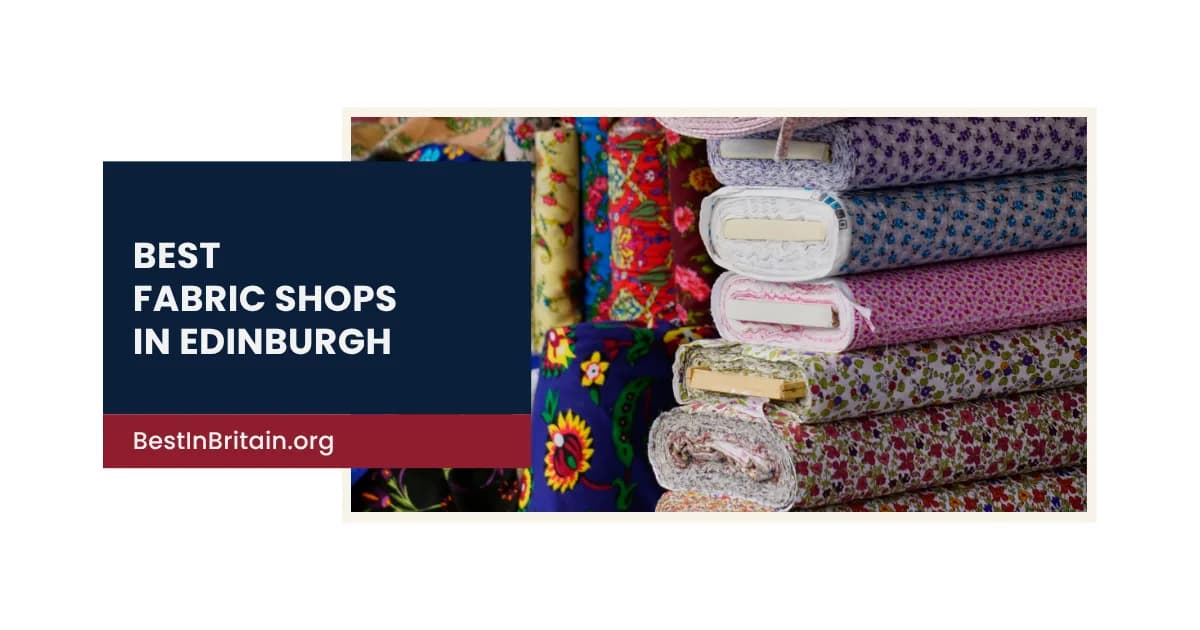
Edinburgh Fabric Shops for Dressmaking, Quilting, Upholstery and Scottish Wool
Edinburgh has a strong independent fabric and sewing community serving dressmakers, quilters, costume designers, upholsterers, students and home sewers.
The city’s shops cover a broad range of materials, from everyday cotton and jersey to bridal silk, Scottish wool, Harris Tweed, upholstery fabric and specialist theatrical textiles.
Some retailers concentrate on garment making and haberdashery.
Others specialise in quilting, patchwork, curtains, blinds or furniture restoration.
The appropriate shop depends on the project, the required material and whether the customer needs fabric by the metre, a small precut piece, design advice or a complete making service.
A customer sewing a summer dress may need breathable cotton, linen, viscose or lightweight wool.
A structured coat requires a fabric with enough body and durability, together with suitable lining and interfacing.
A quiltmaker may prioritise stable cotton, coordinated colour groups and accurate cutting.
Curtains and upholstery require materials designed to tolerate repeated use, weight, sunlight and the physical demands of the finished item.
The appearance of a fabric online does not always show its true colour, weight, texture or movement.
Screen settings, lighting and photography can alter how a textile appears.
Buying in person allows the customer to handle the material, examine the weave and see how it behaves when draped.
A shop assistant may also identify products that would not have appeared in a broad online search.
Fabric is normally sold according to length, with the usable width stated separately.
A customer buying one metre of a 150-centimetre-wide fabric receives a different total area from one metre of fabric only 110 centimetres wide.
Patterns commonly state the required quantity according to one or more standard widths.
The customer should check the finished width of the selected material before asking for it to be cut.
The amount required depends on:
- Garment size
- Fabric width
- Pattern layout
- Directional prints
- Nap or pile
- Pattern matching
- Sleeve and skirt length
- Shrinkage
- Alterations
- Test pieces
- Cushion or curtain repeats
- Whether mistakes or future repairs need to be allowed for
Directional prints and fabrics with nap must normally be cut with every piece facing the same way.
This can increase the quantity substantially.
Velvet, corduroy, brushed fabrics and one-way printed designs should not be calculated using the most economical reversible layout.
Large checks, stripes and repeating motifs also require additional fabric if the pattern is to align across seams.
An experienced shop can help estimate the extra allowance, but the customer should bring the pattern envelope, measurements and a clear description of the desired finish.
Fabric composition affects how a finished project looks, feels and performs.
Natural fibres include cotton, linen, wool and silk.
Manufactured fibres include viscose, polyester, nylon and elastane.
Many textiles combine several fibres to balance cost, strength, drape, recovery and care.
A fabric described as satin refers primarily to its weave or surface rather than one specific fibre.
Satin can be made from silk, polyester, acetate or another material.
Likewise, jersey describes a knitted construction and can contain cotton, viscose, wool, synthetic fibres or a blend.
Customers should examine both the fibre content and fabric type rather than relying on one descriptive name.
Cotton is widely used for shirts, dresses, crafts, children’s clothing and quilting.
Its characteristics vary substantially according to yarn, weave and finish.
Crisp quilting cotton behaves differently from lightweight cotton lawn, brushed flannel, denim or stretch cotton sateen.
A fabric suitable for patchwork may not provide the movement expected in a flowing blouse.
Linen is valued for breathability, strength and texture.
It creases readily, although blends and prewashed finishes can soften the appearance.
Linen can shrink during washing and should normally be pretreated before cutting where the completed item will be laundered.
Wool can be light and fluid or dense and heavily structured.
Suiting, coating, tweed, boiled wool and fine dress wool serve different purposes.
Scottish and Yorkshire wool fabrics can be suitable for tailoring, outerwear, interiors and accessories according to their construction and weight.
Silk also covers a wide range of materials.
Habotai, dupion, organza, chiffon, crepe and satin have distinct weights and handling characteristics.
Some silk fabrics move easily during cutting and sewing and may require specialist needles, fine thread and careful stabilisation.
Viscose is produced from regenerated cellulose and is often chosen for its soft drape.
It can be suitable for dresses, blouses, trousers and linings.
Some viscose fabrics shift or grow during handling and should be cut and stabilised carefully.
Polyester is durable, widely available and used alone or within blends.
Its suitability depends on the construction and intended use.
A high-quality polyester crepe can perform very differently from an inexpensive costume satin.
Elastane adds stretch and recovery to garments such as fitted trousers, jersey tops and sportswear.
A pattern designed for woven fabric should not automatically be made from a stretch textile without considering construction, ease and stabilisation.
The shop should be able to explain whether a fabric stretches across its width, along its length or in both directions.
Weight is commonly described in grams per square metre, although not every shop publishes this information.
A lower GSM fabric is not always transparent or delicate, and a higher number does not automatically mean that a material is suitable for upholstery.
Weave, fibre and finish affect performance alongside weight.
Drape describes how fabric hangs and moves.
A fluid viscose crepe can fall close to the body, while cotton poplin creates a crisper shape.
A customer choosing fabric for a particular pattern should compare its drape with the materials recommended by the pattern designer.
Holding the textile against the body or gathering part of it in the hand can help indicate how it will behave.
Opacity should be assessed under realistic lighting.
A fabric that appears opaque while folded on the roll may become translucent when held as a single layer against daylight.
Light dresses, skirts and trousers may require lining even where the main fabric is not marketed as sheer.
Colour should be considered beside the other materials used in the project.
A lining, zip, thread or trim that appears to match under shop lighting may look different outdoors.
Where exact coordination matters, bring the existing garment, sample or material rather than relying on a photograph.
Fabric shops can often provide swatches.
A swatch allows the customer to compare colour, texture and drape at home before ordering a substantial quantity.
It can also be used to test washing, pressing, interfacing and stitching.
The customer should ask whether the sample is cut from the exact batch that will be supplied.
Dye lots can vary between production runs.
Where a project requires several metres, buy the complete amount together if possible.
Returning later for more of the same named colour does not guarantee an identical match.
Fabric cut to a customer’s requested length is commonly excluded from ordinary change-of-mind returns.
The shop should explain its policy before cutting.
Customers should inspect the roll and confirm the required quantity, colour and orientation.
Any known flaw should be identified and reflected in the cut or price before purchase.
Prewashing helps account for shrinkage and removes some manufacturing finishes.
The fabric should generally be treated in the way the completed item will be cleaned.
A material intended for machine-washed clothing may be washed before cutting.
A textile intended for dry-clean-only tailoring may require professional steam treatment rather than an ordinary wash.
The shop or manufacturer’s care instructions should be followed.
Natural fibres can continue changing slightly after the first wash.
Customers should allow enough extra fabric for shrinkage and avoid cutting until the material is completely dry and pressed appropriately.
Very dark or strongly coloured textiles should be tested for colour transfer.
Washing separately at first may reduce the risk of damaging other items.
Interfacing provides structure and support to collars, cuffs, waistbands, button areas and bags.
It can be woven, non-woven, knitted, fusible or sew-in.
The correct option depends on the main fabric and desired result.
A heavy interfacing can make lightweight material unnaturally rigid, while an overly soft product may not support a tailored area.
Testing a small fused sample is valuable because heat and adhesive can alter colour, texture or drape.
Lining improves comfort, opacity, movement and internal finish.
A coat lining must tolerate friction and repeated wear.
A dress lining may need softness, breathability and enough movement to avoid restricting the outer fabric.
Cotton can provide comfort but may grip clothing more than a smooth lining fabric.
The customer should consider the complete garment rather than choosing lining solely by colour.
Haberdashery includes the practical components used to construct and finish a project.
Typical products include:
- Thread
- Zips
- Buttons
- Needles
- Pins
- Elastic
- Bias binding
- Interfacing
- Fasteners
- Hooks and eyes
- Buckles
- Velcro
- Ribbons
- Trims
- Scissors
- Marking tools
- Bobbins
- Machine accessories
- Hand-sewing equipment
Thread should be suitable for the fabric and sewing process.
A general-purpose polyester thread works for many projects, but silk, topstitching, embroidery and heavy upholstery can require more specific products.
Needle size and point should also match the textile.
Ballpoint or stretch needles are commonly used for knits, while sharp or microtex needles can be more suitable for tightly woven materials.
Denim, leather and embroidery have additional specialist options.
A blunt or inappropriate needle can cause skipped stitches, puckering or damage.
The Dress Fabric Company and Fabric Focus provide broad haberdashery ranges alongside fabric.
Edinburgh Fabrics also carries an extensive selection of buttons, trims, threads and sewing accessories.
Quilting specialists such as myBearpaw and The Patchwork Cat concentrate more heavily on patchwork tools, rulers, precuts and coordinated cotton collections.
Curtain and upholstery projects require additional technical consideration.
Fabric width, pattern repeat and orientation affect how many drops are required.
Curtains may need lining, interlining, heading tape, weights and suitable tracks or poles.
The completed weight must be compatible with the chosen fixing system and wall construction.
Upholstery fabric should be selected according to the furniture, expected use and relevant performance information.
A decorative dress fabric may not tolerate repeated sitting, abrasion or strong sunlight.
Commercial furniture and certain domestic applications can involve specific fire-performance requirements.
The upholsterer or interior specialist should confirm the appropriate specification before fabric is purchased.
Customers should not assume that applying a treatment later will make every textile suitable for regulated furniture use.
Martindale rub counts are commonly used to indicate abrasion resistance.
A higher result can suggest greater durability, but the figure is only one part of assessing suitability.
Seam performance, lightfastness, cleaning requirements, pile and construction also matter.
Historic chairs and sofas can require more than a new covering.
Springs, webbing, padding and frames may need repair.
Cotton & Chintz provides upholstery alongside curtains, blinds and soft furnishings.
Customers can select from the shop’s fabrics or discuss using a material they already own.
Bridal and occasionwear fabrics require particular planning.
The main fabric, lining, interlining, lace, boning, fastenings and trims must work together.
A lightweight silk may need support to create a structured bodice.
Lace motifs may require careful placement and additional length.
Beaded fabric can affect cutting, seam construction and alteration.
The Dress Fabric Company provides specialist assistance for bridal and occasionwear projects.
Customers should bring references, pattern information and the garment maker’s technical requirements before committing to expensive fabric.
Costume and theatrical work often prioritise visual impact, movement and practical construction.
Edinburgh Fabrics carries materials extending from silk, wool and lace to felt, faux fur and unusual decorative fabrics.
The correct choice depends on how close the audience will be, how frequently the item will be worn and whether it must survive washing, travel or repeated performance.
Quilting cotton is usually tightly woven and stable.
It is sold by the metre, as fat quarters or through coordinated precut packs.
A fat quarter is formed by cutting half a metre across the width and then dividing it vertically, producing a wider piece than a conventional long quarter.
This shape can be more useful for patchwork pieces.
Precuts such as charm squares, jelly rolls and layer cakes provide coordinated fabrics in standardised dimensions.
They can save cutting time but should still be checked against the selected pattern.
Different manufacturers can use slightly different names or measurements.
Quilters should consider colour value as well as colour.
A group of fabrics may all be attractive individually but lose definition when assembled if every print has a similar visual weight.
Viewing fabrics in black and white through a phone camera can help compare light, medium and dark values.
The Patchwork Cat, myBearpaw and Fabric Focus all provide products relevant to quilting and patchwork.
Their workshop programmes can help beginners learn rotary cutting, accurate seams, pressing and assembly.
Rotary cutters and quilting rulers should be used on a suitable cutting mat.
Blades are extremely sharp and should be closed or retracted immediately after each cut.
Children should be supervised around cutting equipment and sewing machines.
Machine servicing can improve stitch quality and reduce damage caused by worn or misaligned components.
The Dress Fabric Company provides a sewing-machine repair drop-off service.
Customers should describe the machine, fault, accessories and any unusual sounds or error messages.
The power lead, foot pedal, bobbin case and sample stitching may help the technician diagnose the issue.
Vintage machines can require parts that are no longer widely stocked.
The shop should explain likely timescales and whether a repair estimate will be provided before substantial work begins.
Classes can provide practical support that is difficult to reproduce through written instructions.
Fabric Focus runs workshops across quilting, patchwork, embroidery and bag making.
myBearpaw operates an attached teaching studio with classes in sewing, quilting, knitting, crochet and related crafts.
The Patchwork Cat combines a specialist quilting shop with classes and a café in Newhaven.
Ginger Twist Studio runs workshops connected with sewing, knitting, crochet and textile crafts.
Students should check whether materials, patterns and equipment are included.
Some courses require participants to bring a sewing machine or complete preparation in advance.
A beginner machine class may focus on threading, bobbins, tension and basic seams, while a project class assumes those skills already exist.
The seven businesses in this guide represent different parts of Edinburgh’s fabric market.
The Dress Fabric Company provides a broad garment-textile and haberdashery range, including bridal fabrics, premium suppliers and sewing-machine repairs.
Cotton & Chintz specialises in curtain and upholstery textiles alongside bespoke blinds, cushions, fitting and furniture restoration.
Fabric Focus combines dressmaking, quilting and craft fabrics with haberdashery, mail order and practical workshops.
Edinburgh Fabrics carries one of the city’s broadest general textile ranges, with a particular strength in British and Scottish wool.
Ginger Twist Studio combines modern dressmaking fabric with yarn, patterns, haberdashery and creative classes.
myBearpaw is particularly strong in quilting, patchwork, colourful cotton, sewing tools and workshop-based learning.
The Patchwork Cat operates as a dedicated quilting shop and café offering fabric collections, precuts, notions and classes from Newhaven.
No shop can guarantee that a fabric will perform successfully in a project where the design, pattern and care requirements have not been considered.
A knowledgeable retailer can explain material properties, but the maker remains responsible for testing and following the relevant construction instructions.
How we selected the fabric shops
The retailers were considered according to their Edinburgh presence, textile selection, specialist knowledge and ability to support different types of maker.
The selection includes shops offering:
- Dressmaking fabric
- Quilting cotton
- Patchwork precuts
- Scottish wool
- Harris Tweed
- Yorkshire wool
- Linen
- Jersey
- Viscose
- Silk
- Bridal fabric
- Lace
- Denim
- Corduroy
- Flannel
- Faux fur
- Upholstery fabric
- Curtain material
- Haberdashery
- Buttons and trims
- Sewing patterns
- Yarn
- Sewing tools
- Fabric samples
- Mail order
- Workshops
- Sewing-machine repairs
- Upholstery services
- Curtain and blind making
- Professional fitting
- Online ordering
The businesses are not presented as interchangeable.
Some are broad general fabric retailers, while others are more appropriate for quilting, contemporary dressmaking, bridal work or interiors.
Opening hours and class schedules can change, so customers travelling for a particular material or workshop should check current information directly.
How much does fabric cost in Edinburgh?
Fabric prices vary according to fibre, construction, manufacturer, width and provenance.
Basic craft cotton and synthetic fabric can begin from approximately £4 to £10 per metre.
Better-quality dressmaking cotton, viscose, jersey and linen commonly range from approximately £10 to £30 per metre.
Scottish wool, Harris Tweed, silk, bridal lace and designer interior fabric can cost considerably more.
Indicative Edinburgh prices can include:
| Fabric type | Typical price per metre |
|---|---|
| Basic cotton or polycotton | £4 to £12 |
| Quilting cotton | £12 to £20 |
| Viscose or crepe | £10 to £25 |
| Cotton jersey | £12 to £24 |
| Linen and linen blends | £16 to £35 |
| Denim or corduroy | £12 to £28 |
| Wool and tweed | £25 to £80+ |
| Harris Tweed | £35 to £90+ |
| Silk | £25 to £120+ |
| Bridal lace and embellished fabric | £30 to £150+ |
| Upholstery and curtain fabric | £20 to £100+ |
The width should be considered alongside the price.
A wider fabric can require fewer metres than a narrow one.
Additional costs can include:
- Lining
- Interfacing
- Thread
- Zips
- Buttons
- Trims
- Pattern matching
- Samples
- Delivery
- Curtain making
- Upholstery
- Professional fitting
- Sewing-machine repairs
- Workshop fees
The customer should confirm whether prices include VAT and whether fabric is sold in fixed increments.
The Dress Fabric Company
Editorially SelectedBusiness details
Address
38 Bruntsfield Place, Edinburgh
Contact details: +44 131 221 0464
Operating hours:
- Tuesday, Wednesday, Friday and Saturday: 11 AM to 5:30 PM
- Check directly for seasonal or holiday changes
The Dress Fabric Company is an independent Bruntsfield retailer specialising in dressmaking textiles, haberdashery and sewing support.
Its inventory covers everyday garment fabrics alongside premium silk, lace, wool, linen and designer collections.
The range can support casual clothing, tailoring, occasionwear, bridal work, costumes and craft projects.
Customers can examine fabrics from suppliers including Kaldor, James Hare and other established textile houses.
The available range changes as seasonal collections arrive and older designs sell through.
Anyone seeking a specific colour, composition or quantity should contact the shop before travelling.
The business provides a substantial haberdashery range.
Customers can coordinate thread, zips, buttons, ribbon, trims and other notions with the selected fabric.
Bringing the pattern envelope allows staff to check the required materials and recommend suitable supporting products.
The Dress Fabric Company provides fabric samples and mail-order assistance.
A customer who cannot find the complete required selection in the shop may be able to view supplier books or arrange larger samples.
This can be useful for bridal work, coordinated event garments and projects requiring an exact colour.
The bridal consultancy supports customers choosing fabric, lace and trims for bespoke dresses.
The dressmaker’s requirements should be established before purchase because a fabric may need to support boning, draping, embroidery or a particular silhouette.
The shop also provides a drop-off service for sewing-machine repairs on a scheduled basis.
Customers should supply the machine’s essential accessories and explain the fault clearly.
A repair may involve cleaning, timing, tension, electrical issues or replacement components.
Services and products include
- Dressmaking cotton
- Linen and linen blends
- Viscose
- Jersey
- Wool
- Silk
- Bridal fabric
- Lace
- Occasionwear textiles
- Designer fabric
- Lining
- Interfacing
- Zips
- Buttons
- Ribbon and trims
- Sewing thread
- Fabric samples
- Supplier ordering
- Mail order
- Bridal consultation
- Sewing-machine repair drop-off
- Cut-length fabric service
Best suited to: Dressmakers, bridal clients, costume makers and home sewers wanting an extensive garment-fabric range with experienced personal advice.
Pros
- Excellent selection of textiles and haberdashery
- Reliable sampling and mail-order service
- Sewing-machine repair drop-off
- Dedicated bridal consultancy
- Tailored cut-length service
- Premium silk, lace and wool ranges
- Established Bruntsfield location
- Knowledgeable independent service
- Suitable for everyday and specialist dressmaking
- Coordinated notions and trims
Excellent range of fabrics and sensible prices
“Easily one of the best local shopping experiences ever. This is precisely how small independents can make a difference and starve the internet of ill deserved support. A vastly experienced and hugely knowledgeable owner. Excellent range of fabrics and sensible prices. Add all of that, to an owner who can’t do enough to help and inputs her own invaluable opinion to any proposed purchase. Simply brilliant and thoroughly deserving of full support. Makes shopping pleasurable again…”
- Colin MC, Google Reviews
There is always something new or different
“This is an excellent shop. There is always something new or different on offer. The owner is very knowledgeable and very good at sourcing fabulous fabrics.”
- Catherine Gowthorpe, Google Reviews
Cotton & Chintz
Editorially SelectedBusiness details
Address
88 Newington Road, Edinburgh
Contact details: +44 131 667 5796
Operating hours:
- Monday to Friday: 10 AM to 5 PM
- Check directly before a special journey
Cotton & Chintz specialises in fabrics and complete services for curtains, blinds, cushions, upholstery and other soft furnishings.
Its Newington shop contains stocked fabric and supplier books covering traditional, contemporary and decorative interior styles.
Customers can buy fabric by the metre or instruct the business to design, make and install the finished item.
Curtain and blind projects begin with the window dimensions, room, desired light control and decorative style.
The team can help select fabric, lining, heading and hardware.
A heavy interlined curtain requires a rail or pole capable of supporting the completed weight.
The wall and fixing points must also be appropriate.
Cotton & Chintz provides made-to-measure curtains and Roman blinds.
The service can include measuring and professional installation, reducing the risk of the customer ordering unsuitable dimensions or fittings.
The final quotation should identify fabric, lining, heading, track or pole, labour and fitting.
Complimentary fabric samples are available for qualifying ranges.
Samples allow the client to compare colours in daylight and evening lighting and assess how the textile relates to paint, furniture and flooring.
The selected fabric can then be ordered from the relevant supplier.
The shop provides cushions and other coordinated soft furnishings.
A customer can use matching or contrasting materials to connect windows, seating and accessories across the room.
Pattern repeat should be considered where several items must align visually.
Cotton & Chintz also provides upholstery.
Customers can select a textile from the shop’s collections or discuss supplying their own material.
The upholsterer should confirm the required quantity and whether the chosen fabric is suitable for the furniture and expected use.
Services and products include
- Curtain fabric
- Blind fabric
- Upholstery textiles
- Cotton
- Satin
- Silk
- Decorative prints
- Fabric books
- Complimentary samples
- Made-to-measure curtains
- Roman blinds
- Cushions
- Pelmets
- Tracks
- Curtain poles
- Tie-backs
- Measuring
- Professional fitting
- Furniture upholstery
- Furniture repair
- Customer-supplied fabric projects
Best suited to: Homeowners and interior clients wanting fabric selection, made-to-measure soft furnishings, upholstery and professional installation through one Edinburgh business.
Pros
- Specialist curtain and soft-furnishing fabrics
- Bespoke design and make-up service
- Complimentary fabric samples
- Essential fixtures for curtain installation
- Professional upholstery services
- Measuring and fitting available
- Extensive supplier fabric books
- Custom curtains, blinds and cushions
- Furniture restoration capability
- Established Newington premises
Huge selection of materials and designs to choose from
“Julie and her staff at Cotton & Chintz provided an excellent friendly service with good advice and communication, a huge selection of materials and designs to choose from in the shop. We are delighted with our curtains and Roman blinds which they fitted on completion ahead of schedule. Would highly recommend Cotton & Chintz.”
- Barbara Stewart, Google Reviews
Great choice of fabrics
_“Great choice of fabrics. Staff very helpful in narrowing down the choices to cater for my needs and requests.
The whole process from start to finish - choosing fabric, make up and fitting - very smooth.
Communication excellent. Super professional service. Would highly recommend.”_
- Gordon Brown, Google Reviews
Fabric Focus
Editorially SelectedBusiness details
Address
131 East Claremont Street, Edinburgh
Contact details: +44 131 558 3888
Operating hours:
- Tuesday to Saturday: 10 AM to 4 PM
Fabric Focus is an independent Edinburgh fabric and haberdashery shop serving dressmakers, quilters and craft enthusiasts.
The physical premises carry a wider range than is shown through the online shop, making an in-person visit useful for customers who want to compare several fabrics.
The inventory includes fabric from manufacturers such as Moda, Makower UK, Hoffman and Northcott.
Collections change regularly and can include coordinated quilting ranges, seasonal prints and specialist textiles.
Quilters can find fabric by the metre, fat quarters, bundles and project materials.
Dressmaking stock includes jersey, linen, cotton, wool, chiffon, crepe, denim and corduroy.
The exact suitability depends on the weight and construction, so customers should bring pattern recommendations where possible.
Fabric Focus stocks British woven wool and genuine Harris Tweed alongside international textiles.
Customers seeking authentic protected Harris Tweed should look for the Orb Mark and product information showing that the material has been woven in the Outer Hebrides according to the relevant legal definition.
The haberdashery department includes zips, elastic, scissors, needles, hook-and-loop tape, snap fasteners, hook-and-eye closures, bobbins, pins and other sewing supplies.
This allows customers to assemble most of the practical components for a project during one visit.
The shop runs workshops covering quilting, patchwork, embroidery, bag making and related textile skills.
Course descriptions should be checked for experience level and required equipment.
Some classes are suitable for complete beginners, while others assume basic sewing-machine knowledge.
Fabric Focus also operates online ordering and delivery.
Customers requiring more fabric than the website currently lists are encouraged to contact the physical shop because additional stock may be available.
Services and products include
- Quilting cotton
- Patchwork fabric
- Fat quarters
- Moda collections
- Makower UK fabric
- Hoffman fabric
- Northcott fabric
- Jersey
- Linen
- British wool
- Harris Tweed
- Chiffon
- Crepe
- Denim
- Corduroy
- Faux fur
- Haberdashery
- Zips and fasteners
- Needles and pins
- Scissors and sewing tools
- Patterns
- Workshops
- Online ordering
- UK delivery
Best suited to: Quilters, dressmakers and crafters wanting a broad fabric range, practical haberdashery and structured workshops.
Pros
- Stocks major fabric manufacturers
- Extensive and diverse inventory
- Durable fabrics and coordinated collections
- Accessible practical workshops
- Skilled and supportive tutors
- More stock in the physical shop than online
- Dressmaking and quilting ranges
- British wool and Harris Tweed
- Comprehensive haberdashery
- Online shopping and delivery
The fabric arrived very quickly
“I ordered a fat quarter bundle of fabric from Fabric Focus. It was my first time ordering from them and I wasn’t disappointed. The fabric arrived very quickly and was wrapped with care in a paper bag with a little sticker. It’s always the attention to the small details that I look for. I have found that if a retailer pays attention to the small details then they’ll pay attention to everything else. I am very impressed with Fabric Focus and I will buy from them again with confidence. Fabulous fabric, fabulous service. Highly recommended.”
- Gail Morris, Google Reviews
Lovely inventory of fabric
“Kevin was very helpful with our selection. The shop has a lovely inventory of fabric with inspirational catalogues throughout. Lots of ideas… We left with materials AND inspiration for our next project. We went out of our way to fit this visit to Fabric Focus into our schedule while in Edinburg and we are glad we did. A score for regional fabrics and overall experience!”
- Lois Johnson, Google Reviews
Edinburgh Fabrics
Editorially SelectedBusiness details
Address
12 - 14 St Patrick Square, Edinburgh
Contact details: +44 131 668 2790
Operating hours:
- Monday to Saturday: 10 AM to 7 PM
- Sunday: 1 PM to 6 PM
Edinburgh Fabrics is a family-run textile retailer established in 1980.
The St Patrick Square shop carries one of the broadest general selections in the city, serving dressmakers, students, costumiers, designers and craft customers.
Its product range spans everyday materials, specialist textiles and extensive haberdashery.
The business places particular emphasis on British wool.
It describes its collection as Edinburgh’s largest range of Yorkshire and Scottish wool fabrics.
Customers can find suitings, coatings, tweeds and other wool textiles suitable for garments, accessories and selected interior projects.
Edinburgh Fabrics also stocks genuine Harris Tweed.
Authentic Harris Tweed is protected by law and carries the Orb Mark.
It must be handwoven by islanders at their homes in the Outer Hebrides using pure virgin wool dyed and spun in that region.
The material can be used for jackets, coats, bags, cushions and other durable projects.
The available colours and patterns vary as rolls sell and new stock arrives.
The general dressmaking range includes cotton, jersey, linen, silk, lace, denim, felt, fleece, faux fur and decorative textiles.
This breadth makes the shop particularly relevant to costume and theatrical projects requiring unusual colours or textures.
The customer should check fabric composition and care instructions before buying because products with a similar visual appearance can behave very differently when pressed, washed or sewn.
The haberdashery selection includes buttons, zips, thread, trims, needles, elastic and other practical supplies.
Staff can help customers coordinate accessories and determine which dye, thread or interfacing may suit a selected textile.
The online shop provides access to part of the range.
Colour representation cannot be guaranteed through a screen, making samples or an in-store visit advisable for exact matching.
Cut fabric is normally treated as a customised product and cannot be returned for a simple change of mind.
Services and products include
- Scottish wool
- Yorkshire wool
- Harris Tweed
- Suiting
- Coating
- Cotton
- Linen
- Jersey
- Silk
- Lace
- Denim
- Felt
- Fleece
- Faux fur
- Costume fabrics
- Upholstery and furnishing options
- Buttons
- Zips
- Thread
- Trims
- Interfacing
- Sewing accessories
- In-store advice
- Online ordering
Best suited to: Dressmakers, costume designers and textile enthusiasts seeking a broad general range with particular strength in Scottish and British wool.
Pros
- Large inventory of British, Yorkshire and Scottish wool
- Extensive collection of genuine Harris Tweed
- Comprehensive haberdashery and crafting accessories
- Supportive and knowledgeable staff
- Family business established in 1980
- Broad garment and costume range
- Silk, lace, felt and faux fur
- Long opening hours
- Sunday opening
- Online and in-store shopping
I was given good guidance
“I love this shop! I went in to get some silk and dye for a costume project. Not only was I guided to the variety of silk weights, and told the advantages / disadvantages between them for dyeing, I was able to test them in motion and wave them about. I was given good guidance on the right dyes and how much I needed by weight…he brought out the calculator and helped me through the whole process. I bought what I needed and it wasn’t as expensive as I was expecting! Definitely recommend.”
- Violette Rose, Google Reviews
Literally the best fabric store
“I have been a customer for 20 years. This place is AWESOME. Literally the best fabric store I’ve ever been to on the planet. Beautiful embroidered Japanese, sturdy camo, glow in the dark spooky, blacker than blackout, the softest felts and fleece, tons of sewing accessories, etc! The family is always helpful, efficient, and knowledgeable. The prices are affordable. The best. Here’s to another 20 years! Thank you Edinburgh Fabrics!”
- Jeff Kohl, Google Reviews
Ginger Twist Studio
Editorially SelectedBusiness details
Address
1 London Road, Edinburgh, EH7 5AP
Ginger Twist Studio is an independent yarn and fabric shop close to the eastern end of Edinburgh city centre.
The shop is known primarily for colourful yarn, but it also contains a dedicated dressmaking-fabric range, patterns and haberdashery.
Its textile selection focuses on modern independent sewing and recognisable contemporary fabric designers.
Customers can find printed cotton, linen, viscose, denim, corduroy, jersey and other garment-focused fabrics.
The collections are curated rather than attempting to cover every possible textile category.
This can make the shop particularly useful to makers looking for coordinated contemporary colours, distinctive prints and fabric connected with independent sewing-pattern brands.
Ginger Twist stocks sewing patterns for dresses, tops, trousers, jackets, accessories and other projects.
Customers can compare the pattern’s recommended material with available fabric and ask for help estimating the quantity.
The shop’s combined yarn and sewing range is useful for projects involving several textile techniques.
A maker may be able to coordinate fabric with knitted trims, crochet details, embroidery or handmade accessories.
The haberdashery selection supports common garment-making requirements.
Customers should check whether specialist zips, tailoring canvas or highly technical materials are stocked before travelling for one specific item.
Ginger Twist Studio also runs classes and creative events.
Its workshop programme can include sewing, knitting, crochet, mending and other textile skills.
Class sizes, supplied materials and expected experience differ, so participants should review the complete description before booking.
The business operates online alongside the physical shop and sends products to customers unable to visit Edinburgh.
Services and products include
- Contemporary dressmaking fabric
- Cotton
- Linen
- Viscose
- Jersey
- Denim
- Corduroy
- Printed textiles
- Independent sewing patterns
- Haberdashery
- Thread and notions
- Yarn
- Knitting supplies
- Crochet supplies
- Embroidery and mending products
- Sewing classes
- Knitting and crochet workshops
- Online ordering
- UK and international delivery
Best suited to: Modern dressmakers and multi-craft makers seeking curated fabric, independent patterns, yarn and creative classes in one colourful shop.
Pros
- Independent Edinburgh yarn and fabric shop
- Dedicated dressmaking-fabric selection
- Contemporary prints and colours
- Independent sewing patterns
- Yarn and sewing products together
- Haberdashery available
- Regular creative workshops
- Online ordering
- Central London Road location
- Strong community-led identity
myBearpaw
Editorially SelectedBusiness details
Address
50 Lochrin Buildings, Gilmore Place, Edinburgh, EH3 9ND
myBearpaw is an independent fabric, yarn and haberdashery shop with an attached teaching studio.
The Tollcross-area business has a strong focus on colourful quilting cotton, patchwork, sewing, knitting and crochet.
Its combination of retail and education makes it particularly suitable for customers who want practical guidance alongside supplies.
The fabric selection includes quilting cotton by the metre, fat quarters, bundles and coordinated collections.
Quilters can compare prints and colour values in person and build a palette around an existing project.
The shop also stocks backing fabrics, wadding, thread and tools required to progress from cutting to assembly and finishing.
Precuts can be useful to beginners because they reduce some measuring and cutting.
They should still be checked against the dimensions required by the pattern.
A quilt made from a jelly roll, charm pack or layer cake may need additional background, border and backing material.
myBearpaw stocks dressmaking and craft products in addition to patchwork fabric.
The exact range changes, so customers searching for a particular garment textile should check availability before travelling.
The haberdashery selection can include needles, pins, cutting tools, rulers, rotary cutters and other sewing equipment.
The attached studio hosts workshops in quilting, patchwork, bag making, sewing-machine skills, embroidery, knitting and crochet.
Beginner classes can help participants understand equipment and terminology before committing to a substantial project.
More advanced workshops may focus on one technique or completed item.
The course information should state whether participants must bring a machine, cutting equipment or prepared fabric.
myBearpaw also sells online, allowing students and returning customers to obtain additional materials after a class.
Services and products include
- Quilting cotton
- Patchwork fabric
- Fat quarters
- Fabric bundles
- Precuts
- Quilt kits
- Backing fabric
- Wadding
- Sewing thread
- Rotary cutters
- Quilting rulers
- Sewing needles
- Haberdashery
- Yarn
- Knitting and crochet supplies
- Sewing-machine classes
- Quilting workshops
- Bag-making classes
- Embroidery classes
- Online shopping
Best suited to: Quilters, patchworkers and beginners who value practical classes and a specialist collection of fabric, yarn and tools.
Pros
- Independent central Edinburgh shop
- Dedicated teaching studio
- Strong quilting and patchwork selection
- Fabric, yarn and haberdashery together
- Precuts and coordinated bundles
- Beginner and advanced workshops
- Sewing-machine skills classes
- Experienced owner-led tuition
- Online ordering
- Supportive craft community
The Patchwork Cat
Editorially SelectedBusiness details
Address
Newhaven, Edinburgh
The Patchwork Cat is an independent quilting and patchwork shop combined with a café and teaching space in Newhaven.
The business has operated from its Edinburgh premises for several years and concentrates on quilting fabric, precuts, patterns, kits and practical sewing supplies.
Its specialist format is designed for customers who want to browse coordinated textile collections rather than a broad general dressmaking warehouse.
The fabric range includes quilting cotton from established design houses.
Customers can buy fabric by length or select fat quarters, packs and kits assembled around particular colours or projects.
A kit can provide the principal fabric and instructions, but buyers should check whether wadding, backing, thread and binding are included.
The shop carries patchwork and sewing notions such as rulers, templates, needles and other tools.
Quilters replacing or expanding equipment can ask whether a product is compatible with their preferred cutting or piecing method.
The teaching programme supports different levels of experience.
Workshops can cover patchwork, quilting, machine skills and individual techniques.
A beginner should confirm whether the class begins with equipment setup and rotary cutting or assumes those skills have already been learned.
The café creates space for customers to discuss projects, attend social sessions or combine a fabric visit with refreshments.
This community-led model may particularly suit makers who want ongoing interaction rather than purchasing supplies anonymously online.
The Patchwork Cat also operates an online store.
The website carries part of the fabric, kit and supply range, while the Newhaven shop provides access to the full physical selection.
Services and products include
- Quilting cotton
- Patchwork fabric
- Fat quarters
- Precut fabric
- Fabric bundles
- Quilt kits
- Sewing patterns
- Backing fabric
- Wadding
- Binding supplies
- Patchwork rulers
- Templates
- Needles and notions
- Sewing tools
- Quilting classes
- Patchwork workshops
- Social sewing sessions
- Café
- Physical and online shopping
Best suited to: Quilters and patchworkers looking for specialist fabrics, kits, teaching and a community-oriented shop and café.
Pros
- Dedicated Edinburgh quilting shop
- Newhaven shop and café
- Wide range of quilting cotton
- Precuts, kits and fabric packs
- Patchwork and sewing notions
- Regular classes
- Community sewing environment
- Suitable for beginners and experienced quilters
- Online shop available
- Independent local business
How to choose fabric for dressmaking
Begin with the pattern rather than selecting a fabric solely because its print is attractive.
The pattern envelope or instructions normally recommend appropriate fabric types.
These recommendations relate to drape, stretch, structure and weight.
A loose shirt designed for cotton lawn may become stiff in upholstery-weight fabric.
A fitted jersey dress cannot usually be recreated successfully using a stable woven cotton without substantial pattern changes.
Check:
- Recommended fabric type
- Required stretch
- Fabric width
- Directional layout
- Size and finished measurements
- Lining requirements
- Interfacing
- Fasteners
- Shrinkage allowance
- Skill level
Ask the shop to show several options at different prices.
Handling them together can make differences in drape and weight easier to understand.
How to calculate curtain fabric
Curtain calculations depend on the finished width, drop, heading and pattern repeat.
The process generally involves:
- Measuring the track or pole width.
- Applying the required fullness.
- Dividing the total by the usable fabric width.
- Rounding up to a whole number of drops.
- Adding hem and heading allowances.
- Adjusting each drop to match the pattern repeat.
- Multiplying by the number of drops.
- Adding contingency where appropriate.
Roman blinds and cushions require different calculations.
A professional make-up service can measure and specify the quantity where the project involves expensive fabric or several coordinated windows.
How to verify genuine Harris Tweed
Genuine Harris Tweed carries the Orb Mark.
The protected definition requires it to be:
- Handwoven by islanders at their homes in the Outer Hebrides
- Finished in the Outer Hebrides
- Made from pure virgin wool
- Dyed and spun in the Outer Hebrides
Customers buying labelled Harris Tweed should look for the Orb certification and reliable product information.
A general Scottish-style check or wool tweed is not automatically Harris Tweed.
Other Scottish and British wools can still be excellent materials, but they should be described accurately.
What should you ask before fabric is cut?
Before committing to cut fabric, confirm:
- Fibre composition
- Width
- Price per metre
- Required quantity
- Care instructions
- Shrinkage
- Stretch
- Nap or direction
- Pattern repeat
- Dye lot
- Known flaws
- Return policy
- Whether VAT is included
- Whether the remaining roll is sufficient
- Whether more can be ordered
Inspect the correct side and direction of the fabric.
Ask for the label details or retain a photograph showing composition and care information.
Keep the purchase receipt and a small labelled offcut.
This can help with future matching, repairs and cleaning.
Which Edinburgh fabric shop should you choose?
The appropriate shop depends on the project and the level of specialist help required.
The Dress Fabric Company may suit dressmakers seeking garment fabric, bridal textiles, premium supplier ranges and coordinated haberdashery.
Cotton & Chintz is the strongest choice in the guide for curtains, blinds, cushions and upholstery where the customer wants measuring, making and fitting as well as fabric.
Fabric Focus offers one of the broadest combinations of dressmaking, quilting, Harris Tweed, haberdashery and workshops.
Edinburgh Fabrics may suit customers wanting a large general range, unusual costume materials and one of the city’s strongest selections of British and Scottish wool.
Ginger Twist Studio is particularly relevant to modern independent dressmaking, colourful textiles and customers combining sewing with knitting or crochet.
myBearpaw is a strong choice for quilting, patchwork, sewing tools and structured learning through an attached teaching studio.
The Patchwork Cat may suit quilters who want specialist fabric, precuts, kits, workshops and a social shop-and-café environment.
Customers should contact the retailer before making a special journey for one exact product.
Fabric stock changes continuously, and a textile visible online may not remain available in the required quantity.
Bring the sewing pattern, measurements and any existing materials that must be matched.
The strongest fabric-shopping experience is one in which the customer can handle the textile, understand its composition and leave with a material that suits both the visual idea and practical construction of the project.
Edinburgh SEO & Digital Agency Market Statistics
Active Digital & SEO Agencies
420
Registered in EH area
New Agencies (2026 H1)
+38
Incorporated in H1 2026
Median Agency Lifespan
4.8 yrs
Sector maturity index
Emerging Agencies (<3 Yrs)
42%
High market innovation
Top Agency Location Clusters in Edinburgh
- EH3 (New Town & Stockbridge)32% cluster
- EH1 (City Centre & Old Town)26% cluster
- EH6 (Leith Creative Quarter)21% cluster
- EH12 (West Edinburgh Park)21% cluster
Agency Capabilities & Multi-SIC Specialisms
- Advertising & Search Marketing (SIC 73110)Core (100%)
- Technical SEO & Web IT Consultancy (SIC 62020)34% of firms
- Bespoke Web & Software Development (SIC 62012)22% of firms
- Strategic Brand & Growth Advisory (SIC 70229)18% of firms
Related articles
Related guides

Business Services
Best painters and decorators in Edinburgh
A practical guide to Edinburgh painters and decorators for interior painting, exterior work, wallpapering, period properties, commercial projects and complete renovations.
Updated 3 August 2026

Business Services
Best yoga classes in Edinburgh
A practical guide to Edinburgh yoga studios for beginners, hot yoga, pregnancy classes, restorative practice, Vinyasa, Ashtanga and Mysore-style teaching.
Updated 3 August 2026

Business Services
Best golf courses in Edinburgh
A practical guide to Edinburgh golf courses offering historic parkland layouts, panoramic city views, municipal value and welcoming visitor tee times.
Updated 2 August 2026

Business Services
Best mini-golf venues in Edinburgh
A practical guide to Edinburgh mini-golf venues, covering indoor adventure courses, current prices, age rules, accessibility and group-booking options.
Updated 2 August 2026

Business Services
Best office-cleaning companies in Edinburgh
A practical guide to Edinburgh office-cleaning companies providing scheduled contracts, deep cleaning, consumables, floor care and flexible workplace services.
Updated 2 August 2026

Business Services
Top Car Locksmiths in Edinburgh for Fast and Reliable Service
A researched guide to Edinburgh auto locksmiths providing emergency vehicle entry, lost-key replacement, transponder programming, spare keys, remote repairs and mobile roadside assistance.
Updated 1 August 2026
Know a business we should consider?
Send us the details and our editorial team will review whether it fits a future guide.
Submit businessWriter profile
George Davies
Regional and city guide desk researcher
George researches location-led guides, city roundups, regional comparisons, attractions, and practical local recommendations.
Editorial Trust Standard
Independent ReviewIndependent Research
Featured rankings are editorially determined. Commercial partner listings are strictly labeled as Sponsored or Featured.
Public Register Audit
Listings are cross-checked against public regulatory registries, Companies House filings, and published fee schedules.
Regional Directory
Explore Other Verified Services in Edinburgh
business services
Best painters and decorators in Edinburgh
photographers
Best photographers in Edinburgh
physiotherapists
Best physiotherapy clinics in Edinburgh
therapists
Best psychologists in Edinburgh
builders
Best roofing contractors in Edinburgh
seo agencies