
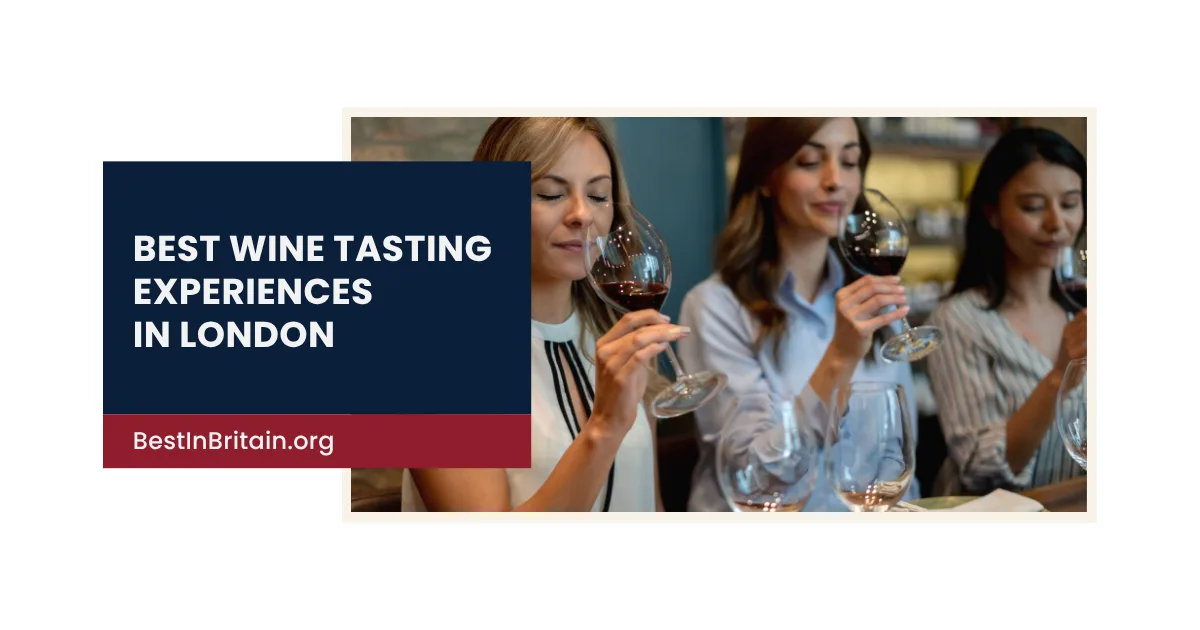
London’s wine-tasting experiences range from informal four-glass flights and neighbourhood producer evenings to structured wine-school sessions, historic cellar tours and guided tastings inside an urban winery.
The best choice depends on the level of instruction required. A self-pour bar encourages exploration, while a formal class teaches tasting structure, grape varieties and regional differences. Producer dinners and private tastings provide more depth but usually cost more.
The six venues below cover materially different formats across Fleet Street, Holborn, Balham, Charing Cross, Canada Water and St James’s.
What distinguishes a suitable wine tasting?
A suitable tasting should state what is poured, how long the event lasts, whether food is included and who leads the session.
Check: - Number of wines - Pour size - Total duration - Hosted or self-guided format - Beginner or advanced level - Region, grape or theme - Blind-tasting component - Food pairing - Dietary accommodation - Seating - Group size - Private or public event - Venue accessibility - Spittoons - Water - Non-alcoholic alternatives - Minimum age - Photo identification - Bottle-purchase pressure - Cancellation terms - Whether the advertised venue can change
A tasting ticket does not necessarily include a full meal, and a wine bar with a large list does not automatically provide guided instruction every day.
At a glance
| Experience | Format | Current price signal | Main strengths | Particularly useful for |
|---|---|---|---|---|
| Humble Grape Fleet Street | Weekly mini tasting, masterclasses and private events | Four-glass Tuesday tasting around £18 | Informal organic and independent-producer focus in a historic setting | Beginners wanting a relaxed introduction without a formal course |
| Davy’s Wine School | Rotating public classes across Davy’s London venues | Around £48 for many two-hour, six-wine classes | Structured education, classic regions and broad London schedule | Visitors wanting a conventional expert-led tasting lesson |
| The Wine Tasting Shop | Public events, Saturday tastings and private cellar sessions | Event dependent | Independent growers, small-group Balham setting and broad retail selection | South London residents and groups wanting neighbourhood-scale tastings |
| Gordon’s Wine Bar | Scheduled guided tastings and everyday self-directed wine-bar visits | Event dependent | Candlelit cellar, historic atmosphere and food pairing | Visitors prioritising setting and occasional guided events |
| Vagabond Canada Water | Urban-winery tours, masterclasses and self-pour exploration | Winery tour and four-wine tasting around £29 | On-site winemaking, more than 100 wines and flexible self-pour format | Visitors wanting to connect tasting with how wine is made |
| Berry Bros. & Rudd | Introductory classes, cellar tours, WSET courses and fine-wine dinners | Intro classes and tours from about £75; advanced events substantially higher | Historic St James’s merchant, structured education and cellar access | Enthusiasts seeking a more formal or premium learning experience |
Events change frequently. Check the live calendar rather than relying on generic opening hours.
How much do wine tastings cost in London?
Typical prices include: - Informal four-wine mini tasting: £15 - £25 - Introductory hosted class: £35 - £75 - Wine and cheese pairing: £40 - £80 - Urban winery tour: £25 - £45 - Private tasting: £50 - £150+ per person - Fine-wine dinner: £200 - £1,000+ - WSET course: several hundred pounds - Bottle purchases: separate
A lower-priced tasting may provide smaller pours and less instruction. Premium events may include rare bottles, a meal or formal qualification teaching.
Humble Grape Fleet Street
Editorially SelectedAddress: 1 St Bride’s Passage, London EC4Y 8EJ
Phone: 020 7583 0688
Format: Wine bar, restaurant, public tastings and private events
Current recurring tasting: Four-glass mini tasting on Tuesdays, around £18
Wine focus: Independent producers, including organic and sustainably made wines
Website
Humble Grape Fleet Street occupies a vaulted space close to St Bride’s Church.
The venue is designed to make wine exploration informal. Its weekly Tuesday format currently offers four tasting glasses for around £18, while the wider events programme includes themed tastings, producer evenings, dinners and masterclasses.
The company works with independent wineries and promotes organic, biodynamic and sustainable production. Those terms should still be considered bottle by bottle rather than treated as interchangeable certifications.
Fleet Street is one of several Humble Grape locations. An event advertised by the group may take place at Battersea, Bow Lane, Canary Wharf, Islington or Liverpool Street instead, so the address must be checked before booking.
The bar also offers food, allowing visitors to turn a short tasting into dinner. A weekly mini flight provides less instruction than a two-hour wine-school class but creates a lower-cost introduction.
Private tastings and corporate sessions can be arranged. Ask whether room hire, food, service charge and minimum spend are included.
Pros - Low-cost recurring four-glass tasting - Informal atmosphere - Independent-producer focus - Food and private-event options
Best for: Beginners and casual groups wanting guided discovery without committing to a long formal class.
What to confirm: Check the exact Fleet Street event, wine count, food inclusion, seating, service charge and cancellation deadline.
Davy’s Wine School and tastings
Editorially SelectedCurrent London venues: Rotating locations including Champagne Charlies, Factory House, El Vino Fleet Street, Mug House, Boot & Flogger and Davy’s Wine House
Typical wine-school duration: Around two hours
Typical current class price: Approximately £48
Typical inclusion: Six wine samples on many introductory sessions
Website
Davy’s runs public wine-school classes, themed tastings, wine-and-cheese events and dining experiences across several London venues.
The source guide identified one Liverpool Street bar as if it were the permanent location. Current events rotate across the Davy’s estate, making the live event calendar more useful than a single venue address.
A typical Wine School session lasts around two hours, costs approximately £48 and introduces six wines. Themes include professional tasting technique, Old World versus New World styles, regional comparisons and food pairing.
The programme also includes higher-priced dinners and larger walk-around tastings. A current Boot & Flogger wine-discovery experience, for example, combines tasting with a three-course meal at a higher ticket price.
Davy’s is particularly useful for people wanting a conventional educational structure without entering a multi-day qualification course.
The historic presentation associated with some Davy’s bars should not be mistaken for a strict or intimidating atmosphere. Current event descriptions position the classes for both beginners and experienced drinkers.
Pros - Structured public wine-school programme - Several London locations and dates - Introductory and advanced themes - Food-pairing and dinner formats available
Best for: Visitors wanting a conventional expert-led class covering tasting technique, grapes and regions.
What to confirm: Check the precise venue, number of wines, food inclusion, level, seating and cancellation terms.
The Wine Tasting Shop
Editorially SelectedAddress: 18 Hildreth Street, Balham, London SW12 9RQ
Phone: 020 8616 8658
Opening: Monday, 4pm - 9pm; Tuesday, noon - 9pm; Wednesday, noon - 10pm; Thursday, noon - 11pm; Friday, 11am - midnight; Saturday, 10am - midnight; Sunday, 11am - 7pm
Format: Wine shop, bar, public events and private cellar tastings
Selection: More than 300 wines
Website
The Wine Tasting Shop combines a neighbourhood merchant, bar and events programme in Balham.
Its selection exceeds 300 wines and includes bottles from smaller and less familiar producers, with organic, biodynamic and natural styles represented.
The current event calendar includes Saturday afternoon tastings, regional themes, supper clubs and a bring-your-own-baby format on selected dates. Individual events have different duration, wine count and age arrangements.
Private tastings are available for groups of six or more in the tasting cellar. This creates a more intimate format than a large merchant event and can suit birthdays, client entertainment and small corporate groups.
The shop’s scale encourages conversation with hosts and staff. It also means popular themed events can have limited capacity.
Table reservations are recommended for ordinary bar visits. A normal table booking provides access to the wine list but is not equivalent to a guided tasting.
Pros - More than 300 wines - Regular public tasting calendar - Private cellar sessions from six guests - Independent Balham setting
Best for: South London residents and smaller groups seeking independent-producer tastings in a neighbourhood venue.
What to confirm: Check the wine count, event duration, food, baby or child policy, cellar accessibility and cancellation terms.
Gordon’s Wine Bar
Editorially SelectedAddress: 47 Villiers Street, London WC2N 6NE
Phone: 020 7930 1408
Opening: Monday to Saturday, 11am - 11pm; Sunday, noon - 10pm
Kitchen: Monday to Saturday, noon - 10pm; Sunday, noon - 9pm
Format: Historic wine bar, scheduled guided tastings and self-directed wine exploration
Website
Gordon’s is thought to be London’s oldest wine bar, established in 1890.
Its candlelit cellar, arched spaces and covered terrace provide one of the most distinctive wine-drinking settings in central London. The everyday experience is primarily a wine-bar visit rather than a continuous guided class.
The venue’s current events programme includes guided tastings led by sommeliers, merchants and producers on selected dates. Visitors specifically wanting tuition should book one of those events rather than arrive for ordinary service expecting a structured tasting.
Most standard tables operate on a first-come, first-served basis. Early arrival improves the chance of cellar or terrace seating but does not guarantee a particular area.
The reservable Cage provides a more private section for groups, subject to current capacity, minimum-spend and booking terms.
Wine is supported by cheese, charcuterie, pies, salads and sharing dishes. The cellar can feel enclosed, dark and busy, while the terrace offers more open seating.
Pros - Distinctive historic cellar - Scheduled guided tastings in 2026 - Broad wine and food offer - Central Charing Cross location
Best for: Visitors who value atmosphere and food pairing, with the option to book a scheduled guided event.
What to confirm: Check the events calendar, cellar accessibility, table policy, Cage minimum spend and whether the chosen visit is guided.
Vagabond Urban Winery, Canada Water
Editorially SelectedAddress: Canada Water, London SE16 2AJ
Format: Working urban winery, self-pour wine bar, hosted tours and masterclasses
Wine selection: More than 100 wines available by self-pour measures
Current winery tour: Around 60 minutes, four wines, from approximately £29
Website
Vagabond’s Canada Water site combines a wine bar with a working urban winery.
The hosted winery tour provides a direct link between production and tasting. The current experience lasts around 60 minutes and includes four wines while introducing the equipment and approach used to make wine on site.
The wider bar uses self-pour machines offering tasting measures, half glasses and full glasses from more than 100 wines. Customers load credit and choose their own sequence.
This makes Vagabond useful for visitors who want flexibility rather than a fixed six-wine class. It also places more responsibility on the guest to monitor spending and alcohol intake.
The events programme includes cheese-and-wine masterclasses, themed tastings, workshops and private sessions. Not every event takes place in Canada Water, so the venue must be checked.
Self-pour discovery provides little formal instruction unless paired with a hosted event. Staff can advise, but it remains a different learning model from Davy’s or Berry Bros. & Rudd.
Pros - Working urban winery - Hosted tour with four wines - More than 100 self-pour options - Regular masterclasses and events
Best for: Curious drinkers who want to see production, compare small pours and learn in a less formal setting.
What to confirm: Check whether the booking is a winery tour, masterclass or ordinary table and review pour credit, food and cancellation terms.
Berry Bros. & Rudd
Editorially SelectedMain London tasting location: 63 Pall Mall, London SW1Y 5HZ
Historic premises: 3 St James’s Street, London SW1A 1EG
Format: Introductory classes, cellar tours, specialist tastings, dinners and WSET courses
Current introductory duration: Approximately two hours
Current cellar-tour signal: Around 90 minutes and approximately £75 on selected dates
Website
Berry Bros. & Rudd provides the most formal and wide-ranging educational programme in this guide.
Introductory wine-tasting sessions teach participants how to assess appearance, aroma, structure and flavour. Current two-hour classes are designed for beginners as well as people seeking greater confidence.
Guided cellar tours combine merchant history with wine tasting. Selected 2026 tours run for approximately 90 minutes at 63 Pall Mall and currently cost around £75.
The merchant also runs WSET courses, regional masterclasses, producer events and cellar dinners. Prices rise substantially for fine-wine dinners involving mature or rare bottles.
This breadth makes Berry Bros. & Rudd suitable for visitors progressing from introductory tasting to formal study. It may be more structured and expensive than necessary for a casual social evening.
Products can use different St James’s spaces. The booking confirmation should be checked carefully rather than assuming every event begins at the historic shop entrance.
Pros - Introductory through advanced education - Historic merchant setting - Guided cellar tours - WSET and fine-wine programmes
Best for: Enthusiasts wanting structured learning, historic-cellar access or progression towards formal wine education.
What to confirm: Check the exact Pall Mall or St James’s address, dress guidance, tasting level, food, ticket limit and cancellation policy.
Structured tasting, self-pour or wine-bar flight?
Structured class
A host controls the sequence and explains technique, region and style.
Best for: - Beginners - Comparative learning - Formal note taking - Questions - Building confidence
Self-pour tasting
The guest chooses the wines and serving size.
Best for: - Flexible exploration - Comparing many styles - Informal dates - Experienced drinkers
Wine-bar flight
A prepared group of small glasses around a theme.
Best for: - Short visits - Lower budgets - Trying before dinner - Casual discovery
Producer event
A winemaker or representative presents the bottles.
Best for: - Regional depth - Vintage comparison - Vineyard stories - Buying decisions
Pour sizes and alcohol intake
A tasting pour is smaller than a standard glass, but several samples can add up.
Ask: - Number of wines - Millilitres per sample - Whether sparkling or fortified wine is included - Whether top-ups are offered - Whether wine accompanies dinner - Whether spittoons are available
Professional tasting does not require swallowing every sample.
Spitting at a tasting
Spitting is normal and appropriate, particularly where many wines are served.
It helps guests: - Compare more wines - Retain concentration - Reduce alcohol intake - Travel more safely - Assess wines objectively
A reputable educational event should provide spittoons or explain where they are available.
Food and pairings
Food may be: - Included pairing - Optional cheese board - Full dinner - Canapés - Available separately - Not served during the class
Check allergens and whether the food is intended as a full meal.
Cheese and charcuterie can affect the perception of acidity, tannin and sweetness. A host should explain the purpose of the pairing rather than presenting it as decoration.
Organic, biodynamic and natural wine
These terms have different meanings.
Organic
Certification generally restricts synthetic vineyard inputs and controls production practices.
Biodynamic
Uses a broader farming system and may follow certification standards, but not every producer is certified.
Natural wine
Has no single legally binding UK definition. It commonly implies low-intervention production, but practices vary.
Ask the host what the producer actually does rather than relying solely on a category label.
Beginners and tasting vocabulary
A beginner does not need specialist language.
Useful observations include: - Light or full bodied - High or low acidity - Dry or sweet - Soft or firm tannin - Fresh or developed fruit - Floral, herbal, mineral or spicy aromas - Short or persistent finish
Tasting notes describe perception rather than one objectively correct answer.
Private and corporate tastings
Ask about: - Minimum group - Maximum group - Private room - Wine count - Theme - Host qualification - Food - AV - Branding - Bottle sales - Service charge - Cancellation - Accessibility - Non-drinkers
The Wine Tasting Shop currently offers private sessions from six guests, while Davy’s, Humble Grape and Vagabond handle larger bespoke events.
Accessibility
Check: - Step-free entrance - Cellar stairs - Lift - Accessible toilet - Seating - Hearing support - Lighting - Assistance dogs - Table height - Route between tasting rooms
Historic cellars may be difficult to access even when another part of the venue is step free.
Allergies and dietary requirements
Disclose: - Dairy - Nuts - Gluten - Shellfish - Meat - Sulphite sensitivity - Alcohol intolerance - Pregnancy - Medication interactions
Wine naturally contains sulphites, and additional sulphites may be used in production. A venue cannot promise that ordinary wine is sulphite free.
Pregnancy and medical considerations
UK health guidance advises avoiding alcohol during pregnancy.
People taking medication or managing a health condition should seek appropriate medical advice where alcohol may interact with treatment.
A tasting can sometimes provide non-alcoholic participation, aroma exercises or food, but equivalent alternatives are not guaranteed.
Age and identification
Wine tastings are for adults aged 18 or over.
Venues may operate Challenge 25 and require original photographic ID. A ticket does not override licensing requirements.
Some daytime venues permit babies or children to accompany adults at specific events, but they cannot consume alcohol and supervision rules apply.
Getting home safely
Plan transport before attending.
Use: - Underground - Train - Bus - Licensed taxi - Designated driver - Nearby accommodation
Do not drive after drinking. Even small tasting pours can accumulate over several wines.
Booking and cancellation
Check: - Refund deadline - Date transfer - Minimum numbers - Event cancellation - Host change - Venue change - Dietary notice - Late arrival - Ticket resale - Gift-voucher expiry
Berry Bros. & Rudd currently allows cancellation or exchange up to seven days before selected cellar tours, but terms differ by event.
Questions to ask before booking - How many wines are included? - What is the pour size? - How long is the session? - Who leads it? - Is it suitable for beginners? - Is food included? - Are spittoons available? - Is seating provided? - Is the tasting private? - Is the venue step free? - Can dietary needs be accommodated? - Are bottles sold afterwards? - Is there pressure to buy? - What ID is required? - What is the cancellation deadline? - Which exact venue hosts the event?
Common warning signs
Be cautious where: - The actual host is not identified - The venue address is unclear - “Unlimited tasting” has no responsible-service explanation - Pour sizes are hidden - Food is implied but not included - A retailer pressures guests to buy - Accessibility is not explained - Organic and natural are treated as identical - A tasting is advertised without an age policy - An old event page is presented as current - A third party changes the venue without clear notice - Transport home is ignored
Frequently asked questions
Which is best for beginners?
Humble Grape’s short Tuesday tasting, Davy’s Wine School and Berry Bros. & Rudd’s introductory class are all suitable at different price points.
Which is most informal?
Vagabond’s self-pour format and Humble Grape’s weekly mini tasting provide the least formal experiences.
Which has the most historic atmosphere?
Gordon’s offers the most recognisable candlelit wine-bar setting, while Berry Bros. & Rudd provides historic merchant and cellar context.
Which is best for private groups?
The Wine Tasting Shop offers intimate private cellar sessions from six guests. Humble Grape, Davy’s and Vagabond handle broader event formats.
Does Gordon’s provide guided tastings every day?
No. Ordinary service is a self-directed wine-bar visit. Guided tastings run on selected dates.
Can guests buy the wines afterwards?
Usually, particularly at merchant-led venues, but availability and retail pricing vary.
Is spitting rude?
No. It is standard practice during structured tasting.
Choosing with confidence
Humble Grape provides a relaxed and relatively affordable introduction. Davy’s offers the broadest rotating programme of conventional wine-school classes across London.
The Wine Tasting Shop creates an intimate neighbourhood experience, while Gordon’s is strongest for historic atmosphere and selected guided events.
Vagabond connects tasting with production at its Canada Water urban winery. Berry Bros. & Rudd provides the most formal progression from introductory classes to WSET study and fine-wine dinners.
Choose according to the level of teaching, number of wines, food inclusion and complete cost. A small, well-explained tasting can provide more value than a long list of expensive bottles without structure.
London Visitor, Culture & Leisure Market Statistics
Annual Visitor Footfall
21.1M
Annual visitors in London
Tourist & Visitor Spend
£14.2B
Annual visitor expenditure
Cultural & Leisure Venues
1,250
Attractions & landmarks
Visitor Stay Profile
52% Day
48% Overnight stays
Primary Attraction & Cultural Hubs in London
- WC2 (West End & Museums Qtr)36% focus
- SE1 (South Bank & London Eye)28% focus
- SW7 (South Kensington Museums)20% focus
- EC3 (Tower of London & City)16% focus
Attraction Types & Category Breakdown
- World-Class Museums & Art Galleries44% of venues
- Royal Parks & Landmark Palaces24% of venues
- West End Theatres & Cultural Shows18% of venues
- Historic Architecture & River Cruises14% of venues
Related articles
Related guides
Things to Do
Best Jazz Clubs in London for Live Music
A current guide to six London jazz clubs and live-music venues, covering ticket prices, seating, food, age rules, accessibility, jam sessions and the different styles each venue presents.
Updated 22 July 2026

Things to Do
Best Ice Skating Rinks in London
A current guide to London's best year-round ice skating rinks, covering public sessions, prices, skate hire, lessons, family rules, accessibility and seasonal rink updates.
Updated 13 July 2026
Things to Do
Best Live Music Venues in London
A current guide to six London live music venues, covering concert formats, standing and seating, accessibility, bag rules, age restrictions, food, ticket fees and choosing the right room.
Updated 13 July 2026
Things to Do
15 of the best walking tours in London for curious wanderers
Discover 15 standout London walking tours, covering royal ceremony, wartime Westminster, women’s history, Harry Potter, Sherlock Holmes, street art, food, pubs and architecture.
Updated 12 July 2026
Things to Do
12 of the best tours in London for memorable city experiences
Discover 12 standout London tours, including Harry Potter, sightseeing buses, Thames cruises, food walks, cycling, theatre history and specialist neighbourhood experiences.
Updated 11 July 2026
Things to Do
30 of the best free things to do in London for locals and visitors
Discover 30 of the best free things to do in London, from major museums and royal parks to historic ceremonies, skyline views, live music and unusual attractions.
Updated 5 July 2026
Know a business we should consider?
Send us the details and our editorial team will review whether it fits a future guide.
Submit businessWriter profile
Ivan Ivanov
Hospitality & Food Service Contributor
Hospitality professional with more than 20 years of experience, including around a decade with Dishoom in roles such as Head Bartender and Supervisor. Former casino manager and co-owner of Muave, a UK loose leaf tea brand. Covers restaurants, bars, pubs, cafes, drinks, venues and hospitality businesses across the UK.
Editorial Trust Standard
Independent ReviewIndependent Research
Featured rankings are editorially determined. Commercial partner listings are strictly labeled as Sponsored or Featured.
Public Register Audit
Listings are cross-checked against public regulatory registries, Companies House filings, and published fee schedules.
Regional Directory
Explore Other Verified Services in London
accountants
Top Accountants in London
marketing agencies
Top digital marketing agencies in London
private clinics
Best Home Care Services in London
solicitors
Best Immigration Lawyers in London
things to do
Best Jazz Clubs in London for Live Music
commercial property agents