
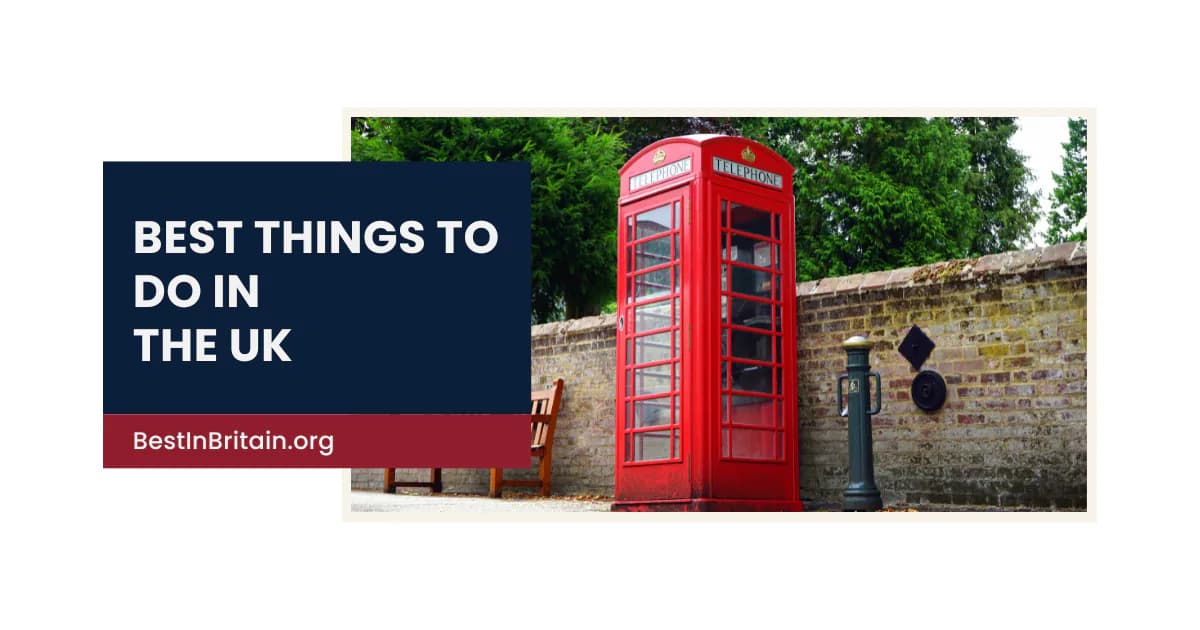
The best things to do in the UK range from globally famous landmarks and major museums to national parks, coastal walks, football grounds, live music, markets, historic railways and slow journeys through landscapes that make each part of the country feel distinct.
For a first trip, London, Edinburgh, York, Bath and Belfast offer strong cultural anchors. The Lake District, Eryri, the Scottish Highlands, Pembrokeshire Coast and Giant's Causeway provide the landscape counterpoint. Experiences such as seeing a West End show, riding a scenic railway, attending a football match or spending an evening in a good local pub reveal a different side of Britain that major attractions alone cannot provide.
No single itinerary can show every side of England, Scotland, Wales and Northern Ireland. The strongest trips combine a few major landmarks with slower experiences: walking through a national park, exploring a market, travelling by train, staying in a smaller town or giving one city enough time to become more than a collection of attractions.
This guide brings together 40 of the best things to do in the UK. It is an editorial selection rather than a ranking of every attraction, focusing on experiences that most clearly reveal the history, landscapes and culture of the four nations.
Best things to do in the UK at a glance
| Experience | Best for | Where |
|---|---|---|
| Tower of London | Medieval and royal history | London |
| Stonehenge | Prehistory and archaeology | Wiltshire |
| Roman Baths | Roman history and a complete city break | Bath |
| York Minster and city walls | Historic city atmosphere | York |
| Edinburgh Castle and Royal Mile | Scottish history and city views | Edinburgh |
| British Museum | Global history and major collections | London |
| West End performance | Theatre and nightlife | London |
| Lake District | Mountains, lakes and walking | Cumbria |
| Scottish Highlands | Road trips and dramatic scenery | Scotland |
| Eryri National Park | Mountain landscapes and Welsh culture | North Wales |
| Giant’s Causeway | Geology and coastal scenery | County Antrim |
| Causeway Coastal Route | Multi-day coastal road trip | Northern Ireland |
| Scenic railway journey | Slow travel and landscape | Across the UK |
| Football match | Living sporting culture | Across the UK |
| Market visit | Food and local life | Across the UK |
| British island stay | Slower travel, wildlife and local culture | Around the UK |
For a first visit, do not try to collect all 40. Choose a few major landmarks, one or two landscapes, and at least one everyday cultural experience such as a market, live performance, football match, pub or scenic train journey.
How we selected the best things to do in the UK
This guide is not based on visitor numbers alone.
We considered:
- Historical importance: Places that explain major periods or turning points in British history.
- Cultural value: Experiences that reveal how people live, create, eat, perform, travel and gather.
- Landscape quality: National parks, coastlines and regions where the setting is the main reason to visit.
- Distinctiveness: Experiences that are difficult to reproduce elsewhere.
- Geographical balance: Coverage across England, Scotland, Wales and Northern Ireland.
- Depth: Whether the experience rewards several hours, a full day or a longer stay.
- Practical value: Whether it fits naturally into a real itinerary rather than only looking good on a checklist.
- Range: A balance of landmarks, cities, landscapes, events and ordinary cultural experiences.
The result deliberately mixes globally famous sites with experiences such as riding a train, visiting a market or watching football. The UK is best understood through both its institutions and its everyday cultural life.
Must-see historic landmarks in the UK
1. Explore the Tower of London

Business details
Address
London EC3N 4AB
Best for: Royal history, medieval architecture and a major first-time London attraction
Visit details:
- Open daily
- Opening and last-admission times vary by season
- Advance booking is recommended
Typical cost: £££
The Tower of London works because almost every part of the site reveals a different layer of English state power. It has functioned as fortress, royal residence, prison, treasury, armoury and place of execution, and those uses overlap rather than appearing as separate museum themes.
The Crown Jewels attract the largest queues, but the White Tower, medieval buildings, defensive walls and Yeoman Warder tours provide the historical structure that makes the visit worthwhile. Connections with William the Conqueror, Henry VIII, Elizabeth I and later monarchy give the site unusual chronological depth.
Despite the central location, this is not a quick London stop. Visitors who give the Tower several hours will understand far more than those who treat it only as the place where the Crown Jewels are displayed.
Pro tip:
Arrive at opening time and visit the Crown Jewels first before queues build.
2. Walk through Westminster

Business details
Address
Westminster, London SW1
Best for: Iconic London landmarks, political history and a compact walking route
Visit details:
- Outdoor landmarks can be viewed at all times
- Parliament, Westminster Abbey and Buckingham Palace use separate visitor schedules
Typical cost: Free to explore outside, with charges for interior visits
Westminster contains several of Britain’s most recognisable landmarks within a compact area.
The Palace of Westminster and Elizabeth Tower stand beside Westminster Abbey, while St James’s Park leads towards Buckingham Palace. Government buildings, statues and memorials add further historical layers.
Rather than rushing between photographs, visitors should choose at least one interior experience, such as a Parliament tour or Westminster Abbey visit.
Pro tip:
Walk from Westminster Bridge through Parliament Square and St James’s Park early in the morning before the pavements become crowded.
3. Experience Stonehenge

Business details
Address
Near Amesbury, Wiltshire SP4 7DE
Best for: Prehistory, archaeology and one of Britain's most recognisable ancient monuments
Visit details:
- Open daily from 9:30 am
- Seasonal closing times apply
- Timed booking is recommended
Typical cost: £££
Stonehenge is famous enough that the reality can seem smaller than its reputation at first sight. The key is to understand that the stone circle is only one part of a much larger prehistoric landscape.
Burial mounds, earthworks and ancient routes help explain why the monument matters, while the visitor centre provides the archaeological context needed to move beyond speculation about how and why the stones were raised.
Standard admission keeps visitors on a protected path, which preserves the site but creates some distance. The more limited Stone Circle Experience changes the relationship with the monument considerably for visitors who want a more atmospheric encounter.
Pro tip:
Book the earliest general entry or a Stone Circle Experience for a quieter and more atmospheric visit.
4. Visit the Roman Baths in Bath

Business details
Address
Abbey Churchyard, Bath BA1 1LZ
Best for: Roman history combined with a highly walkable historic city
Visit details:
- Open daily
- Closing times vary by season
- Advance booking is recommended
Typical cost: £££
The Roman Baths preserve one of northern Europe’s finest ancient bathing complexes.
Visitors follow raised walkways around the Great Bath, temple remains, heated rooms and the sacred spring. Archaeological objects and digital reconstructions reveal the role of Aquae Sulis as both a religious sanctuary and social centre.
The surrounding Georgian city is an essential part of the experience, particularly Bath Abbey, Pulteney Bridge and the Royal Crescent.
Pro tip:
Visit the baths early, then spend the remainder of the day walking through Bath rather than leaving immediately after the museum.
5. Walk York’s walls and visit York Minster

Business details
Address
Central York
Best for: Medieval city atmosphere, architecture and a car-free historic day
Visit details:
- Minster sightseeing varies around worship and events
- City walls usually open from morning until dusk
- Wall sections can close during poor weather
Typical cost: Free walls; £££ for the Minster
York is one of the easiest British cities to understand on foot. Roman, Viking, medieval and railway histories overlap within a compact centre, and the city walls make those layers physically visible from above.
York Minster is the architectural centrepiece, with exceptional stained glass and Gothic stonework, but the best visit also includes time on the walls, around the medieval street pattern and at one major museum.
The strength of York is not any single attraction. It is the density of history within a city small enough to move through without losing time to transport.
Pro tip:
Start on the walls early, visit the Minster when it opens and explore the Shambles before midday crowds arrive.
6. Explore Edinburgh Castle and the Royal Mile

Business details
Address
Castlehill, Edinburgh EH1 2NG
Best for: Scottish history, city views and a classic first Edinburgh visit
Visit details:
- April to September: 9:30 am to 6 pm
- October to March: 9:30 am to 5 pm
- Last entry is one hour before closing
Typical cost: £££
Edinburgh Castle dominates the city from an extinct volcanic rock.
Inside are the Honours of Scotland, the Stone of Destiny, historic military buildings and views across the capital. The Royal Mile descends through the Old Town towards the Palace of Holyroodhouse, passing closes, churches, museums and historic buildings.
The castle is extremely popular and timed tickets regularly sell out.
Pro tip:
Book the earliest castle slot, then walk downhill through the Old Town rather than climbing the Royal Mile first.
7. Discover the castles of North Wales

Business details
Address
Caernarfon, Conwy, Harlech and Beaumaris, North Wales
Best for: Medieval military architecture and understanding conquest in Wales
Visit details:
- Major staffed castles open daily with seasonal hours
- Individual sites use separate tickets
Typical cost: ££ to £££
North Wales contains one of Europe’s greatest concentrations of medieval castles.
Caernarfon, Conwy, Harlech and Beaumaris form part of a UNESCO World Heritage Site associated with Edward I’s conquest of Wales. Each has a different setting, from Caernarfon’s polygonal towers to Harlech’s dramatic position above the coast.
Their architecture is impressive, but visitors should also engage with the conflict, occupation and Welsh resistance behind their construction.
Pro tip:
Choose two castles for a single day rather than rushing through all four.
8. Walk beside Hadrian’s Wall

Business details
Address
Northern England between Wallsend and Bowness-on-Solway
Best for: Roman history experienced in the landscape rather than only in a museum
Visit details:
- Open countryside is accessible throughout the year
- Museums and forts keep separate seasonal hours
Typical cost: Free landscape access, with charges for staffed sites
Hadrian’s Wall crossed Roman Britain from coast to coast.
The most dramatic central section passes crags, open moorland and forts including Housesteads, Chesters and Birdoswald. Vindolanda, south of the wall, preserves an exceptional Roman settlement and internationally important writing tablets.
Walking even a short section makes the scale of the frontier much clearer than visiting one fort alone.
Pro tip:
Base yourself near Hexham or Haltwhistle and combine a fort with a manageable linear walk.
9. Visit Windsor Castle

Business details
Address
Windsor SL4 1NJ
Best for: Royal history, state rooms and an easy day trip from London
Visit details:
- Open on selected days throughout the year
- Closures occur for royal and ceremonial use
- Timed booking is recommended
Typical cost: £££
Windsor Castle is the oldest and largest occupied castle in the world.
Visitors can enter the State Apartments, see works from the Royal Collection and visit St George’s Chapel, where several monarchs are buried. The surrounding town, Long Walk and Windsor Great Park extend the experience beyond the castle walls.
Because it remains a working royal residence, access changes regularly.
Pro tip:
Check the official calendar rather than relying on standard weekly hours, particularly around state events.
10. Explore Stratford-upon-Avon’s Shakespeare story

Business details
Address
Multiple locations across Stratford-upon-Avon
Best for: Shakespeare, Tudor domestic history and live theatre
Visit details:
- Houses and exhibitions use separate seasonal schedules
Typical cost: £££ for combined admission
Stratford-upon-Avon preserves several places connected with William Shakespeare and his family.
Shakespeare’s Birthplace, Anne Hathaway’s Cottage and New Place reveal different stages of his life, while the Royal Shakespeare Company performs his work beside the River Avon.
The town can feel heavily themed around its famous resident, but its strongest sites offer genuine insight into Tudor domestic life and theatre.
Pro tip:
Combine one or two historic houses with an evening performance rather than trying to visit every property.
Essential museums, cities and cultural experiences
11. Spend a day at the British Museum

Business details
Address
Great Russell Street, London WC1B 3DG
Best for: World history, archaeology and a major free museum visit
Visit details:
- Open daily
- Friday commonly has later opening
- Free timed booking may be recommended
Typical cost: Free, with charges for selected exhibitions
The British Museum contains one of the world’s most extensive collections of human history and culture.
Its galleries cover ancient Egypt, Greece, Rome, Assyria, Asia, Africa, Europe and the Americas. The collection is also inseparable from debates over colonial acquisition, ownership and restitution.
It is impossible to see everything properly in one visit.
Pro tip:
Choose three collections in advance and leave time for the Great Court rather than attempting every gallery.
12. See a West End performance

Business details
Address
Theatre district around the West End, London
Best for: Theatre, musicals and a classic London evening
Visit details:
- Performance times vary
- Matinees commonly run on Wednesdays, Thursdays or Saturdays
Typical cost: ££ to £££
London’s West End is one of the world’s leading theatre districts.
The programme ranges from long-running musicals and major drama to comedy, dance and limited-season productions featuring internationally known performers. Historic theatres add atmosphere, but the quality of the production should guide the choice.
Pro tip:
Compare official theatre and same-day ticket options, but avoid unofficial resale listings with inflated prices.
13. Explore Oxford’s colleges and libraries

Business details
Address
Central Oxford
Best for: University architecture, libraries and a compact intellectual city break
Visit details:
- College access changes around teaching, examinations and private events
- Bodleian tours use timed schedules
Typical cost: Free to £££
Oxford’s historic centre brings together medieval colleges, Gothic chapels, libraries and museums.
A Bodleian Library tour, one carefully chosen college and the Ashmolean create a strong first visit. Christ Church Meadow and the riverside provide quieter alternatives to the busy central streets.
Pro tip:
Check college opening information on the day and be prepared to substitute one college for another.
14. Punt through Cambridge

Business details
Address
River Cam, central Cambridge
Best for: College views, river atmosphere and a distinctive first-time Cambridge experience
Visit details:
- Seasonal and weather dependent
- College access varies independently
Typical cost: ££ to £££
Punting provides the classic view of Cambridge’s college backs, bridges and riverside lawns.
Visitors can hire a punt or book a chauffeured tour. The latter is more relaxed and usually includes commentary on the colleges and university history.
A complete visit should also include at least one college and the Fitzwilliam Museum.
Pro tip:
Choose a chauffeured punt for a first visit unless you are comfortable steering in a busy narrow river.
15. Discover Liverpool’s music and maritime heritage

Business details
Address
Liverpool city centre and waterfront
Best for: Music, maritime history and a culturally rich city weekend
Visit details:
- Museums and venues use separate schedules
Typical cost: Free to £££
Liverpool makes the most sense when its music story is placed beside its maritime and migration history rather than treated separately. The port connected the city to trade, empire, migration and the transatlantic slave economy, while later cultural movements gave Liverpool an influence far beyond its size.
The waterfront museums provide the historical foundation. Beatles-related sites, independent venues, the cathedrals, Georgian Quarter and Baltic Triangle then reveal how the city continues to reinvent itself.
A good weekend should include both the famous music associations and the harder histories that shaped the city around them.
Pro tip:
Balance Beatles attractions with the waterfront museums to understand the city beyond one musical story.
16. Experience Manchester’s football, music and industrial history

Business details
Address
Greater Manchester
Best for: Football, music, industrial history and modern urban culture
Visit details:
- Varies by museum, match and performance
Typical cost: Free to £££
Manchester was central to the Industrial Revolution and remains one of Britain’s most influential cultural cities.
The Science and Industry Museum, People’s History Museum and historic canals explain its industrial and political importance. Football stadium tours, live music and neighbourhoods such as the Northern Quarter reveal the modern city.
Pro tip:
Build the visit around a confirmed match, concert or exhibition rather than relying on a generic city-centre walk.
17. Explore Belfast and Titanic Belfast

Business details
Address
1 Olympic Way, Belfast BT3 9EP
Best for: Maritime history, shipbuilding and a strong introduction to Belfast
Visit details:
- Open daily
- Seasonal closing times apply
- Timed tickets are recommended
Typical cost: £££
Titanic Belfast stands beside the slipways where RMS Titanic was built.
Immersive galleries explore Belfast’s shipbuilding industry, the design and construction of the ship, its voyage and the later discovery of the wreck. The surrounding Maritime Mile includes historic vessels, docks and industrial architecture.
Belfast itself also deserves time for political history tours, St George’s Market and its growing food scene.
Pro tip:
Allow at least half a day for the Titanic Quarter and another full day for central Belfast.
18. Experience Cardiff’s history and Welsh culture

Business details
Address
Cardiff and St Fagans
Best for: Welsh history, culture and combining a capital city with open-air heritage
Visit details:
- Both attractions open daily with separate seasonal schedules
Typical cost: £££ for Cardiff Castle; free for St Fagans
Cardiff combines a dramatic city-centre castle with one of Europe’s finest open-air museums.
Cardiff Castle contains Roman remains, a Norman keep and extraordinary Victorian interiors. St Fagans National Museum of History relocates historic buildings from across Wales into a large parkland site.
Together, they provide a much fuller picture of Welsh history than either attraction alone.
Pro tip:
Give St Fagans most of a day and treat Cardiff Castle as part of a separate city-centre route.
The UK’s greatest landscapes and road trips
19. Walk in the Lake District

Business details
Address
Cumbria, England
Best for: Lakes, mountains, walking and a classic British landscape trip
Visit details:
- Open countryside is accessible throughout the year
- Visitor centres and attractions keep separate hours
Typical cost: Free landscape access, with parking and activity charges
The Lake District combines mountains, valleys, woodland and long glacial lakes within England’s largest national park.
Popular bases include Keswick, Ambleside and Windermere, but the most memorable experiences often come from quieter valleys and carefully chosen walks. Boat trips, scenic roads and literary sites provide alternatives to mountain hiking.
Pro tip:
Choose one valley or lake each day. Trying to cross the entire national park repeatedly wastes time in traffic.
20. Drive through the Scottish Highlands

Business details
Address
Northern and western Scotland
Best for: Road trips, mountain scenery and slower multi-day travel
Visit details:
- Open throughout the year
- Seasonal roads, ferries and attractions require planning
Typical cost: Free to explore, excluding transport and attractions
The Scottish Highlands are too large to experience as one attraction, which is exactly why they reward slower travel. Glencoe, the Great Glen, Torridon and Wester Ross each offer different combinations of mountains, lochs, coast and settlement.
The scenery is only part of the story. Castles, battlefields, cleared settlements and estate landscapes reveal how human history shaped the region alongside geology and weather.
The biggest mistake is trying to cover too much ground. Shorter daily distances leave room for walking, viewpoints and local stops, and usually produce a far stronger trip than chasing a long list of famous locations.
Pro tip:
Plan shorter daily distances than a map suggests. Single-track roads, weather and frequent stops make Highland journeys slow.
21. Explore the Isle of Skye

Business details
Address
Isle of Skye, Scotland
Best for: Island scenery, dramatic geology and a multi-night stay
Visit details:
- Open throughout the year
- Ferries, tours and seasonal businesses use changing timetables
Typical cost: Free landscape access
Skye compresses an extraordinary variety of scenery into one island: the Cuillin, Trotternish cliffs, waterfalls, sea lochs, small harbours and open moorland all feel distinct from one another.
That variety is also why a rushed day trip is such a poor way to experience it. The island's roads are slow, parking pressure is intense at famous sites and weather can change the value of each stop completely.
Several nights allow visitors to spread out, start early and explore less famous peninsulas as well as headline locations such as the Old Man of Storr or Fairy Pools.
Pro tip:
Stay several nights, explore early and avoid treating the island as a rushed day trip from the mainland.
22. Walk through Glencoe

Business details
Address
Glencoe, Highlands PH49
Best for: Mountain scenery, walking and a historically resonant Highland landscape
Visit details:
- Valley and paths open throughout the year
- Visitor centre hours vary seasonally
Typical cost: Free landscape access, with parking charges at some locations
Glencoe is one of Scotland’s most dramatic and historically resonant valleys.
Steep mountains rise above the road and walking routes, while interpretation explains geology, mountaineering and the 1692 massacre. Short woodland trails and viewpoints provide accessible options, while major mountain routes require experience.
Pro tip:
Do not stop only at roadside lay-bys. Visit the National Trust centre and choose a suitable walk for a fuller understanding of the glen.
23. Explore Eryri National Park

Business details
Address
North-west Wales
Best for: Mountain landscapes, Welsh culture and varied walking
Visit details:
- Open throughout the year
- Mountain railway and visitor services operate seasonally
Typical cost: Free landscape access, with parking and activity charges
Eryri contains the highest mountain in Wales, long glacial valleys, lakes, forests and communities where Welsh remains a living everyday language.
Yr Wyddfa attracts the greatest attention, but the national park includes many quieter routes around Cadair Idris, the Rhinogydd and the northern Carneddau.
Pro tip:
Use public transport or park-and-ride services for popular trailheads and choose a route suited to the forecast and your experience.
24. Walk the Pembrokeshire Coast

Business details
Address
Pembrokeshire, Wales
Best for: Coastal walking, beaches and wildlife-rich sea cliffs
Visit details:
- Coast path open throughout the year
- Weather, tides and erosion can affect sections
Typical cost: Free
Pembrokeshire Coast National Park protects cliffs, beaches, islands, harbours and wildlife-rich waters in west Wales.
The coast path can be tackled as a long-distance route or through shorter sections around Tenby, St Davids, Stackpole and the north Pembrokeshire cliffs. Boat trips reveal seabird colonies and offshore islands.
Pro tip:
Use coastal buses to create one-way walks instead of returning along the same path.
25. See the Giant’s Causeway

Business details
Address
Bushmills, County Antrim BT57 8SU
Best for: Geology, coastal scenery and Northern Ireland's best-known natural landmark
Visit details:
- Coastal site accessible throughout the year
- Visitor centre and parking use separate schedules
Typical cost: Free access on foot, with charges for visitor facilities and parking
The Giant's Causeway is most impressive when visitors look beyond the familiar close-up photograph of the basalt columns. The wider site is a volcanic coastal landscape where geology, sea and cliff walking all contribute to the experience.
The interlocking columns were formed by ancient volcanic activity, while the Finn McCool legend gives the site a parallel cultural explanation that remains part of how people relate to it.
The lower stones are the headline attraction, but the cliff paths provide the broader perspective needed to understand why the area has UNESCO World Heritage status.
Pro tip:
Arrive early or walk in from nearby accommodation to experience the coast before tour groups arrive.
26. Drive the Causeway Coastal Route

Business details
Address
Coast between Belfast and Derry-Londonderry
Best for: A multi-day road trip linking cliffs, glens, castles and coastal towns
Visit details:
- Open throughout the year
- Individual attractions and ferries use seasonal schedules
Typical cost: Free to drive, excluding attractions
The Causeway Coastal Route links cliffs, beaches, castles, glens and historic towns along Northern Ireland’s north coast.
Highlights include Carrickfergus Castle, the Glens of Antrim, Carrick-a-Rede, Dunluce Castle, the Giant’s Causeway and Mussenden Temple.
Pro tip:
Allow at least two or three days. Driving the entire route in one day turns a coastal experience into a sequence of car parks.
27. Walk in the Mourne Mountains

Business details
Address
County Down, Northern Ireland
Best for: Mountain walking with sea views and varied route difficulty
Visit details:
- Open countryside accessible throughout the year
Typical cost: Free, with parking charges in some locations
The Mournes rise sharply between inland valleys and the Irish Sea.
Walking routes follow granite peaks, forests, reservoirs and sections of the Mourne Wall. Slieve Donard is Northern Ireland’s highest mountain, but easier routes around Tollymore and Silent Valley offer equally rewarding scenery.
Pro tip:
Carry a proper map and mountain clothing. Conditions can change quickly even when the coast appears clear.
28. Walk the Jurassic Coast

Business details
Address
Devon and Dorset coast
Best for: Coastal walking, geology and dramatic cliffs
Visit details:
- Coast paths and beaches open throughout the year
- Tides, landslides and erosion can affect access
Typical cost: Free
The Jurassic Coast stretches for 95 miles and reveals around 185 million years of geological history.
Durdle Door, Lulworth Cove, Lyme Regis, West Bay and the East Devon cliffs each show different layers and landforms. Fossil hunting is popular, but unstable cliffs and incoming tides create real risks.
Pro tip:
Check tide and safety information before walking beneath cliffs, and never remove fossils from protected or unsafe areas.
29. Explore Cornwall’s coast and fishing towns

Business details
Address
Cornwall, England
Best for: Fishing towns, coastal walking, beaches and a multi-day regional trip
Visit details:
- Open throughout the year
- Seasonal businesses and ferries vary
Typical cost: Free landscape access
Cornwall combines rugged Atlantic cliffs, beaches, fishing harbours, industrial heritage and a strong cultural identity.
St Ives, the Lizard, Penwith, Tintagel and the Roseland Peninsula provide very different experiences. The South West Coast Path links much of the landscape.
Pro tip:
Choose one part of Cornwall as a base. Repeatedly crossing the county during summer can consume hours in traffic.
30. Walk in the Peak District

Business details
Address
Derbyshire and surrounding counties
Best for: Accessible walking, gritstone edges and limestone dales
Visit details:
- Open countryside accessible throughout the year
Typical cost: Free, with parking charges
The Peak District was Britain’s first national park and remains one of its most accessible.
The southern White Peak contains limestone dales and villages, while the Dark Peak offers gritstone edges, reservoirs and open moorland. Chatsworth, Bakewell and historic industrial sites add variety.
Pro tip:
Choose either the White Peak or Dark Peak for a day rather than spending most of it driving between them.
31. Explore the Yorkshire Dales

Business details
Address
North Yorkshire and Cumbria
Best for: Valleys, waterfalls, stone villages and classic walking country
Visit details:
- Open throughout the year
Typical cost: Free landscape access
The Yorkshire Dales contain limestone pavements, waterfalls, stone villages, moorland and long green valleys.
Popular areas include Malham, Wensleydale, Swaledale and the Three Peaks. Historic railways and market towns provide alternatives to full-day hiking.
Pro tip:
Stay in one dale and explore locally. Narrow roads make cross-park journeys slower than expected.
32. Tour the Cotswolds

Business details
Address
Gloucestershire, Oxfordshire and surrounding counties
Best for: Villages, market towns and slower countryside touring
Visit details:
- Villages and countryside open throughout the year
Typical cost: Free to explore
The Cotswolds are known for rolling farmland, honey-coloured stone villages and historic market towns.
Bath, Cirencester, Burford, Broadway, Chipping Campden and smaller villages provide different starting points. The area is most rewarding on foot, by bicycle or through a carefully planned driving route.
Pro tip:
Visit one famous village early, then spend the rest of the day in quieter places and on local footpaths.
Unforgettable experiences that reveal Britain
33. Take a scenic railway journey

Business details
Address
Routes across the UK
Best for: Slow travel and seeing landscapes without driving
Visit details:
- Timetables vary by route and season
Typical cost: ££ to £££
Britain contains several railway journeys that are attractions in their own right.
The West Highland Line, Settle to Carlisle Railway, Cambrian Coast Line and routes through Cornwall, North Wales and the Scottish Highlands reveal landscapes that are difficult to appreciate from major roads.
Heritage railways add steam travel through national parks and former industrial landscapes.
Pro tip:
Reserve seats where available and check engineering work before booking accommodation around a particular train.
34. Attend a football match

Business details
Address
Stadiums throughout the UK
Best for: Live sporting culture and understanding local identity
Visit details:
- Fixtures vary throughout the season
Typical cost: £ to £££
A football match can reveal more about local identity than many formal attractions. The experience varies enormously between Premier League stadiums, historic lower-league grounds, Scottish football and community clubs in Wales and Northern Ireland.
Famous teams offer scale and atmosphere, but smaller grounds often provide easier ticket access and a stronger sense of the relationship between club and place.
The best choice is therefore not automatically the biggest fixture. A well-supported local club can provide a more revealing cultural experience than a difficult and expensive visit to a globally famous stadium.
Pro tip:
Buy only through official club channels and check whether fixtures may move for television coverage.
35. Hear live music in a British city

Business details
Address
Venues throughout the UK
Best for: Experiencing British music culture in the places where it is still evolving
Visit details:
- Event specific
Typical cost: Free to £££
Britain’s musical influence is best experienced in live venues rather than only through museums and landmarks.
London, Glasgow, Manchester, Liverpool, Bristol, Belfast and Cardiff support scenes ranging from folk and jazz to electronic music, rock, grime and classical performance.
Pro tip:
Choose a confirmed artist and venue before travelling, then explore the surrounding neighbourhood rather than booking a generic themed tour.
36. Spend an evening in a traditional pub

Business details
Address
Throughout the UK
Best for: Local atmosphere, conversation and an everyday British social experience
Visit details:
- Varies by business and licensing arrangements
Typical cost: £ to ££
A good British pub is more than somewhere to buy a drink. Depending on the place, it can function as dining room, meeting place, music venue, sports room, village institution or informal extension of the local community.
The most memorable pub is rarely the one with the most elaborate historical claim. Look instead for somewhere that is actually used by local people, serves regional beer, cider or food, and has a clear identity beyond tourism.
One evening in the right pub can explain more about everyday British social life than another hour spent moving between famous landmarks.
Pro tip:
Ask what is locally brewed and avoid assuming every historic-looking city-centre pub is independent.
37. Eat at a market

Business details
Address
Markets throughout the UK
Best for: Regional food, multicultural Britain and an easy local experience
Visit details:
- Varies by market
Typical cost: £ to ££
Markets are one of the easiest ways to understand how regional food and multicultural Britain overlap. They bring traditional products, immigrant food cultures, independent traders and everyday shopping into the same space.
Borough Market, Swansea Market, St George's Market in Belfast, Cardiff Market, Norwich Market and markets in Leeds, Birmingham and Glasgow all feel different because they reflect the cities around them.
The best visits involve more than buying one famous snack. Walk the full market, look at what local shoppers are buying and choose traders preparing food on site.
Pro tip:
Visit before the main lunch rush, explore every aisle and choose a trader that prepares food on site.
38. Walk part of a national trail

Business details
Address
Routes throughout England and Wales, with equivalent long-distance paths elsewhere in the UK
Best for: Day walks that connect scenery, heritage and local communities
Visit details:
- Open throughout the year
- Conditions vary by route
Typical cost: Free
The UK’s long-distance paths connect coast, countryside, historic sites and communities.
The South West Coast Path, Pennine Way, Offa’s Dyke Path, South Downs Way and Hadrian’s Wall Path can all be experienced through manageable day sections. Scotland and Northern Ireland also contain extensive long-distance networks.
Pro tip:
Create a one-way route using public transport rather than walking out and back.
39. Visit a great country house and garden

Business details
Address
Locations throughout the UK
Best for: Architecture, art, gardens and understanding the country-house tradition
Visit details:
- Date specific and seasonal
Typical cost: £££
Country houses reveal Britain’s architecture, art, landscape design and social divisions.
Chatsworth, Blenheim Palace, Castle Howard, Petworth, Powis Castle and Mount Stewart each offer a different combination of interiors, gardens and estate history. Modern interpretation increasingly addresses how wealth was created and who performed the work.
Pro tip:
Choose a property connected with your route instead of adding a long detour simply for a famous name.
40. Spend time on a British island

Business details
Address
Islands around the UK
Best for: Slower travel, distinct local culture and landscapes that feel separate from the mainland
Visit details:
- Ferry and flight schedules vary seasonally
Typical cost: ££ to £££
Britain's islands are not one type of destination. Skye and Mull offer dramatic western Scottish scenery, Islay has a strong whisky and coastal identity, Orkney and Shetland combine archaeology with northern island culture, while Anglesey, the Isle of Wight and the Isles of Scilly provide very different versions of island travel.
What they share is separation from the mainland pace. Ferry or flight schedules, weather and smaller road networks encourage slower travel.
The experience becomes far more rewarding when the island is treated as a destination in its own right rather than a quick side trip fitted between mainland attractions.
Pro tip:
Stay for several nights and leave flexibility around weather. Islands should not be treated as quick checklist detours.
Best things to do in the UK by type
Best for history
The Tower of London, Stonehenge, Roman Baths, York, Edinburgh Castle, the castles of North Wales and Hadrian's Wall all provide major historical experiences, but from very different periods.
Best for first-time visitors
London, Edinburgh, York, Bath, the Lake District and one additional regional experience form a strong first introduction without trying to cover the entire country.
Best for landscapes
The Lake District, Scottish Highlands, Eryri, Pembrokeshire Coast, Mourne Mountains and Jurassic Coast are among the strongest choices for scenery and outdoor travel.
Best for culture
A West End show, live music, a football match, a traditional pub, a market visit and a city weekend in Liverpool, Manchester, Belfast or Cardiff reveal contemporary Britain more effectively than landmark sightseeing alone.
Best without a car
London, York, Edinburgh, Oxford, Cambridge, Liverpool and several major rail routes are particularly easy to combine without driving. Scenic railway journeys can also turn transport into part of the experience.
Best for a longer road trip
The Scottish Highlands, Causeway Coastal Route, Cornwall and island destinations reward several days and should not be reduced to rushed day trips.
Best free experiences
Walking national parks and coast paths, exploring many city streets and markets, sections of Hadrian's Wall, national trails and several major museums can be done with little or no admission cost, although transport, parking and optional attractions may still add expense.
Frequently asked questions
What are the best things to do in the UK for a first visit?
A strong first trip usually combines London with one historic city such as York, Bath or Edinburgh and one major landscape such as the Lake District, Scottish Highlands or Eryri. Add one cultural experience such as a theatre performance, football match, market or scenic train journey.
How many days do you need to see the UK?
One week is enough for London and one additional region. Two weeks allows two or three regions if they are connected sensibly. Trying to cover England, Scotland, Wales and Northern Ireland properly requires much more time and careful routing.
What are the best things to do in England?
London landmarks and museums, Stonehenge, Bath, York, Hadrian's Wall, the Lake District, Peak District, Yorkshire Dales, Cotswolds and Cornwall are among the strongest options in this guide.
What are the best things to do in Scotland?
Edinburgh, the Scottish Highlands, Isle of Skye, Glencoe, scenic railways and island trips provide the strongest mix of history, scenery and culture in this guide.
What are the best things to do in Wales?
North Wales castles, Eryri, Pembrokeshire Coast, Cardiff and St Fagans, and the wider Welsh coastal and mountain landscapes are among the strongest choices.
What are the best things to do in Northern Ireland?
Belfast and Titanic Belfast, the Giant's Causeway, Causeway Coastal Route and Mourne Mountains provide a strong mix of history, coast and landscape.
Can you travel around the UK without a car?
Yes, especially between major cities. Rail works well for London, York, Edinburgh, Manchester, Liverpool, Oxford, Cambridge and many other urban destinations. A car becomes more useful in the Highlands, rural Wales, Cornwall, national parks and parts of Northern Ireland.
What should you book in advance in the UK?
Major attractions with timed entry, long-distance trains, ferries, popular accommodation, theatre, football matches and high-demand seasonal destinations are the most important things to book ahead.
What is the best time of year to visit the UK?
Late spring and early autumn often provide a good balance of daylight, manageable crowds and mild conditions. Summer has the longest days but the highest demand, while winter works well for city breaks and some cultural trips but gives much shorter daylight for rural travel.
How to plan a trip around the UK
The United Kingdom is compact on a map but slow to travel across in practice. A train from London to Edinburgh is straightforward, while short-looking journeys through Cornwall, the Highlands, rural Wales or Northern Ireland can take much longer.
For a first visit of one week, choose London and one additional region. With two weeks, combine two or three regions connected by direct rail or a domestic flight. A comprehensive trip across all four nations deserves at least three weeks and still requires careful choices.
Rail is usually best between major cities. A car becomes more useful in national parks, rural Wales, the Scottish Highlands and parts of Northern Ireland. Avoid collecting a car before leaving a major city, where parking and traffic often create unnecessary expense.
Book major attractions, long-distance trains, ferries and popular accommodation in advance. Edinburgh in August, Cornwall in summer, the Lake District on bank holidays and the Highlands during peak touring season can become exceptionally busy.
Weather should shape the order of each day rather than the entire trip. Keep one or two indoor attractions available for wet periods, but do not cancel outdoor plans simply because the forecast shows showers. Conditions vary quickly across the UK.
The best British trips combine famous landmarks with ordinary experiences: a market lunch, a local train, a neighbourhood pub, a short coastal walk or a conversation in a small museum. These moments often explain the country better than another rushed photograph of a major attraction.
Final thoughts
The strongest UK trips are rarely the ones with the longest attraction list. Britain is compact enough to tempt visitors into overplanning, but distances in rural areas, city queues, weather and transport all make slower itineraries more rewarding.
A good trip might combine one major landmark, one museum or cultural experience, one landscape and one ordinary local activity in each region. That balance produces a clearer sense of place than moving constantly between famous names.
Use this list as a menu rather than a checklist. Choose the experiences that fit the route you are already taking, give the biggest places enough time, and leave room for the market, train journey, pub, coastal path or small museum that was not originally the reason for the trip.
Related guides

Things to Do
25 best Christmas markets in the UK
Discover 25 of the best Christmas markets in the UK, from Bath's Georgian streets and Birmingham's Frankfurt market to cathedral fairs, city festivals and historic estate markets.
Updated 26 September 2026

Things to Do
20 best places for a romantic weekend in the UK
Discover 20 of the best places for a romantic weekend in the UK, from historic cities and coastal towns to countryside escapes, islands and mountain retreats across all four nations.
Updated 26 September 2026

Things to Do
15 best wildlife parks in the UK
Discover 15 of the best wildlife parks in the UK, from drive-through safari reserves and open-range animal parks to native-species centres and wetland conservation attractions.
Updated 30 June 2026

Things to Do
20 best Christmas days out in the UK
Discover 20 of the best Christmas days out in the UK, from illuminated gardens and decorated palaces to festive steam trains, immersive Santa experiences and family winter attractions.
Updated 29 June 2026

Things to Do
20 best holiday parks in the UK
Discover 20 of the best holiday parks in the UK, from forest villages and coastal caravan resorts to lodge estates, family activity parks and island retreats across all four nations.
Updated 29 June 2026

Things to Do
30 best free attractions in the UK
Discover 30 of the best free attractions in the UK, from world-class museums and galleries to historic buildings, botanic gardens, industrial sites and remarkable landscapes.
Updated 28 June 2026
Know a business we should consider?
Send us the details and our editorial team will review whether it fits a future guide.
Submit businessWriter profile
Gabriela Krumova
Arts, Culture & Performance Contributor
Actor, theatre director and Queen Margaret University Drama graduate with international performance experience across Edinburgh, London, New York, Paris and Venice. Gabriela has performed in and directed Edinburgh Festival Fringe productions and covers theatre, performing arts, cultural venues, live entertainment, festivals and the creative industries for Best in Britain.
Editorial Trust Standard
Independent ReviewIndependent Research
Featured rankings are editorially determined. Commercial partner listings are strictly labeled as Sponsored or Featured.
Public Register Audit
Listings are cross-checked against public regulatory registries, Companies House filings, and published fee schedules.