
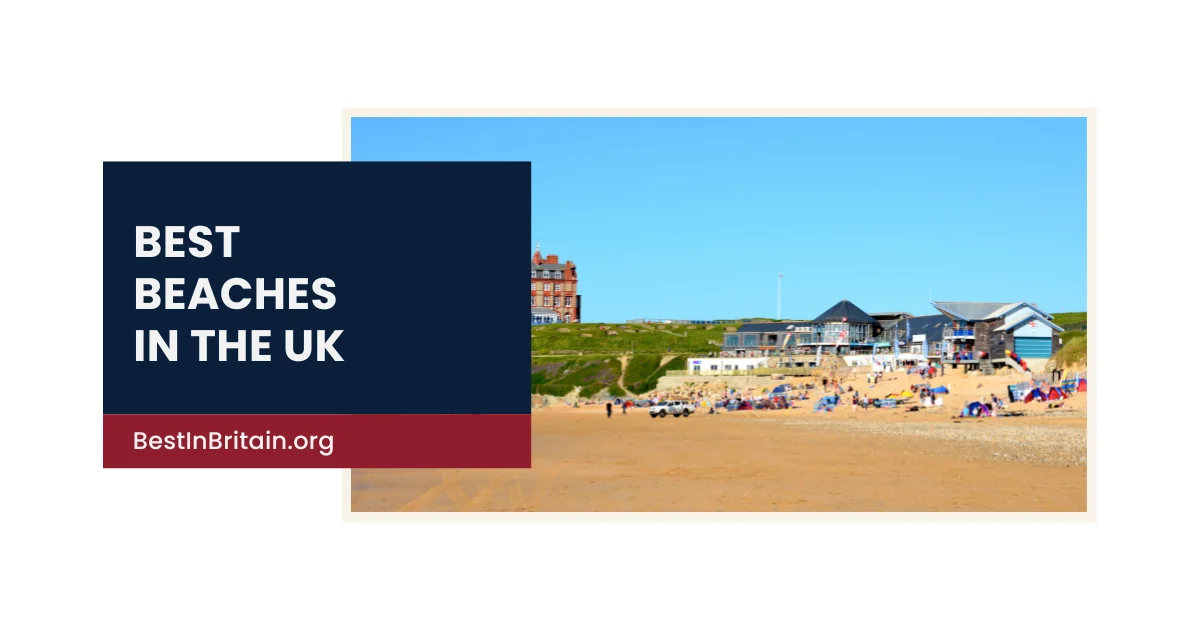
The United Kingdom has more than 11,000 miles of coastline, ranging from broad Atlantic surf beaches and sheltered sandy bays to tidal islands, chalk cliffs, dunes and remote northern shores. That variety is why there is no single type of beach that defines a great British coastal escape.
Some of the best beaches in the UK are places to swim, surf and spend a full family day beside the sea. Others are better for walking, wildlife, photography or experiencing a dramatic coastal landscape. A remote Highland bay and a busy resort beach such as Bournemouth offer completely different experiences, and both can deserve a place on a list like this for different reasons.
This guide brings together 40 of the best beaches across England, Scotland, Wales and Northern Ireland. It is not intended as a rigid ranking of every stretch of coastline. Instead, it highlights beaches that stand out for scenery, character, activities, accessibility, natural setting or the overall experience of visiting them.
What are the best beaches in the UK?
For a first-time coastal trip, some of the strongest all-round choices include Woolacombe in Devon for space and family-friendly facilities, Fistral Beach in Cornwall for surfing, Bamburgh Beach in Northumberland for its castle setting, Luskentyre in the Outer Hebrides for white sand and wild scenery, Rhossili Bay on the Gower Peninsula for dramatic coastal walking, and Portstewart Strand for one of Northern Ireland's classic long sandy beaches.
The right choice depends on what you want from the coast. Surfers may prioritise exposed Atlantic beaches, families may prefer sand, facilities and seasonal lifeguard cover, while walkers and photographers may value cliffs, dunes, wildlife and quieter access more than cafés or attractions.
Our picks at a glance
| What you want from a beach | Our pick | Where | Why it stands out |
|---|---|---|---|
| Surfing | Fistral Beach | Cornwall, England | Consistent Atlantic swell, surf schools and a strong surf culture |
| A family beach day | Woolacombe Beach | Devon, England | A long sandy shoreline with town facilities and plenty of space |
| Dramatic coastal scenery | Rhossili Bay | Gower, Wales | Three miles of sand beneath high cliffs with exceptional walking views |
| White sand and island scenery | Luskentyre | Isle of Harris, Scotland | Pale sand, turquoise tidal water and an undeveloped Hebridean setting |
| Castle views | Bamburgh Beach | Northumberland, England | A broad beach directly below Bamburgh Castle |
| A remote wilderness experience | Sandwood Bay | Sutherland, Scotland | A long walk-in route, dunes, sea stacks and no road access |
| A traditional seaside town | Tenby South Beach | Pembrokeshire, Wales | Sand, harbour, old town and extensive visitor facilities in one destination |
| Wildlife and nature | Holkham Beach | Norfolk, England | Sand, salt marsh, pine woodland and a major nature reserve setting |
| An urban beach break | Brighton Beach | East Sussex, England | A lively city seafront with pier, promenade and extensive attractions |
| A Northern Ireland coast trip | Portstewart Strand | County Londonderry, Northern Ireland | Two miles of sand, dunes and unusually easy access |
How we selected these beaches
We have deliberately included different types of coastline rather than judging every beach by the same standard. The selection considers the character of the beach and surrounding landscape, opportunities for swimming or surfing, walking and wildlife, practical access, nearby facilities, distinctive landmarks and whether the destination offers an experience worth making a journey for.
That means a remote beach with no facilities can sit alongside a busy seaside resort. Sandwood Bay, for example, is compelling because of its isolation and landscape, while Bournemouth earns its place for almost the opposite reason: easy access, extensive facilities and a classic resort experience.
Practical information can also change with the season. Lifeguard cover, parking arrangements, road access and visitor facilities should always be checked with the linked official source before travelling. Tide and weather conditions are especially important around coves, estuaries, tidal islands and cliff-backed beaches.
England, Scotland, Wales and Northern Ireland: what we mean by UK beaches
In this guide, "UK beaches" means beaches across all four nations of the United Kingdom: England, Scotland, Wales and Northern Ireland. Great Britain technically refers to England, Scotland and Wales, while the United Kingdom also includes Northern Ireland. We use both "British beaches" and "UK beaches" in the general travel sense, while the country sections below make the location of each beach explicit.
Best beaches to visit in England
1. Surf at Fistral Beach

Business details
Address
Newquay, Cornwall TR7 1HY
Best for: Surfing, surf lessons and Newquay atmosphere
Access and visitor information:
- Beach accessible throughout the year
- Seasonal lifeguard cover commonly operates in designated areas
- Surf schools, cafés and parking are available nearby
Access cost: Free, with charges for parking and activities
Fistral is one of Britain’s best-known surfing beaches and the place most closely associated with Newquay’s surf culture.
The broad west-facing bay receives consistent Atlantic swell and hosts major surfing competitions, but it is not only for experienced surfers. Lessons, equipment hire and beachside facilities make it approachable for beginners, while the headlands create excellent viewpoints for spectators.
The beach can become extremely busy in summer, particularly when good weather coincides with a major event.
Our take:
Choose Fistral when surfing is part of the reason for the trip. It combines serious Atlantic conditions with enough instruction, hire and beachside infrastructure to work for beginners as well as experienced surfers.
Pro tip:
Check the surf and lifeguard conditions before entering the water, and book lessons in advance during peak periods.
2. Walk across Porthcurno Beach

Business details
Address
Porthcurno, Cornwall TR19 6JX
Best for: Scenery, clear water and combining coast with culture
Access and visitor information:
- Beach accessible throughout the year
- Facilities and lifeguard arrangements vary seasonally
- Access involves a walk from the village and car park
Access cost: Free, with parking charges
Porthcurno sits beneath granite cliffs in one of Cornwall’s most dramatic coastal settings.
Its pale sand and clear turquoise water can look almost subtropical on a calm summer day. The beach is also close to the Minack Theatre and the PK Porthcurno communications museum, making it possible to combine coast, culture and local history in one visit.
Strong currents and rapidly changing conditions mean the water should never be judged by appearance alone.
Our take:
Porthcurno is strongest as part of a full coastal day rather than a simple beach stop. The combination of pale sand, granite cliffs, the Minack Theatre and local history gives it more depth than its appearance alone suggests.
Pro tip:
Visit early, combine the beach with the Minack Theatre and avoid attempting the cliff paths in poor weather.
3. Spend the day at Woolacombe Beach

Business details
Address
Woolacombe, Devon EX34 7BA
Best for: Families, surfing and long sandy walks
Access and visitor information:
- Beach accessible throughout the year
- Seasonal lifeguard cover applies to selected zones
- Town facilities, parking and equipment hire are available
Access cost: Free, with parking charges
Woolacombe stretches for several miles along the North Devon coast between Baggy Point and Morte Point.
Its scale gives families, walkers and surfers more room than many smaller resort beaches. The central section has easy access to cafés and shops, while the quieter ends feel increasingly open and natural.
The Atlantic exposure creates excellent surf but also requires attention to flags, currents and designated swimming areas.
Our take:
Woolacombe is one of the most versatile choices in this guide. It works for families, surfers and walkers, while its length gives visitors a realistic chance of finding space away from the busiest access points.
Pro tip:
Walk away from the central access points for more space, but note where the lifeguarded zones begin and end.
4. See Durdle Door and Man O’War Beach

Business details
Address
West Lulworth, Dorset BH20 5PU
Best for: Jurassic Coast scenery and photography
Access and visitor information:
- Coastal access is generally available throughout the year
- Access involves steep paths and steps
- Parking and local services operate separately
Access cost: Free coastal access, with parking charges
Durdle Door is one of the most recognisable natural landmarks on the Jurassic Coast.
The limestone arch rises beside a shingle beach, while the neighbouring Man O’War Cove offers a more enclosed setting. The view from the cliffs is exceptional, but the steep descent, loose surfaces and exposed coastline make this a less straightforward beach day than the photographs suggest.
There are no full resort facilities at beach level, and the climb back to the car park is demanding.
Our take:
Come for the landscape rather than resort-style convenience. The arch, cliffs and neighbouring cove are exceptional, but steep access and limited facilities at beach level make this a more physical day out.
Pro tip:
Wear proper footwear, carry water and arrive early before the main paths and viewpoints become crowded.
5. Relax on Bournemouth Beach

Business details
Address
Bournemouth, Dorset
Best for: Easy access, families and a classic seaside day
Access and visitor information:
- Beach accessible throughout the year
- Seasonal lifeguard cover and visitor services apply
- Multiple access points, toilets, cafés and parking are available
Access cost: Free, with charges for parking and selected facilities
Bournemouth offers one of England’s most complete traditional seaside experiences.
Its long sandy shoreline is divided into several distinct sections, ranging from the busy central pier area to quieter stretches towards Southbourne and Alum Chine. The promenade, cliff lifts, gardens and town-centre facilities make it particularly convenient for visitors who want an accessible beach without travelling into a rural area.
The central section becomes crowded during hot weather and school holidays.
Our take:
Bournemouth is the practical choice for visitors who want sand without giving up cafés, toilets, transport and town-centre convenience. Its quieter sections are often more rewarding than staying around the central pier all day.
Pro tip:
Use one of the quieter eastern or western sections if the area around Bournemouth Pier feels too busy.
6. Walk Holkham Beach

Business details
Address
Holkham, Norfolk NR23 1AB
Best for: Walking, birdwatching and wide-open landscapes
Access and visitor information:
- Beach and nature reserve accessible throughout the year
- Tides can cover channels and alter walking routes
- Parking is available near Lady Anne’s Drive
Access cost: Free beach access, with parking charges
Holkham is a vast landscape of sand, salt marsh, pine woodland and open sky on the north Norfolk coast.
At low tide, the sea can appear remarkably distant, creating an immense sense of space. The beach forms part of an important nature reserve and is particularly rewarding for walking, birdwatching and photography rather than conventional resort entertainment.
Tidal channels and long distances can make the landscape deceptive.
Our take:
Holkham is less about a conventional seaside day and more about scale, walking and nature. The huge tidal landscape and surrounding reserve are what make it memorable.
Pro tip:
Check the tide, remember the route back through the dunes and allow more walking time than the map appears to require.
7. See Bamburgh Beach and Castle

Business details
Address
Bamburgh, Northumberland NE69
Best for: Castle views, walking and photography
Access and visitor information:
- Beach accessible throughout the year
- Facilities are concentrated in Bamburgh village
- Conditions can be cold and exposed outside summer
Access cost: Free, with parking charges
Bamburgh Beach combines a broad sandy shoreline with one of the most impressive castle views in Britain.
Bamburgh Castle rises directly above the dunes, while the Farne Islands and Northumberland coast extend into the distance. The beach is excellent for long walks and photography, with enough space to feel peaceful even when the village is busy.
The North Sea can remain cold and conditions change quickly.
Our take:
Few UK beaches have a landmark backdrop this strong. The castle transforms an already excellent walking beach into one of the most distinctive coastal views in England.
Pro tip:
Walk north along the beach before turning back for the strongest view of the castle above the dunes.
8. Explore Whitby Beach

Business details
Address
Whitby, North Yorkshire YO21
Best for: Combining the beach with harbour, history and town attractions
Access and visitor information:
- Beach accessible throughout the year
- Seasonal lifeguard cover may operate on selected sections
- Town, pier and cliff access use separate routes
Access cost: Free, with parking charges
Whitby’s beaches sit beneath a historic harbour town shaped by fishing, shipbuilding, tourism and literary connections.
West Cliff Beach provides the main stretch of sand and traditional seaside facilities, while the harbour, piers and views towards Whitby Abbey add much more than a standard beach visit. At low tide, the coastline opens into long walking routes towards neighbouring bays.
Tides can cut off sections beneath the cliffs.
Our take:
Whitby works best when the beach is treated as one part of the destination. The harbour, abbey views and historic town give the day more variety than the sand alone.
Pro tip:
Combine a morning beach walk with the harbour and Abbey steps, checking tide times before walking far from town.
9. Walk Formby Beach and dunes

Business details
Address
Formby, Merseyside L37
Best for: Dunes, woodland, nature and walking
Access and visitor information:
- Coast and woodland accessible throughout the year
- Parking capacity can be limited during busy periods
- Dune paths may be steep, sandy and uneven
Access cost: Free access, with parking charges for some visitors
Formby brings together a broad beach, high dunes, pine woodland and one of England’s best-known red squirrel habitats.
The changing shoreline is shaped by erosion and shifting sand, creating a coastal landscape that feels far removed from nearby Liverpool. It is particularly suitable for walking and nature-focused visits, although the route from the car park through the dunes can be demanding.
The coast is dynamic, and paths may change or close after storms.
Our take:
Formby is a strong choice when woodland, dunes and wildlife matter as much as the shoreline. Give yourself enough time to experience the whole landscape rather than simply walking straight to the beach.
Pro tip:
Allow time for both the woodland and beach rather than walking directly to the sea and leaving.
10. Visit West Wittering Beach

Business details
Address
West Wittering, West Sussex PO20 8AJ
Best for: Families, shallow water and water sports
Access and visitor information:
- Beach accessible throughout the year
- Parking frequently requires advance booking
- Seasonal safety zones apply to swimmers and water sports
Access cost: Free beach access, with parking charges
West Wittering is a broad sandy beach near the entrance to Chichester Harbour.
Its shallow water, extensive sand at low tide and open views make it popular with families, walkers and water-sports users. The surrounding dunes and saltmarsh add ecological interest, while the managed parking and facilities make the beach easier to use than many rural alternatives.
Demand can exceed parking capacity on warm days.
Our take:
West Wittering combines an attractive sandy beach with comparatively straightforward facilities, making it particularly useful for families. Advance parking planning is part of the experience on busy days.
Pro tip:
Reserve parking before setting out and check the tide if shallow paddling or a long sand walk is part of the plan.
11. Walk the sands at Camber

Business details
Address
Camber, East Sussex TN31 7RT
Best for: Dunes, family days, photography and kite sports
Access and visitor information:
- Beach accessible throughout the year
- Seasonal lifeguard and safety arrangements may apply
- Car parks and access points can become congested
Access cost: Free, with parking charges
Camber Sands is unusual on the East Sussex coast for its extensive sand dunes and broad beach.
The landscape feels more open and natural than the nearby shingle shoreline, making it popular for family visits, photography, walking and kite sports. At low tide the beach becomes exceptionally wide, but the distance to the water and changing channels require attention.
Large crowds, wind and tidal conditions can transform the experience quickly.
Our take:
Camber feels unusually expansive for this part of the south coast. The dunes are a major part of its character, but the scale of the beach means tides, wind and walking distances deserve more attention than first-time visitors sometimes expect.
Pro tip:
Arrive early, use marked access routes through the dunes and avoid relying on mobile reception for all practical information.
12. Explore Studland Bay

Business details
Address
Studland, Dorset BH19
Best for: A varied beach day with dunes, heathland and several beach areas
Access and visitor information:
- Beach and nature reserve accessible throughout the year
- Facilities vary between the bay’s separate beach areas
- Ferry queues and car parks become busy in summer
Access cost: Free access, with parking charges
Studland Bay contains several miles of sandy shoreline backed by dunes, heathland and woodland.
Shell Bay, Knoll Beach, Middle Beach and South Beach each offer a different atmosphere, from open family beaches to smaller coves with views towards Old Harry Rocks. The surrounding reserve is important for wildlife and makes the area rewarding beyond a conventional day beside the sea.
One designated section has a long-established naturist area, which is clearly signed.
Our take:
Studland is better understood as several different beach experiences within one bay. Choosing the right section in advance can make a bigger difference here than at many single-access beaches.
Pro tip:
Choose the specific section of the bay before travelling, as facilities and atmosphere differ considerably.
13. Photograph Botany Bay

Business details
Address
Broadstairs, Kent CT10 3LG
Best for: Chalk cliffs, sea stacks and photography
Access and visitor information:
- Beach access depends on tides and local conditions
- No large resort facilities are available directly on the sand
- Cliff and road access can be restricted
Access cost: Free
Botany Bay is known for its chalk cliffs, sea stacks and small sandy shoreline near Broadstairs.
The beach is most striking at lower tide, when more sand and rock formations are exposed. It is a scenic stop for walking and photography, but its compact size and limited parking make it less suitable for large crowds than nearby resort beaches.
Cliff falls are a genuine hazard along this part of the Kent coast.
Our take:
Botany Bay is best for a shorter scenic visit, photography and coastal walking rather than a fully serviced beach day. Its cliffs and sea stacks are the main attraction.
Pro tip:
Check the tide and keep well away from the base and edge of the cliffs, even in calm weather.
14. Experience Brighton Beach

Business details
Address
Brighton, East Sussex BN1
Best for: An urban seaside break, promenade life and attractions
Access and visitor information:
- Seafront accessible throughout the year
- Attractions and lifeguard arrangements vary seasonally
- Rail access is often easier than city-centre parking
Access cost: Free, with charges for attractions and facilities
Brighton Beach is less about untouched scenery and more about the energy of one of Britain’s best-known coastal cities.
The shingle shore, Palace Pier, historic seafront architecture, independent businesses and busy promenade create a distinctive urban beach experience. Swimming is possible in suitable conditions, but the steeply shelving shore and powerful waves require care.
The beach is at its best when treated as part of a wider day in the city.
Our take:
Brighton is the choice for atmosphere rather than isolation. The appeal comes from combining the beach with the pier, promenade, independent businesses and the wider city.
Pro tip:
Travel by train where practical and explore beyond the pier towards Hove or Kemptown for a different atmosphere.
15. Visit Wells-next-the-Sea Beach

Business details
Address
Wells-next-the-Sea, Norfolk NR23 1DR
Best for: Families, beach huts, pinewoods and photography
Access and visitor information:
- Beach accessible throughout the year
- A long tidal channel separates the harbour from the open beach
- Parking and seasonal transport operate near the pinewoods
Access cost: Free beach access, with parking charges
Wells-next-the-Sea is known for its colourful beach huts, pine woodland and wide north Norfolk sands.
The beach lies some distance from the town centre, creating a clear separation between the working harbour and the open coast. Its combination of woodland walks, sand and distinctive huts makes it especially appealing to families and photographers.
The tidal harbour channel has strong currents and is not a safe alternative to the designated beach.
Our take:
The beach huts, pinewoods and wide sands make Wells especially photogenic, while the separation from the town gives the shoreline a more open feel than the harbour suggests.
Pro tip:
Use the main beach access and never attempt to swim or cross the harbour channel.
16. Discover Kynance Cove

Business details
Address
The Lizard, Cornwall TR12 7PJ
Best for: Dramatic Cornish scenery and coast-path views
Access and visitor information:
- Coastal access available throughout the year
- Beach area changes substantially with the tide
- The route from the car park includes steep and uneven paths
Access cost: Free access, with parking charges
Kynance Cove is one of Cornwall’s most visually distinctive coastal locations.
Dark serpentine rock, small islands and pale sand create a complex cove that changes dramatically between high and low tide. The South West Coast Path provides superb views from above, while the lower beach rewards visitors who time their arrival carefully.
Access can be difficult for anyone with limited mobility, and parts of the beach disappear at high tide.
Our take:
Kynance is one of the strongest visual landscapes in the guide, but tide and access matter. Seeing the cove from above before descending is part of the experience, not merely a route to the sand.
Pro tip:
Visit around lower tide and view the cove from the coast path before descending.
17. Walk Perranporth Beach

Business details
Address
Perranporth, Cornwall TR6 0JN
Best for: Surfing, families, dog walking and easy town access
Access and visitor information:
- Beach accessible throughout the year
- Seasonal lifeguard cover commonly applies
- Town facilities and multiple access points are available
Access cost: Free, with parking charges
Perranporth offers a long sandy beach backed by dunes and a lively north Cornwall town.
It is large enough for long walks even during busy periods and is popular with surfers, families and dog walkers. The beach’s direct connection with the town provides easy access to food, equipment hire and accommodation without losing the sense of an open Atlantic shoreline.
Tides can significantly reduce the available sand.
Our take:
Perranporth is a good all-round Cornwall option for visitors who want a large Atlantic beach without giving up immediate access to a lively town and practical facilities.
Pro tip:
Check the dog restrictions and tide before travelling, as both can affect which part of the beach is most suitable.
18. Explore Saunton Sands

Business details
Address
Saunton, Devon EX33 1LQ
Best for: Surfing, long walks and dune scenery
Access and visitor information:
- Beach accessible throughout the year
- Seasonal lifeguard cover may operate in marked areas
- Parking, food and surf facilities are available near the main entrance
Access cost: Free beach access, with parking charges
Saunton Sands stretches for miles beside the Braunton Burrows dune system in North Devon.
Its long, gently curving shoreline is popular with surfers, families and walkers, while the enormous dune reserve behind it creates one of England’s most important coastal landscapes. The scale of the beach allows visitors to find quieter areas away from the main entrance.
Distances are deceptive, particularly when walking towards the far end of the bay.
Our take:
Saunton is defined by scale. The long beach and Braunton Burrows create a huge coastal landscape that suits surfing and walking particularly well.
Pro tip:
Explore a manageable section of the dunes and beach rather than attempting the entire shoreline in one visit.
Best beaches to visit in Scotland
19. See the white sands of Luskentyre

Business details
Address
Isle of Harris, Outer Hebrides HS3
Best for: White sand, scenery and a wild Hebridean beach experience
Access and visitor information:
- Beach accessible throughout the year
- Facilities are limited and weather conditions change quickly
- Road access includes narrow and single-track sections
Access cost: Free
Luskentyre is one of the most celebrated beaches in Scotland, with pale sand, clear water and views towards the Harris hills.
The colours shift constantly with the tide, cloud and sunlight, creating a landscape that can appear almost unreal. Despite its fame, the beach remains largely undeveloped and should be approached as a wild coastal environment rather than a managed resort.
The water is cold and the weather can change within minutes.
Our take:
Luskentyre is about landscape rather than facilities. Its shifting colours, pale sand and mountain backdrop make it worth allowing time for rather than treating it as a quick photo stop.
Pro tip:
Allow several hours, check the tide and avoid treating the beach as a brief roadside photograph.
20. Look across Seilebost Beach

Business details
Address
Isle of Harris, Outer Hebrides HS3
Best for: Elevated views, tidal scenery and photography
Access and visitor information:
- Beach accessible throughout the year
- Parking and roadside stopping space are limited
- Tides strongly affect the appearance and walking routes
Access cost: Free
Seilebost provides one of the finest elevated coastal views in the Outer Hebrides.
The beach faces across shifting turquoise channels towards Luskentyre, with sandbanks and shallow water creating a different pattern at every tide. Access to the shore is less obvious than at some neighbouring beaches, but the viewpoints alone justify the stop.
Careless roadside parking can obstruct residents and traffic.
Our take:
The elevated views are at least as memorable as the shoreline itself. Seilebost is particularly rewarding for visitors interested in tidal patterns and photography.
Pro tip:
Use designated parking and take time to follow a proper access path instead of stopping on narrow verges.
21. Visit Calgary Bay

Business details
Address
Isle of Mull PA75
Best for: A relaxed island beach stop, picnics and short walks
Access and visitor information:
- Beach accessible throughout the year
- Facilities are limited and seasonal
- The approach involves narrow island roads
Access cost: Free
Calgary Bay is a sheltered crescent of pale sand on the north-west coast of Mull.
Low grassy dunes, clear water and wooded hills give it a softer landscape than many exposed Hebridean beaches. It is suitable for a relaxed stop, picnic or coastal walk, while nearby art trails and community facilities add interest beyond the shore.
Its popularity means the small access area can feel pressured in high season.
Our take:
Calgary Bay is compact, sheltered and easy to enjoy at a slower pace. It suits a relaxed Mull itinerary better than a rushed drive-by visit.
Pro tip:
Stay locally or arrive outside the middle of the day, and park only in designated areas.
22. Hike to Sandwood Bay

Business details
Address
Near Kinlochbervie, Sutherland
Best for: Remote walking, wilderness and dramatic Highland scenery
Access and visitor information:
- Beach accessible throughout the year
- Reaching the beach requires a long walk from the nearest road
- There are no visitor facilities on the beach
Access cost: Free
Sandwood Bay is one of mainland Britain’s wildest and most remote beaches.
A long moorland path leads to a mile of sand backed by dunes, a freshwater loch and the distinctive sea stack of Am Buachaille. The absence of road access is central to the experience and protects the sense of isolation.
Visitors must be prepared for exposure, boggy ground and rapidly changing Highland weather.
Our take:
The walk is part of the reason to come. Sandwood rewards visitors prepared for a remote Highland journey with a sense of isolation that road-access beaches cannot reproduce.
Pro tip:
Carry proper clothing, food, water and navigation, and leave enough daylight for the return walk.
23. Swim carefully at Achmelvich Bay

Business details
Address
Achmelvich, Sutherland IV27
Best for: White sand, clear water and a compact Highland bay
Access and visitor information:
- Beach accessible throughout the year
- Facilities and nearby accommodation are seasonal
- Road access is narrow and parking is limited
Access cost: Free
Achmelvich is a compact white-sand bay on the north-west Highland coast.
Its sheltered shape and clear water make it one of the most inviting beaches along the North Coast 500, while rocky headlands provide short walks and viewpoints. The small scale that gives the bay its charm also means it can become congested quickly.
The sea remains cold and conditions should be assessed carefully before swimming.
Our take:
Achmelvich packs clear water and pale sand into a small Highland bay, but that same compact scale means congestion can quickly change the atmosphere in peak season.
Pro tip:
Visit early or outside peak touring months, and never block the single-track road or passing places.
24. Walk West Sands at St Andrews

Business details
Address
St Andrews, Fife KY16 9XL
Best for: Walking, running and combining beach with a historic town
Access and visitor information:
- Beach accessible throughout the year
- Facilities are available near the town end
- Wind and tides can create exposed conditions
Access cost: Free, with some parking charges
West Sands extends for almost two miles beside St Andrews and its famous golf links.
The broad beach is ideal for walking, running and open views across the Fife coast. Its association with the opening scenes of Chariots of Fire adds cultural interest, while the historic town, cathedral and university make it easy to build a full day around the coast.
The beach feels very exposed during strong easterly winds.
Our take:
West Sands is at its best as part of a wider St Andrews day. The open beach, golf links and historic town create a combination that few other Scottish beaches offer.
Pro tip:
Walk from the town end and combine the shore with the cathedral ruins and historic centre.
25. Enjoy Nairn Central Beach

Business details
Address
Nairn, Highlands IV12
Best for: An accessible Highland beach day and wildlife watching
Access and visitor information:
- Beach accessible throughout the year
- Seasonal facilities are available near the promenade
- Wildlife sightings depend on tide and conditions
Access cost: Free
Nairn’s central beach offers a long sandy shoreline beside a traditional Highland seaside town.
The Moray Firth is known for marine wildlife, and dolphins are sometimes visible offshore, although sightings are never guaranteed. The promenade, harbour and nearby cafés make this one of Scotland’s more accessible beaches for a relaxed family day.
Water temperatures remain low even in summer.
Our take:
Nairn is one of the easier Scottish beaches for a straightforward family day, with promenade facilities and the added possibility of marine wildlife offshore.
Pro tip:
Bring binoculars for wildlife watching and continue east beyond the central promenade for a quieter walk.
26. Explore Balnakeil Beach

Business details
Address
Durness, Sutherland IV27
Best for: Wild northern scenery, dunes and local history
Access and visitor information:
- Beach accessible throughout the year
- Facilities are limited
- Weather and road conditions can affect access
Access cost: Free
Balnakeil is a wide crescent of pale sand near Durness on Scotland’s far north coast.
The beach is backed by dunes and overlooked by the ruins of Balnakeil Church, giving the area a strong sense of history and isolation. Its open northern setting produces dramatic light and weather, particularly outside the summer season.
This is a wild beach with few managed facilities.
Our take:
Balnakeil offers the kind of open, weather-shaped northern landscape that feels very different from a resort beach. The church ruins and nearby craft village add useful context to the visit.
Pro tip:
Combine the beach with the churchyard and nearby craft village, while leaving flexibility for changing weather.
27. Discover Sanna Bay

Business details
Address
Ardnamurchan, Highland PH36
Best for: Remote coves, island views and an Ardnamurchan road trip
Access and visitor information:
- Beach accessible throughout the year
- The route involves long stretches of narrow road
- There are no major facilities at the beach
Access cost: Free
Sanna Bay lies near the western end of the Ardnamurchan Peninsula and feels exceptionally remote.
A series of white-sand coves looks towards the Small Isles, with dunes, rocky outcrops and clear water creating a varied coastal landscape. Reaching it requires commitment, but the journey is part of what keeps the beach quiet.
Mobile reception and services can be limited across the peninsula.
Our take:
Sanna rewards the journey. Its coves, clear water and views towards the Small Isles feel especially remote because reaching the peninsula already requires commitment.
Pro tip:
Treat Sanna as part of a longer Ardnamurchan stay rather than a rushed detour from the main road network.
28. Walk Lossiemouth East Beach

Business details
Address
Lossiemouth, Moray IV31
Best for: Easy beach access, dunes and Moray Firth walking
Access and visitor information:
- Beach accessible throughout the year
- Access is via the pedestrian bridge from town
- Facilities are concentrated around Lossiemouth
Access cost: Free
Lossiemouth East Beach combines a long sandy shoreline with dunes and the mouth of the River Lossie.
A pedestrian bridge connects the town directly to the beach, making the broad coast easy to reach without losing its open feel. The Moray Firth setting is excellent for walking and wildlife watching, while Lossiemouth provides cafés, harbour views and practical facilities.
Wind can make conditions feel much colder than the temperature suggests.
Our take:
The pedestrian bridge gives Lossiemouth an unusually direct connection between town and open coast. It is a practical choice for walking without losing the feeling of a broad dune-backed beach.
Pro tip:
Cross the bridge early and walk east along the dunes before returning to explore the harbour.
Best beaches to visit in Wales
29. Walk Rhossili Bay

Business details
Address
Rhossili, Swansea SA3 1PR
Best for: Clifftop scenery, long walks and a classic Gower landscape
Access and visitor information:
- Beach and coast path accessible throughout the year
- Beach access involves a steep descent
- Tides affect access towards Worm’s Head and the wider bay
Access cost: Free access, with parking charges
Rhossili Bay is one of Wales’s most spectacular coastal landscapes.
Three miles of sand curve beneath high cliffs at the western end of the Gower Peninsula, with views towards Worm’s Head and the remains of the Helvetia shipwreck sometimes visible at low tide. The clifftop route is rewarding even for visitors who do not descend to the beach.
The climb back from the sand is steep and exposed.
Our take:
Rhossili is one of the strongest choices for visitors who value the view as much as time on the sand. The clifftop perspective is exceptional even if you never make the steep descent.
Pro tip:
Check the tide before approaching Worm’s Head and save enough energy for the climb back to the village.
30. Hike to Barafundle Bay

Business details
Address
Stackpole, Pembrokeshire SA71
Best for: A secluded-feeling bay reached on foot
Access and visitor information:
- Beach accessible throughout the year
- No road reaches the beach directly
- Access requires a coastal walk from Stackpole Quay or nearby paths
Access cost: Free access, with parking charges
Barafundle Bay is a sheltered sandy beach enclosed by dunes and wooded cliffs on the Pembrokeshire coast.
Its lack of direct road access helps preserve a secluded atmosphere, although its reputation means the beach is no longer a secret. The walk from Stackpole Quay adds to the experience and provides excellent coastal views before the bay appears below.
There are no full facilities on the beach itself.
Our take:
Barafundle feels more secluded because you have to walk to it. That approach is part of its appeal and helps distinguish it from beaches reached directly by road.
Pro tip:
Carry everything you need, take all litter away and arrive early during school holidays.
31. Spend a day on Tenby South Beach

Business details
Address
Tenby, Pembrokeshire SA70
Best for: Families, town facilities and a complete coastal day out
Access and visitor information:
- Beach accessible throughout the year
- Seasonal visitor services and safety arrangements apply
- The town provides extensive facilities within walking distance
Access cost: Free, with parking charges
Tenby South Beach offers a long sweep of sand beneath one of Wales’s most attractive harbour towns.
Views extend towards Caldey Island, while the old town, harbour, medieval walls and neighbouring beaches make Tenby one of the UK’s strongest all-round coastal destinations. South Beach generally provides more space than the smaller town beaches during busy periods.
The walk from some town car parks can be longer than expected.
Our take:
Tenby is one of the most complete coastal destinations in the guide. The beach, harbour, old town and facilities make it particularly easy to build an entire day without returning to the car.
Pro tip:
Park once and explore Tenby on foot, combining South Beach with the harbour and old town.
32. Surf at Whitesands Bay

Business details
Address
Near St Davids, Pembrokeshire SA62
Best for: Surfing, coastal walking and views beneath Carn Llidi
Access and visitor information:
- Beach accessible throughout the year
- Seasonal lifeguard cover may operate
- Parking and café facilities vary by season
Access cost: Free beach access, with parking charges
Whitesands is a broad west-facing beach near St Davids and one of Pembrokeshire’s best-known surf locations.
The sand lies beneath Carn Llidi, creating a dramatic backdrop and access to excellent coastal walking. Waves can suit surfers of different abilities depending on conditions, while the wide shore also works well for families during calmer weather.
Rip currents and Atlantic swell require close attention to safety guidance.
Our take:
Whitesands combines a proper surf beach with immediate access to dramatic coastal walking. It is a strong choice for active visitors who want more than a day on the sand.
Pro tip:
Use a local surf school for a first lesson and walk partway up Carn Llidi for a wider view of the coast.
33. Explore Newborough and Llanddwyn

Business details
Address
Newborough, Anglesey LL61
Best for: Beach, forest, dunes, history and mountain views
Access and visitor information:
- Forest and beach accessible throughout the year
- Vehicle access and parking arrangements can change
- The tidal island should only be approached with awareness of conditions
Access cost: Free access, with parking charges
Newborough combines an extensive sandy beach, forest trails, dunes and views towards the mountains of Eryri.
At the far end lies Ynys Llanddwyn, a tidal island associated with the Welsh patron saint of lovers. Its lighthouse, ruins and paths make this much more than a conventional beach visit, particularly in clear weather when the mountain backdrop is at its strongest.
High tides and poor weather can affect safe access around the island.
Our take:
Few entries combine as many different elements as Newborough: forest, beach, dunes, tidal island, historic features and mountain views. Allow enough time for the walk to Llanddwyn.
Pro tip:
Check the tide and allow enough time to walk from the main parking area to Llanddwyn and back.
34. See Harlech Beach and dunes

Business details
Address
Harlech, Gwynedd LL46
Best for: Quiet walking, dunes and combining coast with Harlech Castle
Access and visitor information:
- Beach accessible throughout the year
- Access involves paths through a large dune system
- Facilities are available near selected entrances
Access cost: Free
Harlech Beach is a broad stretch of sand backed by one of the most important dune systems in Wales.
The coast feels spacious and undeveloped, while Harlech Castle rises above the surrounding landscape inland. The beach is ideal for walking and provides a quieter contrast to some of North Wales’s more heavily developed resorts.
The distance between the dunes, water and town can be greater than expected.
Our take:
Harlech is a good alternative for visitors who prefer space and walking to busy resort facilities. The castle nearby makes it easy to combine coast and heritage in one trip.
Pro tip:
Combine the beach with Harlech Castle, but allow separate time for each rather than rushing between them.
35. Walk Three Cliffs Bay

Business details
Address
Gower Peninsula, Swansea SA3
Best for: Coastal walking, landscape photography and Gower scenery
Access and visitor information:
- Beach accessible throughout the year
- Access requires walking over uneven paths
- Tides can isolate areas and cover river crossings
Access cost: Free
Three Cliffs Bay is one of the Gower Peninsula’s most distinctive beaches.
A winding river, saltmarsh, dunes and three limestone peaks create a landscape that feels more complex than a simple sandy bay. The ruins of Pennard Castle overlook the valley, adding a historical feature to an already exceptional coastal walk.
Tidal movement can alter safe routes across the beach and river.
Our take:
Three Cliffs is best approached as a landscape and walking destination. The river, dunes, limestone peaks and castle ruins create far more visual variety than a conventional open beach.
Pro tip:
Approach as a walking destination, check the tide and do not rely on crossing the river at the same point later.
36. Visit Aberdaron Beach

Business details
Address
Aberdaron, Gwynedd LL53
Best for: A quieter village beach and Llŷn Peninsula atmosphere
Access and visitor information:
- Beach accessible throughout the year
- Village facilities are nearby
- Sea and weather conditions are exposed to the open coast
Access cost: Free
Aberdaron Beach lies beside a small village near the western tip of the Llŷn Peninsula.
The sandy bay, whitewashed buildings and historic church create a strong sense of place, while coastal paths lead towards headlands with views across to Bardsey Island. It is more intimate than the great open beaches elsewhere in Wales.
Road journeys across the peninsula are slow, particularly in summer.
Our take:
Aberdaron is appealing because the beach and village feel connected. It suits travellers who want a smaller coastal place with a strong sense of location rather than a large resort.
Pro tip:
Stay long enough to explore the village and take a short section of the coast path rather than visiting only the sand.
Best beaches to visit in Northern Ireland
37. Drive onto Portstewart Strand

Business details
Address
Portstewart, County Londonderry BT55
Best for: Families, walking, surfing and easy access
Access and visitor information:
- Beach accessible throughout the year
- Vehicle access is controlled and may be restricted
- Seasonal safety arrangements and facilities apply
Access cost: Free on foot, with vehicle and parking charges
Portstewart Strand is a two-mile sandy beach backed by dunes on Northern Ireland’s north coast.
The unusual ability to drive onto designated parts of the beach makes it accessible, while the dune system and River Bann estuary add natural interest. It is popular with families, walkers and surfers and has also appeared in major film and television productions.
Vehicle access should not distract from the environmental sensitivity of the dunes.
Our take:
Portstewart is an unusually accessible long sandy beach, but walking beyond the vehicle areas reveals more of the dunes and natural character that justify its place in this guide.
Pro tip:
Walk beyond the busiest vehicle area and follow all restrictions protecting the dune system.
38. Surf beneath the cliffs at Whiterocks

Business details
Address
Portrush, County Antrim BT56
Best for: Surfing, limestone cliffs and Causeway Coast scenery
Access and visitor information:
- Beach accessible throughout the year
- Seasonal lifeguard cover may apply
- Water-sports conditions vary substantially
Access cost: Free
Whiterocks is a sandy beach framed by striking limestone cliffs near Portrush.
Sea arches, stacks and pale rock formations create a dramatic backdrop, while consistent waves make the beach popular with surfers and bodyboarders. The shoreline also links naturally with the wider Causeway Coast and views towards Dunluce Castle.
Cliffs, swell and currents all require caution.
Our take:
Whiterocks combines a usable surf beach with one of the most dramatic cliff settings on the Causeway Coast. The geology gives it more visual character than a typical resort shoreline.
Pro tip:
Use designated access points and keep clear of unstable cliff faces, particularly after heavy rain or storms.
39. Relax at Tyrella Beach

Business details
Address
Tyrella, County Down BT30
Best for: Families, walking and a less commercial coastal setting
Access and visitor information:
- Beach accessible throughout the year
- Seasonal facilities and safety arrangements apply
- The dune conservation area has protected habitats
Access cost: Free, with possible seasonal parking charges
Tyrella is a broad sandy beach within Dundrum Bay, backed by an extensive dune conservation area.
Its relatively sheltered setting makes it popular for family visits, walking and water activities, while views towards the Mourne Mountains strengthen the sense of place. The beach generally feels less commercial than major resort locations.
Visitors should avoid damaging the mature dunes and protected vegetation.
Our take:
Tyrella suits visitors looking for a broad, relatively low-key beach backed by protected dunes. The Mourne Mountain views add a strong sense of place.
Pro tip:
Use marked paths through the dunes and bring everything needed when visiting outside the main summer season.
40. Walk Murlough Beach and nature reserve

Business details
Address
Dundrum, County Down BT33
Best for: Nature, dunes, walking and Mourne Mountain views
Access and visitor information:
- Nature reserve and beach accessible throughout the year
- Access is through protected dunes and boardwalks
- Facilities are limited away from the main entrance
Access cost: Free access, with parking charges
Murlough combines a long sandy beach with one of Northern Ireland’s most important dune landscapes.
The reserve lies beneath the Mourne Mountains and supports a wide range of plants, butterflies and birdlife. Boardwalks lead through the dunes towards the shore, making the transition from heath and grassland to open beach a central part of the visit.
This is a nature reserve first and should be treated with more care than a conventional resort beach.
Our take:
Murlough is as much a nature-reserve visit as a beach visit. The walk through protected dunes and the views towards the Mournes are central to the experience.
Pro tip:
Follow the marked routes, keep dogs under appropriate control and allow time for the reserve as well as the shoreline.
How to plan a beach trip around the UK
A British beach trip should be planned around tides, weather and access rather than sunshine alone. A beach that is broad and sandy in the morning may be almost completely covered a few hours later, while a calm-looking sea can still contain powerful currents.
Check official tide information and local safety guidance before setting out. Swim between lifeguard flags where seasonal cover is available, and never assume that a popular beach is automatically safe. Cliffs, soft sand, mud, tidal islands and offshore winds create different risks around the coastline.
A car is useful for remote beaches in Cornwall, Pembrokeshire, the Scottish Highlands and Northern Ireland, but many celebrated beaches have limited parking. Arriving early, using local buses or staying within walking distance can significantly improve the experience. Never park in passing places, gateways or narrow village roads.
Facilities vary enormously. Urban beaches such as Bournemouth, Brighton and Tenby place cafés, toilets and shops nearby, while Sandwood Bay, Sanna and Barafundle require visitors to carry what they need and take everything away afterwards.
Water temperatures around the UK remain low for much of the year. Wetsuits, warm clothing and a change of dry clothes can matter even during summer. Anyone planning to surf, paddleboard, kayak or swim beyond a sheltered area should use appropriate equipment and understand the local conditions.
The strongest coastal trips combine the beach with the landscape and community around it. Walk a section of coast path, visit the harbour, support a local café, explore the dunes or learn why the shoreline looks the way it does. Britain’s beaches are not simply places to lie in the sun. They are living landscapes shaped by tides, weather, wildlife and human history.
When is the best time to visit beaches in the UK?
Late spring through early autumn generally gives the widest choice of visitor facilities and the greatest likelihood of seasonal lifeguard cover at managed beaches. July and August are usually the busiest months, particularly at famous beaches in Cornwall, Devon, Dorset and Pembrokeshire.
That does not mean summer is always the best time to visit. Beaches such as Bamburgh, Holkham, Rhossili and West Sands can be exceptional for walking outside the main holiday period, while Scottish and island beaches often reward visitors who are prepared for more changeable conditions. Whatever the season, tide, wind and local weather matter more than the month alone.
Can you swim at UK beaches?
Swimming is possible at many of the beaches in this guide when local conditions are suitable, but suitability can change by the hour. Seasonal lifeguard cover, where available, should be used as a practical guide, and swimmers should follow beach flags and local safety instructions.
Some places require particular care because of strong currents, cold water, tidal channels, steeply shelving shores or exposed Atlantic swell. Porthcurno, Woolacombe, Wells-next-the-Sea, Kynance Cove, Whitesands and other entries in this guide all have conditions that can vary substantially. A beautiful-looking sea is not necessarily a safe one.
Which parts of the UK have the best sandy beaches?
Excellent sandy beaches are spread across the country rather than concentrated in one region. Cornwall and Devon have some of England's best-known surf and family beaches, including Fistral, Woolacombe, Perranporth and Saunton Sands. Norfolk offers huge open beaches such as Holkham and Wells-next-the-Sea, while Northumberland combines sand with historic scenery at Bamburgh.
In Scotland, the Outer Hebrides and north-west Highlands are particularly notable for pale sand and clear water, including Luskentyre, Seilebost, Achmelvich and Sanna. Wales has major sandy landscapes around Gower and Pembrokeshire, while Northern Ireland's north coast includes long beaches such as Portstewart Strand and Whiterocks.
What are the best UK beaches for families?
For a straightforward family beach day, Woolacombe, Bournemouth, West Wittering, Perranporth, Tenby South Beach and Nairn Central Beach are among the more practical choices in this guide because they combine attractive coastlines with nearby facilities or relatively simple access.
The best family option still depends on the age of the children, swimming ability, tide and weather. Remote beaches, steep descents and tidal islands can be rewarding, but they require more planning than managed resort beaches with cafés, toilets and seasonal safety cover.
What are the best UK beaches for surfing?
Fistral Beach is the clearest surf-focused entry in this guide because of its consistent Atlantic swell, surf schools and close connection with Newquay's surf culture. Woolacombe, Perranporth, Saunton Sands, Whitesands Bay, Portstewart Strand and Whiterocks are also well-known for waves and water sports depending on conditions.
Beginners should use recognised local surf schools and follow lifeguard guidance where available. Conditions suitable for experienced surfers may be unsuitable for inexperienced swimmers or first-time surfers.
Which UK beaches are best for walking and scenery?
Rhossili Bay, Holkham, Bamburgh, Three Cliffs Bay, Newborough and Llanddwyn, Luskentyre, Sandwood Bay and Murlough are particularly strong if walking and landscape matter more than resort facilities. Durdle Door, Kynance Cove and Botany Bay offer shorter but highly distinctive coastal scenery, while West Sands and Harlech provide long open shorelines that are easy to combine with nearby historic places.
Are beaches in the UK free to visit?
Most beaches in this guide are free to access on foot, although parking, attractions, equipment hire and some vehicle access can involve charges. Managed car parks are particularly common at popular rural beaches where public transport is limited. Always check the linked official visitor information before travelling because access and charging arrangements can change.
A final word on choosing the right beach
There is no single beach that will be best for every visitor. Fistral makes sense for a surf-focused trip, Luskentyre for a wild island landscape, Bournemouth for convenience, Bamburgh for history and scenery, Rhossili for walking, and Tenby for travellers who want a beach and a complete town experience in the same place.
Use this list as a starting point rather than a league table. Decide whether your priority is swimming, surfing, scenery, accessibility, family facilities, wildlife or solitude, then check tide, weather and official local guidance before setting out.
Related guides
Nature and Outdoors
20 best lakes and lochs in the UK for unforgettable scenery
Discover the best lakes and lochs across the United Kingdom, from iconic Highland waters and Lake District classics to Welsh mountain lakes, peaceful reservoirs and dramatic waters in Northern Ireland.
Updated 19 July 2026
Nature and Outdoors
15 best national parks in the UK for unforgettable landscapes
Discover all 15 national parks in the United Kingdom, from the mountains and lakes of Scotland, Wales and northern England to ancient forests, open moorland, wetlands and dramatic protected coastlines.
Updated 13 July 2026

Nature and Outdoors
20 best scenic drives in the UK for unforgettable views
Discover the best scenic drives across the United Kingdom, from mountain passes and coastal roads to lochside routes, moorland roads and some of the most dramatic short drives in England, Scotland, Wales and Northern Ireland.
Updated 11 July 2026
Nature and Outdoors
20 best waterfalls in the UK for a memorable visit
Discover the best waterfalls across the United Kingdom, from dramatic Highland cascades and famous Welsh falls to woodland waterfalls in England and striking river landscapes in Northern Ireland.
Updated 8 July 2026

Things to Do
25 best Christmas markets in the UK
Discover 25 of the best Christmas markets in the UK, from Bath's Georgian streets and Birmingham's Frankfurt market to cathedral fairs, city festivals and historic estate markets.
Updated 26 September 2026

Things to Do
20 best places for a romantic weekend in the UK
Discover 20 of the best places for a romantic weekend in the UK, from historic cities and coastal towns to countryside escapes, islands and mountain retreats across all four nations.
Updated 26 September 2026
Know a business we should consider?
Send us the details and our editorial team will review whether it fits a future guide.
Submit businessWriter profile
George Davies
Regional and city guide desk researcher
George researches location-led guides, city roundups, regional comparisons, attractions, and practical local recommendations.
Editorial Trust Standard
Independent ReviewIndependent Research
Featured rankings are editorially determined. Commercial partner listings are strictly labeled as Sponsored or Featured.
Public Register Audit
Listings are cross-checked against public regulatory registries, Companies House filings, and published fee schedules.