
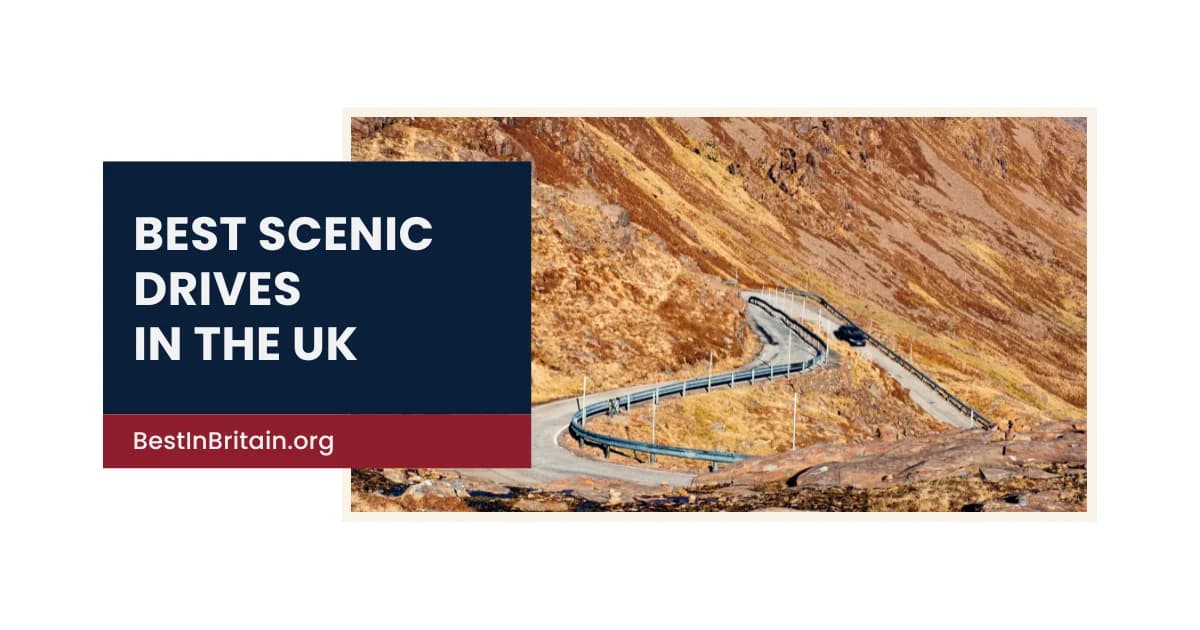
The best scenic drives in the UK are not simply roads with attractive views. The strongest routes change constantly as you travel, moving between mountain passes, sea lochs, valleys, moorland, cliffs, villages and open coast. Bealach na Bà, Glencoe and the Trotternish Peninsula deliver some of the most dramatic scenery in Scotland; Hardknott, Borrowdale and Buttertubs provide memorable mountain and moorland driving in England; the Black Mountain Pass and Elan Valley show two very different sides of Wales; while the Antrim Coast Road is one of the UK's great coastal journeys.
Distance is a poor measure of quality. An 11-mile pass can be more memorable than a 150-mile touring route if the road, landscape and viewpoints work together. Equally, some famous drives are only worthwhile when you get out of the car. A short walk, beach stop, village lunch or viewpoint often provides the moment that makes the route memorable.
Scenic driving in Britain also requires patience. Roads that appear short on a map can be narrow, steep, exposed or unexpectedly slow. Weather can remove the very view you travelled for, and popular routes can become frustrating when every verge is treated as a photo stop.
This guide brings together 20 of the best scenic drives in the UK across Scotland, England, Wales and Northern Ireland. It is an editorial selection rather than a ranking based on distance or driving difficulty, with each route chosen for scenery, atmosphere, sense of place and how rewarding the journey feels when experienced properly.
Best UK scenic drives at a glance
| Scenic drive | Nation | Best for | Driving character |
|---|---|---|---|
| Bealach na Bà | Scotland | Hairpins, mountain drama and a sense of arrival | Steep, narrow and demanding |
| Glencoe | Scotland | Big scenery with easier road access | Major road through a dramatic glen |
| Glen Etive | Scotland | Quiet Highland scenery | Slow single-track out-and-back |
| Snow Roads | Scotland | Multi-day Highland touring | High roads and mountain villages |
| Trotternish Loop | Scotland | Island scenery and iconic viewpoints | Busy scenic loop with many stops |
| Hardknott and Wrynose | England | The most dramatic mountain-road drive in England | Very steep and technically demanding |
| Borrowdale and Honister | England | Mountain scenery without Hardknott's extremity | Narrow but broadly accessible |
| Atlantic Highway | England | Coast, villages and a relaxed touring day | Easy main road with scenic detours |
| Black Mountain Pass | Wales | Open upland scenery and sweeping bends | Fast-feeling mountain pass, best driven calmly |
| Elan Valley | Wales | Reservoirs, dams and quiet upland roads | Slow scenic loop |
| Antrim Coast Road | Northern Ireland | Coastal scenery and village stops | Long, rewarding coastal route |
| Mourne Coastal Route | Northern Ireland | Lough, coast and mountain views | Layered full-day touring route |
A useful way to choose is by confidence rather than fame. Bealach na Bà and Hardknott are memorable partly because they are demanding. Glencoe, the Great Glen, Elan Valley and the Antrim Coast deliver outstanding scenery on roads that are easier for most drivers.
How we selected the best scenic drives in the UK
This guide focuses on the quality of the journey rather than the number of miles covered.
We considered:
- Scenery: The strength and variety of the landscape visible from the route.
- Sense of progression: Whether the views and character change meaningfully as the drive develops.
- Distinctiveness: Roads that feel inseparable from the region rather than interchangeable with another rural route.
- Stops along the way: Walks, villages, viewpoints, beaches, historic sites and places that justify leaving the car.
- Driving experience: How the road itself contributes to the journey, without treating speed or technical difficulty as a virtue.
- Accessibility: Whether the route can be enjoyed by ordinary visitors with realistic planning.
- Seasonality: How weather, daylight and congestion affect the experience.
- Responsible travel: Whether the route can be enjoyed without unsafe stopping, misuse of passing places or unnecessary pressure on small communities.
A technically difficult road is not automatically a better scenic drive. Glencoe and the Antrim Coast are included because the broader landscapes are exceptional, while Winnats Pass and Cheddar Gorge show that a much shorter road can still make a strong impression.
Best scenic drives in Scotland
1. Drive the Bealach na Bà to Applecross

Route: Tornapress to Applecross, Wester Ross
Best for: Hairpins, mountain drama and confident drivers
Trip planning:
- Recommended duration: 2 to 4 hours including stops
- Approximate route length: 11 miles over the pass, with wider touring extensions available
- The road can be difficult in poor weather and is unsuitable for some large vehicles
Typical trip cost: ££
Bealach na Bà feels more like a mountain pass than an ordinary road. The climb from Tornapress rises quickly through a sequence of tight bends before reaching exposed high ground where the views open across the Applecross peninsula and, in clear conditions, towards Skye.
The appeal is not just the famous hairpins. The road changes character several times, from sheltered lower slopes to open mountain scenery and then to a long descent towards Applecross Bay. That sense of progression makes the route far more memorable than a single viewpoint.
It also demands concentration. Passing places, steep gradients, cyclists, motorhomes and sudden changes in visibility can all slow the journey. Anyone uncomfortable with narrow roads should choose one of the easier Highland routes in this guide instead.
Pro tip:
Drive slowly, use passing places correctly and allow time to stop safely after the pass rather than trying to photograph while moving.
2. Follow the road through Glencoe

Route: A82 through Glencoe, Highlands
Best for: Big Highland scenery on a relatively accessible road
Trip planning:
- Recommended duration: half a day with stops
- The core scenic section runs roughly between Bridge of Orchy and Ballachulish
- Weather and traffic can affect visibility and travel time
Typical trip cost: ££
The A82 through Glencoe is one of the rare scenic drives that remains impressive even though it follows a major through-road. The approach across Rannoch Moor feels broad and exposed before the landscape suddenly tightens into a deep glen framed by steep, dark mountains.
That transition is the reason the route works so well. Waterfalls appear close to the road, ridges rise almost vertically above the valley and the scenery changes constantly as you move towards Ballachulish.
Glencoe is often reduced to a handful of crowded pull-ins, but the route is far better when treated as a landscape rather than a photo stop. A short walk or an hour away from the road gives the surrounding scale much more meaning.
Pro tip:
Do not stop only at the first busy viewpoint. Continue through the glen and include a short walk for a fuller sense of the landscape.
3. Drive Glen Etive

Route: Turn-off from the A82 near Glencoe, Highlands
Best for: Quiet single-track scenery, river views and a slower Highland drive
Trip planning:
- Recommended duration: 2 to 4 hours return
- The single-track road runs to the head of Loch Etive
- Passing places are essential and the road is not suited to rushed driving
Typical trip cost: ££
Glen Etive offers a completely different rhythm from nearby Glencoe. Once the single-track road leaves the A82, traffic thins and the landscape becomes progressively quieter as the River Etive twists between steep mountains.
The drive is long enough to feel like a small journey in its own right. Open moorland gives way to deeper valley scenery before the road eventually reaches Loch Etive, where the sense of enclosure suddenly opens into water and distant hills.
Its appeal is quiet rather than spectacular in a single moment. The best parts are often the stretches between named stops, where river, mountain and road sit together without much infrastructure.
Pro tip:
Drive to the end rather than turning back early, and expect to spend more time than the mileage suggests.
4. Take the Snow Roads Scenic Route

Route: Blairgowrie to Grantown-on-Spey, eastern Highlands
Best for: A multi-day Highland route with villages, passes and viewpoints
Trip planning:
- Recommended duration: 1 to 3 days depending on stops
- Approximate route length: 90 miles
- High roads can be difficult or closed in winter weather
Typical trip cost: ££
The Snow Roads Scenic Route is better understood as a compact Highland road trip than a single drive. It links Glenshee, Braemar, Ballater and Tomintoul through some of the highest public roads in Britain, with long stretches of open mountain scenery between settlements.
What makes it distinctive is the combination of altitude and variety. One section feels like an exposed mountain pass, another runs beside estate landscapes or through forest, and the villages provide natural breaks rather than forced attractions.
The route is short enough to rush in a day, but that would miss much of its value. Castles, short walks, viewpoints and the eastern Cairngorms deserve at least one overnight stop, ideally more.
Pro tip:
Check conditions in advance and allow at least one overnight stop instead of trying to squeeze the route into a quick transfer day.
5. Drive the Great Glen beside Loch Ness

Route: Fort William to Inverness, Highlands
Best for: Loch scenery, historic stops and easier Highland touring
Trip planning:
- Recommended duration: full day with stops
- Approximate direct distance: 66 miles
- Several sections of the drive have worthwhile detours and viewpoints
Typical trip cost: ££
The Great Glen route is one of Scotland's easiest ways to combine Highland scenery with straightforward driving. Between Fort William and Inverness, the road follows a long natural corridor broken by Loch Lochy, Loch Oich, Loch Ness and sections of the Caledonian Canal.
The scenery is less raw than Assynt or Applecross, but the variety is excellent. Water, forest, mountain views, canal engineering and historic sites appear repeatedly, giving the journey a strong sense of progression.
This is also one of the better choices for visitors who want dramatic Highland landscapes without committing to narrow single-track passes. The road can still be busy, so the most rewarding moments often come from leaving the main carriageway for a quieter viewpoint or short walk.
Pro tip:
Use the quieter B-roads and viewpoints where practical instead of staying on the fastest main-road line throughout.
6. Explore the Trotternish Loop on Skye

Route: Portree and the Trotternish Peninsula, Isle of Skye
Best for: Iconic Skye landscapes and multiple short walks
Trip planning:
- Recommended duration: full day
- The loop combines short scenic driving sections with essential stops
- Traffic, parking pressure and weather can affect the day considerably
Typical trip cost: £££
The Trotternish Loop compresses much of what makes Skye famous into one long day: jagged rock formations, high sea cliffs, waterfalls, open moorland and constantly changing views across the coast.
The Old Man of Storr and Quiraing are the obvious headline stops, but the road between them is just as important. The peninsula feels increasingly exposed as you travel north, and the western return offers a quieter contrast to the busier eastern side.
The weakness is popularity. Car parks fill early and roadside stopping can become chaotic. The route is at its best when you choose two or three places to explore properly rather than treating every viewpoint as another item to collect.
Pro tip:
Start early and prioritise a few stops properly rather than attempting every pull-in when the route is crowded.
7. Drive through Assynt and around Kylesku

Route: North-west Highlands, Scotland
Best for: Wild scenery, isolated peaks and slow single-track touring
Trip planning:
- Recommended duration: full day or longer
- Road distances are modest but driving is slow
- Single-track roads and changing weather require careful planning
Typical trip cost: ££
Assynt is one of those regions where the road seems secondary to the landscape and then suddenly becomes part of it. Isolated mountains rise directly from wide moorland, sea lochs cut deep into the coast and Kylesku Bridge creates one of the most recognisable road views in the Highlands.
The scenery around Loch Assynt, Quinag and the approaches to Kylesku is unusually spacious. Peaks stand apart from one another rather than forming one continuous wall, which gives almost every bend a different composition.
This is not a route that rewards chasing mileage. Even a modest circuit can take most of a day once you include viewpoints, short walks and the slower pace required by single-track roads.
Pro tip:
Choose a small number of stops and viewpoints rather than trying to cover the entire area in one over-ambitious circuit.
Best scenic drives in England
8. Drive Hardknott and Wrynose Passes

Route: Eskdale to Little Langdale, Lake District
Best for: England's most dramatic and demanding mountain-road drive
Trip planning:
- Recommended duration: half a day with stops
- The route is short in distance but very demanding
- Steep gradients and narrow bends make it unsuitable for nervous drivers and larger vehicles
Typical trip cost: ££
Hardknott and Wrynose form the most technically demanding scenic drive in England and one of the most dramatic. The road climbs brutally through the western Lake District, squeezing between stone walls and tight bends before opening onto exposed mountain passes.
The attraction is the sense of crossing the landscape rather than merely viewing it. Eskdale, Hardknott Roman Fort, Wrynose Bottom and Little Langdale all feel connected by the road's steep rise and fall.
This route is not a badge of honour. Large vehicles, nervous drivers and poor weather can turn it from memorable to miserable very quickly. In good conditions, driven patiently, it is extraordinary.
Pro tip:
Attempt the route only in good visibility and drive it for the landscape, not for speed or convenience.
9. Follow Borrowdale and Honister Pass

Route: Keswick to Buttermere, Lake District
Best for: Mountain scenery with a more manageable driving experience
Trip planning:
- Recommended duration: half a day
- The drive includes several short but dramatic sections
- Weather, traffic and farm vehicles can slow progress
Typical trip cost: ££
Borrowdale and Honister offer one of the most complete scenic drives in the Lake District because the landscape changes so clearly along the way. Leaving Keswick, the road passes Derwentwater and enters increasingly wooded valley scenery before climbing towards the stark slate landscape of Honister Pass.
The descent towards Buttermere then opens the view again, replacing the enclosed pass with water, steep fells and a quieter valley atmosphere.
For most visitors, this is a better scenic drive than Hardknott. It still feels mountainous and dramatic, but the road is less intimidating and the stops at Derwentwater, Honister and Buttermere give the day more variety.
Pro tip:
Stop at Derwentwater or Buttermere as well as the pass itself so the route feels like a complete landscape journey.
10. Drive Buttertubs Pass

Route: Hawes to Thwaite, Yorkshire Dales
Best for: Moorland, dry-stone walls and a classic Dales landscape
Trip planning:
- Recommended duration: 2 to 4 hours with village stops
- The pass itself is short but best combined with surrounding dales roads
- Road conditions can be poor in winter weather
Typical trip cost: ££
Buttertubs Pass is short, but it captures the Yorkshire Dales particularly well. The road climbs quickly from Hawes into exposed upland country, where stone walls, rough grassland and broad views replace the greener valley below.
Its real strength is the connection between Wensleydale and Swaledale. Driving the pass as part of a longer day makes the landscape feel coherent rather than isolated, especially when combined with village stops or a walk.
The famous limestone potholes give the road its name, but the open moorland setting is what most visitors remember.
Pro tip:
Combine the pass with time in both Wensleydale and Swaledale rather than driving it simply as a quick there-and-back.
11. Drive Winnats Pass

Route: Castleton, Peak District
Best for: A short dramatic gorge drive paired with walking
Trip planning:
- Recommended duration: 1 to 3 hours with local stops
- The road section itself is short
- Traffic and parking pressures can be significant at busy times
Typical trip cost: £
Winnats Pass is proof that a scenic drive does not need to be long. The road climbs through a narrow limestone gorge immediately west of Castleton, with steep green and rocky slopes rising sharply on both sides.
The visual impact comes from compression. Unlike broad moorland roads, the scenery closes around the car before opening again onto higher ground near Mam Tor.
On its own, the drive is over quickly. Combined with Castleton, a short walk or Mam Tor, it becomes one of the Peak District's most satisfying half-day routes.
Pro tip:
Drive the pass as part of a quieter early-morning or evening visit, then explore the surrounding landscape on foot.
12. Take the Atlantic Highway in north Cornwall

Route: Bude to Newquay via the A39 and coastal detours
Best for: Coastal detours, villages and a relaxed full-day road trip
Trip planning:
- Recommended duration: full day or longer
- The core road is straightforward, but the best scenery comes from detours
- Summer traffic can be heavy
Typical trip cost: ££
The Atlantic Highway is less about one spectacular road and more about using the A39 as a spine for exploring north Cornwall. The main route moves efficiently between towns and open countryside, while the best scenery appears on carefully chosen detours towards cliffs, beaches and harbour villages.
That rhythm is its strength. You can spend an hour driving, leave the car for a coastal walk or lunch, then continue to a completely different stretch of coast.
Trying to include every famous stop weakens the experience. Two or three detours, chosen well, will give a much better sense of north Cornwall than a rushed sequence of car parks.
Pro tip:
Use the A39 as the framework and choose only a few coastal detours rather than trying to drive into every famous village.
13. Drive Cheddar Gorge

Route: Cheddar, Somerset
Best for: A short limestone gorge drive with strong walking options
Trip planning:
- Recommended duration: 1 to 3 hours with viewpoints
- The road through the gorge is relatively short
- Traffic, walkers and cyclists require careful driving
Typical trip cost: £
Cheddar Gorge is one of England's most recognisable short scenic drives. The road enters between steep limestone walls, curves through the narrowest section and then climbs towards the more open Mendip landscape above.
The contrast is what makes it memorable. At road level the gorge feels enclosed and dramatic; from the higher paths it becomes easier to understand the scale and geology of the whole landscape.
The drive itself takes very little time, so it should be treated as part of a wider visit rather than the destination in isolation.
Pro tip:
Drive the gorge outside the busiest middle-of-day period if possible, then stop to see it from above as well as from road level.
14. Explore the Norfolk Coast Road

Route: Hunstanton to Cromer, Norfolk
Best for: Big skies, marshes, beaches and slow coastal exploring
Trip planning:
- Recommended duration: full day or 2 days with stops
- The route follows or links the north Norfolk coast
- Bird reserves and beach access can involve separate parking and opening arrangements
Typical trip cost: ££
The north Norfolk coast is one of the best examples of a scenic drive that depends on subtlety rather than drama. The landscape is low, open and constantly influenced by tide, weather and light, with salt marsh, dunes, beach, reedbeds and wide skies replacing mountain passes.
Hunstanton, Holkham, Wells-next-the-Sea, Blakeney and Cley each contribute a different character. The road rarely delivers one enormous reveal, but the repeated transitions between village, marsh and sea create a strong sense of place.
This is a route for stopping often. Bird reserves, beaches and harbour walks are more important than the act of driving itself.
Pro tip:
Treat the route as a series of short coastal visits rather than a single continuous drive from end to end.
Best scenic drives in Wales
15. Drive the Black Mountain Pass

Route: A4069 between Llangadog and Gwaun-Cae-Gurwen, Wales
Best for: Open upland scenery and sweeping mountain-road views
Trip planning:
- Recommended duration: 2 to 4 hours with stops
- The main scenic section is relatively short
- Weather, livestock and motorbike traffic all affect conditions
Typical trip cost: ££
The Black Mountain Pass crosses one of the most open and visually striking sections of western Bannau Brycheiniog. Long views, moorland and a succession of sweeping bends make the road feel dramatic without the extreme gradients of Hardknott or Bealach na Bà.
Its reputation as a 'driving road' can distract from the landscape. The real reward is the sense of crossing high open country, with views changing quickly as the road rises and falls across the mountain.
Because the route is popular with drivers, riders, cyclists and livestock, patience matters more than pace.
Pro tip:
Drive for the scenery rather than the road’s reputation, and include a stop in the surrounding landscape instead of only crossing the pass.
16. Explore the Elan Valley

Route: Near Rhayader, mid Wales
Best for: Reservoirs, dams and a quiet inland touring route
Trip planning:
- Recommended duration: half a day or full day
- The scenic loop links reservoirs, dams and upland roads
- Some roads are narrow and weather can change quickly
Typical trip cost: ££
The Elan Valley is one of the most distinctive scenic drives in Wales because the landscape feels both natural and engineered. Long reservoirs sit beneath open hills, while monumental Victorian dams appear unexpectedly along quiet roads.
The route rewards curiosity more than speed. Stopping at several dams, walking a short section of shoreline and looking back across the reservoirs reveals how carefully the valley was reshaped.
Compared with the busier roads of Eryri, the experience is calmer and more spacious, making it particularly good for a slow half-day or full-day drive.
Pro tip:
Stop at the dams and visitor points rather than simply following the loop, since the route’s character lies in the details.
17. Drive around Llanberis and Pen-y-Pass

Route: Llanberis, Pen-y-Pass and surrounding roads, Eryri
Best for: Compact mountain scenery, lake views and Eryri access
Trip planning:
- Recommended duration: half a day with stops
- Road access and parking restrictions apply in peak season
- Mountain weather can change rapidly
Typical trip cost: ££
The road between Llanberis and Pen-y-Pass delivers a remarkable amount of mountain scenery in a short distance. Llyn Padarn gives the approach an open, reflective start before the valley narrows and the surrounding slopes rise sharply towards the high pass.
This is not a remote touring road. It is one of the busiest gateways into Eryri and is closely tied to Yr Wyddfa, mountain transport and slate history.
The route works best when the car is only part of the day. A short walk, lake stop or heritage visit gives far more context than simply driving up to the pass and back.
Pro tip:
Start early and expect to leave the car for at least one short walk or viewpoint stop rather than treating the route as a pure drive.
18. Drive the west coast of Anglesey

Route: Around Newborough, Aberffraw and Rhosneigr, Anglesey
Best for: Beaches, dunes and a gentler coastal road trip
Trip planning:
- Recommended duration: half a day or full day
- The route works best with beach and headland stops
- Summer traffic and weather can affect the day
Typical trip cost: ££
The west coast of Anglesey offers a gentler kind of scenic driving, built around beaches, dunes, low coastal roads and long views rather than steep passes.
Newborough and Llanddwyn provide the strongest combination of forest, sand and mountain backdrop, while Aberffraw and Rhosneigr introduce more open Atlantic scenery. On a clear day, the distant mountains of Eryri give the coast much more depth.
This route is not about the road itself. Its value comes from stopping often, walking out to the beach or headland and letting the journey unfold slowly.
Pro tip:
Take time to walk out to Llanddwyn or one of the beaches so the route becomes more than a chain of roadside views.
Best scenic drives in Northern Ireland
19. Drive the Antrim Coast Road

Route: Larne to Ballycastle, County Antrim
Best for: One of the UK's strongest long coastal drives
Trip planning:
- Recommended duration: full day or longer
- The route can be extended into the Causeway Coast
- Weather, coastal traffic and stop frequency affect overall timing
Typical trip cost: ££
The Antrim Coast Road is one of the UK's great coastal journeys because the scenery stays consistently interesting without relying on a single headline viewpoint. Cliffs rise beside the road, villages sit close to the water and the Glens of Antrim repeatedly open inland from the coast.
The route has a strong sense of continuity. Even the quieter stretches feel connected to the sea and to the communities along it, which makes the drive more satisfying than a sequence of isolated attractions.
It also works naturally as the scenic core of a longer Causeway Coast trip, though it deserves enough time to stop at beaches, glens and harbour villages rather than simply passing through.
Pro tip:
Drive it slowly and stop often. The route is much more rewarding when broken by beaches, glens and village walks.
20. Explore the Mourne Coastal Route

Route: Bangor to Newcastle via Strangford Lough and County Down coast
Best for: Lough, coastal villages and mountain views
Trip planning:
- Recommended duration: full day or 2 days
- The drive combines lough scenery, coast and mountain views
- Ferry crossings and opening times should be checked in advance if included
Typical trip cost: ££
The Mourne Coastal Route is less immediately famous than the Antrim Coast, but it offers one of Northern Ireland's most varied road journeys. The drive moves between Strangford Lough, small harbour settlements, open coastline and increasingly dramatic views of the Mourne Mountains.
The landscape builds gradually rather than delivering one dominant set piece. By the time the road reaches Newcastle, the relationship between sea and mountain feels much stronger because the route has already passed through quieter lough and coastal scenery.
It is particularly well suited to an overnight trip, allowing time for a ferry crossing, village stop or short walk without turning the day into a long drive from Belfast.
Pro tip:
Stay overnight near Newcastle or Strangford Lough so the route does not become a long, rushed day from Belfast.
Best UK scenic drives by type
Best for dramatic mountain roads
Bealach na Bà, Hardknott and Wrynose, the Black Mountain Pass and Snow Roads are the strongest choices when the road itself is a major part of the experience.
Best for easier scenic driving
Glencoe, the Great Glen, Elan Valley and the Antrim Coast Road provide exceptional scenery without relying on the steepest or narrowest roads in this guide.
Best for coastal scenery
The Antrim Coast Road, Norfolk Coast Road, Atlantic Highway and west coast of Anglesey all reward frequent stops by the sea rather than continuous driving.
Best for a short scenic drive
Winnats Pass and Cheddar Gorge make a strong impression in a relatively short distance. Glen Etive also works well as a half-day out-and-back route.
Best for a full road-trip day
The Trotternish Loop, Great Glen, Antrim Coast Road, Mourne Coastal Route and Atlantic Highway are best approached as full-day journeys with walking, food and viewpoint stops.
Best for a multi-day scenic route
The Snow Roads and a slower circuit through Assynt work best when spread over more than one day.
Frequently asked questions
What is the best scenic drive in the UK?
There is no single best route for every driver. Bealach na Bà and Hardknott are among the most dramatic roads, Glencoe and the Antrim Coast combine major scenery with easier driving, and the Elan Valley is one of the strongest options for a slower and less demanding scenic day.
What is the most scenic drive in Scotland?
Bealach na Bà, Glencoe, Glen Etive, the Trotternish Loop and Assynt are among the strongest choices. Bealach na Bà is the most technically dramatic, while Glencoe is easier for most visitors.
What is the best scenic drive in England?
Hardknott and Wrynose provide England's most dramatic mountain-road experience, while Borrowdale and Honister offer a more broadly enjoyable Lake District route. The Atlantic Highway is better for a relaxed coastal day.
What is the best scenic drive in Wales?
The Black Mountain Pass is one of the strongest roads for open upland scenery, while the Elan Valley offers a calmer route around reservoirs and dams. The Llanberis and Pen-y-Pass roads are especially strong for compact mountain views.
What is the best scenic drive in Northern Ireland?
The Antrim Coast Road is the strongest all-round choice for coastal scenery, villages and a longer touring day. The Mourne Coastal Route offers a quieter alternative with lough, coast and mountain views.
Which scenic drives are suitable for nervous drivers?
Glencoe, the Great Glen, the Antrim Coast Road, Norfolk Coast Road and much of the Elan Valley are generally less intimidating than Bealach na Bà, Hardknott and Wrynose. Conditions still vary, so weather and traffic should always be considered.
Which UK scenic drives are not suitable for large vehicles?
Bealach na Bà and Hardknott and Wrynose are among the routes where size, gradient and narrow bends can create serious difficulty. Drivers of motorhomes, caravans or larger vehicles should check official guidance before attempting narrow mountain passes.
When is the best time for a scenic drive in the UK?
Late spring and early autumn often provide a good balance of daylight and lower traffic. Summer offers the longest days but can bring congestion to Skye, the Lake District and Cornwall. Winter can be spectacular but makes high passes much more weather-dependent.
How to plan a scenic drive in the UK
The best scenic drives are usually shorter than the best road trips. A route of 20 or 30 miles through the right landscape can be more memorable than a whole day spent trying to cover too much ground. It is often better to pair one scenic road with a village, walk, viewpoint or lunch stop than to string together several famous roads in a single overlong day.
Weather matters greatly. Cloud, rain, strong wind or mist can completely change the experience on mountain passes, coastal roads and exposed moorland routes. This does not mean cancelling the trip at the first sign of bad weather, but it does mean being realistic about visibility and road conditions.
Many of the roads in this guide are narrow or steep. Passing places should be used properly, slower vehicles should allow others to pass where safe and travellers should never stop in dangerous locations simply because a view appears suddenly. Some routes, particularly Bealach na Bà and Hardknott Pass, are not suitable for every driver or vehicle.
Parking can also shape the day. Routes such as the Trotternish Loop, Pen-y-Pass and popular sections of the Lake District become much more enjoyable when started early. In places such as Norfolk or Anglesey, the scenic drive works best when combined with repeated short walks rather than long roadside waits.
Food, fuel and charging should be considered before leaving major towns, especially in remote Highland, mid Wales or island areas. Mobile reception may be limited, so offline maps and pre-downloaded directions are useful.
Final thoughts
The best scenic drive depends as much on how you want to travel as on the landscape itself. Bealach na Bà, Hardknott and the Black Mountain Pass are memorable because the road feels dramatic. Glencoe, the Great Glen and the Antrim Coast offer broader scenery with fewer technical demands. Norfolk, Anglesey and the Elan Valley reward a slower style of travel where walking, villages and changing light matter more than the road.
The strongest drives in this guide are not the ones you complete fastest. They are the routes where you stop safely, leave the car regularly and let the surrounding landscape become the reason for the journey.
Related guides
Nature and Outdoors
40 best beaches in the UK for a memorable coastal escape
Discover the best beaches across the United Kingdom, from sweeping surf beaches and sheltered family bays to white-sand island shores, dramatic coves and wild coastal landscapes.
Updated 22 July 2026
Nature and Outdoors
20 best lakes and lochs in the UK for unforgettable scenery
Discover the best lakes and lochs across the United Kingdom, from iconic Highland waters and Lake District classics to Welsh mountain lakes, peaceful reservoirs and dramatic waters in Northern Ireland.
Updated 19 July 2026
Nature and Outdoors
15 best national parks in the UK for unforgettable landscapes
Discover all 15 national parks in the United Kingdom, from the mountains and lakes of Scotland, Wales and northern England to ancient forests, open moorland, wetlands and dramatic protected coastlines.
Updated 13 July 2026
Nature and Outdoors
20 best waterfalls in the UK for a memorable visit
Discover the best waterfalls across the United Kingdom, from dramatic Highland cascades and famous Welsh falls to woodland waterfalls in England and striking river landscapes in Northern Ireland.
Updated 8 July 2026

Things to Do
25 best Christmas markets in the UK
Discover 25 of the best Christmas markets in the UK, from Bath's Georgian streets and Birmingham's Frankfurt market to cathedral fairs, city festivals and historic estate markets.
Updated 26 September 2026

Things to Do
20 best places for a romantic weekend in the UK
Discover 20 of the best places for a romantic weekend in the UK, from historic cities and coastal towns to countryside escapes, islands and mountain retreats across all four nations.
Updated 26 September 2026
Know a business we should consider?
Send us the details and our editorial team will review whether it fits a future guide.
Submit businessWriter profile
George Davies
Regional and city guide desk researcher
George researches location-led guides, city roundups, regional comparisons, attractions, and practical local recommendations.
Editorial Trust Standard
Independent ReviewIndependent Research
Featured rankings are editorially determined. Commercial partner listings are strictly labeled as Sponsored or Featured.
Public Register Audit
Listings are cross-checked against public regulatory registries, Companies House filings, and published fee schedules.