
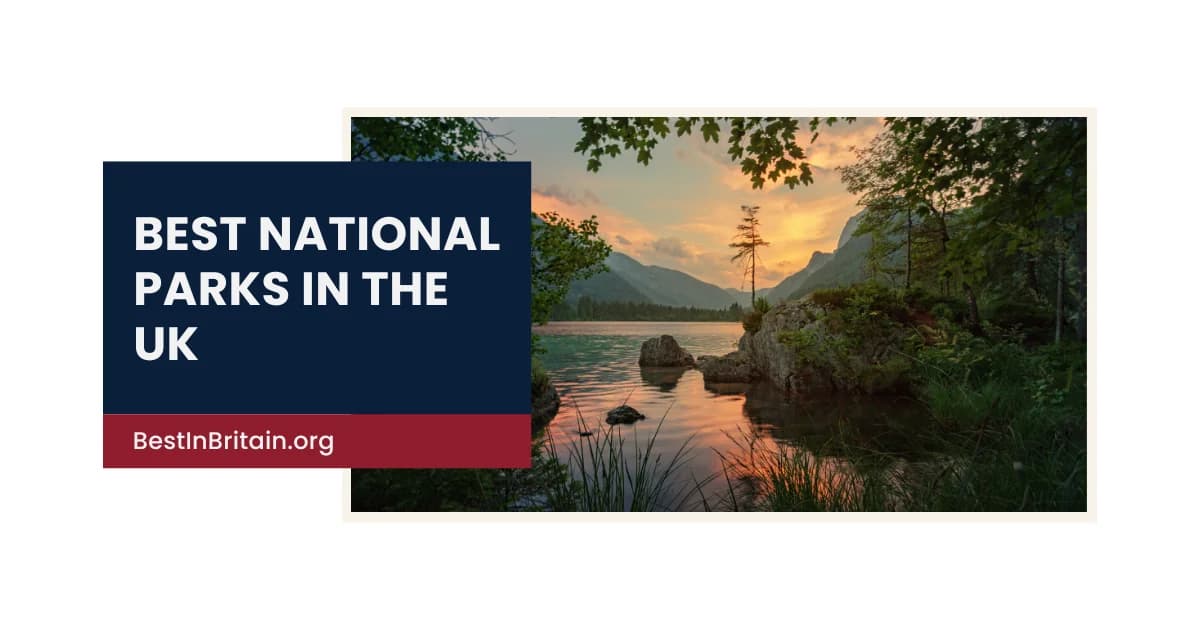
The best national parks in the UK range from high mountain landscapes and deep glacial valleys to chalk downs, ancient woodland, wetlands and dramatic coast. The Lake District, Eryri and Cairngorms are especially strong for mountain scenery; Pembrokeshire Coast stands out for coastal walking; the New Forest offers one of the most distinctive lowland landscapes; and the Broads provides a completely different experience built around rivers, shallow lakes and wetlands.
The United Kingdom has 15 national parks, each protected for its landscape, wildlife, cultural heritage and opportunities for people to experience the outdoors. They range from the high mountains of the Cairngorms and Eryri to the wetlands of the Broads, the chalk hills of the South Downs and the only predominantly coastal national park in Britain.
British national parks are not untouched wildernesses. They contain villages, farms, roads, working landscapes and communities whose histories are closely connected with the land. Entry to the parks themselves is free, although parking, attractions, activities and some visitor facilities may charge separately.
This guide covers all 15 national parks in the UK. It is an editorial guide rather than a rigid ranking, explaining what makes each park distinctive, where first-time visitors should begin and how to experience these protected landscapes responsibly.
UK national parks at a glance
| National park | Nation | Best for | Character |
|---|---|---|---|
| Lake District | England | Mountains, lakes and classic walking | High fells, valleys and lakes |
| Eryri | Wales | Mountain scenery and Welsh cultural landscape | High mountains, lakes and slate valleys |
| Cairngorms | Scotland | Scale, wildlife and mountain wilderness | Highlands, pinewoods and plateau |
| Peak District | England | Accessible walking and varied landscapes | Limestone dales and gritstone moorland |
| Loch Lomond and The Trossachs | Scotland | Lochs, hills and easy access from central Scotland | Water, woodland and mountains |
| Pembrokeshire Coast | Wales | Coastal walking, beaches and wildlife | Cliffs, coves, islands and coast path |
| Yorkshire Dales | England | Limestone scenery and traditional valleys | Dales, waterfalls and stone villages |
| Dartmoor | England | Moorland, tors and prehistoric landscapes | Granite moor and wooded valleys |
| South Downs | England | Car-free walking and chalk landscapes | Downs, farmland and dramatic coast |
| Northumberland | England | Solitude, dark skies and Hadrian's Wall | Remote hills and open moorland |
| Exmoor | England | Coast, moorland and wildlife | High moor and wooded combes |
| New Forest | England | Ancient woodland, heath and free-roaming animals | Commons, woodland and wetlands |
| North York Moors | England | Heather moorland, villages and coast | Moor, valleys and coastline |
| Bannau Brycheiniog | Wales | Ridges, waterfalls and dark skies | Mountains, reservoirs and caves |
| Broads | England | Boating, wetlands and wildlife | Rivers, shallow lakes and reedbeds |
If you are choosing between parks, start with the kind of trip you want. The Lake District, Eryri and Cairngorms suit mountain-focused visits; Pembrokeshire Coast and South Downs are especially strong for long-distance and coastal walking; the New Forest works well for gentler outdoor days; while the Broads is the clearest choice for exploring by boat.
How we selected and compared the UK national parks
Because this guide covers all 15 UK national parks, the aim is not to decide which park is universally "best". Instead, the comparison focuses on what each protected landscape does particularly well.
We considered:
- Landscape character: Mountains, moorland, coast, woodland, wetlands, lakes and valleys.
- Distinctiveness: Whether the park offers an experience that is clearly different from the others.
- Walking and outdoor access: The range of short, moderate and more demanding routes.
- Wildlife and ecology: Important habitats, species and conservation value.
- Culture and heritage: Villages, farming traditions, language, archaeology and industrial history.
- Accessibility: Public transport, road access, visitor hubs and the practicality of a first visit.
- Visitor depth: Whether the park can support a full day, weekend or longer trip.
- Responsible tourism: How visitors can reduce pressure on busy areas and sensitive landscapes.
A large park is not automatically a better park. The Cairngorms offers exceptional scale and remoteness, while the Broads is far lower and flatter but provides a completely different kind of protected landscape shaped by water, navigation and wetlands.
The best national parks to visit in the UK
1. Explore the Lake District National Park

Business details
Address
Cumbria, England
Best for: Mountains, lakes, walking and a classic first UK national park trip
Visit details:
- Open countryside is accessible throughout the year
- Visitor centres, boat services and attractions keep separate seasonal hours
- Mountain access depends on weather, daylight and local conditions
Entry: Free landscape access, with charges for parking and attractions
The Lake District contains England’s highest mountains, its largest natural lakes and one of the country’s most celebrated cultural landscapes.
Popular bases such as Keswick, Ambleside and Windermere provide access to lakes, valleys and walking routes of every difficulty. Scafell Pike attracts experienced hikers, while Derwentwater, Grasmere and Ullswater offer boat trips, low-level paths and historic villages.
Its international reputation brings heavy traffic and pressure on the most famous locations, particularly during summer and bank holidays.
Pro tip:
Choose one lake or valley per day and use buses, boats or local walking routes instead of repeatedly driving across the park.
2. Discover Eryri National Park

Business details
Address
North-west Wales
Best for: Mountain scenery, hiking and Welsh cultural landscapes
Visit details:
- Open countryside is accessible throughout the year
- Visitor centres and mountain transport operate separate seasonal schedules
- Conditions on high ground can change rapidly
Entry: Free landscape access, with charges for parking and activities
Eryri is Wales’s largest national park and contains its highest mountain, Yr Wyddfa.
The park combines glacial valleys, lakes, forests, slate landscapes and communities where Welsh remains an everyday language. Yr Wyddfa receives the greatest attention, but Cadair Idris, the Rhinogydd, the Carneddau and quieter valleys provide equally rewarding experiences.
The landscape is inseparable from Welsh culture, industrial history and the communities that live within it.
Pro tip:
Use park-and-ride or public transport for popular trailheads and choose a route appropriate for the forecast rather than reputation.
3. Experience the Cairngorms National Park

Business details
Address
Highlands and Aberdeenshire, Scotland
Best for: Scale, wildlife, native pinewoods and mountain adventure
Visit details:
- Open countryside is accessible throughout the year
- Visitor centres, ski facilities and attractions keep separate hours
- Winter mountain travel requires specialist skills and equipment
Entry: Free landscape access, with charges for parking and activities
The Cairngorms is the UK’s largest national park and contains an extraordinary mixture of mountains, forests, rivers, moorland and wildlife habitats.
Ancient Caledonian pinewoods survive around areas such as Rothiemurchus and Glenmore, while the high plateau supports rare alpine species. Aviemore is the best-known base, but Braemar, Ballater, Grantown-on-Spey and Tomintoul reveal different sides of the park.
Its scale means that no single visit can cover the whole landscape properly.
Pro tip:
Choose one side of the park as a base and avoid spending entire days driving between distant valleys.
4. Walk through the Peak District National Park

Business details
Address
Derbyshire and surrounding counties, England
Best for: Accessible walking, gritstone edges and limestone dales
Visit details:
- Open countryside is accessible throughout the year
- Visitor centres and attractions use separate schedules
- Some moorland paths may close temporarily for safety or conservation
Entry: Free landscape access, with parking charges
The Peak District became Britain’s first national park and remains one of its most accessible.
The southern White Peak contains limestone dales, dry-stone walls and villages, while the Dark Peak is characterised by gritstone edges, reservoirs and open moorland. Routes around Mam Tor, Stanage Edge and Dovedale are especially popular.
Its central location makes it easy to reach, but that convenience creates congestion at famous trailheads.
Pro tip:
Choose either the White Peak or Dark Peak for a day rather than losing time driving between both landscapes.
5. Explore Loch Lomond and The Trossachs National Park

Business details
Address
Central Scotland
Best for: Lochs, hills and an easy introduction to Highland scenery
Visit details:
- Open countryside and loch shores are accessible throughout the year
- Boat services, visitor centres and attractions operate seasonally
- Camping byelaws apply in selected management zones
Entry: Free landscape access, with charges for parking and activities
Loch Lomond and The Trossachs provides the most accessible introduction to Highland scenery from Glasgow and central Scotland.
The park includes Britain’s largest lake by surface area, wooded lochs, mountain ranges and communities extending from Balloch to Breadalbane. Visitors can take boat trips, walk sections of the West Highland Way or climb hills ranging from accessible viewpoints to major Munros.
Busy roads around Loch Lomond can disguise how much quieter the park becomes away from its main corridor.
Pro tip:
Use a ferry, waterbus or linear walking route to experience the loch without spending the entire day in road traffic.
6. Walk the Pembrokeshire Coast National Park

Business details
Address
Pembrokeshire, Wales
Best for: Coastal walking, beaches, wildlife and maritime landscapes
Visit details:
- Coast paths and open landscapes are accessible throughout the year
- Tides, erosion and storms can affect particular sections
- Visitor attractions and boat trips operate separate schedules
Entry: Free landscape access, with parking and activity charges
Pembrokeshire Coast is the UK’s only national park designated primarily for its coastline.
Cliffs, beaches, islands, estuaries, harbours and small coastal communities stretch around west Wales. The Pembrokeshire Coast Path links much of the park, while St Davids, Tenby, Stackpole and the northern cliffs provide very different starting points.
Wildlife, archaeology and maritime history make the park far more than a collection of beaches.
Pro tip:
Use coastal buses to create a one-way walk and check the tide before entering coves or walking beneath cliffs.
7. Explore the Yorkshire Dales National Park

Business details
Address
North Yorkshire and Cumbria, England
Best for: Limestone scenery, waterfalls and traditional dale landscapes
Visit details:
- Open countryside is accessible throughout the year
- Visitor centres and attractions keep separate schedules
- Weather and flooding can affect rural roads and paths
Entry: Free landscape access, with parking charges
The Yorkshire Dales is a landscape of limestone, waterfalls, green valleys, moorland and traditional stone-built settlements.
Malham Cove, Aysgarth Falls and the Three Peaks are its best-known landmarks, but Swaledale, Wensleydale and the park’s western valleys reward slower exploration. Historic railways, abbey ruins and market towns add variety for visitors who do not want a full day of hiking.
Narrow roads make cross-park journeys slower than they appear on a map.
Pro tip:
Stay within one dale for the day and explore it on foot instead of attempting to collect landmarks across the entire park.
8. Discover Dartmoor National Park

Business details
Address
Devon, England
Best for: Moorland, tors, archaeology and more adventurous walking
Visit details:
- Open countryside is accessible throughout the year
- Military training can restrict access to selected ranges
- Weather on exposed moorland can change quickly
Entry: Free landscape access, with parking charges
Dartmoor is defined by granite tors, open moorland, wooded valleys, rivers and layers of prehistoric and industrial history.
Short walks around accessible tors provide broad views, while longer routes lead into remote ground where navigation becomes essential. Villages, ancient stone rows, clapper bridges and mining remains reveal a landscape shaped by people over thousands of years.
Mist can remove visibility rapidly, even when conditions appear settled at lower elevations.
Pro tip:
Carry a map and compass for longer routes and check military firing notices before planning walks across range areas.
9. Walk the South Downs National Park

Business details
Address
Hampshire, West Sussex and East Sussex, England
Best for: Car-free walking, chalk hills and dramatic coastal scenery
Visit details:
- Public paths and open landscapes are accessible throughout the year
- Visitor attractions and transport services keep separate schedules
- Coastal cliff paths may close because of erosion
Entry: Free landscape access, with parking and attraction charges
The South Downs stretches from Winchester to Eastbourne across chalk hills, farmland, woodland and dramatic coastline.
The South Downs Way provides the park’s main long-distance route, while Seven Sisters, Devil’s Dyke, the Meon Valley and historic towns offer manageable day visits. Its proximity to London and the south coast makes it one of Britain’s easiest national parks to explore without a car.
The park is a working landscape, and many paths cross farmland and grazing areas.
Pro tip:
Use railway stations and local buses to create a linear walk rather than returning to the same car park.
10. Explore Northumberland National Park

Business details
Address
Northumberland, England
Best for: Solitude, dark skies, Hadrian's Wall and remote uplands
Visit details:
- Open countryside is accessible throughout the year
- Visitor centres and heritage sites keep separate hours
- Remote upland areas have limited mobile reception and facilities
Entry: Free landscape access, with charges for parking and attractions
Northumberland is England’s least populated national park and one of its strongest destinations for solitude and dark skies.
The park includes sections of Hadrian’s Wall, the Cheviot Hills, broad valleys and remote moorland near the Scottish border. Historic forts and museums provide cultural context, while the International Dark Sky Park designation makes clear nights especially valuable.
Distances, exposure and limited services require more preparation than in heavily developed parks.
Pro tip:
Combine one Hadrian’s Wall site with a manageable walk and remain after sunset only when properly equipped for the conditions.
11. Discover Exmoor National Park

Business details
Address
Devon and Somerset, England
Best for: Moorland, wooded valleys, wildlife and dramatic coast
Visit details:
- Open countryside is accessible throughout the year
- Visitor centres and attractions keep separate hours
- Steep coastal roads can be difficult in poor weather
Entry: Free landscape access, with parking charges
Exmoor combines high moorland, wooded valleys, rivers and one of England’s most dramatic stretches of coast.
The park’s northern edge rises above the Bristol Channel in steep cliffs and wooded combes, while inland areas contain open grazing land and historic villages. Exmoor ponies, red deer and dark skies strengthen its wildlife appeal.
Its compact size encourages rushed driving, but the narrow roads make slow exploration far more rewarding.
Pro tip:
Choose one coastal section and one inland walk rather than trying to cross the park repeatedly.
12. Explore the New Forest National Park

Business details
Address
Hampshire, England
Best for: Ancient woodland, heathland, cycling and family-friendly walking
Visit details:
- Open forest and common land are accessible throughout the year
- Visitor centres and attractions use separate schedules
- Seasonal car park closures protect sensitive habitats
Entry: Free landscape access, with charges for parking and attractions
The New Forest is an ancient landscape of heathland, woodland, wetlands and open grazing rather than a conventional dense forest.
Ponies, cattle and donkeys roam freely under a historic commoning system, while villages such as Brockenhurst, Lyndhurst and Beaulieu provide convenient bases. Cycling, low-level walking and wildlife watching make the park particularly accessible to families.
The free-roaming animals are not domesticated attractions and should never be fed or approached closely.
Pro tip:
Slow down on forest roads, give livestock space and explore beyond the busiest roadside pony-viewing areas.
13. Walk the North York Moors National Park

Business details
Address
North Yorkshire, England
Best for: Heather moorland, heritage railway journeys and coast
Visit details:
- Open countryside is accessible throughout the year
- Heritage railway and visitor services operate separate timetables
- Moorland fire restrictions may apply during dry weather
Entry: Free landscape access, with parking and attraction charges
The North York Moors brings together heather moorland, deep wooded valleys, historic villages and a rugged stretch of Yorkshire coast.
The park is especially striking during late-summer heather season, but routes around Sutton Bank, Rosedale, Goathland and the coastal villages remain rewarding throughout the year. The North Yorkshire Moors Railway provides another way to experience the landscape.
Its coastal and inland sections feel distinct enough to justify separate days.
Pro tip:
Use the railway or local transport for one day, then choose either the moors or coast for a focused walking route.
14. Explore Bannau Brycheiniog National Park

Business details
Address
South and mid Wales
Best for: Mountain ridges, waterfalls, dark skies and varied Welsh scenery
Visit details:
- Open countryside is accessible throughout the year
- Visitor centres, caves and attractions use separate schedules
- Mountain weather can change quickly
Entry: Free landscape access, with parking and attraction charges
Bannau Brycheiniog contains mountain ridges, waterfalls, caves, reservoirs and rural communities across south Wales.
Pen y Fan is the best-known summit, while Waterfall Country, the Black Mountain and the quieter western areas reveal a much broader landscape. The park is also recognised for its dark skies and strong connections with Welsh language, farming and industrial history.
Popular routes can become crowded, while equally impressive areas nearby remain much quieter.
Pro tip:
Do not make Pen y Fan the automatic choice; select a route based on weather, experience and crowd levels.
15. Discover the Broads National Park

Business details
Address
Norfolk and Suffolk, England
Best for: Boating, wetlands, wildlife and a very different national park experience
Visit details:
- Waterways and public paths are accessible throughout the year
- Boat hire, visitor centres and attractions operate seasonally
- Navigation rules and speed limits apply on the waterways
Entry: Free landscape access, with charges for boat hire, moorings and attractions
The Broads is unlike every other UK national park.
Its network of navigable rivers, shallow lakes, reedbeds, marshes and historic settlements was shaped in part by medieval peat digging and later flooding. Boating is the classic way to explore, but walking, cycling, wildlife watching and visits to windmills and churches reveal other sides of the landscape.
Water levels, tides and boat traffic require careful planning even on apparently calm waterways.
Pro tip:
Take a guided boat trip before hiring independently, particularly if you have no experience of navigation or mooring.
Best UK national parks by type
Best for mountains
The Lake District, Eryri and Cairngorms are the strongest choices for high mountain landscapes. Bannau Brycheiniog and Northumberland also offer rewarding upland routes with a different scale and character.
Best for coastal scenery
Pembrokeshire Coast is the clearest choice for a park defined primarily by coastline. Exmoor, South Downs and North York Moors also combine inland landscapes with dramatic coastal sections.
Best for easier walking and family visits
The New Forest, South Downs, Peak District and parts of Loch Lomond and The Trossachs offer strong lower-level options alongside more demanding routes.
Best for wildlife
Cairngorms, New Forest, Broads, Exmoor and Pembrokeshire Coast all provide distinctive wildlife and habitat experiences, though sightings depend on season, weather and luck.
Best for dark skies
Northumberland, Exmoor, Bannau Brycheiniog and parts of the Cairngorms are especially rewarding for night-sky experiences when conditions are clear.
Best without a car
South Downs, parts of the Peak District, Lake District, Yorkshire Dales, Eryri and Loch Lomond and The Trossachs can all work well with rail, bus or boat connections if routes are planned carefully.
Best for a first national park visit
The Lake District, Peak District, Eryri, New Forest and South Downs are among the easiest first choices because they combine clear visitor hubs with varied landscapes and a wide range of route difficulty.
Frequently asked questions
How many national parks are there in the UK?
There are 15 national parks in the United Kingdom. They are spread across England, Scotland and Wales. Northern Ireland does not currently have a designated national park.
What are the best national parks to visit in the UK?
The Lake District, Eryri, Cairngorms, Peak District, Loch Lomond and The Trossachs, Pembrokeshire Coast, Yorkshire Dales and New Forest are among the strongest all-round choices, but the best park depends on whether you want mountains, coast, woodland, wildlife, easier walking or water-based exploration.
What is the largest national park in the UK?
The Cairngorms is the largest national park in the UK. Its scale is one of its defining characteristics, with mountains, forests, moorland, rivers and communities spread across a very large area.
What was the first national park in Britain?
The Peak District became Britain's first national park. It remains one of the most accessible, with contrasting White Peak limestone and Dark Peak gritstone landscapes.
Which UK national park is best for mountains?
The Lake District, Eryri and Cairngorms are the strongest mountain-focused choices in this guide. The Lake District combines major fells with lakes and valleys, Eryri offers Wales's highest mountains and strong cultural context, while the Cairngorms provides the greatest scale and most remote high-ground experience.
Which UK national park is best for coastal walking?
Pembrokeshire Coast is the strongest choice because coastline is central to the park's identity. South Downs, Exmoor and North York Moors also include major coastal walking sections.
Which national parks are easiest to visit without a car?
The South Downs, Peak District, parts of the Lake District, Yorkshire Dales, Eryri and Loch Lomond and The Trossachs can all work well with public transport. Planning around specific trailheads and one-way routes is more effective than navigating to the park name alone.
Are UK national parks free to enter?
Yes. The landscapes themselves do not normally have an admission fee, but parking, boat trips, heritage attractions, equipment hire, visitor experiences and some facilities may charge separately.
Does Northern Ireland have a national park?
No. Northern Ireland does not currently have a designated national park. It has other protected landscapes, including Areas of Outstanding Natural Beauty, country parks and major mountain and coastal areas.
When is the best time to visit UK national parks?
Spring and early autumn often provide a useful balance of daylight, scenery and lower visitor pressure. Summer brings the longest days but also the busiest roads and trailheads. Winter can be rewarding at lower levels, while high mountain travel may require specialist skills and equipment.
How to plan a visit to the UK’s national parks
The UK’s national parks are open landscapes rather than gated attractions. There is normally no admission fee, but car parks, boat trips, heritage sites, equipment hire and visitor attractions may charge separately.
A national park can cover hundreds or thousands of square miles, so selecting a specific valley, walking route, village or visitor centre is more useful than simply navigating to the park name. Trying to cross an entire park in one day often results in more driving than exploring.
Rail and bus travel work particularly well in parts of the Peak District, South Downs, Lake District, Yorkshire Dales, Eryri and Loch Lomond and The Trossachs. Public transport also reduces pressure on popular car parks and allows one-way walks.
Weather should determine the route. Mountain conditions in the Cairngorms, Eryri, Lake District and Bannau Brycheiniog can be completely different from conditions in the nearest town. Carry suitable clothing, food, water and navigation, and be prepared to choose a lower-level alternative.
Visitors should follow the relevant countryside access guidance, take litter away, keep dogs under control around livestock and wildlife, and avoid damaging paths, dunes, peatland or vegetation. Wild camping rules differ between England, Wales and Scotland and may also be affected by local byelaws.
Northern Ireland does not currently have a designated national park. Its protected landscapes include Areas of Outstanding Natural Beauty, country parks and major mountain and coastal areas, which deserve separate coverage rather than being inaccurately included in this list.
The strongest national park trips combine scenery with local communities. Use village shops, cafés, guides, accommodation and public transport where possible. These are living and working landscapes, and responsible tourism helps protect both their environment and their future.
Final thoughts
The UK's national parks are not interchangeable. The Lake District, Eryri and Cairngorms are defined by mountain landscapes, Pembrokeshire Coast by the sea, the New Forest by ancient woodland and common land, and the Broads by water and wetland.
That variety is the reason there is no single national park that suits every trip. A demanding mountain weekend, a family cycling day, a long coastal walk and a quiet wildlife visit are all valid ways to experience a protected landscape, but they require different places and different planning.
The strongest visits are usually the most focused. Choose one valley, ridge, coastline, village or waterway, spend less time driving and allow enough time to understand the landscape rather than simply collecting viewpoints.
Related guides
Nature and Outdoors
40 best beaches in the UK for a memorable coastal escape
Discover the best beaches across the United Kingdom, from sweeping surf beaches and sheltered family bays to white-sand island shores, dramatic coves and wild coastal landscapes.
Updated 22 July 2026
Nature and Outdoors
20 best lakes and lochs in the UK for unforgettable scenery
Discover the best lakes and lochs across the United Kingdom, from iconic Highland waters and Lake District classics to Welsh mountain lakes, peaceful reservoirs and dramatic waters in Northern Ireland.
Updated 19 July 2026
Nature and Outdoors
20 best scenic drives in the UK for unforgettable views
Discover the best scenic drives across the United Kingdom, from mountain passes and coastal roads to lochside routes, moorland roads and some of the most dramatic short drives in England, Scotland, Wales and Northern Ireland.
Updated 11 July 2026
Nature and Outdoors
20 best waterfalls in the UK for a memorable visit
Discover the best waterfalls across the United Kingdom, from dramatic Highland cascades and famous Welsh falls to woodland waterfalls in England and striking river landscapes in Northern Ireland.
Updated 8 July 2026

Things to Do
25 best Christmas markets in the UK
Discover 25 of the best Christmas markets in the UK, from Bath's Georgian streets and Birmingham's Frankfurt market to cathedral fairs, city festivals and historic estate markets.
Updated 26 September 2026

Things to Do
20 best places for a romantic weekend in the UK
Discover 20 of the best places for a romantic weekend in the UK, from historic cities and coastal towns to countryside escapes, islands and mountain retreats across all four nations.
Updated 26 September 2026
Know a business we should consider?
Send us the details and our editorial team will review whether it fits a future guide.
Submit businessWriter profile
George Davies
Regional and city guide desk researcher
George researches location-led guides, city roundups, regional comparisons, attractions, and practical local recommendations.
Editorial Trust Standard
Independent ReviewIndependent Research
Featured rankings are editorially determined. Commercial partner listings are strictly labeled as Sponsored or Featured.
Public Register Audit
Listings are cross-checked against public regulatory registries, Companies House filings, and published fee schedules.