
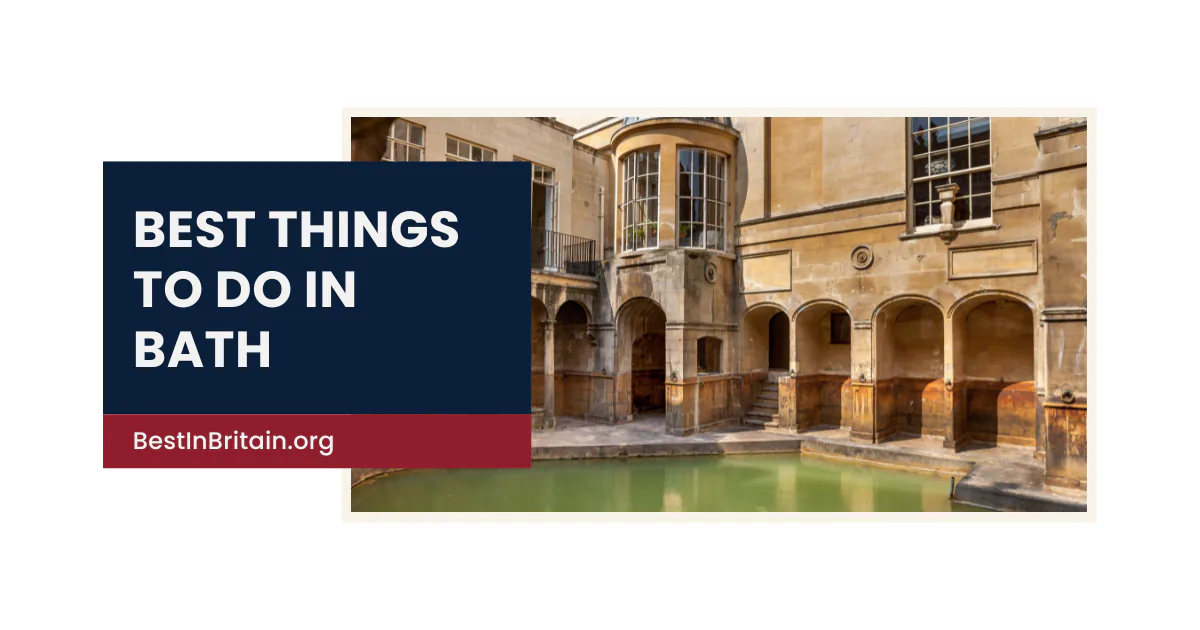
20 best things to do in Bath for an unforgettable visit
Bath makes an impression before you enter a museum. The soft-coloured stone, crescents of Georgian houses and steep green hills appear almost choreographed, yet the city is more interesting when you look beyond its famously beautiful facades. Under the streets is a Roman story built around extraordinary hot springs. Behind the Georgian drawing rooms is a history of servants, commerce, science and social ambition. And beyond the centre, canals, valleys and wooded paths make the surrounding landscape part of the experience.
It is easy to spend a day photographing Bath without getting to know it. A more rewarding visit asks how the city became a fashionable spa destination, who built and inhabited its grand terraces, and what survives of the communities and ideas that flourished here. That is the approach behind this selection of 20 attractions: established landmarks, smaller collections worth seeking out, outdoor escapes and experiences that feel genuinely connected to the place.
For a first visit, make time for the Roman Baths, Bath Abbey and a walk through the Circus and Royal Crescent. If you are staying overnight, add one less obvious museum, a walk above the city or a performance. Bath rewards a slower pace, and many of its best details are discovered between scheduled visits.
This guide keeps the practical questions in view, including which attractions are free, where booking matters, what to do in the rain and how to put together a realistic one-day or weekend itinerary. Opening hours, prices and programme details can change, so follow each attraction's official link before setting out.
Where to begin: choosing the Bath experience that suits you
| If you want... | Start with... | Why it stands out |
|---|---|---|
| Bath's defining history | Roman Baths | The clearest explanation of the city's origins as a spa destination |
| A remarkable historic interior | Bath Abbey | Fan vaulting, memorials and a working place of worship |
| The classic Georgian view | Royal Crescent and the Circus | Architecture best appreciated slowly and from several angles |
| Life behind the elegant facades | No. 1 Royal Crescent | A more revealing picture of Georgian domestic society |
| Art and decorative collections | Holburne Museum | An opportunity to spend time with objects, rather than only buildings |
| Bath's literary connections | Jane Austen Centre | An accessible introduction before exploring the streets yourself |
| A memorable indulgence | Thermae Bath Spa | A modern way to experience the city's naturally heated waters |
| A striking walk | Bath Skyline | Countryside and elevated views close to the urban centre |
| An easy free afternoon | Pulteney Bridge, Royal Victoria Park and canal | Distinctive scenery without an attraction ticket |
| An evening out | Theatre Royal Bath | A historic venue with a broad programme |
Historic and cultural things to do in Bath
1. Explore the Roman Baths

Business details
Address
Abbey Churchyard, Bath BA1 1LZ
Contact details: +44 1225 477785
Operating hours:
- Monday to Sunday: 9 am to 6 pm
- Last entry: 5 pm
- Seasonal and festive variations may apply
Price: £££
The Roman Baths are Bath’s most important attraction and one of the best-preserved ancient bathing complexes in Northern Europe. Built around the city’s natural hot spring, the site preserves the Great Bath, Roman pavements, temple remains and thousands of archaeological objects.
The museum explains how Aquae Sulis developed as a centre of worship and bathing under Roman rule. Projections, reconstructed spaces and audio guides help visitors understand how the complex would once have looked and functioned.
There is a reason this should usually be the first paid attraction on a first-time itinerary. The mineral-rich spring explains both the Roman settlement and the later Georgian spa city. Bath's architectural grandeur makes more sense after you have seen the much older infrastructure beneath it. The setting is not merely picturesque: it was a place where bathing, religion, healing and public life overlapped.
Do not mistake the Great Bath for the entire visit. The objects recovered from the sacred spring, the remains of the temple and the interpretation of everyday ritual are just as important to the story. Allow enough time to move through the archaeological spaces without rushing directly to the familiar open-air pool photograph. The water in the historic Roman Baths is not for swimming; the modern spa elsewhere in the city is the place to bathe.
Pro tip:
Book the first available entry of the day or visit later in the afternoon. The central Great Bath becomes particularly busy around midday.
2. Step inside Bath Abbey

Business details
Address
Bath Abbey, Bath BA1 1LT
Contact details: +44 1225 422462
Operating hours:
- Monday to Friday: 10 am to 5:30 pm
- Saturday: 10 am to 6 pm
- Sunday: 1 compatibly pm to 3:30 pm
- Visiting hours can change for services and special events
Price: Donation or visitor admission may apply
Bath Abbey stands at the heart of the city beside the Roman Baths. Its present form dates largely from the late medieval period, although the site has been used for Christian worship for more than a thousand years.
Inside, the fan-vaulted ceiling is the defining feature, accompanied by stained glass, memorials and the large Klais organ. Tower tours provide a closer look at the bells and roof while rewarding visitors with panoramic views over central Bath.
The Abbey's importance is not only architectural. It occupies a central place in the story of worship in Bath, and the building is still used for services and community life. That active role is worth remembering when arranging a visit: it is not an attraction that operates independently of its congregation.
The extraordinary stone vaulting draws the eye upwards, but pause to look at the memorials and details at ground level too. They give glimpses of the city's changing population and fortunes over several centuries. If a tower tour is part of your plans, consider the stairs and access arrangements in advance rather than making it a last-minute decision.
Pro tip:
Check the tower tour schedule before arriving. Places are limited and involve a long, narrow staircase, but the view is among the best in the city centre.
3. Walk around the Royal Crescent

Business details
Address
Royal Crescent, Bath BA1 2LR
Operating hours:
- Open at all times
Price: Free
The Royal Crescent is one of Britain’s finest examples of Georgian architecture. Designed by John Wood the Younger and completed in the 18th century, its sweeping curve of 30 terraced houses overlooks a broad lawn and Royal Victoria Park.
The uniform façade conceals homes of different sizes and layouts, making the crescent as much an architectural illusion as a residential development. It remains one of the city’s most recognisable sights.
The Crescent is best understood as a piece of town planning rather than simply a row of beautiful houses. Its consistent front presents an extraordinary unified composition while the properties behind it were adapted for the needs and fortunes of individual owners. This tension between a controlled public image and private domestic life is part of what makes Georgian Bath so fascinating.
A photograph from the grass gives the famous sweeping view, but spending a little time observing the entrances, railings, doors and relationship with the park is more revealing. Residents still live here, so appreciate it as a real neighbourhood rather than an open-air stage set. The nearby house museum at No. 1 Royal Crescent is a useful next step.
Pro tip:
View the crescent from the lower edge of the lawn first, then walk behind it to see how dramatically the architecture changes away from the formal façade.
4. Experience Georgian life at No. 1 Royal Crescent

Business details
Address
1 Royal Crescent, Bath BA1 2LR
Contact details: +44 1225 428126
Operating hours:
- Tuesday to Sunday: 10 am to 5:30 pm (last entry 4:30 pm)
- Closed Mondays except during local school holidays and bank holidays
- Additional scheduled closures may apply; check the official calendar
Price: ££
No. 1 Royal Crescent is a restored Georgian townhouse furnished to show how wealthy residents and their servants lived during the late 18th century. Its rooms include the drawing room, dining room, bedrooms, kitchen and servants’ quarters.
The museum is especially useful for understanding the society behind Bath’s grand architecture. Carefully chosen furniture, decorative objects and interpretation reveal the contrast between elegant entertaining rooms and the work taking place below stairs.
Here the Georgian ideal of elegance becomes considerably more complicated. Reception rooms tell one story about wealth and social display; kitchens and service areas tell another about the work required to sustain it. This contrast makes the museum especially rewarding after you have admired the flawless architecture outside.
Rather than treating the house as a collection of period furniture, follow the interpretation of everyday routines and the people who made them possible. The property's modern presentation uses narrative elements to place the rooms in social context. It is a relatively contained experience and fits naturally with the Circus and Royal Crescent walk. Current opening dates include short planned closures, so check the calendar carefully.
Pro tip:
Visit after walking around the Royal Crescent. Seeing the interior immediately afterwards makes the architecture and social history much easier to understand.
5. Admire the Circus

Business details
Address
The Circus, Bath BA1 2ET
Operating hours:
- Open at all times
Price: Free
The Circus is a circular arrangement of Georgian townhouses designed by John Wood the Elder. Its three curved sections create a perfectly balanced urban space inspired by classical architecture and ancient monuments.
Look closely at the stonework and you will find carved symbols, including acorns, serpents, nautical emblems and Masonic imagery. Mature plane trees now occupy the central lawn, giving the Circus a quieter and more enclosed atmosphere than the Royal Crescent.
The Circus rewards a different kind of attention from the Royal Crescent. Rather than presenting one theatrical frontage to open countryside, it creates a contained urban room through a sequence of curved terraces. The resulting space feels ordered but also unexpectedly intimate, especially beneath its established trees.
Spend a few minutes examining the decorative details high on the facades. Their symbols and classical references reveal that the design was about ideas as much as appearance. From here, the short walk to the Royal Crescent is one of Bath's finest transitions between two very different architectural compositions.
Pro tip:
Stand in the centre and slowly turn through the full circle. Each entrance is positioned to reveal a different approach into the space.
6. Cross Pulteney Bridge

Business details
Address
Bridge Street, Bath BA2 4AT
Operating hours:
- Open at all times
- Individual shops keep their own hours
Price: Free
Pulteney Bridge is one of Bath’s most photographed landmarks. Completed in the 18th century, it crosses the River Avon and is lined with shops on both sides, making it one of only a small number of historic bridges in Europe built in this way.
The classic view includes the bridge, the curved weir and the Georgian buildings lining the river. Crossing the bridge leads naturally towards Great Pulteney Street and the Holburne Museum.
A peculiar feature of Pulteney Bridge is how easily its most impressive attribute can be missed while crossing it. From the roadway the shops make it feel like an ordinary street; from the river it becomes a monumental bridge framed by the Avon and weir. Seek out both perspectives.
The bridge also provides a useful hinge between the busiest historic centre and the elegant streets of Bathwick. Continue towards Great Pulteney Street to appreciate a wider piece of Georgian planning, rather than walking across and straight back. Take care around river levels and avoid treating the weir as a place for close access.
Pro tip:
For the best view, walk to Grand Parade or the riverside path below. The bridge itself is easier to appreciate from a slight distance.
7. Visit the Holburne Museum

Business details
Address
Great Pulteney Street, Bath BA2 4DB
Contact details: +44 1225 388569
Operating hours:
- Monday to Saturday: 10 am to 5 pm
- Sunday and bank holidays: 11 am to 5 pm
Price: General museum admission is charged; café and shop are free to enter. Collection displays are free on Wednesdays after 3 pm; exhibitions may still carry a charge.
The Holburne Museum occupies a grand building at the far end of Great Pulteney Street. Its collection began with Sir William Holburne and now includes paintings, silver, ceramics, sculpture and decorative art.
The museum combines historic interiors with a modern rear extension overlooking Sydney Gardens. Works by Gainsborough, Guardi, Stubbs and Ramsay sit alongside changing exhibitions and smaller displays.
The Holburne works particularly well for visitors who have enjoyed Bath's architecture and want to understand the tastes of the people who once occupied its drawing rooms. Portraits, silver, porcelain and decorative objects provide a social and artistic companion to the city outside. The approach along Great Pulteney Street is part of the pleasure: the museum terminates a grand urban vista.
It is worth knowing that general gallery admission is now charged, rather than assuming the permanent collection is always free. The shop and cafe can be entered without a ticket, and the collection displays have a free-entry period on Wednesday afternoons from 3 pm. Check special exhibitions separately as admission conditions differ. This is a more considered visit than a quick stop for the facade.
Pro tip:
Approach from Pulteney Bridge and walk the full length of Great Pulteney Street. The formal avenue creates one of Bath’s most impressive architectural views.
8. Discover Jane Austen’s Bath

Business details
Address
40 Gay Street, Bath BA1 2NT
Operating hours:
- Monday to Sunday: 9:45 am to 6 pm
- Last full admission is one hour before closing
Price: ££
The Jane Austen Centre explores the author’s relationship with Bath and the influence the city had on novels including Northanger Abbey and Persuasion. Costumed guides, displays and period dress introduce visitors to Regency society and Austen’s years in the city.
Although the centre is not one of Austen’s former homes, it provides an accessible introduction to the streets, customs and social rituals that shaped her experience of Bath.
Austen's connection with Bath is both literary and personal, and the two should not be conflated. The city appears vividly in her fiction, but her own relationship with it was more ambivalent than the polished Regency image often presented to visitors. The Jane Austen Centre offers an enjoyable entry point, especially if you are new to the novels.
The more lasting experience may be to leave the centre and walk the nearby streets with passages from Persuasion or Northanger Abbey in mind. Think of the attraction as a starting point for reading the city's social landscape, not as a preserved house in which Austen lived. Literature lovers should also allow time for quieter streets around the upper town.
Pro tip:
Combine the centre with a self-guided walk along Gay Street, Gravel Walk and around the Assembly Rooms to place Austen’s Bath in its real setting.
9. Visit the Herschel Museum of Astronomy

Business details
Address
19 New King Street, Bath BA1 2BL
Contact details: +44 1225 446865
Operating hours:
- Opening days and hours vary seasonally
- Check the official website before visiting
Price: ££
The Herschel Museum occupies the former home of William and Caroline Herschel. It was here in 1781 that William Herschel discovered the planet Uranus using a telescope of his own construction.
The small museum preserves period rooms, scientific instruments, musical connections and a garden workshop. It tells not only William’s story but also that of Caroline Herschel, an important astronomer in her own right.
Among Bath's smaller museums, this is one of the most intellectually rewarding. The Herschels connect the city to a major moment in scientific history, while the house shows how discoveries can emerge from a combination of disciplined observation, instrument making and individual curiosity.
Caroline Herschel deserves attention in her own right, rather than appearing only as a supporting figure in William's story. The family's interests in music, astronomy and craft also challenge the notion that Georgian Bath was concerned only with fashionable leisure. This is a specialist visit, but one with a strong sense of place.
Pro tip:
Allow around an hour. The museum is compact, but its original setting and specialist collection reward visitors who take time to read the displays.
10. Browse the Victoria Art Gallery

Business details
Address
Bridge Street, Bath BA2 4AT
Contact details: +44 1225 477233
Operating hours:
- Opening hours vary
- Check the current exhibition schedule before visiting
Price: Free and paid areas depending on the exhibition
The Victoria Art Gallery sits close to Pulteney Bridge and holds Bath’s public art collection. Displays include British paintings, decorative art and works connected with the city and surrounding region.
The upper galleries regularly host temporary exhibitions, while the permanent collection offers a quieter cultural stop between the Abbey quarter and Great Pulteney Street.
The Victoria Art Gallery is an easy stop to underestimate because it sits so close to bigger landmarks. Its scale is an advantage for visitors who want a cultural break without committing an entire afternoon. The permanent holdings and changing displays offer another way of interpreting local history and British art.
Check the current exhibition programme before deciding how long to allow. Entry conditions differ between areas, so a free visit and a paid exhibition should not be assumed to be the same experience. Pairing the gallery with the river and Pulteney Bridge makes particularly good use of its location.
Pro tip:
This is an easy attraction to pair with Pulteney Bridge and the Holburne Museum, particularly when the weather makes a longer outdoor walk less appealing.
Relaxing and outdoor things to do in Bath
11. Bathe in the thermal waters at Thermae Bath Spa

Business details
Address
The Hetling Pump Room, Hot Bath Street, Bath BA1 1SJ
Contact details: +44 1225 331234
Operating hours:
- Main spa: 9 am to 9:30 pm on normal operating days (facilities close at 9 pm)
- Reduced hours on certain festive dates
- Minimum admission age: 16; treatments: 18
Price: £££
Thermae Bath Spa allows visitors to bathe in the city’s naturally warm, mineral-rich water. Its best-known feature is the open-air rooftop pool, which looks across Bath’s skyline and surrounding hills.
A standard spa session also includes indoor pools and wellness facilities. It is a modern experience rather than a preserved historic bath, but it connects directly with the natural springs that have defined the city for centuries.
The enduring attraction of Bath's thermal water is that it connects two different chapters of the city's story. The Roman complex is an archaeological site; Thermae Bath Spa is a contemporary wellness venue. Trying both is not repetitive, because each answers a different question: how people bathed here in antiquity, and what the experience feels like today.
The rooftop setting is memorable, but the practical details matter. Standard sessions generally include the rooftop pool, indoor pool and wellness facilities, while treatments and packages have their own conditions. Admission starts at age 16 and treatments require guests to be 18 or over. This is not an option for young children, and anyone planning a relaxing visit should reserve enough time rather than fitting it between museum appointments.
Pro tip:
Choose a late-afternoon session so you can see the city in daylight and remain as the rooftops begin to light up.
12. Walk through Prior Park Landscape Garden

Business details
Address
Ralph Allen Drive, Bath BA2 5AH
Contact details: +44 1225 833977
Operating hours:
- Usually open daily from 10 am
- Closing times vary by season
Price: ££, free for National Trust members
Prior Park is an 18th-century landscaped garden set in a valley overlooking Bath. Its most famous feature is the Palladian Bridge, one of only a small number of surviving bridges of its kind.
Paths descend through woodland, lawns and restored lakes before climbing back towards viewpoints over the city. The changing levels make the garden visually dramatic, although visitors should expect steep slopes.
Prior Park offers one of the clearest demonstrations of how landscape was deliberately shaped to frame beautiful views. The famous Palladian Bridge is the focal point, but the garden is much more than a single photograph. Paths, water and woodland are designed to reveal the valley in stages.
This is not a level city park. Slopes can be demanding, particularly after rain, and visitors should plan the descent and return climb before setting off. With no general visitor parking, transport is also part of the planning. For those happy to walk, the reward is a distinctly different perspective on Bath's relationship with the surrounding countryside.
Pro tip:
There is no general visitor parking at the garden. Use public transport or walk from the city, and wear footwear suitable for uneven and sometimes muddy paths.
13. Follow the Bath Skyline Walk

Business details
Address
Multiple access points around the eastern side of Bath
Operating hours:
- Open at all times
Price: Free
The Bath Skyline Walk is a six-mile circular route through woodland, meadows and elevated countryside above the city. It offers some of the best views across Bath and a complete contrast to the busy historic centre.
The full route passes through areas including Bathwick Fields, Smallcombe Wood and Claverton Down. Shorter sections can be enjoyed independently by visitors without time for the entire circuit.
From a distance, Bath looks almost like a model city fitted into the hills, and the Skyline route explains why. The pattern of terraces, stone buildings and open countryside becomes clearer from above. It is also a reminder that Bath's identity is not limited to its elegant streets: farmland, woods and hilltop paths sit close by.
The full six-mile circuit is a proper walk rather than a casual stroll between city landmarks. Bring appropriate shoes, allow for weather and daylight, and consult the National Trust route before departing. Shorter viewpoint sections are the sensible choice if you are visiting with limited time or mixed walking abilities.
Pro tip:
Start near Bathwick Hill and complete only the viewpoint section if you want the scenery without committing to the full six-mile walk.
14. Relax in Royal Victoria Park

Business details
Address
Marlborough Lane, Bath BA1 2NQ
Operating hours:
- Open daily
Price: Free
Royal Victoria Park stretches west from the Royal Crescent and provides 57 acres of open lawns, mature trees and recreational spaces. It was opened in 1830 by the future Queen Victoria, then still a princess.
The park includes a botanical garden, children’s play area, tennis courts and broad spaces for picnics. It offers an easy place to slow down after exploring the densely built city centre.
Royal Victoria Park shows another side of Bath's nineteenth-century story: public leisure rather than private grand houses. Its open lawns, established planting and recreational areas make it useful for residents as well as visitors. For families, the space to move around can be as welcome as another hour inside a museum.
It is a natural continuation from the Royal Crescent, and the botanical garden adds interest beyond the main lawns. Consider a picnic or a relaxed pause here after visiting the Georgian quarter. Unlike many of the city's best-known attractions, the pleasure is largely in having no schedule.
Pro tip:
Walk through the park immediately after visiting the Royal Crescent, then continue towards the botanical garden at its western end.
15. See Bath from Alexandra Park

Business details
Address
Shakespeare Avenue, Bath BA2 4RQ
Operating hours:
- Open daily
Price: Free
Alexandra Park sits above the city on Beechen Cliff and provides one of Bath’s best panoramic viewpoints. From the terrace, the historic centre, Abbey, surrounding hills and rows of Bath-stone terraces spread out below.
The park is less famous than the central landmarks and often considerably quieter. Reaching it involves a steep climb, but the view gives visitors a clear sense of Bath’s setting within the Avon valley.
Bath's elegance can be difficult to appreciate at street level because the buildings fill the view. Alexandra Park solves that problem. From its elevated position, the city's dense historic centre, surrounding terraces and green hills can be understood together.
The viewpoint is particularly compelling in clear weather, but reaching it should not be underestimated. Some approaches involve steep streets and numerous steps. Those with mobility concerns should plan a gentler route or consider another elevated viewpoint rather than treating the climb as a minor detail.
Pro tip:
Take the steep pedestrian route from the railway station only if you are comfortable with steps. An alternative route by road is longer but gentler.
16. Walk beside the Kennet and Avon Canal

Business details
Address
Access from Sydney Gardens and Bathwick, Bath
Operating hours:
- Towpath open at all times
Price: Free
The Kennet and Avon Canal provides a peaceful walking route just beyond the city centre. From Sydney Gardens, the towpath follows locks, bridges, narrowboats and tree-lined sections towards Bathampton.
It is a particularly good option for repeat visitors who have already seen the main landmarks. The level path makes for an easy walk, while waterside pubs and cafés provide natural stopping points further along the route.
The canal offers a slower, more everyday Bath, with narrowboats, locks and towpaths replacing ceremonial facades and crowded squares. It also links the city to the history of inland transport, trade and engineering. This makes the walk rewarding even if you are not particularly interested in boats.
Beginning near Sydney Gardens gives the route an attractive transition from formal landscape to working waterway. Choose a distance that suits your time and energy. Towpaths can become slippery or narrow in places, and walkers should share the space considerately with cyclists and other users.
Pro tip:
Start beside Sydney Gardens and walk towards Bathampton. Turn back whenever you are ready or return by bus to avoid retracing the entire route.
Memorable Bath experiences
17. Eat a historic bun at Sally Lunn’s

Business details
Address
4 North Parade Passage, Bath BA1 1NX
Contact details: +44 1225 461634
Operating hours:
- Open daily
- Breakfast, daytime and evening hours vary
Price: ££
Sally Lunn’s occupies one of the oldest houses in Bath and is famous for the large, light Sally Lunn bun. The building contains a restaurant and a small museum area displaying the remains of an earlier kitchen.
The bun is served in both sweet and savoury dishes, making the experience more substantial than a simple bakery stop. Its exact origin is surrounded by legend, but the building and recipe have become part of Bath’s visitor tradition.
Sally Lunn's is part food stop, part city folklore. The historic building and its distinctive bun have become woven into Bath's visitor identity, although stories about exact origins deserve to be treated as tradition rather than documentary certainty.
The real question is what sort of experience you want. Dining inside provides the full historic-restaurant setting; a takeaway offers a quicker introduction when your itinerary is crowded. It can be a charming break between major landmarks, but it is worth allowing extra time when queues build.
Pro tip:
Reserve a table at busy times. Visitors who only want a bun to take away can use the small shop rather than waiting for the restaurant.
18. Take a boat trip on the River Avon

Business details
Address
Departures vary around Pulteney Weir and Bath riverside
Operating hours:
- Seasonal
- Sailings depend on weather and river conditions
Price: ££
A boat trip provides a different view of Bath’s riverfront, bridges and surrounding countryside. Depending on the operator, cruises range from short sightseeing journeys to longer trips towards Bathampton.
The experience is especially enjoyable in warmer months, when the River Avon and Kennet and Avon Canal become a lively part of the city’s outdoor life.
After seeing Bath's bridges and riverbanks on foot, the view from the water offers a change of pace. Buildings, trees and stone embankments take on a different scale, while longer trips can reveal how quickly the urban setting gives way to greener countryside.
The experience varies significantly by operator and departure location. Do not assume every advertised Bath boat trip follows the same route or includes the same landmarks. Check whether you want a short city cruise, a longer river journey or a canal-based outing, and remember that weather and river conditions can alter plans.
Pro tip:
Check the departure point carefully. Different operators leave from different sections of the river and canal, and services may be reduced outside summer.
19. Watch a performance at Theatre Royal Bath

Business details
Address
Saw Close, Bath BA1 1ET
Contact details: +44 1225 448844
Operating hours:
- Varies by performance
Price: ££ to £££
Theatre Royal Bath is one of Britain’s most attractive historic theatres and presents drama, comedy, opera, dance and touring productions throughout the year.
The main auditorium is joined by the Ustinov Studio and the egg, a dedicated theatre for children and families. Its varied programme makes it one of the strongest evening options after the daytime attractions close.
Theatre Royal is a reminder that Bath's cultural identity was never just architectural. Performance and sociability played a significant role in the city's fashionable history, and the venue remains a compelling place to spend an evening today.
Look at the individual spaces rather than only the headline touring productions. The Ustinov Studio can offer a more intimate theatrical experience, while the egg focuses on younger audiences. Choosing a performance that genuinely interests you makes a stronger final evening than booking a show simply to tick off a landmark.
Pro tip:
Look beyond the main auditorium listings. The Ustinov Studio regularly stages smaller productions that may not be touring elsewhere.
20. Explore Bath’s independent shops and markets

Business details
Address
Walcot Street, Milsom Street, Green Park Station and central Bath
Operating hours:
- Varies by shop and market
Price: Free to explore
Bath’s compact centre contains a strong mix of independent shops, galleries, food businesses and markets. Walcot Street is known for antiques, interiors and creative businesses, while the streets around Milsom Street combine established retailers with smaller independents.
Green Park Station hosts changing markets and food traders beneath its former railway roof. The covered setting makes it useful in poor weather and adds another layer to Bath’s architectural history.
Bath's smaller shopping streets are worth exploring because they reveal a contemporary city behind the heritage image. Independent bookshops, design businesses, food traders and specialist retailers offer a different rhythm from the main sightseeing route.
Walcot Street is a good place to look for creative and individual businesses, while Green Park Station's market activity depends on the day. Avoid planning the entire stop around a market without confirming the traders' schedule. A little unstructured browsing can be one of the better ways to discover how Bath functions beyond tourism.
Pro tip:
Check the market schedule before visiting Green Park Station, as the strongest mix of traders appears on particular days rather than throughout the week.
A route through Bath that makes sense
Bath is compact, but trying to see all its museums, viewpoints and spas in a single day turns an enjoyable trip into a timetable. For most visitors the central choice is between a history-led day and a more relaxed Bath experience. Both work; trying to do both in full rarely does.
One day in Bath: the essential landmarks
Begin with a pre-booked morning visit to the Roman Baths. The attraction is centrally located, but the archaeological displays reward more than a fleeting stop. Continue immediately to Bath Abbey, allowing for any services that temporarily restrict visitor access.
After lunch, cross Pulteney Bridge and look back from the river to appreciate its shop-lined structure. If art is a priority, continue along Great Pulteney Street to the Holburne Museum. Otherwise, return towards the upper town to walk through the Circus and around the Royal Crescent.
Spend the late afternoon in Royal Victoria Park or a nearby independent café. If you are staying for the evening, consider Theatre Royal Bath or a restaurant reservation rather than another rushed attraction. This day is achievable on foot for most visitors, but includes some uphill walking.
Two days in Bath: architecture, culture and breathing room
Day one works best as an exploration of the ancient and Georgian city. Visit the Roman Baths and Abbey, then trace the Georgian streets from the Circus to Royal Crescent. Go inside No. 1 Royal Crescent if you want to understand the domestic life behind the celebrated facades. An evening performance offers a fitting conclusion.
Day two can follow your interests. Art lovers might pair the Holburne Museum with the Victoria Art Gallery. Literature and science enthusiasts can visit the Jane Austen Centre and Herschel Museum. If you prefer a gentler day, book a spa session and walk beside the canal or through Royal Victoria Park. More energetic walkers can swap the museums for Prior Park or a section of the Bath Skyline route.
The advantage of two days is not simply visiting more places. It is having enough time to notice Bath's small streets, changing light and dramatic relationship with the hills.
Bath without the crowds: what is genuinely worth doing differently?
The busiest sightseeing streets cluster around the Roman Baths, Abbey and main shopping routes. You can avoid much of the pressure without avoiding the city's best attractions. Book a first entry to a major site, then walk away from the centre during the busiest part of the day. Royal Victoria Park, the canal towpath and parts of the upper town provide a change of atmosphere.
Not every lesser-known place is automatically better. The Roman Baths remain essential because their significance is real, not merely because they are famous. The more useful distinction is whether an attraction adds a new perspective. No. 1 Royal Crescent helps explain a building you have already admired; the Herschel Museum introduces an entirely different scientific history; the canal reveals a working landscape beyond the polished terraces.
Free things to do in Bath
You can enjoy a substantial part of Bath without paying for admission. The Royal Crescent, Circus and Pulteney Bridge are all free to see from public areas. Royal Victoria Park, Alexandra Park and stretches of the Kennet and Avon Canal provide scenic walks, and the Bath Skyline offers longer routes with fine views.
Bath's independent streets and market areas are also enjoyable to browse, although individual markets operate on particular days. The Holburne's shop and café are accessible without a museum ticket, and the museum currently offers free access to its collection displays on Wednesdays after 3 pm. Confirm conditions before visiting, particularly when a temporary exhibition is involved.
For a satisfying low-cost half-day, explore the Circus and Royal Crescent, continue through Royal Victoria Park and finish with a walk back towards the city centre through quieter residential streets.
Bath with children and teenagers
Bath can work well for families, provided the attractions are chosen with different attention spans in mind. The Roman Baths offer objects, reconstructions and stories that make the ancient world tangible. The Abbey's architecture can also be impressive, though younger visitors may prefer a shorter stop.
Royal Victoria Park is a practical counterbalance to museum time, with space to play and relax. A short boat trip can give the family a different perspective on the city, while the egg at Theatre Royal is specifically oriented towards children and young audiences.
For teenagers interested in literature, art or science, the Jane Austen Centre, Herschel Museum and Holburne Museum are more selective choices. Remember that Thermae Bath Spa has a minimum admission age of 16, with treatments restricted to adults aged 18 and over.
When Bath is at its best
Bath is a year-round destination, but the experience varies. Spring suits visitors interested in gardens and longer walks, while summer brings lively streets, extended sightseeing opportunities and greater competition for popular tickets. Autumn is rewarding for quieter architectural walks and views over the changing countryside. In winter, indoor museums, the spa and theatre become especially appealing, although daylight and some outdoor conditions are less forgiving.
For a first-time visitor, a weekday outside the busiest school-holiday periods can provide the most flexible balance between open attractions and manageable crowds. This is a planning preference rather than a guarantee: exhibitions, events and local holidays can alter demand. Always check both the attraction calendar and any special closures.
Frequently asked questions about visiting Bath
Is Bath worth visiting for just one day?
Yes. The compact historic centre makes it possible to visit the Roman Baths, admire Bath Abbey and walk between Pulteney Bridge, the Circus and Royal Crescent in a day. You will have to be selective, however. A weekend allows time for museums, the spa or walks in the surrounding hills without rushing.
What is Bath most famous for?
Bath is internationally known for its Roman bathing complex, natural thermal springs and exceptionally coherent Georgian architecture. The Royal Crescent, Circus, Bath Abbey and Pulteney Bridge are among its most recognisable landmarks.
What are the best things to do in Bath for the first time?
Start with the Roman Baths and Bath Abbey, then explore the Royal Crescent, Circus and Pulteney Bridge on foot. These sites explain the city's ancient origins and later Georgian identity. Add a museum or garden according to your interests.
Can you swim in the Roman Baths?
No. The historic Roman Baths are preserved as an archaeological and museum attraction, and visitors cannot bathe in the water. For a modern bathing experience using naturally heated mineral water, visit Thermae Bath Spa, subject to its admission rules.
Is Thermae Bath Spa the same as the Roman Baths?
No. The Roman Baths are a historic archaeological attraction, while Thermae Bath Spa is a contemporary wellness facility with pools and spa experiences. They are separate places with separate admission charges and booking arrangements.
What can you do in Bath for free?
Walk around Royal Crescent and the Circus, cross Pulteney Bridge, relax in Royal Victoria Park or explore the canal towpath. Alexandra Park and the Bath Skyline offer viewpoints and longer walks. Some museum spaces and specific admission periods may also be free.
What are the best things to do in Bath when it rains?
The Roman Baths, Bath Abbey, No. 1 Royal Crescent, Holburne Museum, Jane Austen Centre and Herschel Museum are suitable cultural options. Thermae Bath Spa and a performance at Theatre Royal Bath can also work, provided you have booked appropriately.
How many days do you need in Bath?
Two days is a good balance for most visitors. One day covers the defining central landmarks, while an additional day allows for a spa session, museums or a walk beyond the centre. Those planning multiple galleries and countryside routes could comfortably stay longer.
Is Bath easy to get around without a car?
Yes. Many central attractions are within walking distance of Bath Spa railway station and one another. The main complication is the city's steep hills, particularly around Alexandra Park, Prior Park and the Skyline route. Buses can help with some outer destinations.
Where is the best view of Bath?
Alexandra Park provides a broad panorama over the city, while the Bath Skyline route offers countryside perspectives. Prior Park combines designed landscapes with views over Bath. The best option depends on how far and how steeply you want to walk.
Which attractions should I book in advance?
Prioritise tickets for the Roman Baths, Thermae Bath Spa, No. 1 Royal Crescent and any desired theatre performances or special tours. Booking is particularly advisable at weekends, during school holidays and for timed-entry experiences.
Can Bath be visited on a budget?
Yes. Much of Bath's famous architecture can be appreciated from public streets at no cost, and the city's parks and footpaths offer excellent free experiences. Choosing one major paid attraction and spending the rest of the day exploring on foot is a sensible budget itinerary.
Bath's appeal goes beyond its postcard views
Bath is beautiful, but beauty alone would not make it such a worthwhile destination. What gives the city depth is the way its layers remain visible: Roman religion and engineering, medieval worship, Georgian social ambition, scientific discovery and a contemporary arts scene occupy the same walkable streets.
The strongest visit does not necessarily involve the longest list of tickets. Explore one landmark properly, look behind a famous facade, spend time beside the water and leave space for an unexpected discovery. Bath is most memorable when its monuments are understood as part of a living city rather than a collection of isolated photographs.
Practical planning: getting around Bath and making the most of your stay
Bath is easy to explore on foot, and many central attractions sit within a short walk of one another. However, the city becomes steep very quickly beyond the centre, particularly around Prior Park, Alexandra Park and the Skyline Walk.
A strong first-day route begins at the Roman Baths and Bath Abbey, continues across Pulteney Bridge, then follows Great Pulteney Street to the Holburne Museum. From there, return through the centre towards the Circus and Royal Crescent.
Thermae Bath Spa is best reserved in advance, particularly for weekends. The Roman Baths, No. 1 Royal Crescent and the Jane Austen Centre can also become busy during school holidays and summer weekends.
Visitors arriving by train will find Bath Spa station close to the historic centre. Driving is less convenient because central parking is limited and traffic can be slow, so park-and-ride services are often the simplest option for a day visit.
Bath Visitor, Culture & Leisure Market Statistics
Annual Visitor Footfall
6.2M
Annual visitors in Bath
Tourist & Visitor Spend
£470M
Annual visitor expenditure
Cultural & Leisure Venues
140
Attractions & landmarks
Visitor Stay Profile
64% Day
36% Overnight stays
Primary Attraction & Cultural Hubs in Bath
- BA1 (Abbey & Roman Baths Zone)54% focus
- BA1 (Royal Crescent & Circus)26% focus
- BA2 (Widcombe & Pulteney Canal)12% focus
- BA2 (Prior Park & Skyline Walk)8% focus
Attraction Types & Category Breakdown
- Roman & Georgian Heritage Sites46% of venues
- Art Galleries & Museums24% of venues
- Thermal Spas & Wellness Venues18% of venues
- Parks & River Avon Tours12% of venues
Bath Business & Travel Statistics
Planning a business visit or researching the local commercial scene? Browse the UK city corporate registry index for insights on active businesses and local sectors.
Related guides

Things to Do
25 best Christmas markets in the UK
Discover 25 of the best Christmas markets in the UK, from Bath's Georgian streets and Birmingham's Frankfurt market to cathedral fairs, city festivals and historic estate markets.
Updated 26 September 2026

Things to Do
20 best places for a romantic weekend in the UK
Discover 20 of the best places for a romantic weekend in the UK, from historic cities and coastal towns to countryside escapes, islands and mountain retreats across all four nations.
Updated 26 September 2026

Things to Do
Top Escape Rooms in Edinburgh for a Thrilling Challenge
A researched guide to Edinburgh escape rooms offering historical mysteries, cinematic adventures, magical puzzles, detective stories and team-building games.
Updated 1 August 2026

Things to Do
Best Jazz Clubs in London for Live Music
A current guide to six London jazz clubs and live-music venues, covering ticket prices, seating, food, age rules, accessibility, jam sessions and the different styles each venue presents.
Updated 22 July 2026
Things to Do
16 best things to do in Norwich for an unforgettable visit
Explore 16 of the best things to do in Norwich, including the restored castle, cathedral quarter, historic lanes, independent market, riverside walks and Norfolk day trips.
Updated 22 July 2026

Things to Do
17 best things to do in Inverness for an unforgettable Highland visit
Discover the best things to do in Inverness, from the new castle experience and River Ness walks to Culloden, Clava Cairns, Loch Ness and memorable Highland day trips.
Updated 21 July 2026
Know a business we should consider?
Send us the details and our editorial team will review whether it fits a future guide.
Submit businessWriter profile
Gabriela Krumova
Arts, Culture & Performance Contributor
Actor, theatre director and Queen Margaret University Drama graduate with international performance experience across Edinburgh, London, New York, Paris and Venice. Gabriela has performed in and directed Edinburgh Festival Fringe productions and covers theatre, performing arts, cultural venues, live entertainment, festivals and the creative industries for Best in Britain.
Editorial Trust Standard
Independent ReviewIndependent Research
Featured rankings are editorially determined. Commercial partner listings are strictly labeled as Sponsored or Featured.
Public Register Audit
Listings are cross-checked against public regulatory registries, Companies House filings, and published fee schedules.
Regional Directory