
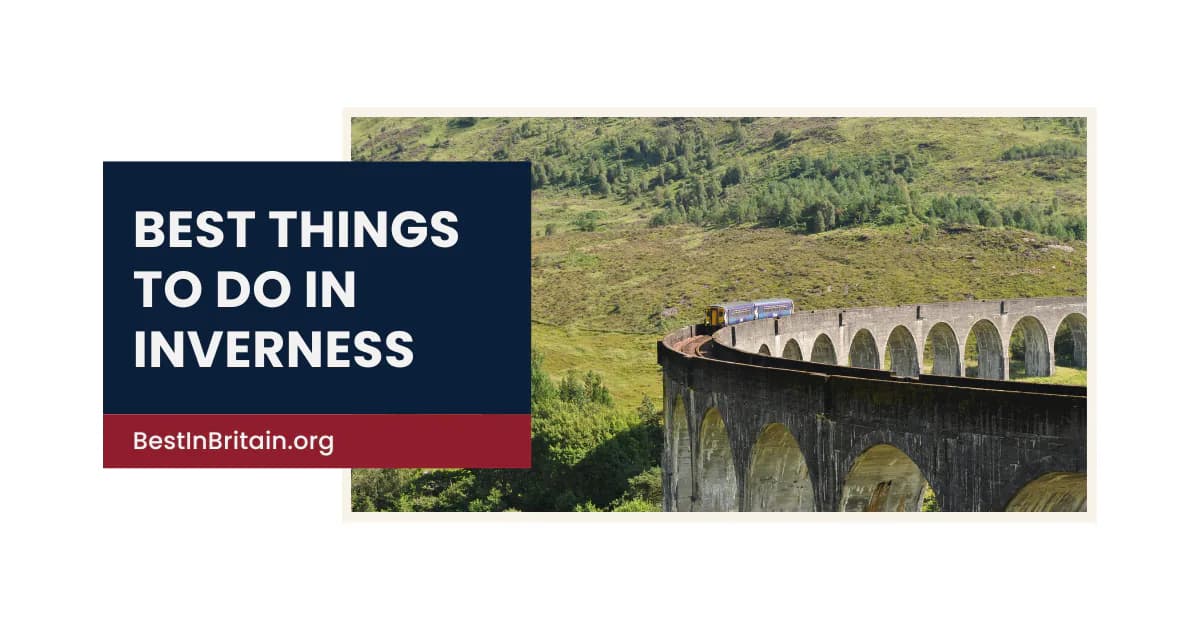
17 best things to do in Inverness for an unforgettable Highland visit
Inverness has a way of feeling both unmistakably Highland and comfortably small. Follow the River Ness through the centre and you can pass a castle, a cathedral, independent shops and wooded islands in one afternoon. Leave the city in almost any direction and the landscape changes quickly, from the open ground at Culloden to the dark water of Loch Ness and the broad skies above the Moray Firth.
That combination is the real reason to visit. Inverness is often sold as a gateway, somewhere to collect a hire car before setting off for the Highlands. But treating it only as a departure point misses a city with a worthwhile cultural life, enjoyable waterside walks and a history that is inseparable from the places surrounding it.
There is also no single 'essential' Highland day out. Culloden is a place for serious historical reflection. Clava Cairns reaches back much further, into the Bronze Age. Urquhart Castle is as compelling for its strategic position as its Loch Ness views. Meanwhile, a gentle riverside walk or an evening performance can offer an experience of Inverness that a tightly scheduled coach itinerary rarely captures.
We have kept this selection focused on 17 distinctive experiences, separating things to do in Inverness itself from heritage sites and landscapes that require a journey beyond the city. Each entry explains what makes the place worth considering, who it best suits and where the practical trade-offs lie. The aim is not to fit everything into one trip, but to help you make better choices.
What should you see first in Inverness?
For a first-time visitor with one day, start with the Inverness Castle Experience, visit the Inverness Museum and Art Gallery when open, then walk alongside the River Ness to the Ness Islands. If you have a second day, choose between Culloden and Clava Cairns for history or Loch Ness and Urquhart Castle for landscape and medieval heritage. These are different types of experiences and deserve enough time to be appreciated.
| If you are most interested in... | Prioritise |
|---|---|
| A first introduction to Highland stories | Inverness Castle Experience |
| The best free city walk | River Ness and Ness Islands |
| Highland history in context | Inverness Museum and Art Gallery |
| The Jacobite rising | Culloden Battlefield |
| Prehistoric Scotland | Clava Cairns |
| Military architecture | Fort George |
| Loch Ness scenery and heritage | Loch Ness boat trip and Urquhart Castle |
| A peaceful lochside stop | Dores Beach |
| Wildlife watching | Moray Firth dolphin viewpoints |
| An extra day beyond the city | A focused Highland day trip |
Essential things to do in Inverness
1. Explore the Inverness Castle Experience

Business details
Address
Inverness Castle, Castle Hill, Inverness IV2 3EG
Operating hours:
- April to September: 10 am to 7 pm
- October to March: 10 am to 6 pm
- Last admission is two hours before closing
- Open daily except Christmas Day
Price: £££
The Inverness Castle Experience is the city’s major new visitor attraction and the natural starting point for a first visit. The restored red sandstone castle now introduces the stories, landscapes, culture and people of the Highlands through immersive displays and interpretation.
The experience is designed as more than a conventional castle tour. Exhibits use storytelling, sound, objects and digital media to connect Inverness with the wider Highland region.
Its elevated position above the River Ness also provides some of the best views across the city.
Why it stands out: The important distinction here is between the castle building and what visitors might expect of a traditional fortress tour. This is primarily a storytelling attraction about the Highlands, not an exhibition of medieval rooms and weapons. Its value is as an introduction to the region's languages, people, landscapes and traditions. That makes it particularly useful at the beginning of a trip, when the themes introduced inside can inform the places you choose to explore afterwards.
Who will enjoy it most: First-time Highland visitors, families who enjoy immersive interpretation and anyone wanting an orientation before travelling further north or west. Visitors primarily seeking medieval military architecture may prefer Urquhart Castle or Fort George.
Editorial perspective: A new landmark experience does not automatically become the most important historical site in the region. We would treat Inverness Castle as a useful starting point, then follow its stories into the actual landscapes, museums and communities beyond the city. That balance gives the attraction more meaning than a standalone visit.
Pro tip:
Book online for a guaranteed entry time, particularly during summer. Allow around two hours rather than treating it as a quick viewpoint stop.
2. Walk beside the River Ness and across the Ness Islands

Business details
Address
Access from both sides of the River Ness, Inverness
Operating hours:
- Open at all times
Price: Free
The River Ness provides Inverness with its most attractive and accessible walking route. Paths follow both banks south from the city centre towards a chain of wooded islands connected by elegant Victorian footbridges.
The Ness Islands feel surprisingly peaceful despite being close to the centre. Mature trees, river views and quiet paths make the route suitable for a gentle walk at almost any time of year.
A complete circuit can include the cathedral, Eden Court, Bught Park and Inverness Botanic Gardens.
What makes this walk special: The river is not just a scenic feature separating two sides of the centre. It provides the most natural way to connect central Inverness with quieter residential and green spaces. The footbridges, wooded islands and changing river views offer a slower impression of the city than the shopping streets. The route is particularly appealing in the softer light of early morning or evening, although paths may be slippery after rain.
Who will enjoy it most: Couples, photographers, walkers and travellers looking for a memorable free activity without leaving the city. The route can be adapted to a short riverside stroll or an extended circuit including the gardens.
Editorial perspective: This is one of the first experiences we would recommend even to visitors with no interest in formal sightseeing. Inverness is at its most appealing when the river shapes the day rather than simply appearing in the background of photographs.
Pro tip:
Begin near the castle and follow the western bank towards the islands, then return on the opposite side for different views of the city.
3. Visit Inverness Museum and Art Gallery

Business details
Address
Castle Wynd, Inverness IV2 3EB
Operating hours:
- April to October, Tuesday to Saturday: 10 am to 5 pm
- Sunday and Monday: Closed
- Winter hours from November to March are reduced
Price: Free
Inverness Museum and Art Gallery explores the archaeology, natural history, art and culture of the Highlands.
Its collections include Pictish stones, Highland weapons, historic clothing, geological specimens and objects connected with Jacobite history and everyday life in the region. Temporary exhibitions add contemporary art and changing local themes.
The museum is compact, free and positioned immediately beside Inverness Castle, making it easy to include in a central itinerary.
Why visit before the bigger historic sites: The museum's breadth is a strength. Highland history cannot be understood through the Jacobites alone, and displays about geology, settlement, language, material culture and everyday life give context to the region beyond famous battles. The collection helps visitors place prehistoric monuments and later conflicts into a longer chronology.
Who will enjoy it most: Curious first-time visitors, families with older children, history readers and anyone looking for a free, weatherproof activity in the centre. Because it is compact, it works well as part of a wider walking day rather than requiring a dedicated excursion.
Editorial perspective: We would not skip this simply because the best-known Highland attractions lie outside the city. A short visit can make the stories at Culloden, Clava Cairns and the castles more intelligible and more rewarding.
Pro tip:
Visit before travelling to Culloden or Clava Cairns. The historical background makes both sites easier to understand.
4. Browse the Victorian Market

Business details
Address
Academy Street, Queensgate and Church Street entrances, Inverness IV1
Operating hours:
- Market access and individual business hours vary
- Most businesses open during normal daytime trading hours
Price: Free to explore
The Victorian Market is a covered shopping arcade in the heart of Inverness. Its restored entrances and ironwork lead to a collection of independent retailers, food businesses and small local producers.
The market dates from the 19th century and remains one of the city centre’s most recognisable commercial landmarks. Recent redevelopment has added a food hall while retaining the historic structure.
Look beyond the food hall: The market's appeal lies in the combination of everyday local commerce and an older built environment. Its internal passages invite a more unhurried approach than a modern shopping centre, and independent traders offer a chance to look for something more distinctive than a standard souvenir. Individual units and opening patterns change, so no single stall should be regarded as essential to the experience.
Who will enjoy it most: Food lovers, independent-shop browsers and visitors seeking a sheltered stop between the station, museum and river.
Editorial perspective: The Victorian Market makes an effective lunch stop, but it should not be mistaken for a comprehensive introduction to Highland food. For that, explore independent restaurants and regional produce beyond the central arcade as well.
Pro tip:
Visit around lunchtime when the widest range of food businesses is open, then explore the smaller retail passages beyond the main hall.
5. Step inside Inverness Cathedral

Business details
Address
15 Ardross Street, Inverness IV3 5NS
Contact details: +44 1463 225553
Operating hours:
- Visitor access varies around services, events and seasonal schedules
- Check before making a special journey
Price: Free, with donations welcomed
Inverness Cathedral stands beside the River Ness and is dedicated to St Andrew. Built during the 19th century, its red sandstone exterior and twin towers form one of the city’s strongest riverside landmarks.
The interior includes stained glass, carved stone, memorials and a broad nave used for worship, concerts and community events.
Although smaller than Scotland’s medieval cathedrals, it contributes significantly to the character of the riverfront.
What to notice: The cathedral's setting is as important as the interior. From the opposite bank, its towers help define the riverside skyline; from close up, the red sandstone and stained glass provide a quiet contrast to busier visitor attractions. It is a functioning place of worship, so some areas and visits may be affected by services.
Who will enjoy it most: Visitors interested in architecture, religious heritage and short cultural stops. It is particularly convenient for people walking between the centre, Eden Court and the Ness Islands.
Editorial perspective: We would include the cathedral as part of a considered riverside itinerary, rather than presenting it as a lengthy standalone attraction. A brief, respectful interior visit and time to appreciate the setting are often enough.
Pro tip:
Include the cathedral in a River Ness walk rather than visiting it as an isolated attraction.
6. Explore Inverness Botanic Gardens

Business details
Address
Bught Lane, Inverness IV3 5SS
Operating hours:
- Monday to Sunday: 9:30 am to 4 pm
- Café last orders: 3:45 pm
- Some areas may close during events
Price: Free
Inverness Botanic Gardens provide a warm and colourful escape close to the River Ness. The gardens include tropical and cactus houses, outdoor planting, ponds and a community growing area.
The compact site is particularly valuable in poor weather, when the glasshouses offer a complete contrast to the Highland climate outside.
The gardens can be reached on foot from the city centre by following the river and crossing the Ness Islands.
Why it deserves a place on the route: Inverness is often used as a jumping-off point for wild Highland scenery, but the Botanic Gardens show that the city has quieter horticultural attractions of its own. The contrast between the glasshouses and the outdoor climate is particularly striking on a wet or windy day. Displays change with the seasons, so the visit may feel different from one month to another.
Who will enjoy it most: Plant enthusiasts, families, budget-conscious visitors and walkers extending a Ness Islands circuit.
Editorial perspective: For a city break, this is a particularly sensible addition because it is free and easy to combine with other riverside highlights. We would not make it a priority over Loch Ness or Culloden on a first Highland trip, but it can be one of the most relaxing hours of a city-focused day.
Pro tip:
Allow around 60 to 90 minutes and combine the visit with the Ness Islands rather than travelling out and back by the same route.
7. See a show or film at Eden Court

Business details
Address
Bishops Road, Inverness IV3 5SA
Contact details: +44 1463 234234
Operating hours:
- Varies by performance, cinema screening and event
Price: £ to £££
Eden Court is the principal theatre, cinema and arts centre in the Highlands. Its programme includes touring theatre, music, comedy, dance, film, festivals and local productions.
The venue sits beside the River Ness close to the cathedral and provides one of the strongest evening options in Inverness.
During summer, additional events and performances may take place in outdoor or temporary spaces around the building.
What it adds to a Highland visit: Inverness is often described primarily through landscape and history. Eden Court is a reminder that it is also a contemporary cultural centre serving the wider Highlands. A concert, play or locally produced performance can introduce a different aspect of the region's creative life than a museum or coach tour.
Who will enjoy it most: Couples, arts-minded travellers, families and anyone looking for an evening activity that is not dependent on the weather.
Editorial perspective: Rather than treating a performance as something to book only after all sightseeing is arranged, we suggest checking the programme early. An especially interesting event can be worth building a whole evening around.
Pro tip:
Check the programme before choosing travel dates. A strong theatre, music or film event can add far more to a visit than a generic evening in the city centre.
8. Experience local brewing and distilling

Business details
Address
Uile-bheist Distillery and Brewery, Ness Bank, Inverness IV2 4SF
Operating hours:
- Tour, bar and restaurant hours vary
- Advance booking is recommended for guided experiences
Price: ££ to £££
Uile-bheist is a brewery and distillery beside the River Ness and the first new distillery built in Inverness for more than a century.
Tours introduce the production of beer and whisky, while the bar and restaurant provide a more casual way to experience the site. The business draws on Highland folklore and local landscape in its branding and visitor experience.
Its location makes it easy to combine with the cathedral, Eden Court and a walk through the Ness Islands.
The interesting distinction: Inverness has long been a gateway to whisky-producing regions, but Uile-bheist offers a production experience within the city itself. A guided visit explains methods and the relationship between brewing, distilling and local identity more clearly than simply ordering a drink at the bar. Whisky production and maturation should not be confused, so confirm what is being produced and what is available to sample on the date of your visit.
Who will enjoy it most: Adults interested in brewing, distilling, modern Scottish hospitality and production processes. Tour suitability and tasting arrangements should be checked for anyone travelling with children.
Editorial perspective: We prefer to distinguish a genuine production tour from a generic tasting stop. If the making of beer or whisky interests you, spend the money on the guided experience rather than only the venue's food and drink.
Pro tip:
Book a tour rather than relying only on the bar if you want to understand the production process and the story behind the distillery.
Historic places near Inverness
9. Walk across Culloden Battlefield

Business details
Address
Culloden Moor, Inverness IV2 5EU
Contact details: +44 1463 796090
Operating hours:
- March to early November, visitor centre: 9 am to 5 pm
- Winter visitor-centre hours are reduced
- Battlefield: open daily
Price: ££ for the visitor centre; battlefield access is free
Culloden Battlefield was the site of the final Jacobite rising’s decisive battle on 16 April 1746. The defeat of the Jacobite army had profound consequences for Highland society and Scottish history.
The visitor centre uses artefacts, documents, interpretation and an immersive battle presentation to explain the events from both Jacobite and government perspectives.
Outside, paths cross the open battlefield between memorials, clan markers and the restored landscape.
Understanding the history: Culloden should be approached as a battlefield and memorial landscape, not merely an atmospheric Highland photo opportunity. The battle of 16 April 1746 ended the Jacobite rising of 1745 and was followed by major changes affecting Highland communities. It is important not to compress those complex consequences into a simplistic story of Scotland versus England: the armies involved reflected wider dynastic, political and religious divisions.
Who will enjoy it most: History enthusiasts, visitors tracing Highland heritage and anyone willing to spend time with the interpretation before walking the ground. The exposed moor can be uncomfortable in wind and rain, so bring appropriate clothing.
Editorial perspective: This is the most historically consequential stop in the article. The exhibition offers essential context, while the battlefield itself rewards quiet attention. Respect the site as a place of loss and remembrance.
Pro tip:
Visit the exhibition before walking onto the battlefield. The terrain becomes much more meaningful once the sequence of the battle is clear.
10. Visit the prehistoric Clava Cairns

Business details
Address
Balnuaran of Clava, near Inverness
Operating hours:
- Open all year
Price: Free
Clava Cairns is a group of Bronze Age burial monuments around 4,000 years old. Passage graves, ring cairns and standing stones occupy a peaceful terrace above the River Nairn.
The alignment and construction of the monuments reveal sophisticated knowledge of landscape, stonework and seasonal light. Several stones also carry cup marks that may predate the cairns themselves.
The site is often associated with Outlander, but its real prehistoric importance is considerably more interesting than the fictional connection.
Why the setting matters: Clava Cairns predates the castles and Jacobite landmarks by thousands of years. The monuments reflect funerary practices, stone construction and relationships with the landscape that survive only in partial archaeological evidence. Visitors should be cautious about claims that every alignment or symbol has a definitively known meaning. The genuine uncertainty is part of what makes the site fascinating.
Who will enjoy it most: Archaeology enthusiasts, contemplative travellers and people interested in prehistoric Scotland. The visit is usually relatively short, making it a practical companion to Culloden.
Editorial perspective: The Outlander association may introduce visitors to Clava, but the real reward is standing among monuments built by communities separated from us by roughly four millennia. Stay on established routes, avoid climbing on stones and protect the site for future visitors.
Pro tip:
Combine Clava Cairns with Culloden, which is only a short distance away. Visit early or later in the day for a quieter atmosphere.
11. Explore Fort George

Business details
Address
Ardersier, Inverness IV2 7TD
Operating hours:
- April to September: 9:30 am to 5:30 pm
- October to March: 10 am to 4 pm
- Last entry is one hour before closing
- Closed on selected festive dates
Price: £££
Fort George is one of the most impressive military fortifications in Europe. Built after the Battle of Culloden, the vast artillery fortress occupies a promontory overlooking the Moray Firth.
Visitors can walk along the ramparts, enter barrack rooms, see historic weaponry and visit The Highlanders’ Museum. The scale of the walls, ditches and defensive structures is difficult to appreciate until entering the site.
The surrounding waters are also known for bottlenose dolphins, although sightings are never guaranteed.
Why Fort George differs from other castles: This is not a romantic ruined fortress. It is a vast, planned 18th-century military installation whose geometry, earthworks, ditches and walls explain the strategy of post-Culloden government defence. Its physical scale is part of the experience, and walking the ramparts can make the engineering far more comprehensible than photographs. Parts of the site continue to have military use, so access rules matter.
Who will enjoy it most: Military-history readers, engineering enthusiasts and families interested in large historic places. The open setting makes windproof clothing particularly important.
Editorial perspective: If Culloden tells the story of a defining battle, Fort George illuminates the military response that followed. Visiting both creates a richer historical narrative, though they are best approached as substantial stops rather than rushed photo opportunities.
Pro tip:
Allow at least two to three hours and bring a windproof layer. The exposed ramparts can feel cold even when Inverness is mild.
12. Visit Cawdor Castle and Gardens

Business details
Address
Cawdor, Nairn IV12 5RD
Operating hours:
- Open seasonally, generally from spring to early autumn
- Check exact dates and times before travelling
Price: £££
Cawdor Castle is a lived-in historic castle surrounded by formal gardens and woodland. Its medieval tower was built around a legendary holly tree, which remains visible within the building.
The interiors contain furniture, paintings, tapestries and objects assembled over generations. Outside, the walled garden, flower garden and woodland walks make the estate particularly attractive in summer.
The castle is popularly associated with Shakespeare’s Macbeth, although the historical Macbeth lived long before the present building existed.
History and legend should be separated: The castle's association with the Thane of Cawdor in Macbeth gives it a familiar literary name, but Shakespeare's fictionalised setting is not a reliable guide to the history of the present building. The more rewarding story lies in its lived-in interiors, changing domestic fashions and the gardens that surround it.
Who will enjoy it most: Historic-house visitors, gardeners and people looking for a gentler countryside excursion. It is most rewarding when both house and gardens are open.
Editorial perspective: We recommend Cawdor for the combined estate experience, not merely the famous name. A visitor who rushes through the interiors and ignores the grounds misses much of its appeal.
Pro tip:
Visit during the main gardening season and allow enough time for the grounds rather than focusing only on the castle rooms.
Loch Ness and Highland experiences
13. Take a boat trip on Loch Ness

Business details
Address
Departures vary from Inverness, Dochgarroch and other Loch Ness locations
Operating hours:
- Sailings vary seasonally
- Weather and water conditions can affect departures
Price: ££ to £££
A boat trip is one of the best ways to appreciate the scale and landscape of Loch Ness. Cruises range from short journeys on the northern end of the loch to longer trips combining the water with Urquhart Castle.
The experience is worthwhile regardless of any interest in the Loch Ness Monster. Forested slopes, deep water, changing weather and historic sites create the real appeal.
Some departures include sonar displays and commentary on geology, history and local folklore.
Choosing a cruise: The most useful difference between operators is not only the length of the sailing but the departure point, route, commentary and whether a castle stop is included. A short cruise can provide the essential sense of scale; a longer combination may be better for travellers with a whole day. Weather may make the water look very different across visits, and the loch's deep, dark appearance is compelling without any promised monster sightings.
Who will enjoy it most: First-time Highlands visitors, families and travellers who want to see Loch Ness from the water instead of only roadside viewpoints.
Editorial perspective: A cruise earns its place because it changes your perspective on the landscape. Choose the trip for the scenery and interpretation, with local folklore as an added part of the story rather than the whole justification.
Pro tip:
Check the departure location carefully. Not every cruise leaves from central Inverness, and some require a bus, taxi or car connection.
14. Explore Urquhart Castle

Business details
Address
Drumnadrochit, Inverness IV63 6XJ
Operating hours:
- April to August: 9:30 am to 8:15 pm
- September: 9:30 am to 6 pm
- October: 9:30 am to 5 pm
- November to March: 9:30 am to 4:30 pm
- Last entry is one hour before closing
- Closed on selected festive dates
Price: £££
Urquhart Castle occupies one of the most dramatic positions on Loch Ness. The ruins contain the remains of a medieval fortress that changed hands repeatedly during centuries of conflict.
Visitors can climb Grant Tower, explore the gatehouse and walk among walls overlooking the loch. The visitor centre introduces the site’s history and opens onto a carefully framed view of the castle and water.
Urquhart is one of the busiest attractions near Inverness, particularly during summer.
Why the ruins are remarkable: The position of Urquhart Castle explains much about its long contested history. Above Loch Ness, it controlled a strategic point in the Great Glen, a corridor linking different parts of the Highlands. Its surviving towers and walls do not present an intact medieval residence, but they convey the scale and vulnerability of a fortress that changed hands through centuries of conflict.
Who will enjoy it most: Castle lovers, photographers, families with older children and visitors wanting an iconic Loch Ness viewpoint with genuine historical substance. Some routes include uneven surfaces and steps.
Editorial perspective: We consider Urquhart a better use of a Loch Ness visit than stopping only at a roadside viewpoint. The history and terrain give the scenery a deeper context, particularly if you allow time for the interpretation before exploring the ruins.
Pro tip:
Book a timed ticket and arrive early. Combining the castle with a boat cruise can avoid some of the parking pressure and provides the strongest approach to the ruins.
15. Walk at Dores Beach

Business details
Address
Dores, Inverness IV2
Operating hours:
- Open at all times
Price: Free
Dores Beach lies at the northern end of Loch Ness and provides one of the simplest and most accessible views along the full length of the loch.
The pebble shoreline faces south-west between steep wooded slopes, creating a dramatic perspective in clear or misty weather. The village setting is much quieter than the major visitor attractions further along the loch.
The appeal of simplicity: Dores offers no elaborate exhibition or organised visitor circuit. Its character comes from the view, the pebble shore and the possibility of watching cloud and light move across the loch. The water can be cold and conditions unpredictable; this should be treated as a scenic stopping place, not automatically as a swimming destination.
Who will enjoy it most: Photographers, couples, quiet walkers and visitors who prefer a less structured Loch Ness experience.
Editorial perspective: We would recommend Dores to anyone who wants to pause rather than tick off another admission-based attraction. A short, unhurried stop can be more memorable than an overpacked itinerary.
Pro tip:
Visit near sunset or after a day at Culloden and Clava Cairns. Bring warm clothing, as the exposed shore can feel cold even in summer.
16. Watch for dolphins around the Moray Firth

Business details
Address
Chanonry Point, Fort George and coastal locations around the Moray Firth
Operating hours:
- Coastal viewpoints are generally accessible throughout the day
- Wildlife sightings are never guaranteed
Price: Free from land, with separate charges for wildlife cruises
The Moray Firth supports a well-known population of bottlenose dolphins. Possible viewing locations include Chanonry Point on the Black Isle and the waters around Fort George.
Land-based watching requires patience, suitable clothing and realistic expectations. Wildlife cruises provide another option, although sea conditions and animal movement determine what can be seen.
The wider firth also supports seals, seabirds and other marine wildlife.
Set realistic expectations: Bottlenose dolphins inhabit the Moray Firth, but neither Chanonry Point nor any boat operator can guarantee a sighting. Changing tides, animal movement, weather and visibility all affect the experience. Coastal wildlife watching also requires good etiquette: avoid crowding animals or disrupting other visitors, and use reputable operators who follow wildlife guidance.
Who will enjoy it most: Wildlife enthusiasts, photographers and families prepared to enjoy the coast whether or not dolphins appear.
Editorial perspective: We recommend this as a patient outdoor experience, not a guaranteed spectacle. The views across the firth and the chance of seeing other marine life are valuable even when the dolphins remain out of sight.
Pro tip:
Use local tide guidance and allow plenty of time. Avoid planning a short stop that depends entirely on an immediate sighting.
17. Take a Highland day trip from Inverness

Business details
Address
Routes throughout the Highlands
Operating hours:
- Depends on destination, tour and season
Price: ££ to £££
Inverness is one of the best bases for exploring the northern Highlands. Possible day trips include Glen Affric, the Black Isle, the Cairngorms, the Moray coast and sections of the North Coast 500.
Guided tours are useful for visitors without a car, while rail and bus connections make selected destinations accessible independently. Rural timetables can be limited, so journeys need more planning than travel within the city.
The strongest choice depends on the season and weather. Glen Affric offers woodland and mountain scenery, the Black Isle combines villages and coast, while the Cairngorms provide larger-scale Highland landscapes.
How to choose a direction: Glen Affric is strongest for woodland, lochs and mountain scenery, while the Black Isle makes sense for coastal villages and wildlife. The Cairngorms reward those who want a different mountain landscape, and the Moray coast offers fishing settlements and open sea views. Sections of the North Coast 500 are better explored as focused local trips than as an attempt to complete a famous route in a day.
Who will enjoy it most: Returning Highland visitors, road-trippers and travellers with an extra day who want more than the standard Loch Ness circuit.
Editorial perspective: Distance on a map can be deceptive in the Highlands. A successful day out is one with time to stop, walk and appreciate the place, not one measured by the number of named locations reached.
Pro tip:
Choose one region and explore it properly rather than trying to cover several famous locations in a single rushed day.
How many days do you need in Inverness?
One day is enough for an enjoyable introduction to the city. Focus on the Castle Experience, the nearby museum, the Victorian Market and a river walk. There is no need to rush out to Loch Ness merely to say you have seen it.
Two days allow you to experience central Inverness and dedicate a separate day to either Loch Ness or the Culloden area. This is the minimum we would suggest for visitors who want both the city and a meaningful sense of the surrounding Highlands.
Three or four days provide a stronger base for mixing history, landscapes and the Moray Firth. You could spend one day on the river and city centre, one at Loch Ness, another visiting Culloden and Clava Cairns, and use a final day for Fort George, a wildlife excursion or a longer countryside trip.
The main mistake is assuming that every attraction with an Inverness address is a short stroll from the railway station. Much of the appeal lies outside the urban area, where transfers, seasonal opening times and changeable weather affect what can realistically be done.
A one-day Inverness itinerary without a car
A car-free day is one of Inverness's strengths. The compact centre makes it possible to combine history, shopping, culture and green space without complicated transport arrangements.
Morning: Castle Hill and the museum. Begin at the Inverness Castle Experience, ideally with an advance booking. Follow it with the Museum and Art Gallery, which is nearby and free to enter. Check the museum's weekly opening schedule before committing to this order.
Lunch: Victorian Market. Walk into the centre for independent food options and time to browse the market's historic passages. The market works better as a leisurely stop than a place to rush through between tours.
Afternoon: The river and Ness Islands. Cross towards Inverness Cathedral, then follow the river south. If the weather is good, continue through the wooded islands and towards the Botanic Gardens. You can shorten the walk at any point rather than treating the whole circuit as compulsory.
Evening: A cultural finish. Check Eden Court's programme for a performance or cinema screening. Alternatively, return to the centre for dinner and a relaxed evening. This is a practical itinerary because the attractions form a connected city experience instead of pulling you in several directions.
Two days in Inverness: city life and Highland history
Day one: Get to know Inverness. Explore the castle, museum and riverside at a comfortable pace. Include the Victorian Market and either the Botanic Gardens or a performance at Eden Court depending on weather and interests.
Day two: Culloden and Clava Cairns. Travel to Culloden Battlefield and give the visitor centre and memorial landscape the attention they deserve. Continue to Clava Cairns for a completely different period of Scottish history. These sites complement one another geographically, but their historical meaning should be kept distinct: one concerns an 18th-century battle and its aftermath; the other reflects Bronze Age burial traditions.
Visitors with a particular interest in military history may choose Fort George as another substantial stop, but it is better not to force three important heritage sites into a rushed day. A separate day or a shorter itinerary usually works better.
A full day at Loch Ness from Inverness
Loch Ness deserves more than a fleeting stop beside the road. Choose whether you want to understand the loch from the water, explore its medieval history or spend time walking at the shoreline. An effective day can combine two of these rather than attempting everything.
Begin with a booked boat cruise or travel towards Drumnadrochit for Urquhart Castle. The castle's interpretation, ruins and views are substantial enough to warrant a proper visit. If your cruise includes a castle stop, make sure you understand exactly what the ticket covers and how much time is allowed ashore.
Dores Beach offers another perspective from the northern end of the loch. However, it lies on a different side of Loch Ness from Urquhart Castle, so it should not automatically be treated as a quick stop on the same route. With a car and enough daylight it can fit into a broader day, but visitors using public transport should prioritise direct, practical connections rather than forcing a circuit.
Our route advice: Select one cruise or viewpoint and one meaningful historic stop. You will come away with a stronger memory of Loch Ness than if you spend the day repeatedly getting in and out of a vehicle.
Free things to do in Inverness
The city's best free experiences are not all second-best alternatives to paid tours. Several would belong on a worthwhile itinerary regardless of budget.
The River Ness and Ness Islands are an obvious starting point, particularly for visitors who want to understand the layout of the city on foot. Inverness Botanic Gardens adds a small but rewarding horticultural stop, while Inverness Museum and Art Gallery provides historical context at no admission charge.
The Victorian Market can be explored without buying anything, and Inverness Cathedral ordinarily welcomes visitors subject to services and opening arrangements. Further afield, Clava Cairns is free, as is access to Culloden Battlefield, although the visitor centre has an admission charge. Dores Beach and the Moray Firth's coastal viewpoints also offer memorable scenery without requiring an attraction ticket.
Costs may still arise for buses, parking, food or tours. Check access restrictions and facilities, especially at rural locations.
Things to do in Inverness when it rains
Highland weather is part of the travel experience, but it does not have to dictate an unproductive day. The Castle Experience, Museum and Art Gallery, Victorian Market and Eden Court all offer indoor options in or near the centre.
The Botanic Gardens' glasshouses are another appealing choice, and a pre-booked brewing or distilling tour may suit adult visitors. The cathedral can also make a short sheltered stop when open.
The more important judgement is whether to travel to exposed outdoor sites. Culloden Moor, Fort George's ramparts, Dores Beach and wildlife viewpoints can be notably windy even when conditions in central Inverness appear manageable. Check forecasts and operator information, then move outdoor experiences to a better day if your itinerary allows.
Things to do in Inverness with children
For families, a combination of interactive storytelling and time outdoors generally works better than several consecutive history visits. The Castle Experience can introduce Highland themes through immersive interpretation, while the riverside and Ness Islands give children space for a gentle walk.
The Museum and Art Gallery can be a practical free stop, especially when family activities are scheduled. The Botanic Gardens offer a manageable change of pace, and Loch Ness boat trips can be exciting for children who enjoy being on the water.
Older children interested in history may appreciate Urquhart Castle or Fort George, but uneven ground, exposed weather and long explanations can make these sites less suitable for every family. At Culloden, adults should prepare children for the serious nature of the battlefield rather than framing it as an adventure playground.
When choosing wildlife watching, explain in advance that dolphins are wild animals and may not appear. That helps make the outing enjoyable for the coast and other wildlife rather than dependent on a particular sighting.
When is the best time to visit Inverness?
Spring brings lengthening days and a good opportunity to combine city attractions with countryside walks. Some seasonal sites and tours reopen or extend their schedules during this period.
Summer offers long daylight hours, generally the broadest range of tours and a busy visitor season around Loch Ness. Popular sites such as Urquhart Castle can sell out, so advance booking matters. Longer daylight does not eliminate cold wind or rain.
Autumn is especially appealing for woodland scenery and travellers who prefer a less crowded atmosphere, though tours and historic-house openings may reduce as the season progresses.
Winter can reward visitors who enjoy quieter city breaks and dramatic landscapes, but daylight is short and rural travel requires greater flexibility. Check reduced attraction hours and do not plan exposed walks as if they were summer outings.
The best time depends on what you want to do. Visitors focused on boat cruises, gardens and long scenic days will generally prefer the warmer months. Those mainly interested in the museum, Castle Experience and Highland cultural life can find reasons to visit throughout the year.
Visiting Inverness without a car
The city centre itself is straightforward to navigate on foot, and the railway and bus stations make Inverness a convenient arrival point. The castle, museum, Victorian Market and central riverside can all be combined without driving.
Outside the centre, the position is different. Organised tours can help visitors reach Loch Ness, Culloden and selected Highland destinations. Public buses serve some surrounding communities and attractions, but rural frequencies, seasonal timetables and return connections need to be checked carefully.
Do not assume that a cruise leaves from central Inverness just because it is described as a Loch Ness trip. Dochgarroch and other boarding points may require separate travel. Similarly, a day trip advertised as visiting the Highlands might involve several hours on the road.
For a first short stay without a vehicle, we would choose one major excursion and devote the rest of the time to Inverness itself. That approach is usually more relaxing and gives the city the attention it deserves.
Frequently asked questions about Inverness
Is Inverness worth visiting, or is it just a base for the Highlands?
Inverness is worth visiting in its own right. The Castle Experience, Museum and Art Gallery, Victorian Market, cathedral, river and Ness Islands provide a varied city itinerary. It also works as a base for Loch Ness, Culloden, Clava Cairns and the Moray Firth, but you do not need to leave the city every day to enjoy your stay.
What is Inverness most famous for?
Inverness is widely known as the gateway to the Scottish Highlands and for its proximity to Loch Ness. It is also associated with the River Ness, Highland cultural life, the Jacobite history of nearby Culloden and its role as a regional centre for northern Scotland.
What are the best things to do in Inverness in one day?
For a first visit, combine the Inverness Castle Experience with the nearby museum, browse the Victorian Market and take a walk along the River Ness to the Ness Islands. Check museum opening days and pre-book the castle if needed. This makes a coherent city day without relying on a car.
Can you walk around Inverness city centre?
Yes. The central sights are relatively close together, and the river offers an easy-to-follow walking route. However, Loch Ness, Culloden, Fort George and Cawdor Castle are outside the central walking area and require a separate journey.
Can you see Loch Ness from Inverness city centre?
No. The River Ness runs through Inverness, but Loch Ness lies beyond the city. To see the loch itself you need to travel south-west towards locations such as Dores or Drumnadrochit, or join a suitable boat excursion.
Is Urquhart Castle worth visiting?
Urquhart Castle is one of the most rewarding Loch Ness attractions for visitors interested in both scenery and history. Its medieval ruins occupy a striking position above the water, and the interpretation helps explain why the Great Glen was strategically important. Advance timed booking is recommended during busy periods.
Can you visit Culloden Battlefield for free?
The battlefield is free to access, while admission charges apply to its visitor centre and exhibition. The centre provides important context for understanding the battle, and visitors should treat the outdoor site as a memorial landscape.
How far are Clava Cairns from Culloden Battlefield?
They are close enough to be combined into the same excursion by road. Despite their proximity, they represent very different historical periods. Clava Cairns comprises prehistoric burial monuments, while Culloden is associated with the 1746 Jacobite battle.
Where can you see dolphins near Inverness?
Potential land-based locations include Chanonry Point on the Black Isle and viewpoints around Fort George and the Moray Firth. Dolphins are wild animals and sightings are never certain. Local tide information may help with trip planning, but patience and suitable outdoor clothing remain essential.
What can you do in Inverness for free?
Popular free options include the River Ness walk, Ness Islands, Inverness Museum and Art Gallery, Botanic Gardens and the Victorian Market. Outside the centre, Clava Cairns, the Culloden battlefield and accessible coastal viewpoints provide further free experiences, although travel may cost money.
Is Inverness suitable for a family weekend?
Yes. Families can combine the Castle Experience, gardens and riverside walks with boat trips or historic attractions. The best itinerary depends on children's ages and interests, as some castles and military sites involve uneven ground or lengthy historical interpretation.
How many days should you spend in Inverness?
Two or three days suit most first-time visitors who want to experience the city and one or two surrounding areas. An additional day is useful for Fort George, the Black Isle, Glen Affric or another focused Highland excursion.
What is the difference between Inverness Castle and Urquhart Castle?
The Inverness Castle Experience is a modern interpretive attraction in the city, focused on Highland stories and culture. Urquhart Castle is a ruined medieval fortress overlooking Loch Ness, valued for its history, archaeology and setting. Both are worthwhile, but they are not interchangeable experiences.
A city that rewards more than a quick stop
Inverness works best when you allow it to be more than a convenient address on the way to somewhere else. Its appeal comes from contrasts: the busy streets and calm river, contemporary Highland storytelling and ancient monuments, and short city walks followed by landscapes that feel much further away.
The strongest itinerary is not necessarily the longest. A thoughtful day in Inverness, a proper visit to Culloden or an unhurried afternoon at Loch Ness can reveal more than a hurried circuit of every famous landmark. Choose the places that genuinely interest you, give them enough time and leave room for the weather, the light and unexpected discoveries to shape part of the journey.
How to make the most of a visit to Inverness
Inverness city centre is compact and walkable. A strong first-day route begins at the Inverness Castle Experience, continues through the museum and Victorian Market, then follows the River Ness past the cathedral, Eden Court and Ness Islands.
Culloden and Clava Cairns work naturally together and deserve at least half a day. Fort George is in a different direction and is better treated as a separate trip, possibly combined with dolphin watching or the Moray Firth coast.
Loch Ness should not be reduced to a quick roadside photograph. A cruise, Urquhart Castle and a stop at Dores or Drumnadrochit can easily fill a day.
Public transport reaches Culloden, Loch Ness and several surrounding villages, but a car or organised tour provides greater flexibility for rural locations. Weather changes quickly in the Highlands, so carry waterproof and wind-resistant clothing throughout the year.
Inverness Visitor, Culture & Leisure Market Statistics
Annual Visitor Footfall
2.4M
Annual visitors in Inverness
Tourist & Visitor Spend
£450M
Annual visitor expenditure
Cultural & Leisure Venues
120
Attractions & landmarks
Visitor Stay Profile
70% Day
30% Overnight stays
Primary Attraction & Cultural Hubs in Inverness
- UK1 (Historic Centre & Landmarks)48% focus
- UK2 (Cultural Quarter & Museums)28% focus
- UK3 (Parks & Waterfront Promenade)14% focus
- UK4 (Outer Trails & Heritage Sites)10% focus
Attraction Types & Category Breakdown
- Museums & Cultural Heritage38% of venues
- Parks, Nature & Scenic Walks26% of venues
- Historic Architecture & Landmarks20% of venues
- Guided Tours & Family Attractions16% of venues
Related guides

Things to Do
25 best Christmas markets in the UK
Discover 25 of the best Christmas markets in the UK, from Bath's Georgian streets and Birmingham's Frankfurt market to cathedral fairs, city festivals and historic estate markets.
Updated 26 September 2026

Things to Do
20 best places for a romantic weekend in the UK
Discover 20 of the best places for a romantic weekend in the UK, from historic cities and coastal towns to countryside escapes, islands and mountain retreats across all four nations.
Updated 26 September 2026

Things to Do
Top Escape Rooms in Edinburgh for a Thrilling Challenge
A researched guide to Edinburgh escape rooms offering historical mysteries, cinematic adventures, magical puzzles, detective stories and team-building games.
Updated 1 August 2026

Things to Do
Best Jazz Clubs in London for Live Music
A current guide to six London jazz clubs and live-music venues, covering ticket prices, seating, food, age rules, accessibility, jam sessions and the different styles each venue presents.
Updated 22 July 2026
Things to Do
16 best things to do in Norwich for an unforgettable visit
Explore 16 of the best things to do in Norwich, including the restored castle, cathedral quarter, historic lanes, independent market, riverside walks and Norfolk day trips.
Updated 22 July 2026
Things to Do
20 best things to do in Bath for an unforgettable visit
Discover the best things to do in Bath, from the Roman Baths and Thermae Bath Spa to Georgian landmarks, museums, gardens, riverside walks and memorable local experiences.
Updated 21 July 2026
Know a business we should consider?
Send us the details and our editorial team will review whether it fits a future guide.
Submit businessWriter profile
Gabriela Krumova
Arts, Culture & Performance Contributor
Actor, theatre director and Queen Margaret University Drama graduate with international performance experience across Edinburgh, London, New York, Paris and Venice. Gabriela has performed in and directed Edinburgh Festival Fringe productions and covers theatre, performing arts, cultural venues, live entertainment, festivals and the creative industries for Best in Britain.
Editorial Trust Standard
Independent ReviewIndependent Research
Featured rankings are editorially determined. Commercial partner listings are strictly labeled as Sponsored or Featured.
Public Register Audit
Listings are cross-checked against public regulatory registries, Companies House filings, and published fee schedules.
Regional Directory