
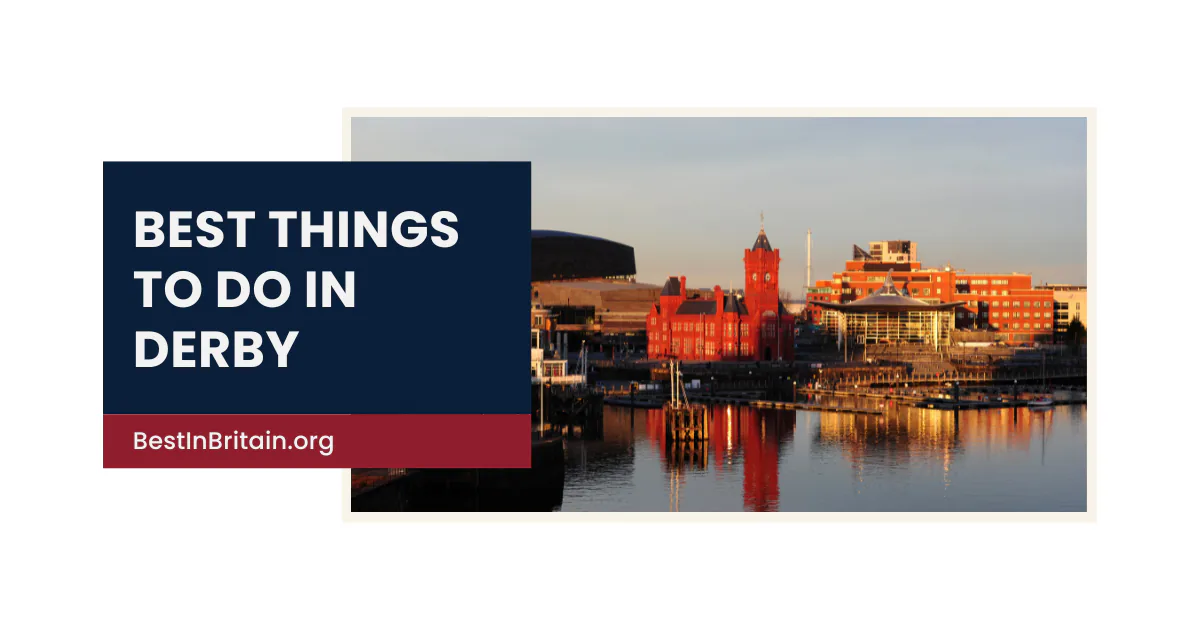
Derby is a city with a far deeper story than many first-time visitors expect. Its riverside silk mill helped shape the modern factory system, its museums hold nationally important art and engineering collections, and its compact centre preserves traces of medieval, Georgian and industrial Derby.
The city also makes an excellent base for exploring Derbyshire. Country houses, historic mill communities and the landscapes of the Peak District are all within easy reach, while large parks and riverside paths provide quieter experiences inside the city itself.
This guide brings together the best things to do in Derby, focusing on the attractions and experiences that genuinely reveal its industrial heritage, architecture, culture and connection with the surrounding county.
Historic and cultural things to do in Derby
1. Explore the Museum of Making
Business details
Address
Silk Mill Lane, Derby DE1 3AF
Contact details: +44 1332 641901
Operating hours:
- Monday: Closed
- Tuesday to Saturday: 10 am to 5 pm
- Sunday: 10 am to 4 pm
Price: Free
The Museum of Making occupies the historic Derby Silk Mill site beside the River Derwent. The location is internationally significant because it formed part of the Derwent Valley Mills, where systems of mechanised factory production developed during the early Industrial Revolution.
The museum tells Derby’s 300-year history of manufacturing through objects connected with engineering, textiles, railways, aviation, ceramics and everyday design. Large machinery sits beside smaller personal objects, prototypes and products made in the city.
Its open displays and working spaces make it feel more like an active centre for creativity than a conventional industrial museum.
Pro tip:
Allow at least two hours and explore the building itself as carefully as the exhibits. Its riverside location and industrial fabric are central to the story.
2. Visit Derby Cathedral
Business details
Address
18 to 19 Iron Gate, Derby DE1 3GP
Contact details: +44 1332 341201
Operating hours:
- Sunday: 8:30 am to 6:15 pm
- Monday: 8:30 am to 6:30 pm
- Tuesday: 8:30 am to 6:30 pm
- Wednesday: 8:30 am to 6 pm
- Thursday: 8:30 am to 6:30 pm
- Friday: 8:30 am to 5 pm
- Saturday: 9 am to 5 pm
- Services and events may temporarily restrict sightseeing
Price: Free, with donations welcomed
Derby Cathedral is best known for its tall Perpendicular Gothic tower, one of the most recognisable landmarks in the city centre. The remainder of the church was substantially rebuilt during the 18th century, creating a bright interior that contrasts with the medieval tower.
Inside are monuments connected with important Derbyshire families, including the elaborate memorial to Bess of Hardwick. The cathedral is also closely associated with local peregrine falcons, which have nested on the tower.
Guided tower tours are offered on selected dates and provide wide views over Derby and the surrounding countryside.
Pro tip:
Check the cathedral’s events calendar before visiting. A tower tour is the best way to appreciate the building’s most important surviving medieval feature.
3. See Joseph Wright’s paintings at Derby Museum and Art Gallery
Business details
Address
The Strand, Derby DE1 1BS
Contact details: +44 1332 641901
Operating hours:
- Monday: Closed
- Tuesday to Saturday: 10 am to 5 pm
- Sunday: 12 pm to 4 pm
Price: Free
Derby Museum and Art Gallery holds the world’s largest collection of works by Joseph Wright of Derby. His dramatic paintings of scientific experiments, industry and candlelit interiors capture both the visual beauty and intellectual excitement of the Enlightenment.
The museum also contains archaeology, natural history, decorative art, military material and displays connected with Derby and Derbyshire.
Wright’s paintings are the essential reason to visit, but the wider galleries provide useful context on the city’s history and changing communities.
Pro tip:
Spend time with the lighting in Wright’s paintings rather than moving quickly between them. Their strongest details often emerge only after several minutes of looking.
4. Step inside Pickford’s House
Business details
Address
41 Friar Gate, Derby DE1 1DA
Contact details: +44 1332 641901
Operating hours:
- Sunday and Monday: Closed
- Tuesday to Saturday: 10 am to 5 pm
Price: Free
Pickford’s House is a Georgian townhouse designed and occupied by architect Joseph Pickford. Its furnished rooms show how a prosperous professional family lived and worked during the 18th century.
Later rooms explore changes in domestic life, clothing and household design across different periods. The contrast between formal reception rooms, family spaces and service areas makes the house particularly useful for understanding Georgian society.
A small garden sits behind the property and provides a quiet break from Friar Gate.
Pro tip:
Visit after walking along Friar Gate. Seeing the house in the context of the surrounding Georgian buildings makes its original status much clearer.
5. Walk through Derby’s Cathedral Quarter
Business details
Address
Iron Gate, Sadler Gate, Friar Gate and surrounding streets, Derby DE1
Operating hours:
- Public streets are accessible at all times
- Individual businesses and attractions keep separate hours
Price: Free to explore
The Cathedral Quarter contains Derby’s strongest concentration of historic streets, independent businesses and cultural attractions. Iron Gate leads towards the cathedral, while Sadler Gate and the surrounding lanes contain shops, restaurants, cafés and surviving architectural details.
The area also includes the Museum and Art Gallery, Pickford’s House, Derby Theatre and several historic pubs and civic buildings.
It is best explored as a neighbourhood rather than simply crossed on the way between attractions.
Pro tip:
Look above modern shopfronts. Upper floors often preserve stonework, windows and façades that reveal the real age of the streets.
6. Find the medieval Bridge Chapel
Business details
Address
St Mary’s Bridge, Sowter Road, Derby DE1 3AT
Operating hours:
- Exterior visible at all times
- Interior access is limited to services, tours and special openings
Price: Free to view
St Mary’s Bridge Chapel is one of only a small number of surviving medieval bridge chapels in England. It stands beside the River Derwent close to the Museum of Making and Derby Cathedral.
The chapel once offered spiritual reassurance to travellers entering Derby and also served as a place where tolls and offerings could be collected.
Its small scale makes it easy to overlook, but it is one of the most unusual historic structures in the city.
Pro tip:
Include it in a riverside walk between the Museum of Making and Darley Park rather than making a separate journey solely to see the exterior.
7. Explore Friar Gate and Derby’s Georgian architecture
Business details
Address
Friar Gate, Derby DE1
Operating hours:
- Street accessible at all times
Price: Free
Friar Gate contains some of Derby’s finest Georgian buildings and provides a useful contrast with the industrial heritage beside the river.
The street includes townhouses, historic inns, Pickford’s House and views towards the former railway bridge. Its architecture reflects the prosperity and expansion of Derby during the 18th and 19th centuries.
Although traffic can make the street feel busy, the façades reward a slow walk.
Pro tip:
Start near the city centre and continue west towards the railway bridge, looking for changes in building scale and decoration along the route.
Art, entertainment and local experiences
8. See a film or exhibition at QUAD
Business details
Address
Market Place, Derby DE1 3AS
Contact details: +44 1332 290606
Operating hours:
- Opening times vary with screenings, exhibitions and events
Price: Free gallery entry, with separate charges for films and events
QUAD is Derby’s centre for independent cinema, digital art, photography and creative events. Its programme combines mainstream and specialist films with exhibitions, workshops, talks and festivals.
The building sits prominently on the Market Place and provides one of the city centre’s most dependable evening cultural options.
Its galleries are generally free, making it easy to visit even without booking a film.
Pro tip:
Check the exhibition and cinema schedules together. A gallery visit followed by an independent film makes a stronger experience than using QUAD only as a conventional cinema.
9. Watch a production at Derby Theatre
Business details
Address
15 Theatre Walk, St Peter’s Quarter, Derby DE1 2NF
Contact details: +44 1332 593939
Operating hours:
- Varies by performance and box-office schedule
Price: £ to £££
Derby Theatre presents drama, comedy, family productions, musicals and new writing. Operated in partnership with the University of Derby, it combines professional performance with artist development and theatre education.
Its programme includes touring work as well as productions created in Derby. The venue’s city-centre location makes it easy to combine with dinner or an evening walk through the Cathedral Quarter.
Pro tip:
Look beyond the headline productions. Smaller studio performances and new work often provide the most distinctive reason to visit.
10. Experience Derby’s pubs, cafés and independent food scene
Business details
Address
Cathedral Quarter, Friar Gate, Sadler Gate and surrounding areas
Operating hours:
- Varies by venue
Price: £ to £££
Derby’s best food and drink experiences are spread across its historic centre rather than concentrated in a single district. Sadler Gate, Friar Gate, Iron Gate and the streets around the Market Place contain independent cafés, restaurants, pubs and bars.
The city also has a strong brewing tradition, with real ale and locally produced beer forming an important part of its pub culture.
Choosing an independent venue in the Cathedral Quarter gives visitors a more distinctive experience than relying only on national chains around the main shopping areas.
Pro tip:
Reserve popular restaurants on Friday and Saturday evenings, especially when Derby County are playing at home or a major event is taking place.
Outdoor things to do in Derby
11. Walk through Darley Park and Darley Abbey
Business details
Address
Darley Park Road, Derby DE22 1DA
Operating hours:
- Open daily
Price: Free
Darley Park follows the River Derwent north of the city centre and contains broad lawns, mature trees, riverside paths and one of the country’s largest collections of hydrangeas.
Beside the park, Darley Abbey preserves an important former mill village within the Derwent Valley Mills World Heritage Site. Historic workers’ housing and industrial buildings reveal how the area developed around textile manufacturing.
The park and village work best as one combined walk.
Pro tip:
Follow the river north from the Museum of Making or St Mary’s Bridge, then return through Darley Abbey village for a varied circular route.
12. Spend time in Markeaton Park
Business details
Address
Markeaton Lane, Derby DE22 4AA
Operating hours:
- Park open daily
- Individual facilities have separate seasonal hours
Price: Free entry, with charges for parking and some activities
Markeaton Park is one of Derby’s largest and most popular green spaces. Open lawns, woodland, gardens, play areas and family activities make it suitable for a longer visit.
The park also contains historic estate buildings, craft businesses and seasonal attractions. Its scale provides more variety than a small city-centre park, particularly for families.
Pro tip:
Check which seasonal activities are operating before travelling. The park itself is always worthwhile, but its family attractions do not all run throughout the year.
13. Follow the River Derwent
Business details
Address
Riverside paths through central Derby and north towards Darley Abbey
Operating hours:
- Public paths are generally accessible throughout the day
- Sections may be affected by flooding or maintenance
Price: Free
The River Derwent is central to Derby’s history and provides one of the best walking routes through the city. Paths connect the Silk Mill site, Cathedral Green, St Mary’s Bridge, Darley Park and the former mill communities further north.
The route combines industrial heritage, wildlife, bridges and green space. It also helps visitors understand why Derby developed where it did and how water power supported early manufacturing.
Pro tip:
Begin at the Museum of Making and walk north. This creates a clear journey from the city’s industrial centre into quieter parkland.
14. Visit Elvaston Castle Country Park
Business details
Address
Borrowash Road, Elvaston, Derby DE72 3EP
Operating hours:
- Country park open daily
- Car park and facilities have seasonal hours
Price: Free entry, with parking charges
Elvaston Castle Country Park lies a short distance south-east of Derby and contains formal gardens, woodland, lakes and open parkland around a Gothic Revival country house.
The estate’s elaborate gardens are the main attraction, with topiary, terraces and ornamental planting creating a more theatrical landscape than Derby’s urban parks.
The house itself is not generally open as a conventional visitor attraction, so the experience centres on the grounds.
Pro tip:
Wear suitable footwear after rain. Woodland and lakeside paths can become muddy, even when the formal garden areas remain firm.
Memorable places near Derby
15. Visit Kedleston Hall
Business details
Address
Kedleston, near Quarndon, Derby DE22 5JH
Contact details: +44 1332 842191
Operating hours:
- Hall: generally 11 am to 4 pm
- Last entry to the hall: 3:15 pm
- Estate opening varies by date and season
Price: £££, free for National Trust members
Kedleston Hall is one of Britain’s finest 18th-century country houses and sits only a short distance from Derby. Designed largely by Robert Adam, it was created as a grand show palace for the Curzon family.
The state rooms contain elaborate plasterwork, painted ceilings, classical columns, furniture, paintings and collections assembled over generations. The central Marble Hall and domed saloon demonstrate Adam’s architecture at its most theatrical.
Landscaped parkland and pleasure grounds surround the house.
Pro tip:
Check the day-specific opening calendar before travelling. The estate may be open when parts of the hall have restricted access.
16. Explore the Derwent Valley Mills World Heritage Site
Business details
Address
Sites between Derby and Matlock Bath, Derbyshire
Operating hours:
- Outdoor areas and settlements are accessible throughout the year
- Individual museums and attractions keep separate hours
Price: Free to explore, with charges for some attractions
The Derwent Valley Mills World Heritage Site follows the River Derwent north from Derby through historic industrial communities including Darley Abbey, Belper, Milford and Cromford.
The valley played a fundamental role in the development of the modern factory system. Mills, canals, workers’ housing and planned settlements show how industrial production transformed both work and everyday life.
Visitors can explore individual sections by train, bicycle, car or on foot rather than attempting the entire valley in one day.
Pro tip:
For a manageable first trip, combine Derby’s Museum of Making with Darley Abbey or take the train to Belper and explore its mill heritage and town centre.
How to make the most of a visit to Derby
Derby’s main central attractions are close together. A strong first-day route begins at the Museum of Making, continues past the Bridge Chapel and Derby Cathedral, then includes the Cathedral Quarter, Museum and Art Gallery, Pickford’s House and QUAD.
Most Derby Museums venues are free, but all three major museum sites close on Mondays. Plan a Tuesday-to-Saturday visit for the widest choice, or check Sunday hours carefully because they differ between locations.
Darley Park can be reached on foot along the River Derwent, while Markeaton Park and Elvaston Castle are easier by bus, taxi, bicycle or car.
Derby is also a practical base for the wider county. Kedleston Hall and the Derwent Valley Mills are nearby, while the Peak District can be reached on a longer day trip. Public transport works well for some towns and attractions, but rural journeys require more planning.
Derby Visitor, Culture & Leisure Market Statistics
Annual Visitor Footfall
2.4M
Annual visitors in Derby
Tourist & Visitor Spend
£450M
Annual visitor expenditure
Cultural & Leisure Venues
120
Attractions & landmarks
Visitor Stay Profile
70% Day
30% Overnight stays
Primary Attraction & Cultural Hubs in Derby
- UK1 (Historic Centre & Landmarks)48% focus
- UK2 (Cultural Quarter & Museums)28% focus
- UK3 (Parks & Waterfront Promenade)14% focus
- UK4 (Outer Trails & Heritage Sites)10% focus
Attraction Types & Category Breakdown
- Museums & Cultural Heritage38% of venues
- Parks, Nature & Scenic Walks26% of venues
- Historic Architecture & Landmarks20% of venues
- Guided Tours & Family Attractions16% of venues
Related guides

Things to Do
25 best Christmas markets in the UK
Discover 25 of the best Christmas markets in the UK, from Bath's Georgian streets and Birmingham's Frankfurt market to cathedral fairs, city festivals and historic estate markets.
Updated 26 September 2026

Things to Do
20 best places for a romantic weekend in the UK
Discover 20 of the best places for a romantic weekend in the UK, from historic cities and coastal towns to countryside escapes, islands and mountain retreats across all four nations.
Updated 26 September 2026

Things to Do
Top Escape Rooms in Edinburgh for a Thrilling Challenge
A researched guide to Edinburgh escape rooms offering historical mysteries, cinematic adventures, magical puzzles, detective stories and team-building games.
Updated 1 August 2026

Things to Do
Best Jazz Clubs in London for Live Music
A current guide to six London jazz clubs and live-music venues, covering ticket prices, seating, food, age rules, accessibility, jam sessions and the different styles each venue presents.
Updated 22 July 2026
Things to Do
16 best things to do in Norwich for an unforgettable visit
Explore 16 of the best things to do in Norwich, including the restored castle, cathedral quarter, historic lanes, independent market, riverside walks and Norfolk day trips.
Updated 22 July 2026
Things to Do
20 best things to do in Bath for an unforgettable visit
Discover the best things to do in Bath, from the Roman Baths and Thermae Bath Spa to Georgian landmarks, museums, gardens, riverside walks and memorable local experiences.
Updated 21 July 2026
Know a business we should consider?
Send us the details and our editorial team will review whether it fits a future guide.
Submit businessWriter profile
Gabriela Krumova
Arts, Culture & Performance Contributor
Actor, theatre director and Queen Margaret University Drama graduate with international performance experience across Edinburgh, London, New York, Paris and Venice. Gabriela has performed in and directed Edinburgh Festival Fringe productions and covers theatre, performing arts, cultural venues, live entertainment, festivals and the creative industries for Best in Britain.
Editorial Trust Standard
Independent ReviewIndependent Research
Featured rankings are editorially determined. Commercial partner listings are strictly labeled as Sponsored or Featured.
Public Register Audit
Listings are cross-checked against public regulatory registries, Companies House filings, and published fee schedules.
Regional Directory