
Britain's historic houses are not all variations on the same country mansion. Some were built to project dynastic power, others as private family retreats, political meeting places or deliberately theatrical expressions of wealth. Their rooms preserve stories of collecting, architecture, domestic work, landscape design and the individuals whose decisions shaped entire estates.
The most rewarding visits go beyond admiring decorated ceilings and long galleries. A well-presented historic house can reveal how a household functioned, where its money came from, how fashions changed and why successive generations altered, neglected or rescued the building. Kitchens, servants' passages, family photographs and unfinished restoration work can be as illuminating as the grandest state room.
This guide brings together 20 of the best historic houses in the UK. The selection includes major estates in England, Scotland, Wales and Northern Ireland, balancing internationally recognised landmarks with houses whose atmosphere and collections deserve wider attention.
Opening arrangements vary considerably. Some houses close during winter, open only selected rooms or require timed admission. Always check the official website before setting out.
How we selected the best historic houses in the UK
Our selection considered:
- Architectural importance: Houses that represent a significant period, architect or style.
- Historic interiors and collections: Surviving rooms, furniture, textiles, art and personal objects that deepen the visit.
- Quality of interpretation: Clear, responsible storytelling about owners, workers, finances and wider social history.
- Setting: Gardens, parkland and designed landscapes that form an essential part of the estate.
- Visitor experience: Enough substance to justify the journey, with practical access to the house and grounds.
- Geographical balance: A broad spread across the four nations rather than a list dominated by southern England.
Historic houses in England
1. Chatsworth House, Derbyshire
Location: Bakewell, Derbyshire
Best for: Art collections, grand interiors and Peak District scenery
Allow: A full day
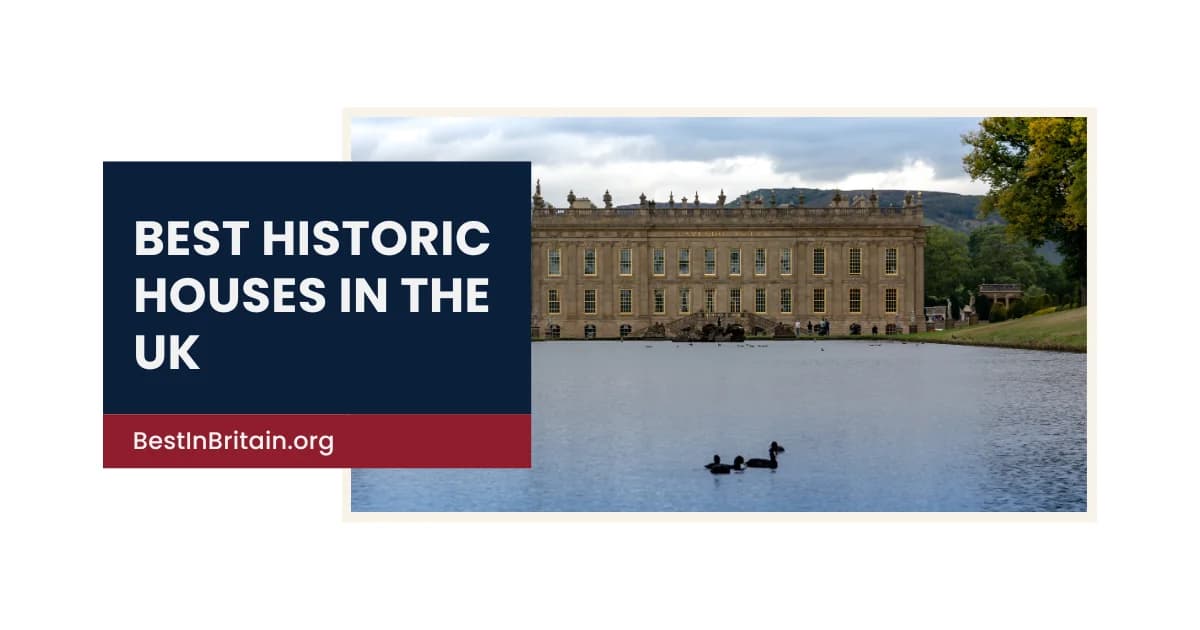
Chatsworth is one of Britain's defining country houses. Home to the Cavendish family for centuries, the estate combines a vast historic collection with rooms that continue to evolve rather than presenting the building as a frozen period piece.
The house contains paintings, sculpture, furniture, drawings and decorative art gathered across generations. Its sequence of interiors ranges from richly ornamented state rooms to more personal family spaces, while the Painted Hall and Sculpture Gallery provide two of the most memorable architectural moments.
Outside, the garden is an attraction in its own right. Waterworks, formal areas, woodland and contemporary additions sit within the wider Derbyshire landscape, giving visitors far more than a conventional house tour.
Why it stands out:
Chatsworth succeeds because the collection, architecture and landscape feel inseparable. It is grand, but the interpretation also shows how each generation left its mark.
Good to know:
The estate is large and busy during holidays. Book house admission in advance and avoid trying to cover every part of the garden at the same pace.
2. Blenheim Palace, Oxfordshire
Location: Woodstock, Oxfordshire
Best for: Baroque architecture, political history and monumental scale
Allow: A full day
Blenheim Palace was created as a national monument as well as a family home. Designed by John Vanbrugh and Nicholas Hawksmoor, its theatrical Baroque architecture reflects the military victory of the first Duke of Marlborough and the political ambitions surrounding the estate.
The state rooms are filled with portraits, tapestries and furniture, while the wider story includes the Spencer-Churchill family and the birth of Winston Churchill. The building's scale can initially feel overwhelming, but the most interesting details often lie in the tension between ceremonial grandeur and domestic life.
The park and gardens were reshaped by Capability Brown, whose lake and sweeping landscape softened the palace's architecture without reducing its drama.
Why it stands out:
Few British houses communicate power as directly. Blenheim is both an architectural spectacle and a useful place to examine how national history, private inheritance and public presentation overlap.
Good to know:
Different ticket types and special events can affect access. Check what is included rather than assuming every exhibition and tour is covered by standard admission.
3. Castle Howard, North Yorkshire
Location: York, North Yorkshire
Best for: Baroque drama, art and landscaped gardens
Allow: Most of a day
Castle Howard rises above the Howardian Hills with a confidence that makes it look more like a continental palace than an English country house. John Vanbrugh's design developed over decades, producing a complex building whose great dome has become one of the most recognisable silhouettes in British architecture.
Inside, the house contains richly layered rooms, family collections and evidence of ongoing restoration. Its history is not one of uninterrupted preservation: fire destroyed part of the building in 1940, and the long process of repair remains central to understanding the estate.
The grounds include lakes, woodland walks, temples and long views that reveal how carefully the landscape was composed.
Why it stands out:
Castle Howard offers both splendour and visible historical change. The restored and unfinished areas make the house feel like a living conservation project rather than a flawless stage set.
Good to know:
The house generally follows a seasonal opening pattern. Check whether the interiors are open on the day of your visit.
4. Hardwick Hall, Derbyshire
Location: Doe Lea, Derbyshire
Best for: Elizabethan architecture and historic textiles
Allow: Half a day to a full day
Hardwick Hall was built for Bess of Hardwick, one of the most powerful women in Elizabethan England. Its famous abundance of glass, tall proportions and prominent initials turn the building into an unmistakable statement of status.
The interiors are particularly important for their textiles. Tapestries, embroideries and large-scale hangings survive in rooms whose proportions were designed to impress visitors and communicate lineage.
Nearby Hardwick Old Hall provides a valuable contrast. Seeing the earlier building alongside its more ambitious successor helps explain the speed and confidence of Bess's rise.
Why it stands out:
Hardwick is one of the clearest places in Britain to understand how architecture could express personal ambition. The house and collection still feel closely connected to the woman who created them.
Good to know:
Do not skip the old hall and external viewpoints. The relationship between the two buildings is essential to the story.
5. Burghley House, Lincolnshire
Location: Stamford, Lincolnshire
Best for: Elizabethan architecture and spectacular painted interiors
Allow: Most of a day
Burghley House was built for William Cecil, chief adviser to Elizabeth I, and remains one of England's greatest surviving Elizabethan houses. Its towers, chimneys and complex roofline create a formidable exterior, but the interiors reveal several later phases of decoration.
The state rooms contain paintings, furniture and a remarkable sequence of murals by Antonio Verrio and Louis Laguerre. These Baroque interiors contrast with the older structure and show how major houses were repeatedly updated to suit new tastes.
The surrounding parkland and proximity to Stamford make Burghley particularly easy to build into a longer cultural visit.
Why it stands out:
Burghley combines a powerful Elizabethan exterior with some of the most exuberant later interiors in Britain. The contrast between periods is part of its appeal.
Good to know:
The house usually opens seasonally and may close on certain days. Confirm house access separately from the grounds.
6. Osborne, Isle of Wight
Location: East Cowes, Isle of Wight
Best for: Queen Victoria, royal family life and coastal gardens
Allow: A full day
Osborne was the private seaside home of Queen Victoria and Prince Albert. Built in an Italianate style, it was intended to provide family privacy away from the formal pressures of court.
The house preserves state rooms, family apartments and objects connected with royal life, but Osborne's strength lies in the combination of grandeur and intimacy. The nursery spaces, Swiss Cottage and private beach reveal how the royal children were educated and how the family used the estate.
Terraces and gardens descend towards the Solent, giving the house a setting unlike any mainland royal residence.
Why it stands out:
Osborne offers a rare view of monarchy as family life. Original furnishings and personal spaces make Victoria and Albert feel less remote than they do in more ceremonial palaces.
Good to know:
The estate is spread across a large site. Allow time for the walk or transport between the main house, Swiss Cottage and beach.
7. Waddesdon Manor, Buckinghamshire
Location: Aylesbury, Buckinghamshire
Best for: French-inspired interiors and decorative arts
Allow: A full day
Waddesdon Manor was created by Baron Ferdinand de Rothschild as a country retreat and a setting for entertaining and displaying his collection. Its French Renaissance-inspired architecture immediately separates it from the more conventionally English houses on this list.
Inside are paintings, furniture, porcelain, clocks and decorative objects assembled with exceptional connoisseurship. The rooms were designed as complete environments, where architecture and collection reinforce one another.
The gardens, aviary and seasonal displays make Waddesdon especially appealing to visitors who enjoy both interiors and ornamental horticulture.
Why it stands out:
Waddesdon is less about ancient family continuity than the deliberate creation of a collecting and entertaining house. It shows how wealth, taste and European influence shaped late-Victorian country-house culture.
Good to know:
Timed house admission is often separate from general grounds access. Transport from the car park may form part of the visit.
8. Petworth House, West Sussex
Location: Petworth, West Sussex
Best for: British art and Capability Brown parkland
Allow: Half a day to a full day
Petworth House is particularly important for its art collection. Paintings by Turner, Van Dyck, Reynolds and others hang within interiors shaped by aristocratic collecting and patronage.
The Carved Room, with its elaborate work by Grinling Gibbons, is one of the architectural highlights. Elsewhere, service areas and domestic spaces help balance the story of display with the practical labour that supported the household.
The surrounding deer park was shaped by Capability Brown and provides long walks with changing views back towards the house.
Why it stands out:
Petworth works as both a country-house visit and a serious art destination. Its collection rewards slow looking rather than a quick procession through rooms.
Good to know:
The house, servants' quarters and park can have different opening arrangements. Check the day's access before planning your route.
9. Holkham Hall, Norfolk
Location: Wells-next-the-Sea, Norfolk
Best for: Palladian architecture and a wider estate day out
Allow: Most of a day
Holkham Hall is one of England's finest Palladian houses. Its restrained exterior gives way to the Marble Hall, a soaring entrance inspired by classical architecture and designed to establish the intellectual tone of the building.
The state rooms contain tapestries, paintings and furniture accumulated by the Coke family. Holkham also remains part of a working estate, and its interpretation extends beyond aristocratic interiors to land, agriculture and long-term stewardship.
The wider destination includes parkland, estate facilities and the nearby north Norfolk coast.
Why it stands out:
Holkham's architecture is exceptionally coherent. The house feels like a complete classical composition rather than a building assembled through unrelated additions.
Good to know:
House opening is seasonal and may be limited to particular days. Check access before travelling specifically for the interiors.
10. Highclere Castle, Hampshire
Location: Newbury, Hampshire
Best for: Victorian interiors, Egyptian collections and television history
Allow: Half a day
Highclere Castle is widely recognised as a filming location for Downton Abbey, but its history extends far beyond its screen identity. The present house was remodelled by Sir Charles Barry, the architect associated with the Palace of Westminster.
The principal rooms retain the formality and circulation expected of a great Victorian country house. The estate also presents material connected with the fifth Earl of Carnarvon and the discovery of Tutankhamun's tomb.
Television has changed how many visitors approach Highclere, but the most rewarding experience comes from comparing the fictional household with the real architectural and family history.
Why it stands out:
Few houses demonstrate so clearly how screen fame can renew public interest in historic architecture. Highclere offers both familiar views and a more complex real story.
Good to know:
Public opening is limited to selected dates and seasons. Advance booking is essential.
11. Montacute House, Somerset
Location: Montacute, Somerset
Best for: Elizabethan architecture and long-gallery atmosphere
Allow: Half a day
Montacute House is built from warm Hamstone and presents one of the most harmonious Elizabethan façades in England. Its symmetry, tall windows and formal garden setting make an immediate impression.
Inside, the Long Gallery runs almost the full length of the upper floor and remains the defining space. The house has experienced changing displays and conservation arrangements over time, so visitors should check which interiors are currently accessible.
The surrounding village and garden add to the sense of a complete historic setting.
Why it stands out:
Montacute is architecturally satisfying without the overwhelming scale of the largest palaces. Its exterior and long gallery make it memorable even during a shorter visit.
Good to know:
Room access can be affected by conservation work. Review current visitor information before travelling.
Historic houses in Scotland
12. Culzean Castle, South Ayrshire
Location: Maybole, South Ayrshire
Best for: Robert Adam architecture and dramatic coastal scenery
Allow: A full day
Culzean occupies a clifftop above the Firth of Clyde, making the approach and surrounding views as important as the interiors. Robert Adam transformed the building into a romantic late-18th-century composition whose architecture responds directly to the coastline.
The Oval Staircase is the best-known interior, but the sequence of rooms, collections and framed sea views gives the entire house a theatrical quality.
Woodland, gardens, shore paths and estate buildings make Culzean one of Scotland's most complete historic days out.
Why it stands out:
Architecture and landscape are inseparable here. Culzean feels designed around movement, changing views and the drama of its coastal position.
Good to know:
The estate is extensive and exposed to coastal weather. Bring suitable clothing even when the forecast looks settled.
13. Hopetoun House, West Lothian
Location: South Queensferry, West Lothian
Best for: Scottish Baroque architecture and historic interiors
Allow: Half a day to a full day
Hopetoun House developed through the work of major Scottish architects, including Sir William Bruce and William Adam. Its broad, balanced façade and formal approach give it the character of a palace while retaining the identity of a long-standing family estate.
The interiors include grand apartments, furniture, paintings and decorative plasterwork. Views across the Forth and the surrounding designed landscape add another layer to the visit.
Despite its proximity to Edinburgh, Hopetoun can feel surprisingly removed from the city.
Why it stands out:
Hopetoun is one of the clearest places to appreciate the confidence of Scottish classical architecture. The house rewards visitors who look at its overall plan as well as individual rooms.
Good to know:
Public opening is seasonal and the estate also hosts private events. Check the calendar before travelling.
14. Mount Stuart, Isle of Bute
Location: Isle of Bute, Argyll and Bute
Best for: Victorian Gothic interiors and island atmosphere
Allow: A full day
Mount Stuart is among the most extraordinary Victorian houses in Britain. Built for the third Marquess of Bute, it combines Gothic architecture with symbolism drawn from astronomy, religion, art and technology.
The Marble Hall rises through the centre of the house beneath a star-filled ceiling, while coloured glass, mosaics and richly worked materials create interiors of remarkable intensity.
Reaching the Isle of Bute turns the visit into a wider journey, and the gardens provide space to absorb the house after its visual richness.
Why it stands out:
Mount Stuart is deeply personal and unlike any conventional stately home. Its design reflects the interests and imagination of a particular patron rather than an attempt to follow one established style.
Good to know:
Plan around ferry times and confirm transport from Rothesay. House tours or timed access may need advance booking.
15. House of Dun, Angus
Location: Montrose, Angus
Best for: Georgian interiors and a quieter Scottish estate visit
Allow: Half a day
House of Dun was designed by William Adam and presents a more intimate experience than Scotland's largest castles and palaces. Its balanced Georgian architecture contains finely decorated interiors with plasterwork, family possessions and rooms that reveal changing domestic use.
The estate's interpretation extends into local history and the relationship between the house, landscape and surrounding communities.
Woodland and riverside walks make it possible to combine the interiors with a less formal outdoor visit.
Why it stands out:
House of Dun offers architectural quality without overwhelming scale. It is particularly rewarding for visitors who enjoy quieter houses where individual rooms can be considered properly.
Good to know:
Interior access may be by guided tour or limited to set times. Check arrangements before arrival.
Historic houses in Wales
16. Tredegar House, Newport
Location: Newport, South Wales
Best for: Restoration stories and layered family history
Allow: Half a day
Tredegar House is one of Wales's most important late-17th-century houses. Its red-brick exterior, state rooms and service spaces tell the story of the Morgan family and the estate's changing fortunes.
Rather than presenting an unbroken image of aristocratic stability, the house explores personalities, spending, decline and later uses. This makes Tredegar especially effective at showing how easily historic houses could be transformed, dispersed or lost.
The gardens and parkland broaden the visit, while Newport's transport links make the property relatively accessible.
Why it stands out:
Tredegar is memorable for its human stories. Wealth, eccentricity, politics and decline are treated as connected parts of the same history.
Good to know:
The house and grounds may follow different opening times. Seasonal events can change the normal visitor route.
17. Plas Newydd, Anglesey
Location: Llanfairpwll, Anglesey
Best for: Menai Strait views and Rex Whistler's mural
Allow: Half a day to a full day
Plas Newydd overlooks the Menai Strait towards the mountains of Eryri. The setting alone would justify the visit, but the house also contains family interiors and one of Rex Whistler's most important decorative works.
His large mural creates an imagined landscape across the dining room, using perspective, architectural fantasy and visual jokes to transform the space.
The grounds descend towards the water and offer changing views across the Strait, making the garden and house equally important.
Why it stands out:
Plas Newydd combines a deeply scenic location with a highly distinctive interior. Whistler's mural gives the house an artistic identity unlike any other on this list.
Good to know:
Check which rooms are open, as conservation and operational requirements may affect interior access.
18. Powis Castle, Powys
Location: Welshpool, Powys
Best for: Historic collections and terraced gardens
Allow: A full day
Powis Castle developed from a medieval fortress into a richly furnished family residence. Its interiors contain paintings, furniture, textiles and objects gathered across generations.
The Clive collection requires particularly careful interpretation because it is connected with British colonial expansion in India. Visitors should approach it as evidence of power, acquisition and empire rather than simply as a display of exotic craftsmanship.
Outside, the terraced garden is one of the most dramatic historic landscapes in Wales, with clipped yews, statues and long views across the estate.
Why it stands out:
Powis brings together architecture, collecting and garden history across several centuries. It also presents difficult questions about how country-house collections were formed.
Good to know:
The terraces include slopes and steps. Check accessible routes and allow enough time for both house and garden.
Historic houses in Northern Ireland
19. Mount Stewart, County Down
Location: Newtownards, County Down
Best for: Political history, distinctive interiors and celebrated gardens
Allow: A full day
Mount Stewart was shaped by the Marquesses of Londonderry and is closely connected with British, Irish and European political history. Its interiors combine formal rooms with highly individual decorative choices and family collections.
The estate is equally famous for its garden, developed with strong Mediterranean and international influences. Formal compartments, sculpture and planting create a sequence of distinct spaces rather than one continuous design.
Interpretation of the family requires attention to politics, landownership and their place within the history of Ireland and Britain.
Why it stands out:
Mount Stewart is intellectually as well as visually rewarding. The house, family and garden open several different routes into 19th- and 20th-century history.
Good to know:
The gardens deserve substantial time. Avoid treating them as a brief addition after the house.
20. Castle Ward, County Down
Location: Strangford, County Down
Best for: Contrasting architecture and Strangford Lough scenery
Allow: Half a day to a full day
Castle Ward is famous for presenting two architectural personalities within one house. One side is classical and orderly, while the other adopts a Gothic character, reflecting the differing tastes traditionally associated with Lord and Lady Bangor.
The contrast continues inside, where rooms shift in mood and decorative language. This makes the house particularly useful for visitors learning to recognise architectural styles.
The wider estate reaches the shore of Strangford Lough and includes walking routes, farm buildings and landscapes familiar from film and television productions.
Why it stands out:
Few houses make architectural disagreement so visible. Castle Ward is engaging because visitors can compare two styles within the same structure rather than between separate buildings.
Good to know:
Access to the mansion can be seasonal or tour-based. Confirm the day's arrangements before planning a visit around the interiors.
Other historic houses worth considering
A list of 20 inevitably leaves out exceptional places. Depending on your route and interests, other strong choices include:
- Kedleston Hall in Derbyshire
- Attingham Park in Shropshire
- Blickling Hall in Norfolk
- Felbrigg Hall in Norfolk
- Chastleton House in Oxfordshire
- Apsley House in London
- Ickworth in Suffolk
- Castle Drogo in Devon
- Drumlanrig Castle in Dumfries and Galloway
- Fyvie Castle in Aberdeenshire
- Haddo House in Aberdeenshire
- Dumfries House in East Ayrshire
- Erddig near Wrexham
- Dyffryn House in the Vale of Glamorgan
- Florence Court in County Fermanagh
- The Argory in County Armagh
How to plan a historic-house trip
Historic houses often sit outside town centres, and public transport can be limited. Check the final part of the journey carefully rather than assuming a nearby railway station means the estate is walkable.
A few practical points can make the day easier:
- Book timed house admission in advance during busy periods.
- Check whether parking must be reserved.
- Confirm that the house itself is open, not only the gardens.
- Look for photography and bag restrictions.
- Ask about step-free access, lifts and alternative routes.
- Allow more time than the published house-tour duration.
- Check whether a special event changes normal admission.
- Bring outdoor clothing for large estates and exposed gardens.
National Trust, English Heritage and National Trust for Scotland membership can offer useful value for frequent visitors, but privately managed houses often require separate admission.
Best historic houses for different interests
Best for architecture
Blenheim Palace, Castle Howard, Hardwick Hall, Holkham Hall, Culzean Castle and Mount Stuart offer some of the strongest architectural experiences.
Best for art and collections
Chatsworth, Petworth, Waddesdon and Powis Castle reward visitors who want to spend time with paintings, furniture and decorative art.
Best for royal history
Osborne provides the most intimate royal experience, focusing on Queen Victoria, Prince Albert and their family away from court.
Best gardens
Mount Stewart, Powis Castle, Waddesdon, Chatsworth and Plas Newydd combine memorable houses with landscapes worth visiting in their own right.
Best for families
Chatsworth, Osborne, Castle Howard and Castle Ward offer enough variety across houses, grounds and additional attractions to sustain a longer family day.
Best quieter alternatives
House of Dun, Tredegar House and Plas Newydd can provide a more measured visit than the busiest internationally known estates.
Frequently asked questions
What is the difference between a historic house and a stately home?
A historic house is any residence valued for its age, architecture, occupants or collections. A stately home usually refers to a grand country house associated with an aristocratic or wealthy family, although the term has no precise legal definition.
Which is the most famous historic house in Britain?
Chatsworth, Blenheim Palace, Highclere Castle and Osborne are among the most widely recognised. Fame does not necessarily indicate the richest visitor experience, and smaller houses can offer more focused interpretation.
Are historic houses open throughout the year?
Many are not. Privately managed estates frequently open seasonally, while National Trust properties may keep gardens open when the house is closed. Always check the exact date.
Can you take photographs inside historic houses?
Rules vary. Some allow non-flash photography, while others restrict it because of loans, conservation or private family areas. Follow the guidance given at each property.
Are historic houses suitable for children?
Many estates provide trails, outdoor play and family activities. Long formal room routes may be less engaging for very young children, so combine the house with gardens or parkland.
Which UK historic houses can be reached from London?
Waddesdon Manor, Petworth House, Highclere Castle and several houses around Oxfordshire and the Home Counties can be visited from London, although a car or organised excursion may be necessary for the final journey.
Final thoughts
The best historic houses do not present the past as a sequence of beautiful rooms detached from the world outside. They explain who built the house, who paid for it, who worked there, what was collected and why the estate survived when so many others did not.
Chatsworth and Blenheim offer extraordinary scale, while Hardwick and Burghley reveal the confidence of Elizabethan England. Osborne brings visitors closer to royal family life, Mount Stuart shows the imaginative possibilities of Victorian design, and Mount Stewart connects private wealth with political history.
Choose fewer houses and spend longer at each. The most revealing details are often found after the first impression of grandeur has passed.
Related articles
Related guides
Historic Sites
20 best Roman sites in the UK to visit
Explore 20 of the best Roman sites in the UK, from Hadrian's Wall and the baths of Aquae Sulis to villas, legionary fortresses, frontier forts and buried cities.
Updated 17 June 2026
Historic Sites
25 best UNESCO World Heritage Sites in the UK
Explore 25 of the best UNESCO World Heritage Sites in the UK, from Stonehenge and Edinburgh to the Giant's Causeway, Hadrian's Wall and the Flow Country.
Updated 14 June 2026

Historic Sites
20 best heritage railways in the UK
Discover 20 of the best heritage railways in the UK, from steam journeys through national parks and Welsh mountain lines to seaside railways and restored main-line stations.
Updated 12 June 2026
Historic Sites
15 best prehistoric sites in the UK to visit
Explore 15 of the best prehistoric sites in the UK, from Stonehenge and Avebury to Neolithic villages, chambered tombs, standing stones, mines and Iron Age hillforts.
Updated 29 April 2026
Historic Sites
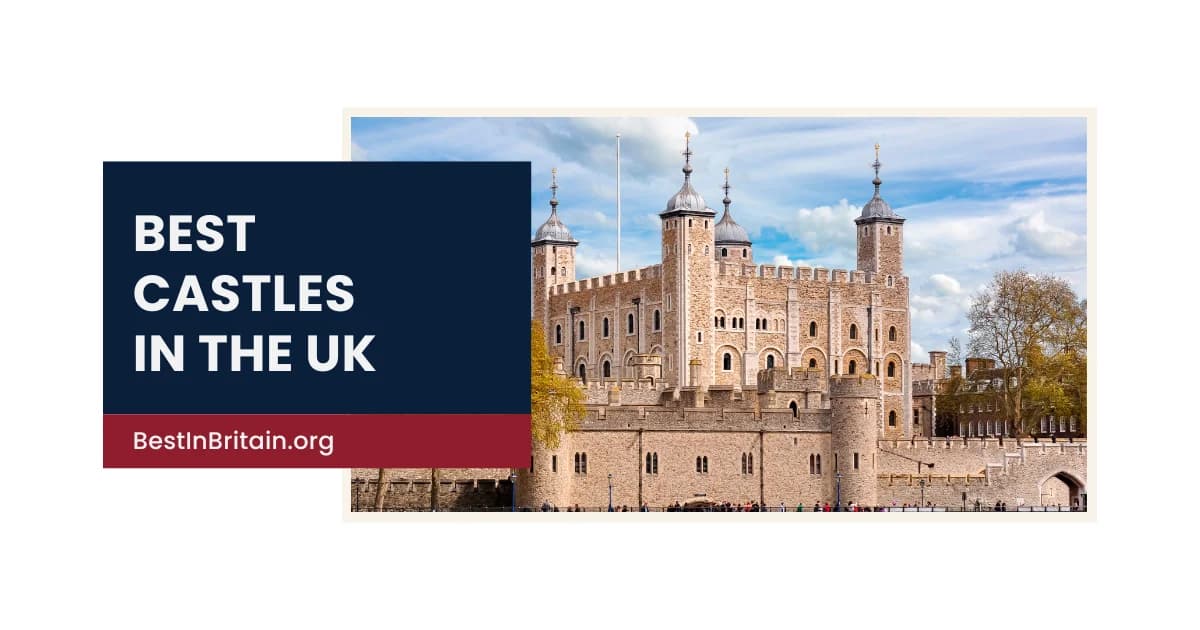
40 best castles in the UK to visit
Discover the best castles to visit across the United Kingdom, from royal residences and medieval fortresses to dramatic coastal ruins and historic strongholds in England, Scotland, Wales and Northern Ireland.
Updated 26 September 2026
Historic Sites
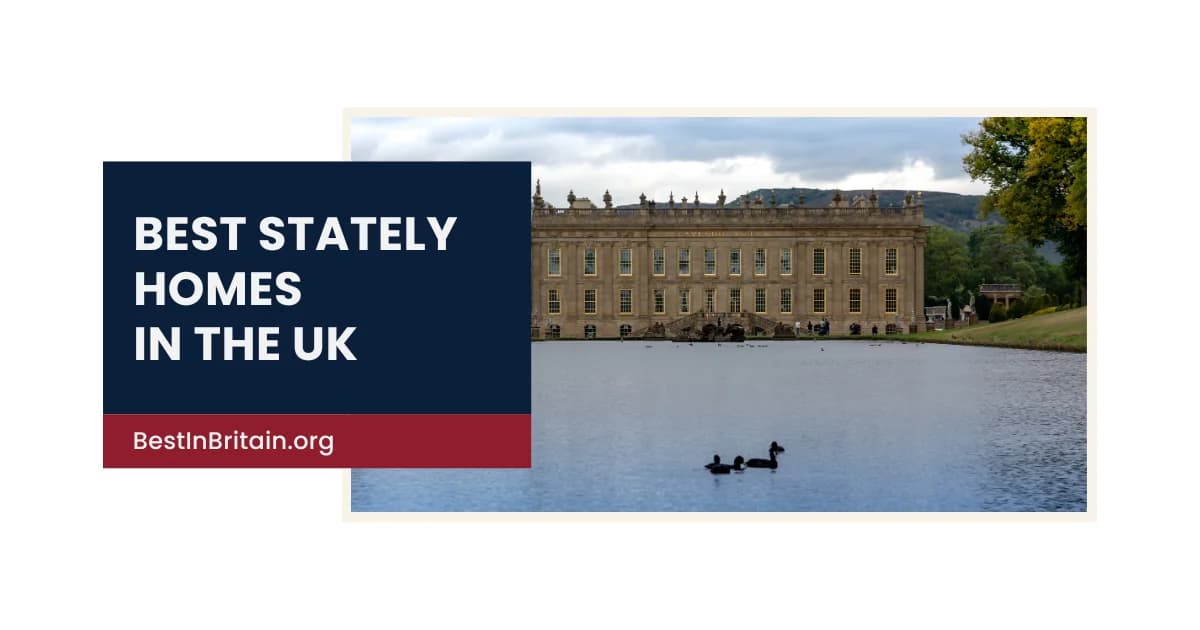
25 best stately homes in the UK for a memorable visit
Discover the best stately homes across the United Kingdom, from grand ducal palaces and aristocratic estates to remarkable country houses with outstanding interiors, gardens and wider landscapes.
Updated 15 July 2026
Know a business we should consider?
Send us the details and our editorial team will review whether it fits a future guide.
Submit businessWriter profile
Gabriela Krumova
Arts, Culture & Performance Contributor
Actor, theatre director and Queen Margaret University Drama graduate with international performance experience across Edinburgh, London, New York, Paris and Venice. Gabriela has performed in and directed Edinburgh Festival Fringe productions and covers theatre, performing arts, cultural venues, live entertainment, festivals and the creative industries for Best in Britain.
Editorial Trust Standard
Independent ReviewIndependent Research
Featured rankings are editorially determined. Commercial partner listings are strictly labeled as Sponsored or Featured.
Public Register Audit
Listings are cross-checked against public regulatory registries, Companies House filings, and published fee schedules.