
Roman Britain survives in far more than straight roads and fragments of defensive wall. Across England, Scotland and Wales, visitors can still walk through legionary fortresses, descend into bathhouses, cross the remains of civilian towns and examine villas whose mosaics reveal how wealthy households adopted Roman fashions.
The strongest Roman sites do not present conquest as a single moment followed by four centuries of unchanging occupation. They show a province that developed unevenly. Military communities expanded around forts, local religions were absorbed into Roman worship, trade linked distant regions and people combined imported customs with existing identities.
Some of the most informative remains lie beneath modern towns. Bath grew around the sacred thermal spring of Aquae Sulis, London Mithraeum survives below a modern office development and Caerleon's baths and barracks sit within a living Welsh community. Elsewhere, open landscapes preserve the frontier more clearly, particularly along Hadrian's Wall and the Antonine Wall.
This guide brings together 20 of the best Roman sites in the UK. It includes military, domestic, religious and industrial locations rather than treating Roman Britain only as a story of forts and emperors.
Opening arrangements, excavation work and conservation restrictions can change. Always check the official website before travelling.
How we selected the best Roman sites in the UK
Our editorial selection considered:
- Archaeological importance: Sites that have significantly shaped knowledge of Roman Britain.
- Visible remains: Buildings, earthworks or reconstructed plans that can still be understood on the ground.
- Range of site types: Forts, towns, villas, bathhouses, temples, mines and frontier systems.
- Quality of interpretation: Museums, artefacts, reconstructions and displays that explain what survives.
- Landscape: Places where the surrounding terrain remains important to the Roman story.
- Geographical range: Strong examples from England, Scotland and Wales.
- Visitor experience: Sites substantial enough to reward a dedicated journey or anchor a wider itinerary.
Roman sites in England
1. The Roman Baths, Bath
Roman name: Aquae Sulis
Best for: Sacred bathing, urban archaeology and museum interpretation
Allow: Two to three hours
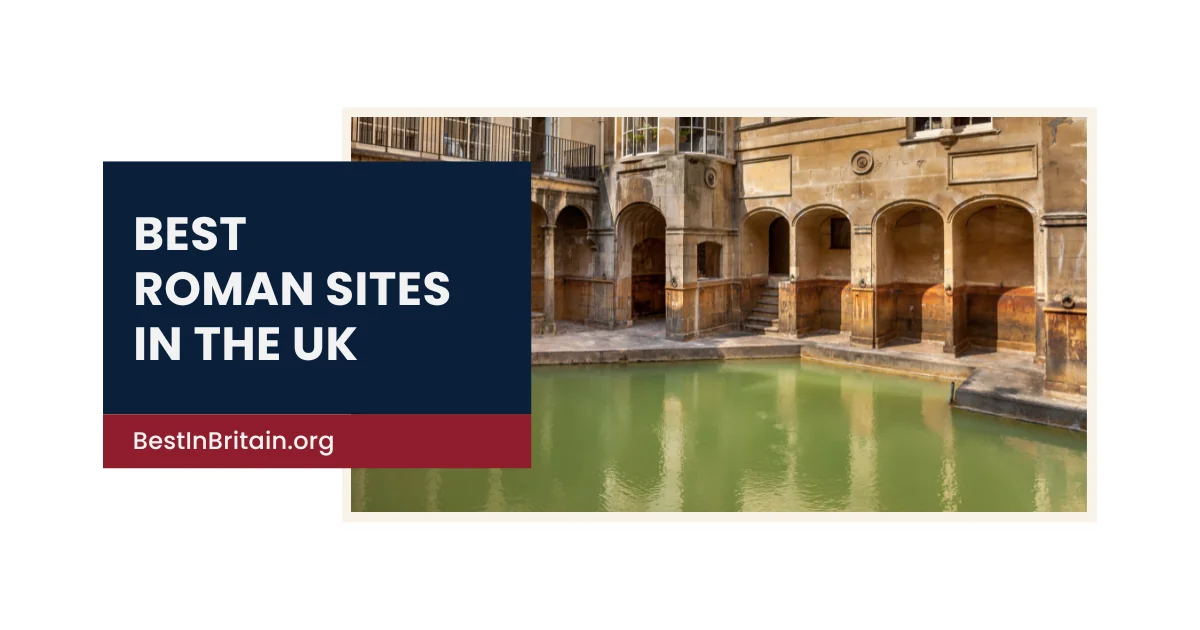
The Roman Baths preserve the heart of Aquae Sulis, a settlement that developed around natural thermal springs sacred to the goddess Sulis Minerva. Roman visitors came to bathe, worship, socialise and seek assistance from the deity.
The surviving complex includes the Sacred Spring, temple precinct, bathhouse and the Great Bath. Much of what visitors see at the upper level reflects later reconstruction, but the Roman masonry, drainage systems and archaeological finds make the original sequence of spaces understandable.
The museum is particularly important. Curse tablets, coins, sculpture and the gilt bronze head of Sulis Minerva reveal personal acts of worship as well as the wealth of the sanctuary.
Why it stands out:
Bath combines substantial architecture with evidence of individual lives. Few Roman sites in Britain explain religion, bathing and urban society so effectively in one visit.
Good to know:
The site can become extremely busy. Book a timed entry and allow enough time for the museum rather than concentrating only on the Great Bath.
2. Housesteads Roman Fort, Northumberland
Roman name: Vercovicium
Best for: Hadrian's Wall, fort layout and dramatic upland scenery
Allow: Two to three hours
Housesteads is one of the most complete Roman forts in Britain. Positioned high on Hadrian's Wall, it commanded broad views across the surrounding landscape and housed an auxiliary garrison responsible for frontier control.
The fort plan remains exceptionally clear. Visitors can identify the headquarters building, commander's house, hospital, granaries and barracks. The communal latrine is one of the most memorable survivals and provides a practical glimpse into military life.
The location is as important as the masonry. From Housesteads, the Wall follows the high ground in a series of dramatic rises and drops, showing how Roman engineers adapted the frontier to the terrain.
Why it stands out:
Housesteads offers the clearest single introduction to the structure of a Roman fort on Hadrian's Wall.
Good to know:
The approach includes a steep outdoor walk from the main parking area. Wear proper footwear and prepare for exposed weather.
3. Vindolanda Roman Fort and Museum, Northumberland
Roman name: Vindolanda
Best for: Archaeological discoveries, writing tablets and everyday frontier life
Allow: Half a day
Vindolanda developed south of the later line of Hadrian's Wall and was rebuilt repeatedly during the Roman occupation. Its waterlogged deposits preserved organic objects that would normally have decayed.
The most famous finds are the Vindolanda writing tablets. These thin wooden documents contain military records, requests, accounts and personal messages, including one of the earliest surviving examples of Latin writing by a woman.
Excavation continues at the site, and visitors may see archaeologists at work during the season. The museum displays footwear, wooden objects, weapons, jewellery and domestic material recovered from the fort and settlement.
Why it stands out:
Vindolanda brings individual Roman voices closer than almost any other site in Britain. Its artefacts reveal routine concerns rather than only official military power.
Good to know:
Allow plenty of time for the museum. The finds are the main reason Vindolanda belongs near the top of any Roman Britain itinerary.
4. Corbridge Roman Town, Northumberland
Roman name: Coria
Best for: Civilian life, trade and the development of a frontier town
Allow: Two to three hours
Corbridge began as a military base but grew into a substantial town serving the northern frontier. Its streets, granaries, workshops, temples and public buildings show a community whose purpose extended far beyond housing soldiers.
The site is especially useful for understanding the economy of Hadrian's Wall. Goods, animals and people moved through Corbridge, and the town acted as a supply and administrative centre.
The museum contains the Corbridge Hoard and a wide range of objects associated with trade, religion, domestic life and military equipment.
Why it stands out:
Corbridge demonstrates that the frontier was supported by towns and civilian communities, not merely a chain of isolated forts.
Good to know:
The remains are generally low, so use the site plan and museum displays to reconstruct the scale of the Roman streets.
5. Chesters Roman Fort and Museum, Northumberland
Roman name: Cilurnum
Best for: Cavalry history and one of Britain's best-preserved military bathhouses
Allow: Two to three hours
Chesters was a cavalry fort built where Hadrian's Wall crossed the River North Tyne. The remains include gates, headquarters buildings, barracks and a substantial bathhouse close to the river.
The bathhouse is the defining feature. Its sequence of changing, cold, warm and hot rooms remains easy to read, helping visitors understand how bathing functioned within military society.
The site museum grew from the collection assembled by John Clayton, whose preservation work helped protect large sections of Hadrian's Wall during the 19th century.
Why it stands out:
Chesters combines a clear fort plan with one of the most complete Roman bath buildings in the country.
Good to know:
The bathhouse lies beyond the main fort and should not be missed. River conditions and wet ground can affect access.
6. Birdoswald Roman Fort, Cumbria
Roman name: Banna
Best for: Long stretches of Hadrian's Wall and the end of Roman Britain
Allow: Two to three hours
Birdoswald occupies a high position above the River Irthing and preserves one of the longest continuous visible sections of Hadrian's Wall.
The fort includes gateways, granaries and defensive remains, but its later history is particularly significant. Archaeological evidence suggests continued occupation after formal Roman administration ended, providing insight into the gradual transformation of frontier communities.
The museum explains the construction and operation of the Wall, while walking routes connect Birdoswald with nearby milecastles, bridges and landscape features.
Why it stands out:
Birdoswald is one of the best places to consider what happened after Roman rule rather than treating AD 410 as an abrupt ending.
Good to know:
The site is well suited to combining archaeology with a longer Wall walk. Check bus and transport schedules if travelling without a car.
7. Arbeia Roman Fort, South Shields
Roman name: Arbeia
Best for: Reconstructions, supply systems and family visits
Allow: Two to three hours
Arbeia stood close to the eastern end of Hadrian's Wall and functioned as a major supply base. Grain and other goods passed through the fort before being distributed along the frontier.
The site is known for its reconstructed west gate, commander's house and barrack block. These buildings help visitors visualise the height, colour and enclosed character of Roman military architecture more easily than foundations alone.
The museum contains material connected with soldiers, civilians and people from across the empire who lived or died in the area.
Why it stands out:
Arbeia makes the frontier's logistics understandable. Its reconstructed buildings are especially useful for visitors new to Roman archaeology.
Good to know:
This is an urban site and easy to combine with Newcastle, South Shields or the eastern end of the Hadrian's Wall route.
8. Wroxeter Roman City, Shropshire
Roman name: Viroconium Cornoviorum
Best for: Roman urbanism and the remains of one of Britain's largest cities
Allow: Two to three hours
Wroxeter was one of the largest cities in Roman Britain. It developed from a legionary base into the civic centre of the Cornovii and contained public baths, a forum, markets and extensive residential districts.
The most prominent surviving structure is the Old Work, a tall section of the bath basilica wall. Surrounding foundations reveal the scale of the public bathing complex.
A reconstructed Roman townhouse based on archaeological evidence provides a useful impression of domestic construction, although visitors should distinguish it from original remains.
Why it stands out:
Wroxeter helps correct the impression that Roman Britain consisted mainly of forts and villas. It was a substantial urban centre with public infrastructure and regional importance.
Good to know:
Most of the ancient city remains beneath fields. The visible bath complex and interpretation are essential for imagining its original extent.
9. Chedworth Roman Villa, Gloucestershire
Best for: Mosaics, domestic luxury and countryside setting
Allow: Two to three hours
Chedworth developed into one of the largest Roman villas in Britain. Its surviving rooms include bath suites, dining areas and corridors decorated with mosaics.
Modern protective buildings preserve several mosaics in place, allowing visitors to examine their patterns and craftsmanship closely. Artefacts and interpretation explore agriculture, household organisation, belief and the villa's relationship with the wider Cotswold landscape.
The estate expanded over centuries, showing how wealthy rural residences could change as status and economic circumstances developed.
Why it stands out:
Chedworth provides one of the strongest pictures of elite domestic life in late Roman Britain.
Good to know:
The site sits in a rural valley with sloping paths. Check accessibility information and allow time for both the protected remains and museum displays.
10. Fishbourne Roman Palace, West Sussex
Best for: Early Roman luxury, mosaics and palace-scale architecture
Allow: Two to three hours
Fishbourne contains the remains of an enormous Roman residence constructed relatively soon after the conquest. Its scale and formal plan have led to its description as a palace, although the identity of its original owner remains debated.
The site contains an exceptional collection of mosaics, including the well-known Cupid on a Dolphin design. Gardens have been reconstructed over part of the original layout to show how architecture and formal planting worked together.
The museum presents finds from the building and explains its destruction by fire during the later Roman period.
Why it stands out:
Fishbourne demonstrates how quickly elite Roman architectural culture appeared in southern Britain after the conquest.
Good to know:
The remains are protected indoors, making this a dependable option in poor weather.
11. Lullingstone Roman Villa, Kent
Best for: Religion, wall paintings and long-term domestic development
Allow: Two hours
Lullingstone Roman Villa was occupied and altered over several centuries. The surviving remains include heated rooms, mosaics, a dining area and evidence of changing religious practice.
The building is especially important for its Christian wall paintings, found within a domestic worship space above an earlier room associated with pagan imagery. This combination illustrates the complexity of belief in late Roman Britain.
A modern cover building protects the archaeology and includes reconstructions that help explain the villa's original appearance.
Why it stands out:
Lullingstone provides rare physical evidence for the development of Christianity within a wealthy Roman household.
Good to know:
The site is compact and works well as part of a wider Kent itinerary. Check seasonal opening dates.
12. Richborough Roman Fort and Amphitheatre, Kent
Roman name: Rutupiae
Best for: The Roman invasion, monumental gateways and coastal change
Allow: Two to three hours
Richborough is traditionally associated with the landing of Roman forces during the conquest beginning in AD 43. It developed from a military supply base into a port town and later a heavily defended fort.
The foundations of a huge ceremonial arch mark the site's role as a symbolic entrance into the province. Later defensive walls reveal how its priorities changed as coastal security became more important.
The Roman shoreline lay much closer to the site than it does today, so understanding landscape change is essential to appreciating Richborough's original purpose.
Why it stands out:
Richborough presents the beginning, development and later defence of Roman Britain within one archaeological site.
Good to know:
The amphitheatre lies away from the central fort remains. Confirm access and allow time to understand the altered coastline.
13. Verulamium Museum and Roman Theatre, St Albans
Roman name: Verulamium
Best for: Urban collections, mosaics and Britain's only fully excavated Roman theatre
Allow: Half a day
Verulamium was one of Roman Britain's major towns. Much of it lies beneath parkland beside modern St Albans, with the museum displaying mosaics, jewellery, tools, pottery and domestic objects recovered through excavation.
The park contains visible sections of the city wall and a preserved hypocaust and mosaic. Nearby, the Roman theatre had a stage rather than the enclosed arena form associated with amphitheatres.
The town was linked with the story of St Alban, traditionally regarded as Britain's first Christian martyr.
Why it stands out:
Verulamium combines a strong museum collection with surviving urban archaeology distributed across an attractive public landscape.
Good to know:
The museum, theatre and park remains are separate stops. Plan a walking route rather than expecting everything within one building.
14. London Mithraeum, City of London
Roman name: Londinium
Best for: Roman religion, immersive presentation and central London accessibility
Allow: Around one hour
The London Mithraeum presents the remains of a temple dedicated to Mithras beneath Bloomberg's European headquarters. The temple was discovered during post-war rebuilding and has since been returned close to its original Roman level and location.
A restrained light and sound presentation reconstructs the sense of an enclosed ritual space without pretending that the missing building survives.
Displays at ground level contain Roman objects found during excavation, including writing tablets and personal possessions connected with Londinium.
Why it stands out:
The Mithraeum demonstrates how significant Roman archaeology can survive beneath a modern financial district.
Good to know:
Admission is free, but timed booking is recommended. The experience is intentionally compact and works well with a wider Roman London walk.
Roman sites in Wales
15. Caerleon Roman Fortress, Baths and Amphitheatre, Newport
Roman name: Isca Augusta
Best for: Legionary life, baths, barracks and an amphitheatre
Allow: Half a day
Caerleon was the permanent fortress of the Second Augustan Legion and remains the most complete Roman military destination in Wales.
The covered fortress baths preserve the large swimming pool and surrounding bathing spaces. Nearby barrack remains help explain how legionaries lived, while the amphitheatre demonstrates the scale of organised entertainment associated with the garrison.
The National Roman Legion Museum adds weapons, inscriptions, domestic objects and burial evidence to the surviving architecture.
Why it stands out:
Caerleon offers several complementary Roman sites within one walkable modern town. Few places in Britain explain legionary life so completely.
Good to know:
The baths, amphitheatre, barracks and museum have separate access arrangements. Check each before planning the order of your visit.
16. Segontium Roman Fort, Gwynedd
Roman name: Segontium
Best for: Roman control of north-west Wales and views towards Eryri
Allow: One to two hours
Segontium was established after the Roman campaigns in Wales and occupied a strategic position overlooking the Menai Strait near modern Caernarfon.
The visible foundations outline the headquarters, barracks and other internal buildings. Although the remains are relatively low, the fort plan remains understandable and its elevated location explains why the site was chosen.
Segontium also entered later Welsh tradition and appears in medieval literary associations, demonstrating how Roman ruins acquired new meanings after the empire withdrew.
Why it stands out:
Segontium links military archaeology with the landscape and later cultural memory of north Wales.
Good to know:
Facilities and interpretation may be limited. Review the site plan in advance and combine the visit with Caernarfon.
17. Dolaucothi Gold Mines, Carmarthenshire
Best for: Roman industry, underground exploration and mining archaeology
Allow: Half a day
Dolaucothi preserves evidence of gold extraction across Roman and later periods. Roman engineers used water management, open workings and underground mining to exploit the deposits.
Guided tours explore parts of the mining landscape and explain how channels, tanks and excavation techniques were used to locate and process ore.
The site adds an important industrial dimension to the story of Roman Britain. Imperial control depended not only on forts and towns but also on the organised extraction of natural resources.
Why it stands out:
Dolaucothi is one of the best places in Britain to understand Roman engineering and resource exploitation.
Good to know:
Underground tours involve confined spaces, uneven ground and safety equipment. Tour options have different accessibility requirements and should be booked in advance.
Roman sites in Scotland
18. Antonine Wall and Rough Castle, Falkirk
Best for: The Roman Empire's northernmost frontier and surviving earthworks
Allow: Two to three hours
The Antonine Wall was constructed across central Scotland on the orders of Emperor Antoninus Pius during the second century. Unlike Hadrian's largely stone wall, much of this frontier was formed from turf set on a stone base, accompanied by a deep ditch, military road, forts and smaller fortlets.
Rough Castle is one of the best-preserved fort sites along the line. Visitors can trace defensive earthworks, the ditch and distinctive pits known as lilia, designed as obstacles on the approach.
The wall was occupied for a much shorter period than Hadrian's Wall, but it represented an ambitious attempt to move the frontier further north.
Why it stands out:
Rough Castle provides the clearest ground-level introduction to the Antonine Wall and the changing strategy of Rome's northern frontier.
Good to know:
The remains are earthworks rather than high standing walls. Use an official map or interpretation guide to understand the layout.
19. Bar Hill Roman Fort, East Dunbartonshire
Best for: Antonine Wall archaeology and views across central Scotland
Allow: One to two hours
Bar Hill was one of the forts positioned along the Antonine Wall. Its elevated setting allowed the garrison to watch the surrounding landscape and maintain communication along the frontier.
The outlines of the fort, headquarters, bathhouse and adjacent Wall can still be traced. Stonework from the bathhouse provides a more immediately recognisable structure than many sections of the turf frontier.
The approach also reveals how the Romans used natural high points to reinforce military control.
Why it stands out:
Bar Hill combines a readable fort plan with one of the strongest landscape settings on the Antonine Wall.
Good to know:
The walk can be muddy and exposed. Parking is limited, and the site is best approached with a clear route plan.
20. Trimontium Museum and Roman Site, Scottish Borders
Roman name: Trimontium
Best for: Roman Scotland, artefacts and the story of a major northern fort complex
Allow: Two to three hours for the museum, longer with a site walk
Trimontium was a major Roman military centre near the Eildon Hills and the modern town of Melrose. The name refers to the three peaks that dominate the surrounding landscape.
The archaeological site itself consists largely of buried remains and earthwork traces, but excavation produced an exceptional collection of military equipment, horse fittings, tools and personal objects.
The museum in Melrose provides the essential interpretation, while guided walks on selected dates connect the finds with the fort landscape.
Why it stands out:
Trimontium is one of the most important Roman sites in Scotland, even though much of its archaeology is not represented by high standing ruins.
Good to know:
Visit the museum before attempting to interpret the outdoor site. Guided walks provide the strongest combined experience.
Other Roman sites worth visiting
A list of 20 cannot cover the full range of Roman archaeology in Britain. Other rewarding choices include:
- Chester Roman Amphitheatre and city walls
- Wallsend Roman Fort at Segedunum
- Great Chesters Roman Fort on Hadrian's Wall
- Carrawburgh and the Temple of Mithras
- Benwell Vallum Crossing and Temple of Antenociticus
- Aesica Roman Fort at Great Chesters
- Ravenglass Roman Bath House in Cumbria
- Aldborough Roman Site in North Yorkshire
- Piercebridge Roman Bridge in County Durham
- Hardknott Roman Fort in Cumbria
- Leicester's Jewry Wall
- Cirencester Roman Amphitheatre and Corinium Museum
- North Leigh Roman Villa in Oxfordshire
- Bignor Roman Villa in West Sussex
- Brading Roman Villa on the Isle of Wight
- Littlecote Roman Villa in Wiltshire
- Silchester Roman City Walls and Amphitheatre
- Dorchester Roman Town House
- Caerwent Roman Town in Monmouthshire
- Tomen y Mur Roman Fort in Gwynedd
- Bearsden Bathhouse near Glasgow
- Croy Hill and Seabegs Wood on the Antonine Wall
Best Roman sites for different interests
Best overall Roman experience
The Roman Baths provides the strongest single indoor visitor experience, while Hadrian's Wall offers the most extensive Roman landscape.
Best Roman fort
Housesteads has the clearest surviving fort plan. Vindolanda is stronger for artefacts and active archaeology, while Caerleon provides the best legionary complex.
Best Roman villa
Chedworth is the most substantial all-round villa experience. Fishbourne stands out for palace-scale architecture and mosaics, while Lullingstone is especially important for religion.
Best museum collection
Vindolanda's organic finds and writing tablets are exceptional. The Roman Baths, Corbridge and Trimontium also provide strong collections.
Best for families
Arbeia's reconstructions, the Roman Baths' interpretation and Caerleon's combination of baths, amphitheatre and museum work particularly well for younger visitors.
Best free Roman sites
The London Mithraeum, Segontium, several Antonine Wall sections and open remains such as Caerwent can be visited without standard admission, although booking, parking or donations may apply.
Best road trip
A Hadrian's Wall itinerary linking Birdoswald, Housesteads, Chesters, Vindolanda and Corbridge provides the strongest multi-day Roman route in Britain.
Understanding a Roman site
Legionary fortress
A large permanent base built for a legion of several thousand soldiers. Caerleon is the clearest surviving example in Wales.
Auxiliary fort
A smaller military base housing non-legionary units such as infantry or cavalry. Housesteads and Chesters are examples.
Vicus
A civilian settlement that developed beside a fort. Traders, craftspeople, families and former soldiers often lived there.
Principia
The headquarters building at the centre of a Roman fort, normally containing administrative rooms, a courtyard and a shrine.
Praetorium
The commander's residence within a fort.
Granary
A raised and ventilated building used to store grain. Strong foundations and raised floors often survive clearly.
Hypocaust
An underfloor heating system that circulated hot air beneath floors and sometimes through wall flues.
Amphitheatre
An enclosed arena used for public spectacles. It differs from a theatre, which had a stage and semi-circular seating.
Bathhouse
A complex of changing, cold, warm and hot rooms used for washing, exercise, relaxation and social activity.
How to plan a Roman-history trip
Roman sites range from major museums to remote earthworks with no staff or shelter. Before travelling:
- Check current opening days and timed-entry requirements.
- Confirm whether museum and archaeological-site tickets are separate.
- Wear waterproof footwear for forts and earthworks.
- Download site plans where mobile coverage may be poor.
- Check accessibility before booking underground or tower experiences.
- Do not climb on exposed masonry.
- Leave enough time for museums and finds.
- Plan public transport carefully along Hadrian's Wall.
- Treat reconstructions as interpretation rather than original buildings.
- Check seasonal guided walks at sites with mostly buried remains.
English Heritage, National Trust, Historic Scotland and Cadw memberships may provide value across several sites, but many museums and independently managed attractions use separate admission systems.
Frequently asked questions
What is the best-preserved Roman site in the UK?
The answer depends on the type of site. Housesteads is one of the most complete forts, the Roman Baths preserves an exceptional religious bathing complex and Chedworth is among the strongest villa sites.
Did the Romans occupy all of the UK?
Roman control covered England and Wales and extended into parts of Scotland at different times. The Romans campaigned in Scotland and built the Antonine Wall, but they did not establish lasting control over the entire area. Ireland was never incorporated into the Roman Empire.
How long did the Romans remain in Britain?
The conquest began in AD 43, although Roman contact pre-dated the invasion. Imperial rule continued for more than three and a half centuries before Roman administration ended in the early fifth century.
Can visitors walk the whole of Hadrian's Wall?
The Hadrian's Wall Path follows the frontier across northern England. Walking the full route normally takes several days, and the visible Wall survives unevenly along the line.
Which Roman city is beneath modern London?
Roman London was known as Londinium. Sections of wall, roads, temples, amphitheatre remains and other archaeology survive beneath or among modern buildings.
Are Roman sites suitable for children?
Many are. Reconstructions, bathhouses, museums and active excavation sites tend to be more immediately engaging than low foundations. Arbeia, Vindolanda, the Roman Baths and Caerleon are especially accessible introductions.
Why are Roman walls sometimes only foundations?
Stone was reused after Roman buildings fell out of use, while agriculture, development and weather removed upper levels. Archaeologists often leave surviving foundations exposed to show the plan while protecting more fragile deposits.
Final thoughts
The best Roman sites in the UK reveal a province built through military force but sustained by roads, towns, trade, religion, extraction and domestic life.
Hadrian's Wall remains the most powerful Roman landscape, yet no single fort explains the frontier completely. Housesteads reveals military planning, Vindolanda preserves personal voices, Corbridge shows trade and Birdoswald raises questions about the period after Roman government.
Further south, Bath and the villas at Chedworth, Fishbourne and Lullingstone reveal very different expressions of wealth and belief. Caerleon demonstrates the scale of a legionary base, while the Antonine Wall and Trimontium show the ambition and limits of Roman power in Scotland.
Visit the museums as well as the ruins. A line of foundations may explain the plan of a building, but a shoe, letter, curse tablet or cooking vessel often says far more about the people who lived there.
Related articles
Related guides
Historic Sites
20 best historic houses in the UK to visit
Explore 20 of the best historic houses in the UK, from grand Baroque palaces and Elizabethan halls to royal retreats and richly furnished country estates.
Updated 22 June 2026

Historic Sites
25 best UNESCO World Heritage Sites in the UK
Explore 25 of the best UNESCO World Heritage Sites in the UK, from Stonehenge and Edinburgh to the Giant's Causeway, Hadrian's Wall and the Flow Country.
Updated 14 June 2026

Historic Sites
20 best heritage railways in the UK
Discover 20 of the best heritage railways in the UK, from steam journeys through national parks and Welsh mountain lines to seaside railways and restored main-line stations.
Updated 12 June 2026
Historic Sites
15 best prehistoric sites in the UK to visit
Explore 15 of the best prehistoric sites in the UK, from Stonehenge and Avebury to Neolithic villages, chambered tombs, standing stones, mines and Iron Age hillforts.
Updated 29 April 2026
Historic Sites
40 best castles in the UK to visit
Discover the best castles to visit across the United Kingdom, from royal residences and medieval fortresses to dramatic coastal ruins and historic strongholds in England, Scotland, Wales and Northern Ireland.
Updated 26 September 2026
Historic Sites
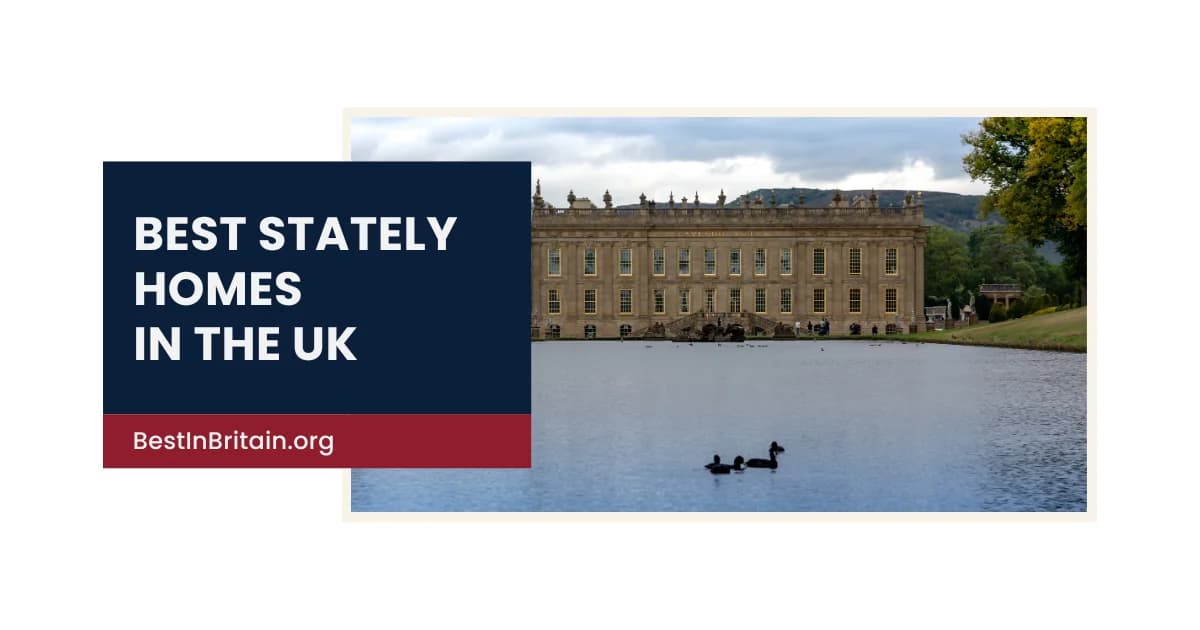
25 best stately homes in the UK for a memorable visit
Discover the best stately homes across the United Kingdom, from grand ducal palaces and aristocratic estates to remarkable country houses with outstanding interiors, gardens and wider landscapes.
Updated 15 July 2026
Know a business we should consider?
Send us the details and our editorial team will review whether it fits a future guide.
Submit businessWriter profile
Gabriela Krumova
Arts, Culture & Performance Contributor
Actor, theatre director and Queen Margaret University Drama graduate with international performance experience across Edinburgh, London, New York, Paris and Venice. Gabriela has performed in and directed Edinburgh Festival Fringe productions and covers theatre, performing arts, cultural venues, live entertainment, festivals and the creative industries for Best in Britain.
Editorial Trust Standard
Independent ReviewIndependent Research
Featured rankings are editorially determined. Commercial partner listings are strictly labeled as Sponsored or Featured.
Public Register Audit
Listings are cross-checked against public regulatory registries, Companies House filings, and published fee schedules.