
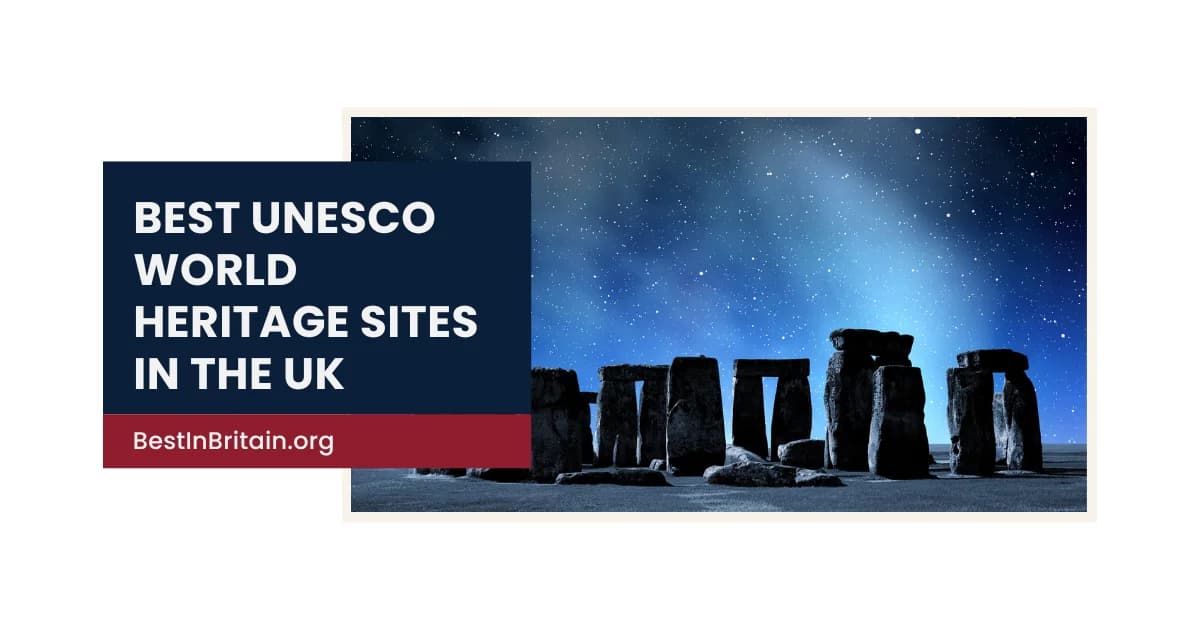
The UK's UNESCO World Heritage Sites range from prehistoric ceremonial landscapes and medieval cathedrals to industrial settlements, modern scientific landmarks and internationally important natural environments. Together, they tell a much broader story than a list of famous buildings ever could.
Some sites can be understood in a single visit. The Tower of London, Durham Cathedral and Jodrell Bank have clear focal points and established visitor routes. Others are spread across entire cities, coastlines or regions. Hadrian's Wall extends across northern England, the Cornwall and West Devon Mining Landscape is composed of several areas, and the Flow Country covers an immense peatland ecosystem in the far north of Scotland.
UNESCO status does not mean that a place is untouched or frozen in time. Many World Heritage Sites remain working towns, places of worship, lived-in landscapes or vulnerable natural environments. Their international recognition rests on what UNESCO describes as Outstanding Universal Value, meaning their importance reaches beyond national boundaries.
This guide brings together 25 of the best UNESCO World Heritage Sites in the UK. The selection balances internationally famous landmarks with industrial, archaeological and natural sites across England, Scotland, Wales and Northern Ireland.
Opening arrangements, conservation work and access restrictions can change. Check the official visitor information for the particular monument, landscape or attraction you intend to visit.
How we selected the best UK World Heritage Sites
Our editorial selection considered:
- Outstanding historic or natural importance: Sites that make an exceptional contribution to understanding architecture, archaeology, science, industry or the environment.
- Visitor experience: Places that reward an in-person visit rather than being significant only in technical or academic terms.
- Range: Prehistoric, Roman, medieval, industrial, scientific, urban and natural heritage.
- Geographical balance: Representation across all four nations of the UK.
- Landscape value: Sites where the wider setting is essential to their meaning.
- Interpretation: Museums, trails, tours or official resources that help visitors understand why the site was inscribed.
- Practicality: Enough accessible material to justify a dedicated trip or become the centre of a wider itinerary.
UNESCO World Heritage Sites in England
1. Stonehenge, Avebury and Associated Sites, Wiltshire
Inscribed: 1986
Type: Cultural
Best for: Prehistory, monumental engineering and ceremonial landscapes
Allow: A full day if visiting both Stonehenge and Avebury
Stonehenge and Avebury form one World Heritage Site but provide very different experiences. Stonehenge is compact, carefully managed and immediately recognisable. Avebury is larger, more dispersed and woven into a living village and agricultural landscape.
Stonehenge developed over many generations, with the familiar arrangement of sarsens and bluestones forming part of a wider landscape containing burial mounds, processional routes and earlier earthworks. Its construction required sophisticated planning, transport and stoneworking.
At Avebury, visitors can walk among the surviving and re-erected stones of an enormous Neolithic circle. West Kennet Avenue, the Sanctuary, Silbury Hill and West Kennet Long Barrow reveal the scale of the wider ceremonial landscape.
Why it stands out:
No other UK World Heritage Site communicates the ambition and organisation of Neolithic communities so clearly across two complementary landscapes.
Good to know:
Stonehenge uses timed admission, while the main Avebury stone circle is open access. Travelling between them by road takes time, so avoid treating both as quick photo stops.
2. City of Bath, Somerset
Inscribed: 1987
Type: Cultural
Best for: Roman archaeology, Georgian architecture and urban design
Allow: One to two days
Bath owes its international significance to several overlapping periods. The Romans developed Aquae Sulis around its thermal springs, creating a religious and bathing complex whose remains survive beneath the modern city.
During the 18th century, Bath became one of Britain's leading spa towns. Architects including John Wood the Elder and John Wood the Younger shaped crescents, squares and terraces in warm local stone, while the surrounding hills influenced the composition of the city.
The Roman Baths, Bath Abbey, Royal Crescent, Circus and Pulteney Bridge are the obvious landmarks, but the World Heritage value lies in the relationship between architecture, landscape and social history.
Bath is also one component of the transnational Great Spa Towns of Europe World Heritage Site, giving the city the unusual distinction of forming part of two UNESCO inscriptions.
Why it stands out:
Bath combines an important Roman sacred site with one of Europe's most coherent Georgian urban landscapes.
Good to know:
The city is best explored on foot, although its hills can be demanding. Book the Roman Baths in advance during busy periods.
3. Palace of Westminster and Westminster Abbey, London
Inscribed: 1987
Type: Cultural
Best for: National government, monarchy and Gothic architecture
Allow: Half a day to a full day
This World Heritage Site brings together the Palace of Westminster, Westminster Abbey and St Margaret's Church. Each building has a distinct purpose, yet together they form the ceremonial and political heart of the United Kingdom.
Westminster Abbey has hosted coronations since 1066 and contains royal tombs, memorials and the graves of major cultural and scientific figures. The present Palace of Westminster was rebuilt during the 19th century after fire destroyed much of the earlier complex.
The contrast between the medieval abbey and the Victorian Gothic Revival palace demonstrates how architecture has been used to express continuity, authority and national identity.
Why it stands out:
Few places in the world concentrate so much constitutional, royal and ceremonial history within one connected urban setting.
Good to know:
The abbey charges for sightseeing, while attending worship is free. Public access to Parliament depends on sittings, tours and security arrangements.
4. Tower of London
Inscribed: 1988
Type: Cultural
Best for: Norman power, royal history and the Crown Jewels
Allow: Three to four hours
The Tower of London began with the White Tower, built after the Norman Conquest as a fortress and an unmistakable symbol of royal authority. Successive monarchs expanded the complex with walls, towers, accommodation and defensive works.
Its history includes royal residence, imprisonment, execution, minting, armour storage and the safeguarding of royal regalia. The Crown Jewels attract the largest crowds, but the architecture and layered uses of the wider fortress are more important to understanding the site.
Yeoman Warder tours bring many of its stories to life, although visitors should remember that the Tower's history involves political violence as well as colourful anecdote.
Why it stands out:
The Tower is one of the clearest surviving expressions of Norman power and a building whose role continually changed alongside the monarchy.
Good to know:
Arrive early and visit the Crown Jewels before queues build. Leave time for the White Tower and external defensive circuit.
5. Durham Castle and Cathedral, County Durham
Inscribed: 1986
Type: Cultural
Best for: Norman architecture and a dramatic river setting
Allow: Half a day
Durham Cathedral and Castle occupy a narrow peninsula above the River Wear. The cathedral was built to house the shrine of St Cuthbert and the remains of the Venerable Bede, while the castle became the residence of Durham's powerful prince-bishops.
The cathedral is among Europe's greatest Norman buildings. Its massive decorated piers and early ribbed vaulting create an interior of extraordinary coherence and force.
Durham Castle now forms part of Durham University and is generally visited through a guided tour. Together, the buildings illustrate the religious and secular authority exercised from the medieval peninsula.
Why it stands out:
Architecture, landscape and institutional power are unusually well aligned at Durham. The approach from the river paths is as important as the interior visit.
Good to know:
Castle tours should be booked separately. University activity can affect access during term time and special events.
6. Canterbury Cathedral, St Augustine's Abbey and St Martin's Church, Kent
Inscribed: 1988
Type: Cultural
Best for: Early English Christianity and medieval pilgrimage
Allow: A full day
Canterbury's World Heritage Site consists of three connected places rather than the cathedral alone. St Martin's Church is associated with the Christian mission to Kent, while St Augustine's Abbey developed as an important early monastic foundation.
Canterbury Cathedral became one of medieval Europe's leading pilgrimage destinations after the murder of Archbishop Thomas Becket in 1170. Its crypt, choir, Trinity Chapel and stained glass preserve several major phases of architecture and worship.
Visiting all three components reveals how Christianity became established, institutionalised and transformed within Anglo-Saxon and medieval England.
Why it stands out:
Canterbury presents the development of English Christianity through a group of sites spanning mission, monastery, cathedral and pilgrimage.
Good to know:
The three locations have separate opening and admission arrangements. Plan the route before arrival rather than assuming they form one enclosed attraction.
7. Studley Royal Park including the Ruins of Fountains Abbey, North Yorkshire
Inscribed: 1986
Type: Cultural
Best for: Monastic ruins and designed landscapes
Allow: A full day
Fountains Abbey is the most extensive ruined monastic complex in Britain. The church, cloisters, cellarium and domestic buildings reveal the scale of a wealthy Cistercian community.
Centuries after the abbey's dissolution, the ruins were incorporated into the designed landscape of Studley Royal. Formal canals, lakes, woodland, temples and carefully framed views transformed the medieval site into part of an ambitious 18th-century garden.
The World Heritage Site also encompasses Fountains Hall, St Mary's Church and the deer park, creating a layered landscape rather than a single-period attraction.
Why it stands out:
The meeting of medieval monastic architecture and Georgian landscape design is unique in scale and quality.
Good to know:
The site involves long outdoor walks. Begin with the ruins and then continue through the water garden at a comfortable pace.
8. Blenheim Palace, Oxfordshire
Inscribed: 1987
Type: Cultural
Best for: Baroque architecture, Capability Brown parkland and political history
Allow: A full day
Blenheim Palace was created as both a national monument and a private residence. It was presented to John Churchill, first Duke of Marlborough, following his victory at the Battle of Blenheim.
John Vanbrugh and Nicholas Hawksmoor designed a monumental Baroque palace whose scale communicates military triumph and aristocratic power. Capability Brown later reshaped the park, creating the lake and sweeping landscape seen today.
The palace is also associated with the Spencer-Churchill family and the birth of Winston Churchill, but its UNESCO significance rests principally on the architecture and designed landscape.
Why it stands out:
Blenheim is one of Europe's most forceful expressions of aristocratic power translated into architecture and landscape.
Good to know:
Different ticket tiers cover different attractions. Check whether exhibitions, upstairs tours and special events are included.
9. The English Lake District, Cumbria
Inscribed: 2017
Type: Cultural landscape
Best for: Mountain scenery, farming traditions and Romantic literature
Allow: Several days
The Lake District was inscribed as a cultural landscape rather than purely for its natural beauty. Its valleys, stone walls, farmsteads and grazing land reflect a long relationship between people and the mountain environment.
From the late 18th century, artists and writers helped reshape the way landscapes were valued. William Wordsworth and other Romantic figures presented the Lakes as a place of emotional, cultural and spiritual importance.
The UNESCO property extends across a large region. Windermere, Keswick and Ambleside are popular bases, but quieter valleys such as Wasdale, Ennerdale and the Duddon provide a stronger sense of the landscape's agricultural and historic character.
Why it stands out:
The Lake District demonstrates how working landscapes can influence art, literature, conservation and global ideas about scenic value.
Good to know:
Do not try to experience the World Heritage Site through one crowded viewpoint. Choose a valley and explore it slowly on foot.
10. Dorset and East Devon Coast
Common name: Jurassic Coast
Inscribed: 2001
Type: Natural
Best for: Geology, fossils and coastal walking
Allow: Several days for more than one section
The Jurassic Coast extends for roughly 95 miles and records around 185 million years of Earth's history through exposed cliffs and rock formations.
Different stretches reveal different geological periods. The cliffs around Lyme Regis and Charmouth are famous for fossils, while Durdle Door, Lulworth Cove and the Isle of Portland demonstrate the effects of erosion, folding and varying rock resistance.
This remains an active and unstable coastline. Cliffs collapse, beaches change and fresh fossils are exposed continually, making conservation and personal safety closely connected.
Why it stands out:
The coast presents an unusually continuous geological record within a visually spectacular and accessible landscape.
Good to know:
Stay away from cliff edges and bases after heavy rain. Check tide times and follow local fossil-collecting guidance.
11. Frontiers of the Roman Empire: Hadrian's Wall
Inscribed: 1987, later expanded as a transnational property
Type: Cultural
Best for: Roman military history and long-distance walking
Allow: Two days to a week, depending on the route
Hadrian's Wall formed part of the north-western frontier of the Roman Empire. The World Heritage Site includes the Wall, forts, milecastles, roads and associated civilian settlements.
The central upland section contains the most dramatic surviving masonry and scenery. Housesteads, Chesters, Birdoswald, Vindolanda and Corbridge each explain a different aspect of frontier life.
The inscription now forms part of the wider transnational Frontiers of the Roman Empire property. Its significance lies not in one uninterrupted wall but in a complex military and administrative system.
Why it stands out:
Hadrian's Wall is Britain's greatest Roman landscape and one of the strongest places to understand how an imperial frontier operated.
Good to know:
The best-preserved central stretch is exposed and hilly. Public transport is seasonal in places, so plan connections carefully.
12. Ironbridge Gorge, Shropshire
Inscribed: 1986
Type: Cultural
Best for: The Industrial Revolution and early iron engineering
Allow: One to two days
Ironbridge Gorge contains a concentration of mines, furnaces, factories, workers' housing, transport infrastructure and museums connected with the early Industrial Revolution.
The Iron Bridge, completed in 1779, is the most recognisable landmark and a major achievement in the structural use of cast iron. Coalbrookdale, Coalport and Jackfield reveal the wider industrial system that developed along the River Severn.
The site is best understood through several museums rather than a single attraction. Blists Hill Victorian Town provides a later interpretation of industrial community life, while the Coalbrookdale Museum of Iron explores production and engineering.
Why it stands out:
Ironbridge preserves the physical landscape in which industrial methods and materials changed manufacturing around the world.
Good to know:
The World Heritage Site is spread across the gorge. A multi-museum ticket can offer better value when staying for more than one day.
13. Derwent Valley Mills, Derbyshire
Inscribed: 2001
Type: Cultural
Best for: Factory systems, water power and industrial settlements
Allow: A full day or weekend
The Derwent Valley became a testing ground for the modern factory system during the 18th century. Richard Arkwright and other entrepreneurs developed water-powered cotton mills whose organisation influenced industrial production internationally.
The World Heritage Site includes Cromford, Belper, Darley Abbey and other communities along the river. Mills, workers' housing, canals and estate buildings show how industrial production reshaped entire settlements.
Cromford Mills provides the clearest visitor introduction, but exploring the wider valley reveals the scale of the system more effectively.
Why it stands out:
The Derwent Valley shows the factory not as an isolated building but as the centre of a new social, residential and transport landscape.
Good to know:
The components are distributed along the valley. Use the railway or plan a driving route rather than expecting one central entrance.
14. Jodrell Bank Observatory, Cheshire
Inscribed: 2019
Type: Cultural
Best for: Radio astronomy, scientific history and modern engineering
Allow: Three to four hours
Jodrell Bank represents a very different form of heritage from Britain's castles and ancient monuments. The observatory played a major role in the development of radio astronomy and the study of meteors, quasars, pulsars and spacecraft.
The Lovell Telescope dominates the site and remains one of the world's most recognisable scientific instruments. Its enormous movable structure demonstrates the engineering required to detect signals from deep space.
The First Light Pavilion and wider visitor centre explain the observatory's work, the growth of radio astronomy and Jodrell Bank's connection with international scientific collaboration.
Why it stands out:
Jodrell Bank proves that World Heritage can recognise modern science, technical ingenuity and ideas as well as ancient architecture.
Good to know:
Outdoor viewing depends on weather, but the main interpretation is indoors. Operational requirements can affect access around the telescope.
15. Cornwall and West Devon Mining Landscape
Inscribed: 2006
Type: Cultural landscape
Best for: Mining history, engine houses and rugged coastal scenery
Allow: Several days
During the 18th and 19th centuries, Cornwall and west Devon became world leaders in copper and tin mining technology. Engineers, workers and machinery from the region influenced mining communities across the world.
The World Heritage Site consists of ten separate areas containing mines, engine houses, foundries, ports, settlements and transport systems. The cliffside engine houses around Botallack provide the most dramatic images, while Geevor Tin Mine, Levant and the Tamar Valley offer deeper interpretation.
The landscape also carries the human consequences of industrial change, including dangerous labour, economic decline and mass migration.
Why it stands out:
This is one of the UK's most extensive and globally influential industrial landscapes.
Good to know:
Do not attempt to cover all ten areas in one trip. Select one region and combine outdoor remains with a museum or guided mine visit.
UNESCO World Heritage Sites in Scotland
16. Old and New Towns of Edinburgh
Inscribed: 1995
Type: Cultural
Best for: Urban history, architecture and walkable city exploration
Allow: Two to three days
Edinburgh's World Heritage status rests on the contrast and relationship between the medieval Old Town and the planned Georgian New Town.
The Old Town follows the ridge from Edinburgh Castle to the Palace of Holyroodhouse, with closes and steep lanes dropping from the Royal Mile. The New Town introduced broad streets, squares and neoclassical architecture that influenced urban planning far beyond Scotland.
The division is visually dramatic, but the city's importance lies in how both areas developed together and continue to function as a living capital.
Why it stands out:
Few European cities present two such distinct and internationally influential forms of urban planning side by side.
Good to know:
Explore beyond the Royal Mile. Calton Hill, the New Town streets, Dean Village and the closes below the main ridge reveal the wider character of the site.
17. The Forth Bridge
Inscribed: 2015
Type: Cultural
Best for: Victorian engineering and estuary views
Allow: One to three hours
The Forth Bridge opened in 1890 and remains one of the defining achievements of late-Victorian engineering. Its vast cantilever structure carried the railway across the Firth of Forth at a scale previously considered impossible.
The red steel bridge is best appreciated from South Queensferry or North Queensferry, where its relationship with the estuary and later road crossings becomes clear.
It remains an operational railway bridge rather than a preserved industrial relic, which strengthens the sense of continuity between historic engineering and modern infrastructure.
Why it stands out:
The bridge transformed long-span construction and has become one of Scotland's most recognisable structures.
Good to know:
The waterfront at South Queensferry provides the easiest views. Boat trips offer a different perspective when weather and services permit.
18. Heart of Neolithic Orkney
Inscribed: 1999
Type: Cultural
Best for: Prehistoric settlements, chambered tombs and ceremonial landscapes
Allow: Two to three days
The Heart of Neolithic Orkney consists of Skara Brae, Maeshowe, the Stones of Stenness and the Ring of Brodgar. Together, they provide exceptional evidence of life, belief and social organisation around five thousand years ago.
Skara Brae preserves stone-built homes and furniture, while Maeshowe demonstrates highly accomplished chambered-tomb architecture. The two stone circles occupy a landscape containing many additional settlement and ritual sites.
The relationship between the monuments matters more than any one component. Water, low hills, routes and intervisibility helped shape a concentrated ceremonial landscape.
Why it stands out:
Orkney contains one of Western Europe's most important and coherent Neolithic landscapes.
Good to know:
Maeshowe requires timed guided entry. Weather can affect access across the islands, so leave flexibility in the itinerary.
19. St Kilda
Inscribed: 1986, with later extensions
Type: Mixed cultural and natural
Best for: Remote island history, seabirds and dramatic Atlantic landscapes
Allow: A full-day boat trip at minimum
St Kilda is the UK's only mixed World Heritage Site, recognised for both its natural environment and cultural history. The archipelago lies far beyond the Outer Hebrides and contains some of Europe's highest sea cliffs and major seabird colonies.
For centuries, a small community survived through fishing, agriculture, bird harvesting and exchange with the outside world. The remaining population was evacuated from Hirta in 1930 after increasing isolation and hardship.
Village ruins, cleits used for storage and traces of earlier settlement remain beneath the immense cliffs.
Why it stands out:
St Kilda combines exceptional ecology with the material remains of one of Britain's most isolated communities.
Good to know:
Landing is weather-dependent and never guaranteed. Travel is demanding, facilities are limited and visitors must follow strict biosecurity rules.
20. The Flow Country, Highlands
Inscribed: 2024
Type: Natural
Best for: Peatland ecology, birdlife and remote northern landscapes
Allow: A full day or longer within a Highland itinerary
The Flow Country is one of the world's most extensive and intact blanket-bog landscapes. Peat has accumulated across this part of northern Scotland for around nine thousand years, creating an intricate environment of pools, ridges, mosses and wetlands.
The landscape stores immense quantities of carbon and supports a distinctive combination of plants and birds. Its importance is ecological and climatic, although the subtle terrain can be harder to read than a mountain or dramatic coastline.
Forsinard Flows provides one of the strongest visitor introductions, with trails and interpretation explaining how blanket bog develops and why damaged peatlands require restoration.
Why it stands out:
The Flow Country recognises an ecosystem whose global value lies in processes, biodiversity and carbon storage rather than conventional scenic grandeur.
Good to know:
This is a huge serial property rather than a single attraction. Choose a managed reserve or visitor trail and avoid walking across fragile bog without local guidance.
UNESCO World Heritage Sites in Wales
21. Castles and Town Walls of King Edward in Gwynedd
Inscribed: 1986
Type: Cultural
Best for: Medieval military architecture and north Wales road trips
Allow: Two to three days
This serial World Heritage Site includes the castles of Caernarfon, Conwy, Harlech and Beaumaris, together with the fortified town walls at Caernarfon and Conwy.
The buildings were created during the conquest of north Wales under Edward I and designed with the assistance of James of St George. Their architecture represents extraordinary technical achievement, but the sites must also be understood as instruments of occupation, colonisation and control.
Each castle has a distinct character. Caernarfon is highly symbolic, Conwy remains closely connected to its walled town, Harlech occupies a dramatic rock and Beaumaris demonstrates an ambitious concentric plan that was never fully completed.
Why it stands out:
The four castles form one of Europe's finest groups of medieval fortifications and a powerful landscape of conquest.
Good to know:
Do not try to visit all four in one rushed day. Allow time for the town walls and the Welsh history surrounding their construction.
22. The Slate Landscape of Northwest Wales
Inscribed: 2021
Type: Cultural landscape
Best for: Industrial archaeology, mountain scenery and community history
Allow: Two to three days
Northwest Wales became an international centre of slate production during the industrial period. Quarries, mines, processing areas, railways, ports and planned communities transformed the landscape and supplied roofing material across the world.
The World Heritage Site consists of six component areas, including Penrhyn, Dinorwig, the Nantlle Valley, Gorseddau, Ffestiniog and Bryneglwys. Museums and preserved railways help explain the technology and transport systems, while the immense quarry faces show the physical impact of extraction.
The social history is equally important. Quarry communities developed distinctive political, linguistic, religious and cultural traditions.
Why it stands out:
The site connects industrial production with Welsh identity, labour history and a mountain landscape permanently reshaped by quarrying.
Good to know:
The components are widely dispersed. Choose a focused route rather than attempting the entire World Heritage Site in one day.
23. Pontcysyllte Aqueduct and Canal
Inscribed: 2009
Type: Cultural
Best for: Canal engineering, walking and elevated waterway views
Allow: Half a day to a full day
Pontcysyllte Aqueduct carries the Llangollen Canal high above the River Dee on a slender cast-iron trough supported by masonry piers. Completed in the early 19th century, it was a major achievement by Thomas Telford and William Jessop.
The World Heritage Site includes more than the aqueduct itself. It follows a section of canal through tunnels, cuttings, embankments and engineered landscapes that demonstrate how difficult terrain was overcome.
Visitors can cross on foot, travel by canal boat or walk sections of the towpath. The exposed edge and height make the crossing thrilling for some and uncomfortable for others.
Why it stands out:
Pontcysyllte combines elegant design with bold engineering and remains in active use more than two centuries after completion.
Good to know:
The towpath is narrow across the aqueduct. Visitors uncomfortable with heights can appreciate the structure from viewpoints below.
UNESCO World Heritage Sites in Northern Ireland
24. Giant's Causeway and Causeway Coast, County Antrim
Inscribed: 1986
Type: Natural
Best for: Volcanic geology and coastal scenery
Allow: Three to four hours
The Giant's Causeway consists of thousands of interlocking basalt columns formed by volcanic activity and cooling lava around sixty million years ago.
Their regular geometric forms inspired the legend that the giant Fionn mac Cumhaill built a route across the sea towards Scotland. Geology and folklore now coexist as two ways of interpreting the landscape.
The UNESCO property extends beyond the most photographed stones to include cliffs and a section of the surrounding coast. Walking higher paths reveals the larger volcanic setting more clearly than staying only beside the water.
Why it stands out:
The Causeway is both a globally important geological formation and one of the most recognisable natural landmarks in the UK.
Good to know:
Access to the stones themselves is free, but visitor-centre services and parking are charged. Rocks can be wet and slippery, and the sea can become dangerous quickly.
25. Gracehill and the Moravian Church Settlements, County Antrim
Inscribed as part of the transnational property: 2024
Type: Cultural
Best for: Planned settlement, religious history and a quieter World Heritage visit
Allow: One to two hours
Gracehill was founded in the 18th century as a Moravian settlement organised around a central square. Its regular plan, church buildings, communal structures, houses and burial ground reflect the religious and social organisation of the community.
The village forms part of the transnational Moravian Church Settlements World Heritage Site alongside Herrnhut in Germany, Christiansfeld in Denmark and Bethlehem in the United States.
Gracehill is subtler than a castle or natural landmark. Its value lies in the survival of an ordered settlement shaped by communal worship, education, work and equality before God.
Why it stands out:
Gracehill is the UK's newest cultural addition to the World Heritage List and offers an unusually coherent example of Moravian planning and community life.
Good to know:
This remains a living village rather than a conventional enclosed attraction. Explore respectfully and check for guided walks or access to individual buildings.
Other UNESCO World Heritage Sites in the UK worth visiting
The UK has more inscribed properties than can fit into a list of 25. Other important choices include:
- Maritime Greenwich in London
- Royal Botanic Gardens, Kew
- Saltaire in West Yorkshire
- New Lanark in South Lanarkshire
- Blaenavon Industrial Landscape in South Wales
- The Great Spa Towns of Europe component at Bath
- Gorham's Cave Complex in Gibraltar
- Gough and Inaccessible Islands
- Henderson Island
- Historic Town of St George and Related Fortifications in Bermuda
Some official UK totals include sites in the Overseas Territories as well as those within England, Scotland, Wales and Northern Ireland. This guide concentrates on sites located within the four nations of the UK.
Best UNESCO World Heritage Sites for different interests
Best for ancient history
Stonehenge and Avebury, the Heart of Neolithic Orkney and Hadrian's Wall provide the strongest archaeological experiences.
Best historic city
Bath and Edinburgh are the most complete urban destinations, while Canterbury and Durham offer more compact cathedral-city visits.
Best natural landscape
The Giant's Causeway is the easiest natural site to experience in a single visit. The Jurassic Coast, Lake District, St Kilda and Flow Country require more time and careful planning.
Best industrial heritage
Ironbridge Gorge provides the most varied museum experience. The Cornwall and West Devon Mining Landscape, Derwent Valley Mills and the Welsh Slate Landscape are stronger for regional exploration.
Best architecture
Blenheim Palace, Westminster, Durham and the castles of Gwynedd represent very different expressions of political, religious and aristocratic power.
Best for families
Stonehenge, the Tower of London, Jodrell Bank, Ironbridge Gorge and the Giant's Causeway provide accessible interpretation and enough variety for a family day.
Best quieter World Heritage Site
Gracehill, parts of the Derwent Valley, the Flow Country and several components of the Welsh Slate Landscape offer a less crowded alternative to famous headline attractions.
What does UNESCO World Heritage status mean?
A World Heritage Site is a cultural or natural property recognised under the UNESCO World Heritage Convention as having Outstanding Universal Value.
Sites are assessed against formal criteria and must have adequate protection and management. Inscription does not transfer ownership to UNESCO, nor does UNESCO directly operate the attraction.
World Heritage status can increase recognition and tourism, but it also brings obligations. Development, erosion, climate change, overcrowding and inappropriate alterations can threaten the qualities for which a site was inscribed.
Cultural sites
These may include monuments, buildings, archaeological sites, industrial landscapes and historic towns.
Natural sites
These are recognised for geology, ecosystems, biodiversity or exceptional natural processes.
Mixed sites
Mixed sites meet both cultural and natural criteria. St Kilda is the UK's only mixed World Heritage Site.
Serial sites
A serial site consists of multiple connected components. The castles of Gwynedd, Welsh Slate Landscape and Heart of Neolithic Orkney are examples.
Transnational sites
These extend across more than one country. The Moravian Church Settlements and Frontiers of the Roman Empire are transnational World Heritage properties.
How to plan a UK World Heritage trip
World Heritage Sites vary enormously in scale. Before travelling:
- Check whether the site is a single attraction or a dispersed landscape.
- Identify which component best matches your interests.
- Book timed admission for major monuments.
- Confirm current conservation closures.
- Allow several days for regional landscapes.
- Use public transport where historic centres have limited parking.
- Follow marked trails in fragile natural environments.
- Check tides and weather for coastal sites.
- Respect lived-in communities and places of worship.
- Avoid treating UNESCO status as permission to access private land.
- Download official maps where mobile coverage may be poor.
A World Heritage road trip works best when organised by region rather than trying to collect sites across the entire UK. Wiltshire combines Stonehenge, Avebury and Bath. North Wales brings together the castles, slate landscape and Pontcysyllte. Central Scotland offers Edinburgh, the Forth Bridge and New Lanark within a manageable journey.
Frequently asked questions
How many UNESCO World Heritage Sites are there in the UK?
UNESCO in the UK currently describes 35 World Heritage properties associated with the UK and its Overseas Territories. Totals can vary depending on whether overseas properties and transnational sites are being counted in a particular context.
What was the first UK World Heritage Site?
The UK's first group of inscriptions came in 1986 and included Durham Castle and Cathedral, the Giant's Causeway, Ironbridge Gorge, St Kilda, Stonehenge and Avebury, Fountains Abbey and the castles of Gwynedd.
What is the newest UK World Heritage Site?
The Flow Country and the Gracehill component of the Moravian Church Settlements were added in 2024. The Flow Country became a new natural property, while Gracehill joined an expanded transnational cultural property.
Is York a UNESCO World Heritage Site?
No. York's historic urban core is on the UK's Tentative List, which means it may be considered for nomination in the future but is not currently inscribed on the World Heritage List.
Is Edinburgh Castle itself a World Heritage Site?
Edinburgh Castle forms part of the Old and New Towns of Edinburgh World Heritage Site. The inscription covers a much wider urban area rather than the castle alone.
Is the Giant's Causeway free?
The geological formation can be accessed without paying an admission fee, although parking, the visitor centre and associated services normally cost extra.
Can a site lose UNESCO status?
Yes. A site can be placed on the List of World Heritage in Danger, and in exceptional circumstances it can be removed entirely if its Outstanding Universal Value is lost. Liverpool Maritime Mercantile City was removed from the list in 2021.
Are all UNESCO sites tourist attractions?
No. Some are lived-in settlements, large landscapes, operational infrastructure or fragile ecosystems. Access may be partial, dispersed or carefully controlled.
Final thoughts
The UK's World Heritage Sites are most rewarding when visitors look beyond the UNESCO label and ask why each place matters internationally.
Stonehenge and Orkney reveal prehistoric societies capable of extraordinary organisation. Durham, Canterbury and Westminster show how religion and political authority shaped architecture. Ironbridge, the Derwent Valley and the Welsh Slate Landscape explain technological changes whose effects spread around the world.
The natural sites broaden the story further. The Jurassic Coast records immense geological time, the Giant's Causeway exposes volcanic processes and the Flow Country demonstrates the global importance of an environment that can initially appear quiet and empty.
Choose fewer sites and explore them properly. UNESCO recognition identifies significance, but the real experience comes from understanding the buildings, communities and landscapes that earned it.
Related articles
Related guides
Historic Sites
20 best historic houses in the UK to visit
Explore 20 of the best historic houses in the UK, from grand Baroque palaces and Elizabethan halls to royal retreats and richly furnished country estates.
Updated 22 June 2026
Historic Sites
20 best Roman sites in the UK to visit
Explore 20 of the best Roman sites in the UK, from Hadrian's Wall and the baths of Aquae Sulis to villas, legionary fortresses, frontier forts and buried cities.
Updated 17 June 2026

Historic Sites
20 best heritage railways in the UK
Discover 20 of the best heritage railways in the UK, from steam journeys through national parks and Welsh mountain lines to seaside railways and restored main-line stations.
Updated 12 June 2026
Historic Sites
15 best prehistoric sites in the UK to visit
Explore 15 of the best prehistoric sites in the UK, from Stonehenge and Avebury to Neolithic villages, chambered tombs, standing stones, mines and Iron Age hillforts.
Updated 29 April 2026
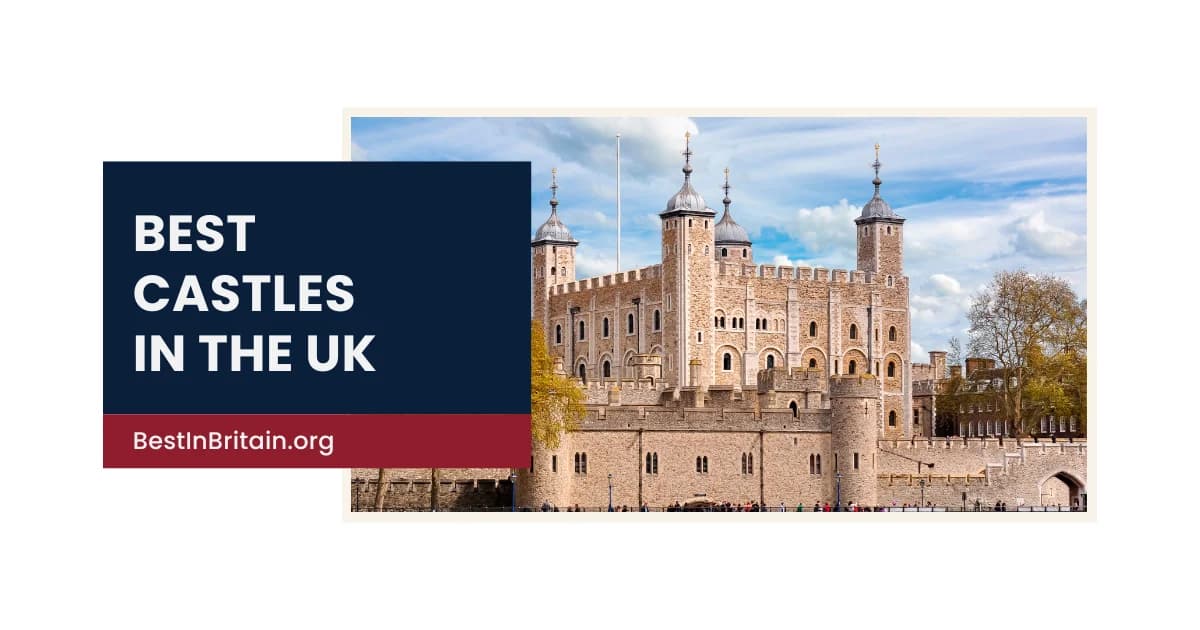
Historic Sites
40 best castles in the UK to visit
Discover the best castles to visit across the United Kingdom, from royal residences and medieval fortresses to dramatic coastal ruins and historic strongholds in England, Scotland, Wales and Northern Ireland.
Updated 26 September 2026
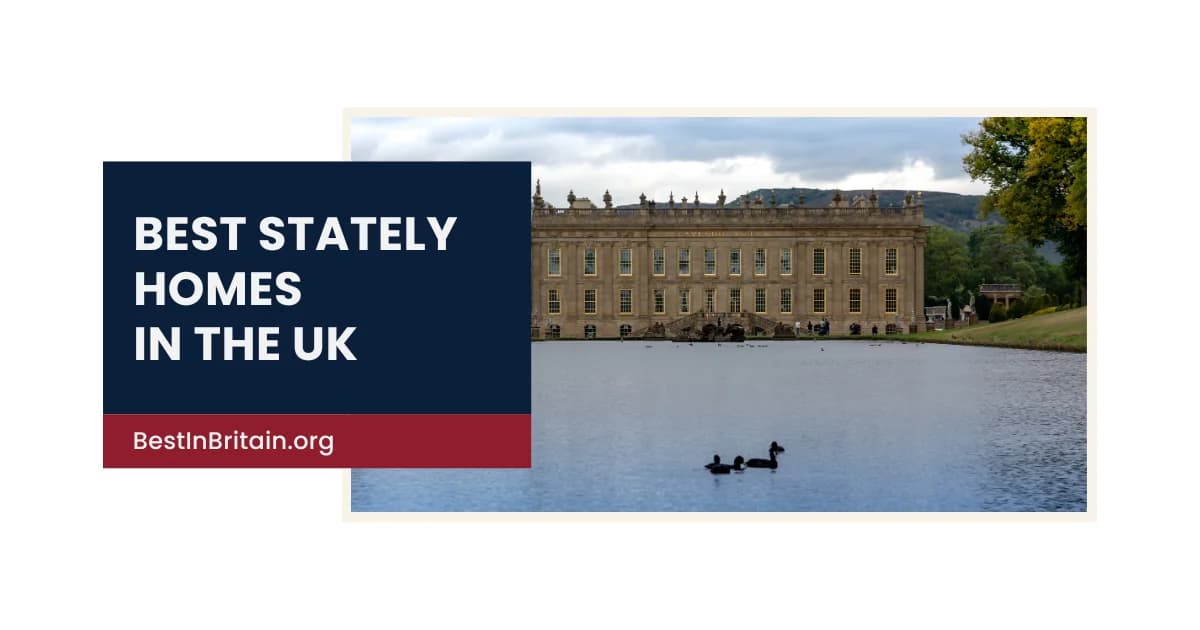
Historic Sites
25 best stately homes in the UK for a memorable visit
Discover the best stately homes across the United Kingdom, from grand ducal palaces and aristocratic estates to remarkable country houses with outstanding interiors, gardens and wider landscapes.
Updated 15 July 2026
Know a business we should consider?
Send us the details and our editorial team will review whether it fits a future guide.
Submit businessWriter profile
Gabriela Krumova
Arts, Culture & Performance Contributor
Actor, theatre director and Queen Margaret University Drama graduate with international performance experience across Edinburgh, London, New York, Paris and Venice. Gabriela has performed in and directed Edinburgh Festival Fringe productions and covers theatre, performing arts, cultural venues, live entertainment, festivals and the creative industries for Best in Britain.
Editorial Trust Standard
Independent ReviewIndependent Research
Featured rankings are editorially determined. Commercial partner listings are strictly labeled as Sponsored or Featured.
Public Register Audit
Listings are cross-checked against public regulatory registries, Companies House filings, and published fee schedules.