
Best Orthodox Churches in the UK to Visit
Orthodox Christianity has been part of Britain's religious landscape for centuries, although its communities have grown particularly strongly through migration from Greece, Cyprus, Eastern Europe, the Balkans, Ukraine, Romania, Russia and the Middle East.
Today, Orthodox churches can be found across the country.
Some occupy purpose-built Byzantine-inspired buildings.
Others have transformed former Anglican, Catholic or Nonconformist churches by adding an iconostasis, sacred icons, candle stands and the liturgical arrangements needed for Orthodox worship.
The result is an unusually varied architectural and religious heritage.
A Greek Orthodox cathedral in London can look very different from a Serbian church in Birmingham, an English-speaking Orthodox parish in Edinburgh or a Ukrainian cathedral established by a post-war diaspora community.
Yet visitors will repeatedly encounter the same fundamental features:
- the Divine Liturgy
- the iconostasis
- Royal Doors
- icons of Christ and the Theotokos
- candles and incense
- Byzantine or related forms of chant
- an altar sanctuary
- the veneration of saints
- a strong sense of continuity with historic Christianity
Our selection focuses on churches that are particularly interesting for their history, architecture, iconography, community significance or place within the development of Orthodoxy in Britain.
All remain active places of worship.
Visitors should therefore approach them as churches first and heritage attractions second.
For the theology and history behind what you will see, read our introduction to Orthodox Christianity and our guide to Orthodox church architecture, icons and the iconostasis.
How we selected the best Orthodox churches in the UK
This is not intended to be a complete directory of Orthodox parishes.
Britain now has far too many active Orthodox communities for that to be useful.
Instead, we looked for churches with a combination of:
- architectural or artistic interest
- historical significance
- important iconography
- established community life
- distinctive Orthodox traditions
- geographical variety
- relevance to the history of Orthodoxy in Britain
- active worship
- reasonable opportunities for respectful visitors
We have also tried to represent several Orthodox traditions rather than producing a list dominated by one jurisdiction.
That means the guide includes Greek, Russian, Ukrainian, Serbian and Antiochian communities alongside parishes whose congregations are increasingly international.
Orthodox Christianity in Britain
Orthodox Christianity in Britain is older than many people realise.
Greek Orthodox worship was established in London during the seventeenth century. St Sophia's historical archive records that London's Greek community received permission to construct a church in 1675, with the first purpose-built Greek church completed in 1681.
A Russian Orthodox chapel subsequently served Orthodox communities in London during the eighteenth century.
During the nineteenth century, growing Greek merchant communities established substantial churches in London and Manchester.
The twentieth century added new communities created through revolution, war and displacement.
Russian émigrés, Serbs, Ukrainians and others established parishes across Britain.
More recent migration has substantially expanded Romanian and other Eastern European Orthodox communities.
The Romanian Orthodox Church now has its own Archdiocese of Great Britain and Northern Ireland, headquartered in London, reflecting the size and permanence of Romanian Orthodox life in the country.
Orthodox Christianity in Britain is therefore not one ethnic church.
It is a network of overlapping communities sharing Orthodox faith and sacramental life while preserving different languages, music, saints and cultural traditions.
1. St Sophia's Greek Orthodox Cathedral, London
St Sophia's Greek Orthodox Cathedral
Location: Bayswater, London
Tradition: Greek Orthodox
Jurisdiction: Archdiocese of Thyateira and Great Britain, Ecumenical Patriarchate
Best for: Byzantine-inspired architecture, mosaics, historic iconostasis and the history of London's Greek community
St Sophia's is one of Britain's most important Orthodox buildings.
The present cathedral emerged from a much older Greek Orthodox presence in London.
By the nineteenth century, London's Greek community had grown significantly through merchant families and commercial networks. Earlier places of worship became too small, leading the community to construct a larger church in Bayswater.
The foundation stone was laid in 1877.
The first Divine Liturgy in the new Church of the Divine Wisdom was celebrated in 1879, and the building was consecrated in 1882.
In 1922 it became the cathedral of the newly established Diocese of Thyateira.
During the Second World War, when the Greek government operated in exile from London, St Sophia acquired additional national significance and became known as the cathedral of the Greek community in exile.
Why St Sophia's stands out
The architecture alone makes the cathedral exceptional.
John Oldrid Scott designed the building in a Byzantine-inspired form at a time when this style remained unusual in Victorian Britain.
Its interior contains marble, mosaics, sacred imagery and one of the most impressive Orthodox iconostases in the country.
The cathedral's own historical records describe an iconostasis approximately 25 feet, or 7.6 metres, high, made from Canadian walnut with decorative inlays and mother-of-pearl.
Later mosaics added another layer of Byzantine-inspired decoration.
Russian-born mosaic artist Boris Anrep worked on parts of the interior during the twentieth century. His wider British work can also be seen in institutions including the National Gallery.
St Sophia's therefore connects several strands of British cultural history:
- Victorian architecture
- Greek migration
- Byzantine revival
- Orthodox worship
- London's international merchant communities
- twentieth-century European history
The cathedral is Grade I listed.
What to look for
Pay particular attention to:
- the large iconostasis
- Royal Doors
- mosaics
- marble work
- central dome
- icons of Christ and the Theotokos
- sanctuary decoration
Understanding the iconostasis makes the interior considerably more meaningful.
Our guide to Orthodox church architecture and the iconostasis explains why icons appear in particular positions and how the Royal Doors are used during worship.
Visitor information
St Sophia's is an active cathedral.
Visitors should consult the cathedral directly before travelling if they want to visit outside a service or see the Treasury Museum, which the cathedral states is available by appointment.
Official website: St Sophia's Greek Orthodox Cathedral
2. Church of the Annunciation of the Mother of God, Manchester
Church of the Annunciation of the Mother of God
Location: Salford, Greater Manchester
Tradition: Greek Orthodox
Jurisdiction: Archdiocese of Thyateira and Great Britain
Best for: Early Greek Orthodox history in Britain and nineteenth-century architecture
Manchester's Greek Orthodox Church of the Annunciation has an important claim within the history of Orthodoxy in England.
The parish's own history describes it as the oldest purpose-built Greek Orthodox church in England.
Manchester's Greek community developed during the early nineteenth century, including migrants from Chios following the Greek War of Independence.
A formal centre of worship was established in the 1840s.
As the community grew, temporary places of worship became inadequate.
The foundation stone of the permanent church was laid in 1860, and the building was completed in 1861.
Architecture and iconography
Unlike churches designed to imitate later Byzantine architecture directly, the Manchester church was built in the form of a classical basilica.
Its exterior therefore reflects both Orthodox identity and the desire of the nineteenth-century Greek community to establish itself within British urban society.
The contrast between exterior and interior is particularly interesting.
Inside, the iconostasis and sacred imagery clearly establish the building as an Orthodox liturgical space.
This makes it a valuable example of how migrant communities adapted Orthodox church architecture to nineteenth-century Britain.
Why visit
St Sophia's in London may be more visually famous, but Manchester's Annunciation church is arguably just as interesting historically.
It reveals that Orthodox Christianity was establishing substantial permanent institutions outside London by the middle of the Victorian period.
It also demonstrates the importance of merchant communities in the development of Orthodoxy in Britain.
Visitor information
The church remains active, so visitors should check the parish's current schedule before travelling.
Official website: Greek Orthodox Church of the Annunciation, Manchester
3. Cathedral of the Dormition of the Mother of God and All Saints, London
Russian Orthodox Cathedral of the Dormition
Location: Ennismore Gardens, Knightsbridge, London
Tradition: Russian Orthodox
Jurisdiction: Diocese of Sourozh, Moscow Patriarchate
Best for: Russian Orthodox worship, historic London Orthodoxy and a distinctive converted church interior
The Cathedral of the Dormition is the principal cathedral of the Russian Orthodox Diocese of Sourozh in Britain.
The diocese states that it was established in 1962, with London as its cathedral city and the Dormition Cathedral as its principal church.
The cathedral occupies a Victorian church building in Ennismore Gardens, close to major South Kensington museums and Hyde Park.
Its architectural history differs significantly from St Sophia's.
Rather than being constructed originally as an Orthodox cathedral, the building was adapted for Orthodox worship.
This makes it an excellent example of how Orthodoxy transforms an existing Western church interior through liturgical use, icons and sanctuary arrangement.
Why it stands out
The cathedral represents an important strand of Russian Orthodox history in Britain.
Russian Orthodox worship in London predates the present cathedral by centuries, including the historic Russian embassy chapel used by Orthodox Christians in the eighteenth and nineteenth centuries.
The present cathedral now functions as the centre of the Diocese of Sourozh.
Current diocesan records show regular hierarchical liturgies, Lenten services and other major celebrations being held there.
What to look for
Visitors familiar with Anglican or Catholic churches should look at how the building has been reinterpreted through Orthodox worship.
Pay attention to:
- iconostasis
- sanctuary
- icons
- candle stands
- liturgical movement
- use of incense
- interaction between Victorian architecture and Orthodox furnishings
The building provides a particularly good illustration of the difference between architectural origin and liturgical identity.
A church does not have to have been designed in Byzantine form to function fully as an Orthodox sacred space.
Visitor information
The cathedral publishes contact information through the Diocese of Sourozh. Its current address is 67 Ennismore Gardens, London SW7 1NH.
Current service and access arrangements should be checked directly before visiting because schedules can change around fasting periods and major feast days.
Official website: Diocese of Sourozh and Dormition Cathedral
4. Cathedral of the Holy Transfiguration of Our Lord, London
Ukrainian Orthodox Autocephalic Church
Location: Acton, London
Tradition: Ukrainian Orthodox
Jurisdiction: Ukrainian Autocephalous Orthodox community in Great Britain
Best for: Ukrainian Orthodox heritage and the history of Britain's Ukrainian diaspora
The Cathedral of the Holy Transfiguration represents an important part of Britain's Ukrainian religious heritage.
The Association of Ukrainians in Great Britain currently lists it as the London parish of the Ukrainian Autocephalous Orthodox Church, at 1A Newton Avenue, Acton.
Ukrainian Orthodox communities in Britain developed particularly strongly through migration following the Second World War.
Churches became much more than places for Sunday worship.
They helped preserve:
- Ukrainian language
- religious traditions
- national identity
- community networks
- music
- festivals
- commemorations
- connections between generations
These functions became newly important after Russia's full-scale invasion of Ukraine in 2022, when Britain received another substantial Ukrainian population.
Why visit
The cathedral provides a direct connection between the wider history of Eastern Orthodoxy and a specifically Ukrainian tradition.
Visitors may encounter liturgical customs, icons and devotional practices shaped by Ukrainian religious culture while remaining recognisably part of Byzantine Orthodox Christianity.
Our detailed article on the history of Ukrainian Orthodox Christianity explores the development of this tradition from Kyivan Rus' through the modern period.
Ukrainian Orthodox churches beyond London
The Association of Ukrainians in Great Britain also currently lists Ukrainian Orthodox parishes in:
- Manchester
- Oldham
- Bradford
- Rochdale
Its Manchester parish is the Ukrainian Orthodox Church of the Dormition of St Mary, while Bradford has a Church of the Protection of the Mother of God.
For visitors particularly interested in Ukrainian religious heritage, these communities make it possible to explore the tradition well beyond London.
Visitor information
This is an active cathedral serving a living community rather than a tourist attraction.
Visitors should contact the parish or check current service information before travelling.
Parish information: Association of Ukrainians in Great Britain: Ukrainian Orthodox parishes
5. Serbian Orthodox Church of the Holy Prince Lazar, Birmingham
Serbian Orthodox Church of the Holy Prince Lazar
Location: Bournville, Birmingham
Tradition: Serbian Orthodox
Jurisdiction: Serbian Orthodox Church, Diocese of Britain and Ireland
Best for: Frescoes, Serbian heritage and purpose-built Orthodox architecture
Known affectionately as Lazarica, the Church of the Holy Prince Lazar is one of the most distinctive Orthodox churches in Britain.
The parish describes it as the first purpose-built Serbian Orthodox church in the UK and as a memorial church associated with Serbs who came to Britain in exile.
It stands in Bournville, one of Birmingham's most architecturally recognisable suburbs.
Why it stands out
Lazarica is especially valuable because it combines:
- Serbian national history
- Orthodox sacred architecture
- fresco painting
- relics
- diaspora history
- active community life
The parish describes the church as richly decorated with frescoes and containing holy relics.
Unlike converted British church buildings, Lazarica was conceived specifically as a Serbian Orthodox sacred space.
That gives visitors a clearer opportunity to experience how architecture, iconography and liturgy were intended to work together.
Serbian Orthodoxy in Britain
The Serbian Orthodox presence in Britain developed strongly after the Second World War.
The Serbian Orthodox Church states that many Serbs settled in Britain after the war and that subsequent migration increased during the conflicts accompanying the break-up of Yugoslavia during the 1990s.
In 2024, the Serbian Orthodox Church established a dedicated Diocese of Britain and Ireland with its see in London.
Lazarica remains one of the most important expressions of Serbian Orthodox identity outside the capital.
What to look for
Inside, focus on:
- frescoes
- iconostasis
- Serbian saints
- Christological imagery
- relics
- sanctuary design
The church also offers an excellent opportunity to compare Serbian Orthodox artistic traditions with Greek examples such as St Sophia's.
Visitor information
The church explicitly welcomes visitors and publishes current contact information and directions.
Its official guidance notes parking arrangements and public transport connections from Birmingham city centre.
Official website: Serbian Orthodox Church of the Holy Prince Lazar
6. St Andrew's Orthodox Church, Edinburgh
St Andrew's Orthodox Church
Location: Edinburgh
Tradition: Eastern Orthodox, multinational community
Jurisdiction: Archdiocese of Thyateira and Great Britain, Ecumenical Patriarchate
Best for: English-language Orthodoxy, Scottish Orthodox history and active liturgical life
St Andrew's shows a different side of Orthodox Christianity in Britain.
Rather than primarily representing one national diaspora, it has developed as a broader Orthodox community serving worshippers from several backgrounds.
The parish traces its Orthodox worship in Edinburgh to 1948, when Archpriest John Sotnikov, a Russian chaplain of the Polish Army, began holding services in the city.
Today the community belongs to the Archdiocese of Thyateira and Great Britain under the Ecumenical Patriarchate.
Why it stands out
St Andrew's is particularly useful for visitors interested in understanding how Orthodox Christianity operates outside a strongly ethnic framework.
Its published schedule includes frequent Matins, Divine Liturgy and Vespers, and the parish explicitly states that services are open to visitors.
Services may include English alongside other Orthodox liturgical languages.
The parish also maintains several worship locations in Edinburgh.
Its Chapel Street church is used for Sunday services and major feasts, while Meadow Lane hosts smaller and more frequent services.
Orthodox Christianity in Scotland
Scotland now contains several Orthodox jurisdictions and communities.
Russian-tradition parishes operate in Glasgow, Edinburgh and Dundee, while Romanian Orthodox communities have also expanded substantially.
This increasingly diverse Orthodox presence means Scotland is no longer served only by occasional diaspora missions.
It has permanent parish networks, regular worship and developing local traditions.
Visitor information
St Andrew's is particularly welcoming to people encountering Orthodoxy for the first time.
The parish publishes a detailed current service schedule online.
Official website: St Andrew's Orthodox Church Edinburgh
7. Greek Orthodox Church of St Nicholas, Cardiff
Greek Orthodox Church of St Nicholas
Location: Cardiff
Tradition: Greek Orthodox
Jurisdiction: Archdiocese of Thyateira and Great Britain
Best for: Orthodox Christianity in Wales and accessible Sunday visiting
St Nicholas gives this guide an important Welsh dimension.
The parish belongs to the Archdiocese of Thyateira and Great Britain under the Ecumenical Patriarchate and maintains regular Orthodox worship in Cardiff.
Its current programme includes Sunday Divine Liturgy and major feast-day services.
The church also specifically publishes an opening period after Sunday Liturgy for private prayer, making it one of the easier Orthodox communities in this guide for visitors to approach outside the main service itself.
Why it stands out
St Nicholas demonstrates that Orthodox Christianity in Britain extends beyond the largest English and Scottish cities.
Cardiff now contains several Orthodox communities, including Greek, Romanian and Russian-tradition parishes.
The city's Orthodox presence therefore reflects the increasing religious diversity of modern Wales.
What to look for
As with other Greek Orthodox churches, visitors should pay particular attention to:
- iconostasis
- icons of Christ and the Theotokos
- liturgical chant
- candle stands
- sanctuary arrangement
- feast-day icons
Our guide to Orthodox church architecture and icons will help explain what each part of the interior means.
Visitor information
The parish publishes current service times and visitor information on its website.
Official website: Greek Orthodox Church of St Nicholas Cardiff
8. St Ignatius Antiochian Orthodox Church, Belfast
St Ignatius Antiochian Orthodox Church
Location: Belfast
Tradition: Antiochian Orthodox
Jurisdiction: Antiochian Orthodox Christian Archdiocese of the British Isles and Ireland
Best for: English-language Orthodox worship and Orthodox Christianity in Northern Ireland
St Ignatius provides an important example of Antiochian Orthodoxy in Britain and completes the geographic spread of this guide into Northern Ireland.
The parish belongs to the Antiochian Orthodox Christian Archdiocese of the British Isles and Ireland.
Unlike many diaspora churches where worship may rely heavily on Greek, Arabic, Romanian or Church Slavonic, St Ignatius explicitly celebrates its services in English.
This makes it particularly accessible to visitors who want to encounter Orthodox worship without a significant language barrier.
The Antiochian tradition
The historic Patriarchate of Antioch is one of Christianity's ancient apostolic sees.
Antioch itself appears repeatedly in the New Testament and was one of the major centres from which Christianity spread through the Roman world.
Modern Antiochian Orthodox communities historically include large numbers of Arabic-speaking Christians from the Middle East.
In Britain, however, many Antiochian parishes have become highly international and include converts as well as cradle Orthodox Christians.
Why visit
St Ignatius is useful precisely because it is not a monumental cathedral.
It shows how Orthodox Christian life can exist as a relatively small worshipping community centred around liturgy rather than an architecturally famous building.
Regular Divine Liturgy is currently celebrated roughly monthly, with additional Reader's Services between liturgies.
The parish states clearly that visitors are welcome.
Visitor information
Services are currently held at Cullen Memorial Hall on Donegall Road in Belfast.
Because the Divine Liturgy is not celebrated every Sunday, checking the current schedule before travelling is essential.
Official website: St Ignatius Antiochian Orthodox Church Belfast
Other Orthodox churches worth knowing about
The eight churches above provide a useful introduction, but Britain's Orthodox landscape is much larger.
Several other communities are particularly worth noting.
St Sava Serbian Orthodox Church, London
St Sava Serbian Orthodox Church
St Sava is one of the principal centres of Serbian Orthodox life in London.
The Serbian Orthodox Church's current London parish site lists regular services and church-school activity at its Lancaster Road church.
The Serbian Orthodox Church also identifies London as the see of the Diocese of Britain and Ireland.
Official website: St Sava Serbian Orthodox Church London
Ukrainian Orthodox Church of the Dormition of St Mary, Manchester
Ukrainian Orthodox Church St Mary Dormition
This Manchester parish is one of the principal Ukrainian Orthodox communities listed by the Association of Ukrainians in Great Britain.
It is particularly relevant for visitors interested in the religious heritage of Britain's post-war Ukrainian communities.
Romanian Orthodox communities
Romanian Orthodox Christianity is now one of the most rapidly visible components of British Orthodoxy.
The Romanian Orthodox Archdiocese of Great Britain and Northern Ireland maintains parishes across England, Scotland and Wales.
Its network includes communities in major cities as well as smaller missions.
Because many Romanian parishes currently worship inside buildings belonging historically to other Christian traditions, they also provide fascinating examples of architectural adaptation.
St Theodore and St Teilo, Cardiff
This Orthodox parish serves Cardiff and South Wales and uses English extensively.
Its dedication to St Teilo, a Welsh saint, is particularly interesting because it reflects a growing Orthodox interest in the Christian saints of Britain from before the East-West schism.
The parish currently worships at Conway Road Methodist Church.
Official website: St Theodore and St Teilo Orthodox Church
Greek Orthodox churches in the UK
Greek Orthodox Christianity has one of the longest organised Orthodox histories in Britain.
The Archdiocese of Thyateira and Great Britain now oversees a substantial network of communities.
Particularly important examples include:
- St Sophia's Cathedral, London
- Church of the Annunciation, Manchester
- St Nicholas, Cardiff
- St Andrew's, Edinburgh
- numerous Greek Orthodox churches throughout Greater London
Greek Orthodox churches are particularly valuable for visitors interested in:
- Byzantine liturgy
- iconography
- Greek religious culture
- the history of Mediterranean migration to Britain
St Sophia's and Manchester's Annunciation church are especially important because their histories reach deep into Britain's nineteenth-century Orthodox development.
Ukrainian Orthodox churches in the UK
Ukrainian Orthodox Christianity in Britain is particularly associated with communities established after the Second World War.
Current Ukrainian Autocephalous Orthodox parishes listed by the Association of Ukrainians in Great Britain include:
- Cathedral of the Holy Transfiguration, London
- Dormition of St Mary, Manchester
- St Volodymyr the Great, Oldham
- Protection of the Mother of God, Bradford
- St Pokrova, Rochdale
These churches serve not only religious needs but also Ukrainian cultural and community life.
The distinction between Ukrainian Orthodox and Ukrainian Greek Catholic churches is important.
Both may use Byzantine liturgy, icons and iconostases, but Ukrainian Greek Catholics are in communion with Rome while Ukrainian Orthodox communities belong to Orthodox ecclesiastical structures.
Our article on Eastern Orthodox and Roman Catholic Christianity explains the wider distinction.
Russian Orthodox churches in the UK
Russian Orthodox Christianity has longstanding historic connections with Britain.
Today several jurisdictions and communities use Russian or Russian-influenced liturgical traditions.
The Diocese of Sourozh lists parishes and communities throughout Britain and Ireland, including London, Newcastle, Glasgow, Edinburgh, Dundee and Belfast.
Visitors should be aware that ecclesiastical jurisdiction has become particularly sensitive since Russia's invasion of Ukraine.
A parish's liturgical tradition, congregation and institutional affiliation should not be treated as identical questions.
Serbian Orthodox churches in the UK
Serbian Orthodox communities became particularly established following twentieth-century migration.
Two of the most significant churches are:
- St Sava in London
- Holy Prince Lazar in Birmingham
The Diocese of Britain and Ireland was established as a distinct Serbian Orthodox diocese in 2024 with its see in London.
Serbian churches can be especially rewarding for visitors interested in fresco painting, Serbian saints, Balkan religious culture and the relationship between national history and Orthodox Christianity.
Romanian Orthodox churches in the UK
Romanian Orthodoxy has expanded substantially with modern migration.
The Romanian Orthodox Church now maintains a dedicated Archdiocese of Great Britain and Northern Ireland.
Its current parish network reaches:
- London
- Birmingham
- Manchester
- Leeds
- Bristol
- Cardiff
- Glasgow
- Edinburgh
- Aberdeen
- many smaller towns and missions
The archdiocese also deliberately promotes devotion to historic Christian saints of the British Isles, showing how migrant Orthodox communities increasingly integrate British pre-Schism Christian heritage into their religious life.
Antiochian Orthodox churches in the UK
The Antiochian Orthodox tradition originates in one of Christianity's oldest patriarchates.
Its British parishes are often especially accessible to English-speaking visitors.
Many have mixed congregations including:
- people of Middle Eastern heritage
- British converts
- Orthodox Christians from other national traditions
This makes Antiochian parishes particularly useful for understanding that Orthodoxy is not inherently tied to one nationality.
St Ignatius in Belfast is one example.
Other Antiochian communities operate elsewhere in Britain and Ireland.
What to look for inside an Orthodox church
Understanding a few basic features will transform a visit.
The iconostasis
The iconostasis is the icon-covered screen separating the sanctuary from the nave.
It normally contains the Royal Doors at its centre.
Royal Doors
These central doors are opened at specific moments during Orthodox worship.
The Annunciation and four Evangelists frequently appear on them.
Christ and the Theotokos
Principal icons of Christ and the Virgin Mary usually occupy prominent places around the Royal Doors.
Patron saint
Most Orthodox churches are dedicated to a particular saint or feast.
Look for that icon within the principal iconographic scheme.
Candles
Visitors will often see worshippers lighting candles before icons.
The act is associated with prayer, remembrance and offering.
Incense
Incense is used extensively during Orthodox worship.
The altar, icons, clergy, congregation and church may all be censed.
Chant
Traditional Orthodox worship relies heavily on sung prayer.
Musical traditions differ between Greek, Russian, Serbian, Romanian, Ukrainian and Middle Eastern communities.
For a much deeper explanation, see Orthodox Church Architecture, Icons and the Iconostasis.
Visiting an active Orthodox church
Orthodox churches are generally welcoming to respectful visitors, but they remain places of worship.
Check the service schedule
Parish schedules vary considerably.
Some churches celebrate the Divine Liturgy every Sunday.
Small missions may hold it only once or twice a month.
Arrive before the service
Entering early gives you time to understand the building and avoids unnecessary disruption during worship.
Expect to stand
Many Orthodox churches have seating, but standing remains traditional for significant parts of the service.
Dress respectfully
There is no single dress code across every British Orthodox parish.
Modest clothing appropriate to an active place of worship is the safest approach.
You do not have to imitate everyone else
Visitors may see worshippers:
- crossing themselves
- bowing
- kissing icons
- lighting candles
- making prostrations
You are welcome to observe without copying practices you do not understand.
Do not enter the sanctuary
The area beyond the iconostasis is reserved for clergy and authorised servers.
Visitors should not pass through the Royal or side doors.
Do not assume Communion is open
Orthodox Holy Communion is ordinarily reserved for Orthodox Christians who are properly prepared to receive it.
Non-Orthodox visitors should normally remain in place unless specifically instructed otherwise.
Photography requires judgement
Some churches permit photography outside services.
Others restrict it.
Never photograph worshippers or liturgical services without permission.
Stay afterwards if invited
Many Orthodox communities share coffee or food after the Divine Liturgy.
For visitors genuinely interested in understanding Orthodox life, this can be as valuable as studying the building itself.
Frequently asked questions
Can anyone visit an Orthodox church?
Generally yes.
Most Orthodox churches welcome respectful visitors, although opening hours outside services vary considerably.
Check the parish's website before travelling.
Do I have to be Orthodox to attend the Divine Liturgy?
No.
Visitors are normally welcome to attend.
Holy Communion itself is ordinarily restricted to Orthodox Christians in good standing and properly prepared to receive it.
Which is the oldest Orthodox church in Britain?
The answer depends on exactly what is meant.
Greek Orthodox worship existed in London in the seventeenth century, but those earliest buildings do not survive as active Orthodox churches.
The Church of the Annunciation in Manchester, completed in 1861, describes itself as the oldest purpose-built Greek Orthodox church in England.
St Sophia's present cathedral building dates from the later nineteenth century.
Are Greek Orthodox and Russian Orthodox different religions?
No.
They are different church traditions within Eastern Orthodox Christianity and normally share the same core faith and sacraments.
Differences include:
- language
- music
- calendar practice
- saints
- cultural customs
- ecclesiastical jurisdiction
Are Ukrainian Orthodox churches the same as Ukrainian Catholic churches?
No.
Both can use Byzantine worship and look similar architecturally.
Ukrainian Greek Catholic churches are in communion with the Pope.
Ukrainian Orthodox churches belong to Orthodox ecclesiastical traditions.
Are Coptic churches Eastern Orthodox?
No.
Coptic Orthodox Christianity belongs to the Oriental Orthodox communion rather than the Eastern Orthodox Church.
The traditions share many similarities but separated following theological disputes surrounding the Council of Chalcedon in 451.
Are Orthodox services always in foreign languages?
No.
Some British parishes use Greek, Romanian, Ukrainian, Serbian, Arabic or Church Slavonic extensively.
Others use mostly or entirely English.
Many use a mixture.
St Ignatius in Belfast, for example, explicitly uses English for its services.
Why are there so many different Orthodox jurisdictions?
Orthodox Christianity is organised as a communion of self-governing local churches rather than around one universal administrative leader.
Migration has brought several of those traditions into Britain.
This means Greek, Romanian, Serbian, Ukrainian and other jurisdictions may operate in the same city.
What is the iconostasis?
The iconostasis is the icon-covered screen between the nave and sanctuary.
It includes the Royal Doors and principal icons of Christ, the Theotokos and saints.
See our detailed guide to Orthodox church architecture and the iconostasis.
Why do Orthodox Christians kiss icons?
The practice is understood as veneration, not worship of the physical object.
The honour is directed toward the person represented.
Can I light a candle if I am not Orthodox?
In many churches, yes.
If unsure, ask someone at the candle desk or simply observe local practice.
What is the best Orthodox church to visit in London?
For architecture and history, St Sophia's Greek Orthodox Cathedral is an excellent introduction.
The Dormition Cathedral offers a contrasting Russian Orthodox tradition, while the Ukrainian Cathedral of the Holy Transfiguration provides a different view of London's Orthodox diaspora.
Visiting more than one makes the diversity of British Orthodoxy much clearer.
Explore more Religious Heritage
Orthodox Christianity: History, Beliefs and Traditions Explained
A comprehensive introduction to Eastern Orthodox theology, worship, sacraments and jurisdictions.
Orthodox Church Architecture, Icons and the Iconostasis
Learn what the iconostasis, Royal Doors, sanctuary and sacred images mean.
Orthodox Prayer and Worship: Traditions, Fasting and Devotion
Explore prayer ropes, the Jesus Prayer, confession, fasting and Orthodox devotional traditions.
A Brief History of Ukrainian Orthodox Christianity
Follow the history of Ukrainian Orthodoxy from Kyivan Rus' to the modern period.
Eastern Orthodox and Roman Catholic Christianity: Key Differences Explained
Understand the major historical and theological differences between the two traditions.
The Tree of Life in Christianity
Explore one of the Bible's most important symbols from Genesis to Revelation.
Best Cathedrals in the UK
Discover Britain's major cathedral buildings and religious heritage.
Best Abbeys and Monastery Ruins in the UK
Explore medieval monasteries, abbeys and monastic landscapes across Britain.
Final thoughts
The most interesting thing about Orthodox Christianity in Britain is its variety.
There is no single architectural style and no single ethnic community that defines it.
St Sophia's in London represents a wealthy nineteenth-century Greek community building in an ambitious Byzantine revival style.
Manchester's Annunciation church reflects an even earlier Greek presence in Victorian industrial Britain.
The Dormition Cathedral shows how a Western church building can be transformed through Orthodox worship.
Birmingham's Lazarica preserves Serbian religious culture through purpose-built architecture, frescoes and communal memory.
Ukrainian churches show how worship, identity and community survived displacement.
St Andrew's in Edinburgh and St Ignatius in Belfast demonstrate another development: Orthodox parishes whose identity is increasingly local and English-speaking rather than being defined exclusively by migration from one country.
Together, these churches reveal an important part of modern British religious heritage.
They also demonstrate that Britain's Christian story did not stop with medieval cathedrals, the Reformation or Victorian church building.
It continues to develop through communities that have brought ancient Eastern Christian traditions into British cities and made them part of the country's living cultural landscape.
Related guides

Religious Heritage
Best Catholic Churches in the UK to Visit
A guide to notable Catholic churches across the UK, covering architecture, history, sacred art, pilgrimage, active worship and practical visitor information.
Updated 2 October 2026
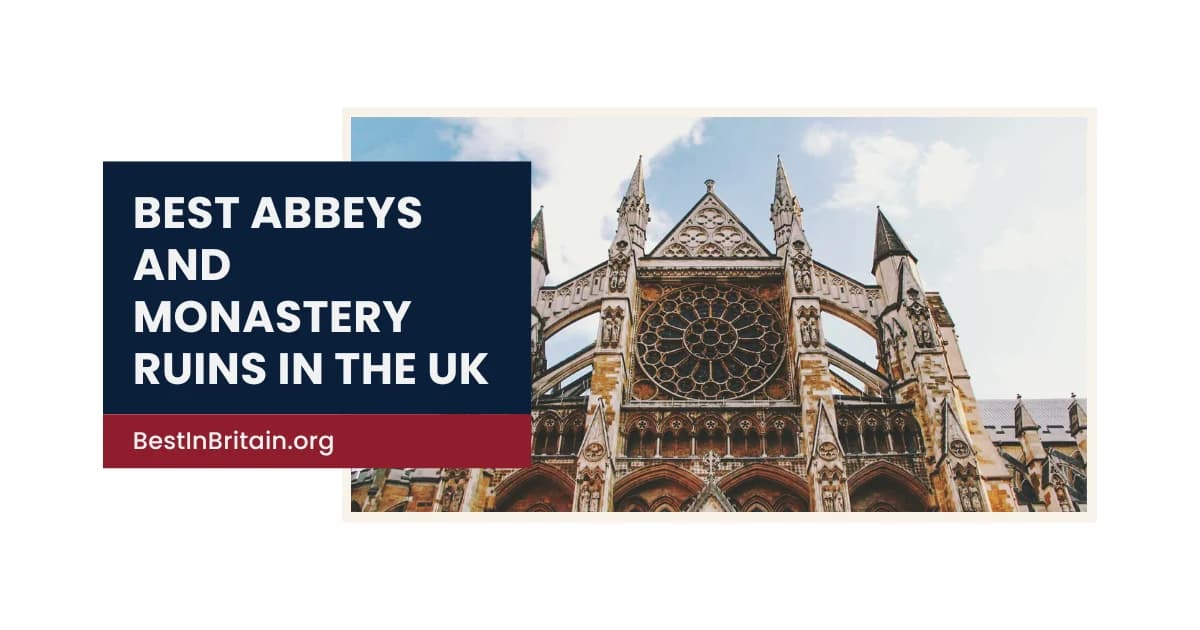
Religious Heritage
20 best abbeys and monastery ruins in the UK
Explore 20 of the best abbeys and monastery ruins in the UK, from vast Cistercian landscapes and dramatic coastal remains to secluded Border abbeys and ancient island monasteries.
Updated 9 June 2026
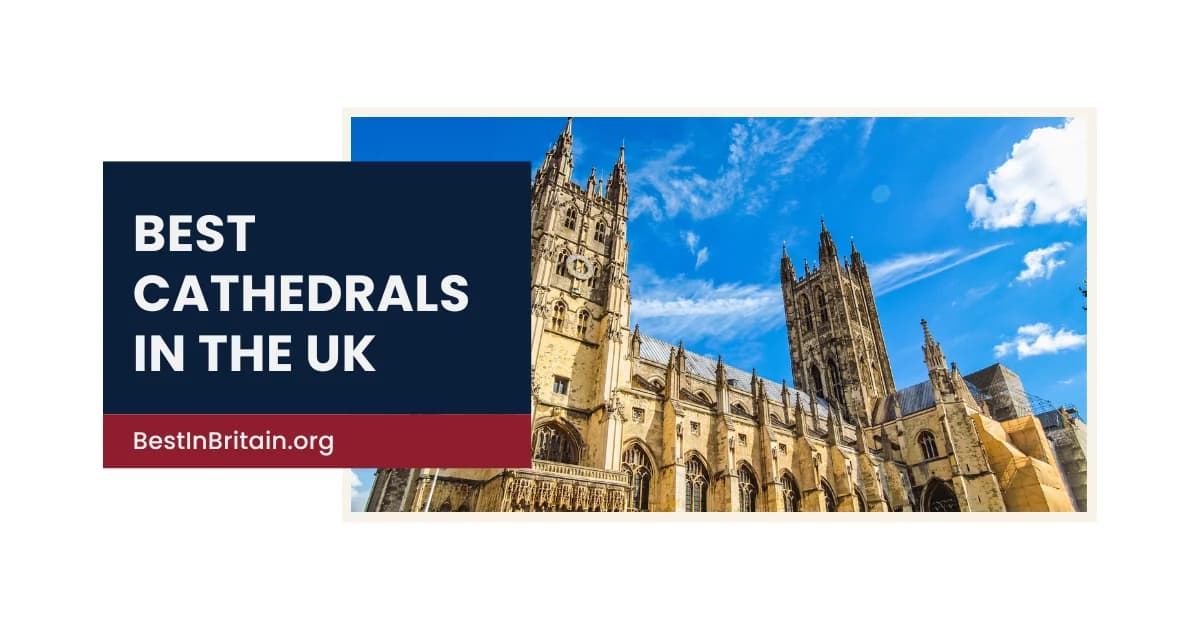
Religious Heritage
20 best cathedrals in the UK to visit
Explore 20 of the best cathedrals in the UK, from medieval pilgrimage landmarks and Gothic masterpieces to bold modern buildings and living centres of worship.
Updated 27 May 2026
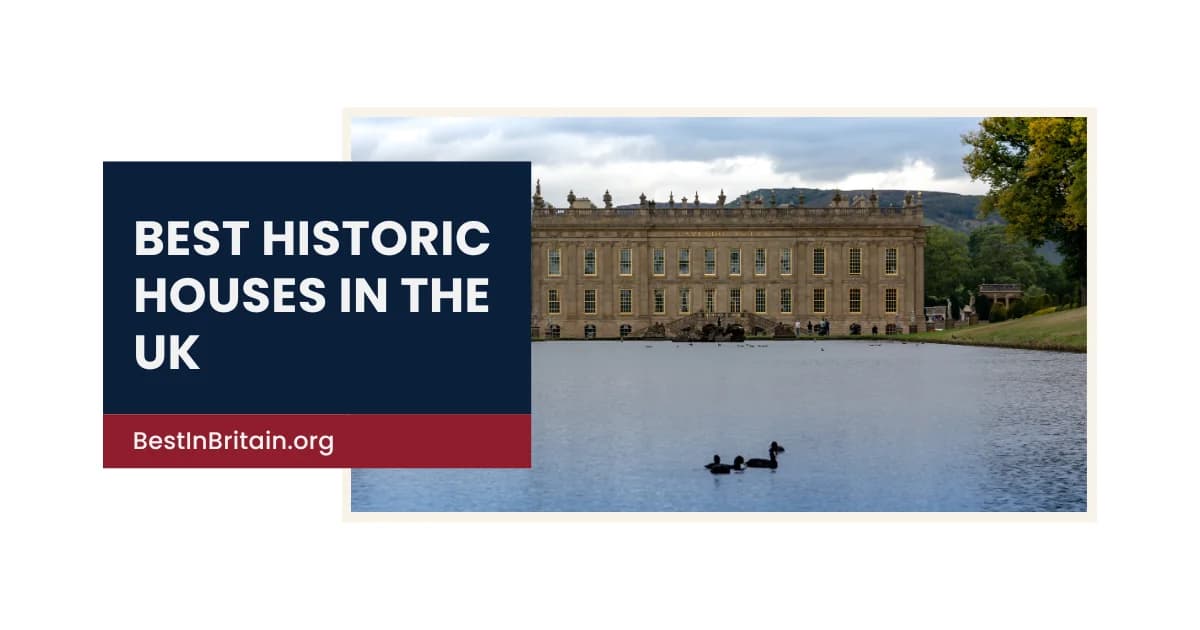
Historic Sites
20 best historic houses in the UK to visit
Explore 20 of the best historic houses in the UK, from grand Baroque palaces and Elizabethan halls to royal retreats and richly furnished country estates.
Updated 22 June 2026
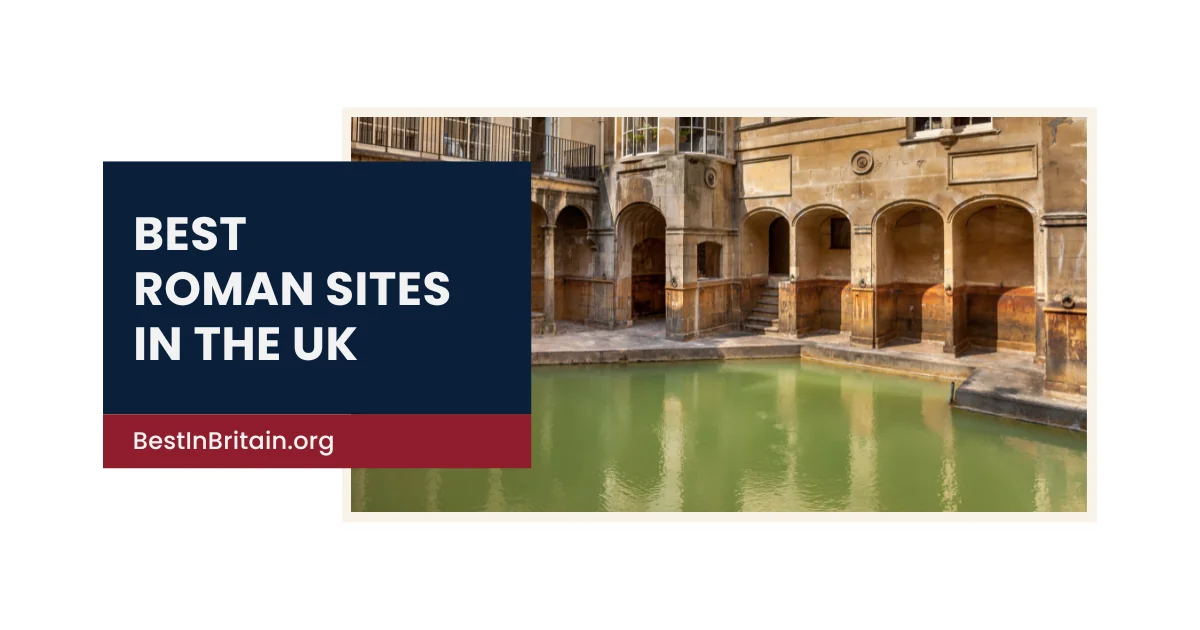
Historic Sites
20 best Roman sites in the UK to visit
Explore 20 of the best Roman sites in the UK, from Hadrian's Wall and the baths of Aquae Sulis to villas, legionary fortresses, frontier forts and buried cities.
Updated 17 June 2026
Historic Sites
25 best UNESCO World Heritage Sites in the UK
Explore 25 of the best UNESCO World Heritage Sites in the UK, from Stonehenge and Edinburgh to the Giant's Causeway, Hadrian's Wall and the Flow Country.
Updated 14 June 2026
Know a business we should consider?
Send us the details and our editorial team will review whether it fits a future guide.
Submit businessWriter profile
Gabriela K.
Arts, Culture & Performance Editor
Actor, theatre director and Queen Margaret University Drama graduate with international performance experience across Edinburgh, London, New York, Paris and Venice. Gabriela has performed in and directed Edinburgh Festival Fringe productions and covers theatre, performing arts, cultural venues, live entertainment, festivals and the creative industries for Best in Britain.
Editorial Trust Standard
Independent ReviewIndependent Research
Featured rankings are editorially determined. Commercial partner listings are strictly labeled as Sponsored or Featured.
Public Register Audit
Listings are cross-checked against public regulatory registries, Companies House filings, and published fee schedules.