
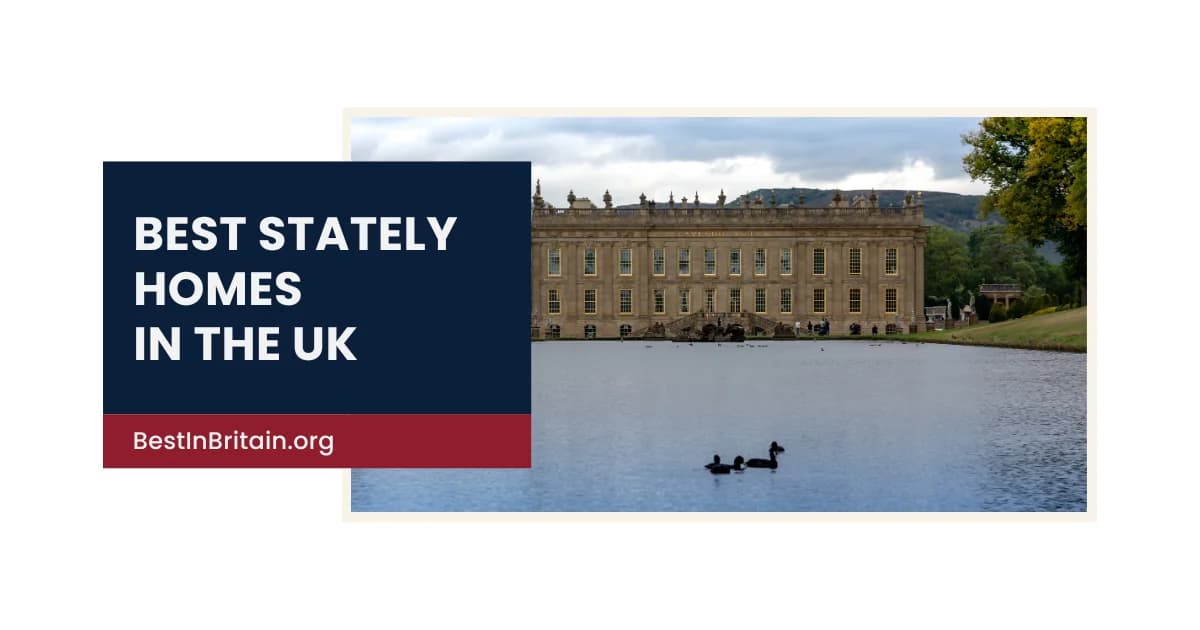
The best stately homes in the UK are not simply grand houses filled with historic furniture. At their strongest, they bring architecture, art, family history, politics, collecting, gardens and designed landscapes together into one coherent experience.
Chatsworth remains one of the most complete all-round visits; Blenheim is unmatched for monumental scale; Castle Howard combines architectural drama with a romantic landscape; Burghley is exceptional for interiors; Mount Stuart is one of the most imaginative Victorian houses in Britain; Powis stands out for the relationship between house and terraced garden; and Mount Stewart offers one of the strongest house-and-garden experiences in Northern Ireland.
A worthwhile visit is rarely confined to the principal rooms. The approach, parkland, service spaces, gardens, estate churches, woodland, lakes and surrounding villages often explain the house just as clearly as the interiors. Britain’s country-house tradition was built around land, status and the organisation of an entire estate, not merely a façade.
This guide brings together 25 of the best stately homes in the UK across England, Scotland, Wales and Northern Ireland. It is an editorial selection rather than a rigid ranking, focusing on architectural quality, interiors, historical depth, setting and whether the complete visit feels worth the journey.
The list includes palaces, castles, country houses and major estates that function in the same broad cultural tradition. The label matters less than the experience: each place here offers enough depth, atmosphere or distinctiveness to justify a dedicated visit.
Best UK stately homes at a glance
| Stately home | Nation | Best for | What defines the visit |
|---|---|---|---|
| Chatsworth House | England | Best all-round stately home experience | Major house, art, gardens and Derbyshire parkland |
| Blenheim Palace | England | Monumental scale and political history | Baroque palace and Capability Brown landscape |
| Castle Howard | England | Architectural drama and romantic landscape | Dome, grand interiors, lakes and temples |
| Burghley House | England | Exceptional interiors | Elizabethan architecture and richly decorated state rooms |
| Petworth House | England | Art collections | Paintings, sculpture and atmospheric interiors |
| Holkham Hall | England | Palladian architecture | Monumental rooms, parkland and Norfolk estate setting |
| Mount Stuart | Scotland | Unusual Victorian interiors | Gothic revival, marble, stained glass and symbolism |
| Culzean Castle | Scotland | Coastal setting | Clifftop house, estate walks and sea views |
| Powis Castle | Wales | Gardens and layered history | Terraces, mature planting and richly furnished interiors |
| Mount Stewart | Northern Ireland | House and garden combined | Distinctive interiors and internationally important gardens |
For a first visit, Chatsworth, Blenheim and Castle Howard are the easiest major landmarks to choose. Visitors mainly interested in architecture may prefer Holkham, Kedleston, Castle Coole or Hopetoun; for collections and interiors, Petworth, Burghley and Waddesdon are especially strong; and for gardens, Powis, Mount Stewart, Chatsworth and Dyffryn deserve particular attention.
How we selected the best stately homes in the UK
This guide does not rank houses by room count, acreage or visitor numbers. Those measures say very little about why one estate feels unforgettable while another merely feels large.
We considered:
- Architectural quality: The house itself, its proportions, materials, design and how clearly its architectural intentions can still be understood.
- Interiors and collections: Furniture, paintings, sculpture, decorative arts, libraries and rooms that retain genuine atmosphere.
- Historical depth: Political, social, cultural and family histories that give the house meaning beyond appearance.
- Setting: Parkland, gardens, woodland, water, surrounding villages and how the building sits within the estate.
- Distinctiveness: Whether the house offers something difficult to find elsewhere, whether through style, collections, landscape or interpretation.
- Social history: How well the visit explains servants, estate workers, labour, wealth and the wider systems that sustained the property.
- Visitor experience: Whether the house and estate reward several hours or a full day rather than a quick walkthrough.
- Interpretation: Whether the presentation adds context rather than treating grandeur as self-explanatory.
That is why this list mixes palaces, castles and country houses. What matters is not the formal label but whether the site functions as one of Britain’s great house-and-estate visits.
Best stately homes to visit in England
1. Explore Chatsworth House

Business details
Address
Bakewell, Derbyshire, England
Best for: The strongest all-round combination of house, art, gardens and estate landscape
Visit details:
- The house, garden and estate open on seasonal schedules
- Farmyard, shops and exhibitions use separate opening arrangements
- Peak holiday periods and autumn weekends can be especially busy
Typical entry cost: £££
Chatsworth is the clearest all-round introduction to the British stately-home tradition because almost every part of the visit works at a high level. The house has major architecture, important collections and richly layered interiors, but it never feels detached from the estate around it.
Inside, paintings, sculpture, ceremonial rooms and family spaces reveal different periods of taste rather than one frozen moment. That makes the house feel accumulated rather than staged. Outside, the gardens, water features, parkland and Derbyshire setting are equally important to the experience.
What makes Chatsworth exceptional is balance. It has enough grandeur to feel significant, enough variety to fill a day and enough warmth to avoid becoming a purely formal exercise in aristocratic display.
Visitors interested only in the house will miss part of the point. Chatsworth is strongest when the interiors, gardens and surrounding landscape are treated as one continuous visit.
Pro tip:
Treat the house and garden as equally important. If time is tight, choose fewer rooms and leave space to walk the grounds properly rather than rushing through everything.
2. Visit Blenheim Palace

Business details
Address
Woodstock, Oxfordshire, England
Best for: Monumental architecture, political history and grand parkland
Visit details:
- The palace and park are open throughout most of the year
- Gardens, exhibitions and family attractions use linked but separate schedules
- Large events can change access patterns and crowd levels
Typical entry cost: £££
Blenheim is best understood as a palace built to communicate power. Its baroque scale, ceremonial planning and long approaches were never intended to feel intimate, and that lack of intimacy is central to its character.
The house rewards visitors who look beyond the size of the rooms and consider what the architecture is saying. Military victory, dynastic ambition and national politics are embedded throughout the palace, while the later association with Winston Churchill adds another layer of public history.
Capability Brown's parkland is not a decorative extra. The lake, bridges, lawns and distant views create the spatial drama that allows the palace to make sense at all.
Blenheim is therefore less emotionally warm than Chatsworth, but few British estates are as complete in their expression of monumental aristocratic power.
Pro tip:
Allow time for the park as well as the palace. Blenheim makes far more sense once you see how the landscape was designed to support the architecture.
3. Discover Castle Howard

Business details
Address
Near York, North Yorkshire, England
Best for: Architectural drama, romantic landscape and a full-day estate visit
Visit details:
- The house and grounds operate on seasonal opening schedules
- Gardens, farm shop and events may use separate hours
- Special exhibitions and Christmas installations attract high demand
Typical entry cost: £££
Castle Howard is one of the most theatrical country-house experiences in Britain. The dome, long façades and formal approach create an immediate sense of drama, but the estate becomes more interesting once visitors see how the building relates to lakes, temples, woodland and distant views.
The interiors do not feel like a single untouched period. Fire, restoration, family continuity and changing taste are all visible, giving the house a sense of evolution rather than museum-like perfection.
That mixture of grandeur and imperfection is part of the appeal. Castle Howard feels romantic because it has been lived through, altered and repaired rather than preserved as a flawless set piece.
Allowing time for the wider landscape is essential. The house is impressive close up, but some of its strongest views come from much farther away.
Pro tip:
Do not stop at the main façade and central rooms. Walk far enough into the grounds to see the house from a distance and understand its full effect in the landscape.
4. Explore Burghley House

Business details
Address
Stamford, Lincolnshire, England
Best for: Elizabethan architecture and some of the richest interiors in this guide
Visit details:
- The house, gardens and park open seasonally
- Adventure areas and events operate separate schedules
- Seasonal routeing can affect access to selected rooms or grounds
Typical entry cost: £££
Burghley is one of England's great Elizabethan prodigy houses, but the exterior is only the beginning. The real reason to visit is the extraordinary density of the interiors.
Painted ceilings, ceremonial staircases, richly furnished rooms and collections accumulated across generations create a visit that rewards slow looking. The house has been altered over time, yet its Elizabethan identity remains legible beneath later decorative layers.
Burghley is particularly strong for visitors who enjoy understanding how architecture and interior decoration were used together to communicate rank and cultural confidence.
Its position beside Stamford is another advantage. A visit can be combined naturally with one of England's most attractive historic towns without diluting the sense of occasion.
Pro tip:
Give proper time to the painted interiors and state rooms. Burghley is at its best when you slow down and look upward as much as outward.
5. Visit Petworth House

Business details
Address
Petworth, West Sussex, England
Best for: Fine art, atmospheric interiors and Capability Brown parkland
Visit details:
- The house and park open throughout much of the year
- Certain wings and displays may operate on reduced seasonal schedules
- The deer park remains accessible more widely than the house
Typical entry cost: £££
Petworth is one of the strongest choices for visitors who care more about art and atmosphere than spectacle. The house contains an exceptional collection of paintings and sculpture, including works associated with Turner and Van Dyck, presented within rooms that still feel convincingly aristocratic.
The interiors have a density and seriousness that reward attention. This is not a house to race through looking only for one famous object; the collection makes more sense when seen as part of a long culture of patronage and display.
Outside, Capability Brown's park changes the mood completely. Deer, old trees and broad views provide space after the visual concentration of the house.
Petworth is less immediately theatrical than Blenheim or Castle Howard, but for art, interiors and atmosphere it is one of the most satisfying estates in the country.
Pro tip:
Visit the house with enough energy left for the park. The emotional balance of Petworth depends on experiencing both the collection indoors and the calmer landscape outside.
6. Walk through Holkham Hall

Business details
Address
Near Wells-next-the-Sea, Norfolk, England
Best for: Palladian architecture, spacious interiors and estate landscape
Visit details:
- The hall and estate open on seasonal schedules
- Beach, park and some estate facilities operate more widely
- House opening days should always be checked in advance
Typical entry cost: £££
Holkham is one of the great Palladian houses of England and one of the most impressive in terms of architectural clarity.
The house presents a noble, restrained exterior, while the Marble Hall and principal interiors deliver grandeur with remarkable confidence. Unlike some heavily furnished houses, Holkham benefits from a certain architectural spaciousness that allows visitors to appreciate proportion, light and material as much as objects.
The estate adds another dimension. Deer park, walled garden, lake and the wider north Norfolk landscape all make Holkham feel like a large, functioning world rather than an isolated mansion. The famous beach nearby strengthens that sense of place and makes a visit unusually varied.
Holkham is especially appealing to visitors who enjoy architecture in itself, rather than only the narrative of family life or decorative clutter.
Pro tip:
Check house opening carefully and allow time for the estate. Holkham is most satisfying when treated as a full-day landscape visit, not just an indoor tour.
7. Explore Waddesdon Manor

Business details
Address
Near Aylesbury, Buckinghamshire, England
Best for: Decorative arts, collecting and French-inspired interiors
Visit details:
- The house and grounds open on seasonal schedules
- Wine cellar, exhibitions and special events use separate arrangements
- Timed entry is common at busier times
Typical entry cost: £££
Waddesdon is unlike any other major English stately home because it was built in the style of a French Renaissance château and filled with the collecting instincts of the Rothschild family.
The result is elegant, cultured and slightly theatrical in a way that sets it apart from older aristocratic houses. The interiors are rich with fine furniture, portraits, objets d’art and decorative confidence, yet the house still feels coherent rather than overloaded.
The gardens and wider setting provide a strong supporting role, but Waddesdon’s particular power lies in how clearly it expresses a cultivated vision of taste. It is less about ancestral continuity in the traditional sense and more about deliberate artistic creation.
For visitors who enjoy collections, display and refined interiors, Waddesdon is one of the strongest house visits in England.
Pro tip:
Pay attention to the collections as part of a whole idea of taste. Waddesdon makes the most sense when seen as a designed cultural statement rather than only a country house.
8. Visit Longleat House

Business details
Address
Warminster, Wiltshire, England
Best for: Elizabethan architecture combined with a large family estate day out
Visit details:
- The house and wider estate use complex seasonal opening schedules
- Safari park and family attractions operate separately from some house elements
- Busy family periods can affect the atmosphere across the estate
Typical entry cost: £££
Longleat can be overshadowed in public memory by its safari park, but the house itself is one of the finest Elizabethan prodigy houses in England.
The architecture is imposing and the interiors have considerable richness, while the landscaped grounds and broader estate remain impressive in their own right. Visitors willing to look beyond the modern visitor attractions find a genuinely important stately home with serious historical interest.
Longleat’s advantage is that it can serve different kinds of visitors at once. Families may come initially for the wider attractions, while house enthusiasts can still find a rewarding architectural and historical visit. That does not make it a purist’s stately home experience, but it does make it more versatile than many alternatives.
Pro tip:
If the house is your priority, plan the day around its opening times first. The estate is broad enough that it is easy to spend time in the wrong places by accident.
9. Discover Harewood House

Business details
Address
Near Leeds, West Yorkshire, England
Best for: Robert Adam interiors, Chippendale furniture and layered estate history
Visit details:
- The house, gardens and exhibitions use seasonal schedules
- Events and sculpture trails may alter routeing or access
- House opening is more limited than some outdoor areas
Typical entry cost: £££
Harewood is one of the great eighteenth-century houses of northern England and a deeply rewarding estate to visit.
The house combines Robert Adam interiors, fine furniture by Thomas Chippendale and a major art collection within a setting that looks out across beautiful Yorkshire parkland. It is also a place where wider historical conversations, including the estate’s connection to the Atlantic slave economy, are increasingly acknowledged, which adds seriousness to the visit rather than diminishing it.
The grounds and bird garden add breadth, while the scale of the estate makes Harewood feel generous without becoming overwhelming. It is an excellent example of a stately home that can be enjoyed for beauty while also being interpreted thoughtfully for modern visitors.
Pro tip:
Take time to absorb both the interiors and the interpretation. Harewood is strongest when appreciated as a beautiful estate with a complex history, not a simple heritage backdrop.
10. Explore Kedleston Hall

Business details
Address
Near Derby, Derbyshire, England
Best for: Neoclassical architecture and carefully staged interiors
Visit details:
- The hall and park are open throughout much of the year
- Certain areas of the house and service spaces may open on separate schedules
- Parkland access is broader than indoor opening
Typical entry cost: £££
Kedleston Hall is one of Robert Adam’s masterpieces and among the finest neoclassical houses in Britain.
The approach is carefully staged, the exterior monumental and the interiors extraordinary in their command of space, ornament and procession. The Marble Hall in particular demonstrates how an English country house could borrow from the language of antiquity to create a theatrical social setting.
The parkland is calmer and more understated, giving welcome contrast after the intensity of the principal interiors. Kedleston has slightly less of the densely layered domestic feel of some other houses in this guide, but that is part of what makes it so architecturally satisfying.
Pro tip:
Look closely at the sequence of rooms rather than treating them as isolated spaces. Kedleston is about procession, mood and controlled revelation.
11. Visit Hatfield House

Business details
Address
Hatfield, Hertfordshire, England
Best for: Jacobean architecture, Elizabethan associations and political history
Visit details:
- The house and park open on seasonal schedules
- West Garden, events and Old Palace access use separate arrangements
- House opening times should be checked carefully
Typical entry cost: £££
Hatfield House offers one of the strongest combinations of Jacobean architecture, political history and estate atmosphere in England.
Built by Robert Cecil and associated with Elizabeth I as well as later statecraft, it feels historically resonant in a way that goes beyond decorative beauty alone. The interiors are rich, confident and full of personality, while the gardens and wider park create a convincing estate framework around the house.
The survival of the Old Palace nearby gives Hatfield an unusual historical depth, allowing visitors to understand the site across more than one architectural period. It is a particularly good choice for anyone interested in the overlap between national political history and aristocratic domestic display.
Pro tip:
Do not miss the wider context of the site. The relationship between the Jacobean house, the Old Palace and the gardens is what makes Hatfield especially rewarding.
12. Explore Audley End House

Business details
Address
Near Saffron Walden, Essex, England
Best for: Understanding both grand rooms and the working life behind them
Visit details:
- The house and grounds are open seasonally
- Servants’ wing, stable yard and gardens may operate separate schedules
- Special events can significantly alter the character of the visit
Typical entry cost: £££
Audley End offers a particularly rich picture of how a great country house functioned behind the scenes as well as in its principal rooms.
The scale of the surviving house is impressive, but one of its real strengths is the chance to explore not only the show interiors but also the service areas and the working life of the estate. That gives the visit a more rounded social texture than houses focused entirely on state rooms.
The gardens and grounds add further depth, and the house’s history of reduction from an even larger original mansion gives the whole site an intriguing sense of what has changed over time. Audley End is especially good for visitors who want a stately home that feels readable, engaging and full of human presence.
Pro tip:
Make time for the service wing as well as the main rooms. It adds a great deal to the sense of how the house actually worked.
Best stately homes to visit in Scotland
13. Discover Hopetoun House

Business details
Address
Near South Queensferry, West Lothian, Scotland
Best for: Grand Scottish interiors and a strong Firth of Forth estate setting
Visit details:
- The house and grounds open seasonally
- Estate walks and events use separate arrangements
- House opening days should be confirmed before travel
Typical entry cost: £££
Hopetoun is often described as Scotland’s finest stately home, and the claim is easy to understand once you arrive.
The house combines architecture by William Bruce and William Adam with an interior that feels grand yet coherent, while the estate setting overlooking the Firth of Forth gives the whole place a strong geographical presence. The proportions of the house, the quality of its rooms and the confidence of its setting all work together unusually well.
Hopetoun’s appeal lies partly in balance. It has enough scale to impress, but it never feels purely monumental. Visitors can appreciate both the social ambition of the house and the more intimate pleasures of the grounds and riverside estate.
Pro tip:
Walk part of the grounds as well as touring the house. Hopetoun’s relationship to the wider landscape is central to its effect.
14. Visit Drumlanrig Castle

Business details
Address
Near Thornhill, Dumfries and Galloway, Scotland
Best for: A large Scottish estate with architecture, art and spacious grounds
Visit details:
- The castle and estate open seasonally
- Adventure play, gardens and estate facilities use separate schedules
- Some events can alter access or visitor flow
Typical entry cost: £££
Drumlanrig is one of Scotland’s great pink sandstone houses and a major statement of late seventeenth-century power.
Despite its castle name and appearance, it functions very much as a stately home estate, with art collections, formal rooms and an immense designed landscape. The building itself is dramatic, but the real pleasure comes from the way the house, gardens and surrounding estate all create a broad, well-rounded visit.
The setting in Dumfries and Galloway gives Drumlanrig a slightly less obvious tourist profile than some better-known Scottish destinations, which can make the experience feel pleasantly spacious. It is especially attractive for visitors who enjoy a major house in a rural setting without the same intensity of crowds found elsewhere.
Pro tip:
Allow time for the estate and gardens, not just the interior tour. Drumlanrig is most impressive when approached as a whole landscape.
15. Explore Mount Stuart House

Business details
Address
Isle of Bute, Scotland
Best for: Extraordinary Victorian design and highly individual interiors
Visit details:
- The house and grounds are open seasonally
- Gardens, events and ferry travel all require planning around separate schedules
- Travel time to Bute should be factored into the day
Typical entry cost: £££
Mount Stuart is one of the few houses in Britain that can genuinely surprise visitors who think they know what a stately home looks like. The late-Victorian interior combines marble, stained glass, astronomy, symbolism and highly personal decorative ideas on a scale that is both luxurious and eccentric.
It does not aim for the classical restraint seen at Kedleston or Castle Coole. Instead, it feels almost visionary, with the building expressing the interests and imagination of its patron through architecture itself.
The journey to Bute adds to the sense of occasion. Mount Stuart feels like a destination rather than a convenient heritage stop, and the quieter grounds provide a useful counterweight to the intensity indoors.
For originality alone, it is one of the most memorable houses in this guide.
Pro tip:
Make a full day of it and plan the ferry properly. Mount Stuart is too distinctive to be reduced to a rushed stop between other destinations.
16. Visit Floors Castle

Business details
Address
Kelso, Scottish Borders, Scotland
Best for: Aristocratic scale, Borders scenery and a balanced estate visit
Visit details:
- The castle and grounds open seasonally
- Walled garden, café and events use separate schedules
- House opening may be more limited than garden access
Typical entry cost: £££
Floors Castle is the largest inhabited castle in Scotland and combines aristocratic scale with the gentler landscape character of the Borders.
The interiors are handsome and rich, while the grounds and walled garden give the estate wider appeal. The view of the house across the River Tweed and surrounding countryside adds greatly to the sense of place. Unlike some more defensive-looking Scottish houses, Floors feels very much like a grand residence designed to impress as well as endure.
It works especially well for visitors who like stately homes that combine architectural presence with broader estate atmosphere rather than overwhelming theatricality.
Pro tip:
See the house, but also allow time for the gardens and the wider setting around Kelso. Floors is stronger as an estate experience than as an interior-only visit.
17. Discover Abbotsford

Business details
Address
Near Melrose, Scottish Borders, Scotland
Best for: Literary history, atmosphere and the world of Sir Walter Scott
Visit details:
- The house and estate open on seasonal schedules
- House, gardens and visitor centre may use slightly different hours
- Some exhibitions or literary events require separate booking
Typical entry cost: £££
Abbotsford is unusual in this guide because it is inseparable from the imagination of a single person: Sir Walter Scott.
The house is not the largest here, but it is one of the most characterful. Gothic detail, collecting instincts and literary ambition combine to create a place that feels deeply personal and culturally important. Scott shaped Abbotsford not simply as a residence but as a projection of history, romance and Scottish identity.
That makes the visit intellectually rich as well as visually rewarding. The house offers atmosphere rather than overwhelming grandeur, and the gardens and estate walks provide a pleasant counterpoint to the detail indoors. For readers, historians and visitors interested in the making of cultural myth, Abbotsford is essential.
Pro tip:
Take time with the interpretation and collections. Abbotsford rewards visitors who are willing to understand the mind behind the house, not only the rooms themselves.
18. Explore Culzean Castle

Business details
Address
Near Maybole, South Ayrshire, Scotland
Best for: Dramatic coastal setting and a varied full-estate day
Visit details:
- The castle and estate open on seasonal schedules
- Woodland trails, beaches and family facilities operate on broader estate access
- Some areas are weather dependent
Typical entry cost: £££
Culzean combines a dramatic clifftop setting with one of the most enjoyable large estate visits in Scotland.
Although called a castle, it functions as a stately home in visitor experience, with handsome interiors, family history and a broad designed estate. The position above the Firth of Clyde is the defining feature. Few major houses in Britain occupy such a dramatic coastal site, and the approach through the estate builds anticipation beautifully.
The house itself is rewarding, but Culzean’s real strength lies in variety. Gardens, woodland, follies, shoreline and wider walks make it ideal for visitors who want more than an hour indoors. It is especially good for mixed groups, since the estate offers enough breadth to satisfy different interests.
Pro tip:
Keep enough time for the grounds. Culzean is at its best when the house tour is part of a broader day exploring the estate and coast.
Best stately homes to visit in Wales
19. Visit Powis Castle and Garden

Business details
Address
Welshpool, Powys, Wales
Best for: Terraced gardens, layered interiors and dramatic visual impact
Visit details:
- The castle and gardens open through most of the year
- Terraces and house access use linked but separate practical arrangements
- Steep site conditions affect movement around the grounds
Typical entry cost: £££
Powis stands apart because the house and garden intensify one another so effectively. From above, the terraces drop dramatically away from the building; from below, the house rises over clipped yews and formal planting with an almost theatrical force.
The interiors are richly furnished and visually dense, but the older castle fabric remains legible enough to give the building a deeper sense of continuity than a more uniform Georgian estate.
The garden is not simply the supporting attraction. Its terraces, mature planting and sculptural forms are fundamental to the identity of the place.
For visitors who want both strong interiors and one of Britain's most memorable formal gardens, Powis is difficult to beat.
Pro tip:
See the house before the terraces if possible, then look back up from below. The contrast between interior richness and external drama is part of Powis’s magic.
20. Explore Plas Newydd House and Garden

Business details
Address
Anglesey, Wales
Best for: Waterside setting, art and views across the Menai Strait
Visit details:
- The house and gardens open seasonally
- Military museum, grounds and shoreline areas may use different schedules
- Weather influences how much of the coastal setting can be enjoyed comfortably
Typical entry cost: £££
Plas Newydd offers something many stately homes cannot: a grand house with a truly memorable waterside setting.
Overlooking the Menai Strait towards Eryri, it combines aristocratic interiors, the celebrated Rex Whistler mural and a broad estate with woodland and shoreline walks. The maritime setting gives the house unusual light and atmosphere, and the wider views are central to its identity.
Plas Newydd is especially rewarding for visitors who want a country house that feels clearly rooted in its landscape rather than simply placed within private parkland. The gardens and grounds are calmer than those at Powis, but the sense of location is arguably even stronger.
Pro tip:
Do not rush away after the house tour. The shoreline walks and views across the strait are one of the best reasons to visit.
21. Visit Erddig

Business details
Address
Wrexham, Wales
Best for: Social history, service spaces and a more human view of estate life
Visit details:
- The house, garden and park open on seasonal schedules
- Some service areas, workshops or seasonal interpretation vary
- The estate is large enough to justify more time than visitors often expect
Typical entry cost: £££
Erddig is one of the most interesting country house visits in Wales because it preserves not only aristocratic interiors but also an unusually vivid sense of estate life below stairs.
The principal rooms are elegant and engaging, but what sets Erddig apart is the depth of interpretation surrounding servants, craftsmen and the working estate. That gives the house a broader social texture and makes the visit feel more human than some stately homes focused only on grandeur.
The garden and parkland add breadth, while the house itself remains attractive enough to satisfy visitors looking for beauty as well as social history. Erddig is especially good for anyone who enjoys heritage presented with warmth and complexity rather than simple deference.
Pro tip:
Spend time in the service spaces and interpretation, not only the main rooms. Erddig’s distinctive strength lies in the lives around the house as much as the family within it.
22. Discover Dyffryn House and Gardens

Business details
Address
Vale of Glamorgan, Wales
Best for: Edwardian gardens and a house-and-landscape visit
Visit details:
- The gardens are a principal draw and operate on seasonal schedules
- House access may be more limited than garden access
- Large grounds mean a longer visit is worthwhile
Typical entry cost: £££
Dyffryn is often approached primarily as a garden destination, but the house and estate together make it a strong stately home experience too.
The house itself has a restrained, elegant character, while the vast Edwardian gardens provide the greater sense of spectacle. That relationship is part of what makes Dyffryn distinctive. Unlike houses where the building overwhelms everything around it, here the wider designed landscape shares the starring role.
Visitors who enjoy stately homes best when they include a major outdoor component are likely to find Dyffryn especially satisfying. It offers architecture, scale and garden richness without the pressure of a heavily ceremonial house tour.
Pro tip:
Think of Dyffryn as a combined house-and-garden estate. The visit feels richer when you do not expect the main building to carry the whole experience alone.
Best stately homes to visit in Northern Ireland
23. Explore Mount Stewart

Business details
Address
Newtownards, County Down, Northern Ireland
Best for: One of the UK's strongest combinations of house and garden
Visit details:
- The house and gardens open throughout much of the year
- Formal garden, lake walks and house tours use linked but separate practical arrangements
- Popular periods can be busy, especially in spring and summer
Typical entry cost: £££
Mount Stewart is one of the best examples in the UK of a house and garden contributing equally to the visit. The interiors tell the story of the Londonderry family through rooms that feel grand but recognisably personal, while the gardens have enough individuality to function as a destination in their own right.
The planting benefits from the mild local climate, but the real strength lies in design. Formal spaces, sculpture, water and more informal areas create a sequence that feels expressive rather than merely decorative.
The wider demesne and lake walks prevent the visit from becoming concentrated around the formal core and give the estate a genuine sense of scale.
For Northern Ireland, Mount Stewart is the clearest all-round choice for visitors who want both architectural and horticultural interest.
Pro tip:
Allow time for the garden as well as the house. Mount Stewart is one of those rare places where the outdoor experience may be just as memorable as the interiors.
24. Visit Florence Court

Business details
Address
County Fermanagh, Northern Ireland
Best for: A calmer country-house experience in a beautiful rural estate
Visit details:
- The house and estate open on seasonal schedules
- Sawmill, gardens and wider trails may use separate arrangements
- Weather affects the feel of the wider estate significantly
Typical entry cost: £££
Florence Court offers a gentler kind of stately home experience, but one that is all the more appealing for that reason.
The house is elegant rather than overwhelming, and the estate around it provides woodland, gardens, mountain views and one of the most attractive wider settings in Northern Ireland. It is the sort of place where a visit feels balanced. Interiors, service history, grounds and landscape all contribute without competing too aggressively for attention.
For many visitors, Florence Court works especially well because it feels accessible and human in scale while still having clear architectural quality. It is a house that rewards a calm half-day or full-day visit rather than a rushed search for spectacle.
Pro tip:
Explore the wider estate trails if the weather allows. Florence Court gains much of its charm from the setting around the house, not the interiors alone.
25. Discover Castle Coole

Business details
Address
Enniskillen, County Fermanagh, Northern Ireland
Best for: Neoclassical restraint, proportion and architectural detail
Visit details:
- The house opens on seasonal schedules, often with guided or structured access
- Estate walks and parkland access may differ from house opening
- Visitors should check tour arrangements before travelling
Typical entry cost: £££
Castle Coole is one of the purest neoclassical houses in Ireland and a compelling stately home visit for anyone who appreciates architectural restraint.
The exterior is severe in the best sense: elegant, balanced and commanding without unnecessary ornament. Inside, the quality of the rooms, proportions and decorative discipline becomes clearer with each space. It is not a house of cluttered richness, but one of refinement and confidence.
The parkland adds necessary softness around the formality of the building, and the setting close to Enniskillen makes Castle Coole easy to include within a wider Fermanagh trip. It is particularly rewarding for visitors drawn to architecture itself rather than to the most theatrical house museums.
Pro tip:
Check how the house is being shown before you travel. Castle Coole is best appreciated when you can give full attention to the guided interpretation and the architecture itself.
Best UK stately homes by type
Best for first-time visitors
Chatsworth, Blenheim, Castle Howard and Mount Stewart are especially strong first choices because each offers a complete experience rather than relying on one exceptional room or garden.
Best for architecture
Holkham, Kedleston, Castle Coole, Hopetoun and Burghley reward visitors who are interested in architectural design, proportion and the sequence of spaces.
Best for interiors and collections
Petworth, Burghley, Waddesdon, Chatsworth and Mount Stuart are among the strongest choices for art, furniture, decorative schemes and rooms that repay close attention.
Best for gardens
Powis, Mount Stewart, Chatsworth and Dyffryn stand out for gardens that are central to the visit rather than secondary to the house.
Best for social history
Erddig and Audley End are particularly strong for understanding servants, service spaces and how large estates functioned in practice. Harewood also benefits from interpretation that acknowledges the wider economic history behind aristocratic wealth.
Best for dramatic settings
Culzean, Plas Newydd, Chatsworth and Hopetoun all gain substantially from their relationship with the surrounding landscape.
Best for a quieter stately home visit
Florence Court, Abbotsford, Floors Castle and some of the less heavily visited Scottish and Welsh estates suit visitors who prefer atmosphere and depth over blockbuster scale.
Frequently asked questions
What are the best stately homes to visit in the UK?
Chatsworth, Blenheim, Castle Howard, Burghley, Petworth, Holkham, Mount Stuart, Powis and Mount Stewart are among the strongest choices in this guide. The best one depends on whether your priority is architecture, interiors, art, gardens, landscape or social history.
What is the best stately home in England for a first visit?
Chatsworth is one of the strongest all-round choices because the house, collections, gardens and Derbyshire estate all contribute meaningfully to the visit. Blenheim offers greater monumental scale, while Castle Howard is stronger for architectural romance and landscape.
Which UK stately homes have the best gardens?
Powis Castle and Mount Stewart are especially strong garden destinations. Chatsworth and Dyffryn also offer substantial designed landscapes where the outdoor experience is central rather than supplementary.
Which stately homes are best for art and interiors?
Petworth, Burghley, Waddesdon and Chatsworth are among the strongest choices for collections and richly interpreted interiors. Mount Stuart is the most unusual if decorative originality matters more than traditional aristocratic restraint.
Which stately homes are best for architecture?
Kedleston, Holkham and Castle Coole are particularly rewarding for neoclassical architecture, while Burghley represents the Elizabethan prodigy-house tradition and Hatfield is a major Jacobean example.
Which stately homes are best for social history?
Erddig and Audley End provide especially strong insight into servants and estate life below stairs. Harewood also offers important context around the economic history that supported the estate.
Are UK stately homes open all year?
Not always. Many houses have shorter opening seasons than their grounds and may close on selected weekdays or during winter. Gardens, parkland and cafés can also follow different schedules, so the official website should be checked before travelling.
How long should you allow for a stately home visit?
A major estate such as Chatsworth, Blenheim, Castle Howard, Powis or Mount Stewart can easily fill most of a day. Smaller or more focused houses may take two to four hours, but the experience is usually better when time is left for the grounds as well as the interiors.
How to plan a stately home day out
Start by deciding what type of experience you want. If the priority is sheer grandeur and scale, Chatsworth, Blenheim and Castle Howard are obvious choices. For neoclassical architecture, Kedleston, Holkham and Castle Coole are especially satisfying. If you want stronger garden interest alongside the house, Powis, Mount Stewart and Chatsworth work particularly well.
It is also worth deciding whether your interest is mainly interiors, collections, history or landscape. Petworth, Burghley and Waddesdon are excellent for interiors and collections. Erddig and Audley End are especially rewarding if you like seeing how a house functioned socially and practically. Stately homes in dramatic settings, such as Culzean or Plas Newydd, are best enjoyed with enough time for the grounds and wider views.
Opening patterns matter. Many houses open only on selected days or for a shorter season than their grounds. It is always worth checking the official website carefully rather than assuming the entire estate is open in the same way all year.
How to get more from a house visit
The easiest mistake is to treat the interior tour as the entire experience. Most great country houses were designed to be approached, entered and then understood in relation to the estate around them. Walk at least part of the grounds if possible, even if only for half an hour after the house tour.
Another useful habit is to pay attention to what each house is trying to say. Blenheim announces power. Rousham, if it had been included as a house rather than a landscape visit, would have suggested restraint. Mount Stuart expresses imagination and individual taste. Waddesdon presents cultivated display. Once you look for intention rather than just ornament, stately homes become much more interesting.
It also helps to notice what is absent as well as what is present. Some houses feel lived in, others ceremonial. Some are full of objects, others depend on architecture and proportion. These differences are part of the pleasure, not a sign that one house is “doing it wrong”.
Choosing the right stately home for your interests
For first-time visitors wanting major landmarks, Chatsworth, Blenheim, Castle Howard and Mount Stewart are especially strong choices. Lovers of architecture may prefer Holkham, Kedleston, Castle Coole or Hopetoun. Visitors interested in gardens should look closely at Powis, Mount Stewart, Chatsworth and Dyffryn, while Erddig, Audley End and Harewood add stronger social-history perspectives.
A striking setting can transform the entire experience. Culzean's cliff edge, Plas Newydd's view across the Menai Strait, Chatsworth's Derbyshire parkland and Hopetoun's position near the Firth of Forth all show how much context matters.
Final thoughts
The best stately-home visits are not simply exercises in admiring wealth. They are opportunities to understand how architecture, land, labour, politics, collecting and family identity were brought together in one place.
That is why different houses reward different kinds of attention. Blenheim communicates power, Burghley rewards close looking, Erddig makes estate life more human, Mount Stuart celebrates individual imagination and Powis shows how dramatically a garden can reshape the experience of a house.
Choose the estate that matches your interests, then give it enough time. A slower visit that includes the grounds, service spaces and surrounding landscape will usually reveal far more than racing through a sequence of grand rooms.
Related guides
Historic Sites
20 best historic houses in the UK to visit
Explore 20 of the best historic houses in the UK, from grand Baroque palaces and Elizabethan halls to royal retreats and richly furnished country estates.
Updated 22 June 2026
Historic Sites
20 best Roman sites in the UK to visit
Explore 20 of the best Roman sites in the UK, from Hadrian's Wall and the baths of Aquae Sulis to villas, legionary fortresses, frontier forts and buried cities.
Updated 17 June 2026
Historic Sites
25 best UNESCO World Heritage Sites in the UK
Explore 25 of the best UNESCO World Heritage Sites in the UK, from Stonehenge and Edinburgh to the Giant's Causeway, Hadrian's Wall and the Flow Country.
Updated 14 June 2026

Historic Sites
20 best heritage railways in the UK
Discover 20 of the best heritage railways in the UK, from steam journeys through national parks and Welsh mountain lines to seaside railways and restored main-line stations.
Updated 12 June 2026
Historic Sites
15 best prehistoric sites in the UK to visit
Explore 15 of the best prehistoric sites in the UK, from Stonehenge and Avebury to Neolithic villages, chambered tombs, standing stones, mines and Iron Age hillforts.
Updated 29 April 2026
Historic Sites
40 best castles in the UK to visit
Discover the best castles to visit across the United Kingdom, from royal residences and medieval fortresses to dramatic coastal ruins and historic strongholds in England, Scotland, Wales and Northern Ireland.
Updated 26 September 2026
Know a business we should consider?
Send us the details and our editorial team will review whether it fits a future guide.
Submit businessWriter profile
George Davies
Regional and city guide desk researcher
George researches location-led guides, city roundups, regional comparisons, attractions, and practical local recommendations.
Editorial Trust Standard
Independent ReviewIndependent Research
Featured rankings are editorially determined. Commercial partner listings are strictly labeled as Sponsored or Featured.
Public Register Audit
Listings are cross-checked against public regulatory registries, Companies House filings, and published fee schedules.