
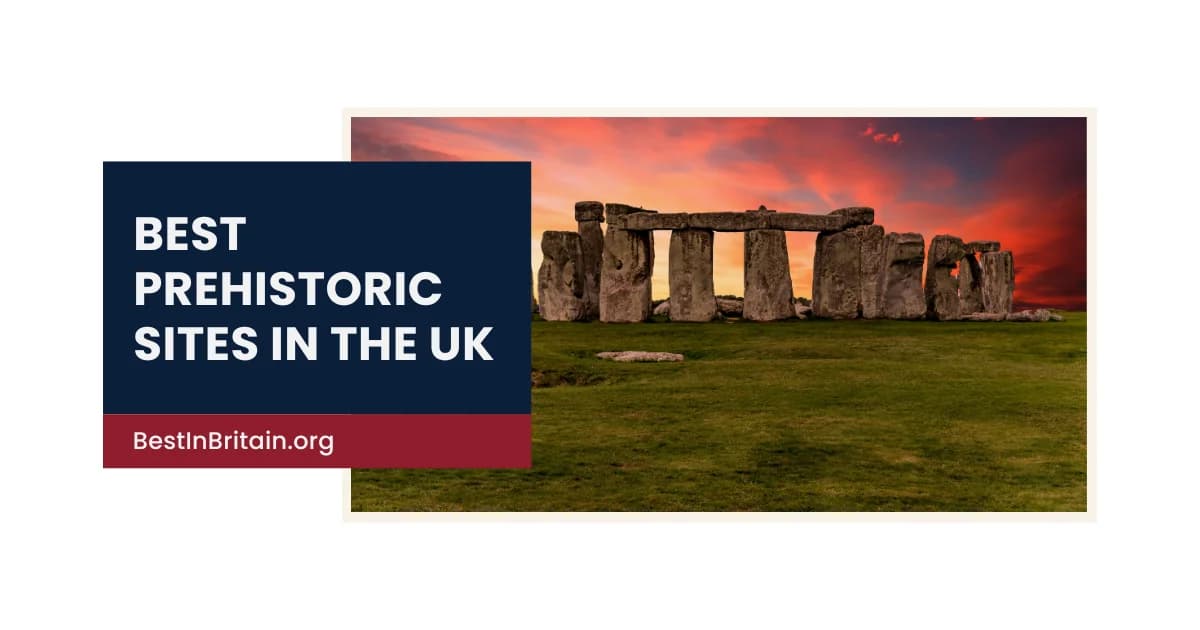
Britain's prehistoric sites are among the clearest reminders that these islands had complex societies long before written history began. Stone circles, burial chambers, mines, settlements and hillforts survive across landscapes that were already being shaped thousands of years before the Romans arrived.
The best-known monuments are only part of the story. Stonehenge may be the most recognisable prehistoric site in the country, but a visit to Skara Brae reveals the layout and furniture of Neolithic homes, while Grime's Graves shows the extraordinary effort invested in mining flint beneath the earth. At Flag Fen, preserved timbers provide evidence of a ritual landscape built across wet ground, and the earthworks of Maiden Castle demonstrate the scale of community organisation during the Iron Age.
These places should not be treated as isolated curiosities. Many formed part of wider ceremonial, agricultural or funerary landscapes that developed over generations. Their purpose was rarely fixed, and modern archaeology continues to change how they are understood.
This guide brings together 15 of the best prehistoric sites in the UK, with a balance of internationally famous monuments and quieter places in England, Scotland, Wales and Northern Ireland. Access at remote or fragile sites can change, so check official information before travelling.
How we selected the best prehistoric sites in the UK
Our editorial selection considered:
- Archaeological importance: Sites that have transformed or substantially informed understanding of prehistoric Britain.
- Survival and visibility: Monuments whose form, structure or landscape remains clear enough to reward an in-person visit.
- Range of periods: Neolithic, Bronze Age and Iron Age sites rather than a list composed entirely of stone circles.
- Variety of site types: Settlements, tombs, mines, ritual monuments, standing stones and defended enclosures.
- Quality of interpretation: Museums, displays, reconstructions or accessible site information that help visitors understand what survives.
- Geographical balance: Strong examples from all four nations of the UK.
- Visitor experience: Places that justify a dedicated trip or can anchor a wider regional itinerary.
Prehistoric sites in England
1. Stonehenge, Wiltshire
Period: Neolithic and Bronze Age
Best for: Monumental engineering, solstice alignments and a major archaeological landscape
Allow: Three to four hours
Stonehenge is Britain's most famous prehistoric monument, but the familiar stone circle is only one part of a much larger landscape. Construction and alteration took place over many generations, beginning with an early earthwork enclosure before the great sarsen stones and smaller bluestones were arranged in their later forms.
The monument's engineering remains extraordinary. The larger uprights were shaped, transported and joined with lintels using carefully worked connections more familiar from timber construction. The arrangement also reflects solar alignments, most famously the midsummer sunrise and midwinter sunset.
Modern visits begin at the visitor centre, where archaeological finds, reconstructions and displays provide context before the journey to the stones. The surrounding landscape contains burial mounds, the Avenue, the Cursus and nearby monuments connected with the wider ceremonial complex.
Why it stands out:
Stonehenge combines technical achievement, ritual meaning and landscape planning on a scale unmatched by any other single prehistoric monument in Britain.
Good to know:
Standard admission follows a path outside the stone circle. Special Stone Circle Experience visits provide much closer access at selected times and require advance booking.
2. Avebury, Wiltshire
Period: Neolithic
Best for: Walking among the stones and exploring a complete ceremonial landscape
Allow: Half a day to a full day
Avebury is one of the largest and most complex Neolithic ceremonial sites in Britain. A huge bank and internal ditch enclose a great stone circle, which once contained two smaller circles and additional central features.
Unlike Stonehenge, the modern village developed partly within the monument, and visitors can walk freely among many of the surviving and re-erected stones. This creates a more immediate experience, although it can also make the full scale of the earthworks difficult to appreciate from ground level.
The wider landscape is essential. West Kennet Avenue, the Sanctuary, West Kennet Long Barrow and Silbury Hill show that Avebury was part of an extensive complex built and used over many centuries.
Why it stands out:
Avebury is not a single monument but a prehistoric landscape that can still be explored on foot. Its scale becomes clearer the longer visitors spend moving between the connected sites.
Good to know:
The stone circle is free to enter, while parking and museum access may involve charges. Roads pass through the village, so take care when crossing between sections.
3. Castlerigg Stone Circle, Cumbria
Period: Late Neolithic to Early Bronze Age
Best for: Mountain scenery and an atmospheric open-access stone circle
Allow: One to two hours
Castlerigg occupies a broad plateau above Keswick, surrounded by the fells of the Lake District. Its setting is one of the most dramatic of any stone circle in Britain, with the monument framed by Blencathra, Skiddaw and the surrounding valleys.
The circle contains dozens of stones, including a rectangular arrangement known as the cove within its eastern side. Its exact functions remain uncertain, but the monument's position may have related to movement through the landscape, gatherings and views towards prominent natural features.
Castlerigg is not enclosed within a large visitor attraction. The experience is therefore shaped by weather, light and the changing mountain backdrop.
Why it stands out:
Few prehistoric monuments demonstrate the relationship between human construction and natural landscape as powerfully as Castlerigg.
Good to know:
Parking is limited and the field can become muddy. Visit early or late in the day for a quieter experience, but remain considerate of nearby residents and livestock.
4. Grime's Graves, Norfolk
Period: Neolithic
Best for: Prehistoric industry, underground archaeology and flint mining
Allow: Two to three hours
Grime's Graves is a landscape of hundreds of prehistoric flint-mining shafts, visible today as shallow grassy hollows across Breckland. Neolithic miners dug deep through chalk to reach high-quality seams of dark flint used for tools and exchange.
The mines were created with remarkable persistence and technical knowledge. Workers descended narrow shafts and excavated low galleries using tools made from antler, stone and bone.
Selected mine access has historically allowed visitors to descend below ground, although availability depends on conservation, staffing and current safety arrangements. Even from the surface, the scale of the mining landscape is striking.
Why it stands out:
Grime's Graves challenges the idea that prehistoric Britain was technologically simple. It reveals specialised labour, geological understanding and organised extraction on an industrial scale.
Good to know:
Underground access is physically demanding and may be restricted by age, mobility or seasonal conditions. Confirm current arrangements before travelling.
5. Flag Fen Archaeology Park, Cambridgeshire
Period: Bronze Age
Best for: Preserved timber archaeology, wetland landscapes and experimental reconstruction
Allow: Two to three hours
Flag Fen preserves part of an extraordinary Bronze Age timber causeway and platform built across the wet landscape near modern Peterborough. Thousands of wooden posts were driven into the ground, creating a structure that extended across the fen.
Objects including weapons and personal items were deposited in the surrounding water, suggesting that the site held ritual as well as practical significance. Waterlogged conditions preserved organic materials that would usually have disappeared from the archaeological record.
The visitor site uses displays and reconstructed prehistoric buildings to explain the causeway, the wetland environment and the lives of the people who used it.
Why it stands out:
Flag Fen reveals a side of prehistory that stone monuments cannot show. Wood, water and deposited objects provide a different understanding of Bronze Age belief and engineering.
Good to know:
Opening can be seasonal, and outdoor areas are affected by weather. Check current hours before making a special journey.
6. Maiden Castle, Dorset
Period: Neolithic origins and Iron Age hillfort
Best for: Monumental earthworks and Iron Age landscape archaeology
Allow: Two to three hours
Maiden Castle is one of the largest and most visually impressive Iron Age hillforts in Europe. Its multiple banks and ditches sweep around a broad chalk hill outside Dorchester, creating a defended enclosure whose scale is best understood by walking the perimeter.
The site developed over a long period. Earlier Neolithic activity preceded the expansion of the hillfort during the Iron Age, when it became a major settlement and regional centre.
The complicated entrances were designed to control movement and expose anyone approaching the enclosure. Excavations also uncovered burials and evidence that shaped early interpretations of conflict around the Roman conquest, although some older dramatic accounts have since been reconsidered.
Why it stands out:
Maiden Castle communicates prehistoric communal labour through earth rather than stone. Its banks and ditches remain among the most powerful surviving features of Iron Age Britain.
Good to know:
The site is exposed and involves steep, uneven walking. There are no extensive indoor visitor facilities, so read the official background before arrival.
Prehistoric sites in Scotland
7. Skara Brae, Orkney
Period: Neolithic
Best for: Domestic life, exceptional preservation and Orkney archaeology
Allow: Two to three hours
Skara Brae is one of the best-preserved Neolithic settlements in Western Europe. The stone-built village was occupied roughly five thousand years ago and remained protected beneath sand until coastal erosion exposed it in the 19th century.
Visitors can see linked houses containing stone beds, storage spaces, hearths and dressers. The survival of this fixed furniture makes the rooms feel unexpectedly recognisable, even though their inhabitants lived millennia before written history in Britain.
The settlement forms part of the Heart of Neolithic Orkney World Heritage Site. Its location beside the Bay of Skaill also makes clear the continuing vulnerability of coastal archaeological sites.
Why it stands out:
Skara Brae brings prehistoric domestic life closer than almost any other site in Britain. It reveals homes rather than only tombs or ceremonial structures.
Good to know:
Strong winds and coastal weather can affect access. Timed booking is sensible during the busiest months, and the site should be combined with other Neolithic monuments on Mainland Orkney.
8. Ring of Brodgar, Orkney
Period: Neolithic
Best for: Monumental landscape, open access and sunset atmosphere
Allow: One to two hours
The Ring of Brodgar is a vast stone circle and henge positioned on a narrow strip of land between the Lochs of Stenness and Harray. Dozens of the original stones remain, surrounded by a large rock-cut ditch.
The monument sits within one of Europe's richest concentrations of Neolithic archaeology. The Stones of Stenness, Maeshowe, Barnhouse settlement and extensive remains around the Ness of Brodgar show that this landscape was repeatedly used for ceremony, settlement and burial.
The ring's scale is difficult to capture in photographs. Walking its circumference makes the relationship between stones, water and distant hills far clearer.
Why it stands out:
The Ring of Brodgar belongs to an entire ceremonial landscape whose density and preservation are exceptional.
Good to know:
The monument is free and outdoors, but erosion may require temporary path restrictions. Stay on marked routes and expect rapidly changing weather.
9. Maeshowe Chambered Cairn, Orkney
Period: Neolithic, with later Norse inscriptions
Best for: Neolithic architecture, winter-solstice alignment and layered history
Allow: Around one hour, plus travel and check-in time
Maeshowe appears externally as a grassy mound, but its interior contains one of Britain's most impressive Neolithic chambered tombs. A long, low passage leads into a tall central chamber built from carefully fitted stone.
The entrance passage is aligned so that light from the setting midwinter sun can reach into the chamber around the winter solstice. The monument's exact rituals remain unknown, but its architecture demonstrates precise planning and substantial communal effort.
Centuries later, Norse visitors entered the tomb and carved runic inscriptions into its walls, adding a second, unexpectedly personal layer of history.
Why it stands out:
Maeshowe combines sophisticated Neolithic engineering with one of the most important groups of runic inscriptions in Britain.
Good to know:
Entry is by guided timed visit and capacity is limited. The passage is low and confined, making the interior unsuitable for some visitors.
10. Kilmartin Glen, Argyll and Bute
Period: Neolithic, Bronze Age and Iron Age
Best for: A concentrated prehistoric landscape and self-guided exploration
Allow: A full day
Kilmartin Glen contains one of mainland Scotland's richest concentrations of prehistoric monuments. Standing stones, stone circles, rock art, chambered tombs and a line of burial cairns appear across a relatively compact landscape.
The linear cemetery is the clearest starting point, but the wider area includes Temple Wood stone circles, Nether Largie cairns and carved rock surfaces at Achnabreck and other nearby locations.
Kilmartin Museum provides essential context, bringing together artefacts and interpretation from across the glen. Without it, visitors can easily see the monuments as isolated features rather than parts of a long-lived ritual landscape.
Why it stands out:
Kilmartin allows visitors to trace several thousand years of prehistoric activity within one area. It rewards a full day more than a quick roadside stop.
Good to know:
The sites are spread across fields, tracks and minor roads. Use a proper map, wear waterproof footwear and avoid obstructing local access.
11. Calanais Standing Stones, Isle of Lewis
Period: Neolithic
Best for: Remote atmosphere, monumental stone alignments and Hebridean scenery
Allow: Two to three hours
The Calanais standing stones form one of Britain's most distinctive megalithic monuments. A central stone circle surrounds a tall monolith, with avenues and shorter stone rows extending outward in a cross-like arrangement.
The main monument is part of a wider concentration of prehistoric sites across the landscape, including additional stone circles and settings nearby. This density suggests that Calanais was not an isolated construction but a long-term ceremonial centre.
Peat growth partially covered some stones before later clearance, showing how dramatically the landscape changed after the monument fell out of use.
Why it stands out:
Calanais combines complex design with a remote island setting. The stones feel closely tied to the open sky, water and low Hebridean hills.
Good to know:
The site can be extremely busy around the summer solstice and during coach arrivals. Visit outside peak periods and prepare for wind and rain.
Prehistoric sites in Wales
12. Pentre Ifan, Pembrokeshire
Period: Neolithic
Best for: Monumental stone construction and Preseli landscape
Allow: Around one hour
Pentre Ifan is the skeletal remains of a Neolithic chambered tomb. Its enormous capstone appears to balance improbably on three upright stones, creating one of the most recognisable prehistoric silhouettes in Wales.
The monument would originally have been covered by a larger mound, so the exposed stones represent only the internal structure of the tomb. This is important to remember, as the modern appearance is more open and sculptural than the builders intended.
The site lies beneath the Preseli Hills, a landscape dense with prehistoric remains and closely associated with the source of some of Stonehenge's bluestones.
Why it stands out:
Pentre Ifan is visually simple but technically remarkable. The surviving chamber communicates the ambition of Neolithic monument builders immediately.
Good to know:
The site is free and reached across rural ground. Parking is limited, facilities are minimal and the field may contain livestock.
13. Bryn Celli Ddu, Anglesey
Period: Neolithic
Best for: Passage-tomb architecture and solar alignment
Allow: One to two hours
Bryn Celli Ddu began as a henge or ritual enclosure before being transformed into a passage tomb. Today, a stone passage leads into a central chamber covered by a reconstructed mound.
Around the summer solstice, the rising sun shines along the passage and into the chamber, demonstrating that the monument's orientation was deliberately connected with seasonal light.
The site is compact, but its sequence of use makes it particularly valuable. It shows that prehistoric monuments could be altered radically as beliefs and communities changed.
Why it stands out:
Bryn Celli Ddu allows visitors to enter a chambered tomb while also seeing evidence of an earlier monument beneath and around it.
Good to know:
The approach crosses rural land and can be wet. Guided visits are offered on selected dates, while general access arrangements should be checked with Cadw.
Prehistoric sites in Northern Ireland
14. Beaghmore Stone Circles, County Tyrone
Period: Neolithic and Bronze Age
Best for: Multiple stone circles, alignments and a remote upland setting
Allow: One to two hours
Beaghmore is a complex of stone circles, cairns and alignments on the edge of the Sperrin Mountains. The site was discovered during peat cutting in the 20th century, when numerous low stones and associated features emerged from beneath the bog.
Unlike the towering stones of Calanais or Avebury, many of Beaghmore's stones are modest in size. The monument becomes impressive through repetition and layout rather than height.
The arrangement appears to have developed over more than one phase, and astronomical interpretations have been proposed for some alignments. As with many prehistoric sites, not every function can be established with certainty.
Why it stands out:
Beaghmore demonstrates that monumental landscapes did not need huge stones. Its subtle circles and rows reward slow, attentive exploration.
Good to know:
The setting is exposed and weather can change quickly. Paths may be wet, and facilities are limited.
15. Navan Fort, County Armagh
Period: Neolithic activity and Iron Age ceremonial centre
Best for: Iron Age ritual, archaeology and links with early Irish tradition
Allow: Two to three hours
Navan Fort, known in Irish tradition as Emain Macha, is one of the most important prehistoric ceremonial sites in Ireland. The large circular enclosure contains a prominent mound and evidence of repeated activity extending back into the Neolithic.
During the Iron Age, an enormous circular timber structure was built, filled with stones and deliberately burned before being covered by a mound. The scale and apparent ritual destruction of the building make it one of the most remarkable archaeological discoveries from prehistoric Ireland.
Later literature associates Emain Macha with the kings of Ulster and the stories of the Ulster Cycle. Archaeology and tradition do not align neatly, but each has shaped the site's significance.
Why it stands out:
Navan Fort offers an unusually rich combination of excavation evidence, large-scale Iron Age ceremony and enduring cultural tradition.
Good to know:
The Navan Centre provides interpretation and seasonal programming before visitors walk to the monument. Check opening times, as the visitor experience may vary through the year.
Other prehistoric sites worth visiting
A list of 15 inevitably leaves out many exceptional monuments. Further strong choices include:
- West Kennet Long Barrow in Wiltshire
- Silbury Hill in Wiltshire
- Uffington White Horse and Castle in Oxfordshire
- Wayland's Smithy in Oxfordshire
- Arbor Low in Derbyshire
- Danebury Hillfort in Hampshire
- Old Oswestry Hillfort in Shropshire
- Trethevy Quoit in Cornwall
- Chysauster Ancient Village in Cornwall
- Carn Euny Ancient Village in Cornwall
- Stanton Drew stone circles in Somerset
- Rollright Stones in Oxfordshire
- Mousa Broch in Shetland
- Jarlshof in Shetland
- Clava Cairns near Inverness
- Cairn Holy in Dumfries and Galloway
- Knap of Howar in Orkney
- Carreg Coetan Arthur in Pembrokeshire
- Barclodiad y Gawres on Anglesey
- Tre'r Ceiri hillfort in Gwynedd
- Din Lligwy on Anglesey
- Giant's Ring near Belfast
- Ballynoe Stone Circle in County Down
- Loughcrew and Newgrange in the Republic of Ireland for visitors extending a trip beyond the UK
Best prehistoric sites for different interests
Best overall prehistoric landscape
Avebury and the surrounding monuments provide the strongest walkable ceremonial landscape in England, while the Heart of Neolithic Orkney offers an exceptional concentration of settlements, tombs and stone circles.
Best preserved settlement
Skara Brae is the outstanding choice. Its stone furniture and linked houses offer rare evidence of how Neolithic people organised domestic space.
Best stone circle
Stonehenge remains the most technically sophisticated and internationally recognised, but Avebury, Calanais, Castlerigg and the Ring of Brodgar offer more open and atmospheric visits.
Best chambered tomb
Maeshowe provides the most impressive engineered interior. Bryn Celli Ddu and Pentre Ifan offer excellent alternatives in Wales.
Best Iron Age site
Maiden Castle communicates the scale of a defended settlement, while Navan Fort is particularly important for ceremonial archaeology and Irish cultural tradition.
Best for families
Stonehenge, Flag Fen, Skara Brae and Navan Centre provide stronger visitor interpretation than remote open-access monuments.
Best remote atmosphere
Calanais, Beaghmore, Kilmartin Glen and several Orkney sites combine archaeology with landscapes that still feel expansive and relatively undeveloped.
Understanding prehistoric site types
Stone circle
A ring or arrangement of upright stones, generally associated with the later Neolithic or Bronze Age. Its purpose may have involved gathering, ceremony, burial, seasonal observation or several functions over time.
Henge
A roughly circular or oval enclosure defined by a bank and internal ditch. Despite the name, Stonehenge is not a typical henge because the main ditch lies outside the bank.
Chambered tomb
A burial monument containing one or more stone-built chambers, often originally covered by earth or stone. The exposed structures visible today may represent only the internal skeleton.
Passage grave
A type of chambered tomb reached through a narrow passage. Maeshowe and Bryn Celli Ddu are prominent examples.
Hillfort
A defended or enclosed hilltop site, usually associated with the Iron Age, although some had earlier origins or later use. Not every hillfort was permanently occupied or built primarily for warfare.
Broch
A substantial circular stone tower found mainly in northern and western Scotland during the Iron Age.
Cairn
A mound built from stone. Cairns could cover burials, mark places or form part of wider ceremonial landscapes.
How to plan a prehistoric-site trip
Many prehistoric monuments stand in open countryside without formal visitor facilities. A careful plan is more useful than assuming every site operates like a museum.
Before travelling:
- Check current access and conservation notices.
- Confirm whether parking is available.
- Wear waterproof footwear.
- Keep dogs under close control around livestock.
- Do not climb on stones or enter restricted areas.
- Follow marked paths to limit erosion.
- Bring a map where mobile coverage may be weak.
- Check ferry and island transport in advance.
- Allow extra time for remote roads.
- Download official site information before arrival.
- Treat solstice events as special access arrangements, not ordinary visiting days.
Some open-access monuments are free, while staffed attractions charge admission. Membership of English Heritage, Historic Scotland or Cadw may offer useful value across several sites.
Frequently asked questions
What is the oldest prehistoric site in the UK?
There is no single simple answer because Britain contains evidence of human activity stretching back hundreds of thousands of years. Among the monumental sites in this guide, several Neolithic tombs and settlements date from the fourth millennium BC.
Is Stonehenge older than the pyramids?
The Stonehenge landscape developed over a long period. Some early features pre-date Egypt's major pyramids, while the familiar large stone settings were constructed later. Skara Brae was occupied before the main phase of the Great Pyramid at Giza and before the famous sarsen arrangement at Stonehenge.
Can visitors walk inside Stonehenge?
Ordinary daytime admission keeps visitors outside the central stones. Limited Stone Circle Experience visits provide closer access at selected times and must be booked separately.
Are prehistoric sites free to visit?
Many open landscapes and stone circles are free, including Castlerigg, Pentre Ifan and Beaghmore. Staffed attractions such as Stonehenge, Skara Brae and Flag Fen normally charge admission.
Why were stone circles built?
There was probably no single purpose shared by every circle. Evidence suggests roles connected with ceremony, burial, gathering, ancestors, movement through the landscape and the observation of seasonal events.
Are the stones at prehistoric sites in their original positions?
Some remain where prehistoric builders placed them, while others have fallen, been moved or been re-erected by archaeologists and antiquarians. Avebury includes both surviving and restored stones, and every site should be understood through its individual conservation history.
What should visitors take to a remote prehistoric site?
Waterproof shoes, warm layers, a map, water and downloaded site information are sensible. Remote monuments often have no toilets, shelter or staff.
Final thoughts
Britain's prehistoric monuments are most rewarding when they are seen as parts of lived landscapes rather than mysterious objects dropped into empty countryside.
Stonehenge and Avebury reveal the scale of Neolithic ceremonial building. Skara Brae preserves homes and daily life, while Grime's Graves exposes the labour behind essential stone tools. Maiden Castle and Navan Fort show that Iron Age communities could organise construction and ceremony on an enormous scale.
The quieter sites matter just as much. A low stone circle at Beaghmore, a chamber beneath the Anglesey turf or a carved rock in Kilmartin Glen may not dominate the skyline, but each preserves evidence of people making places meaningful thousands of years ago.
Visit slowly, read the landscape and be cautious of explanations that claim certainty where archaeology still leaves room for debate.
Related articles
Related guides
Historic Sites
20 best historic houses in the UK to visit
Explore 20 of the best historic houses in the UK, from grand Baroque palaces and Elizabethan halls to royal retreats and richly furnished country estates.
Updated 22 June 2026
Historic Sites
20 best Roman sites in the UK to visit
Explore 20 of the best Roman sites in the UK, from Hadrian's Wall and the baths of Aquae Sulis to villas, legionary fortresses, frontier forts and buried cities.
Updated 17 June 2026
Historic Sites
25 best UNESCO World Heritage Sites in the UK
Explore 25 of the best UNESCO World Heritage Sites in the UK, from Stonehenge and Edinburgh to the Giant's Causeway, Hadrian's Wall and the Flow Country.
Updated 14 June 2026

Historic Sites
20 best heritage railways in the UK
Discover 20 of the best heritage railways in the UK, from steam journeys through national parks and Welsh mountain lines to seaside railways and restored main-line stations.
Updated 12 June 2026
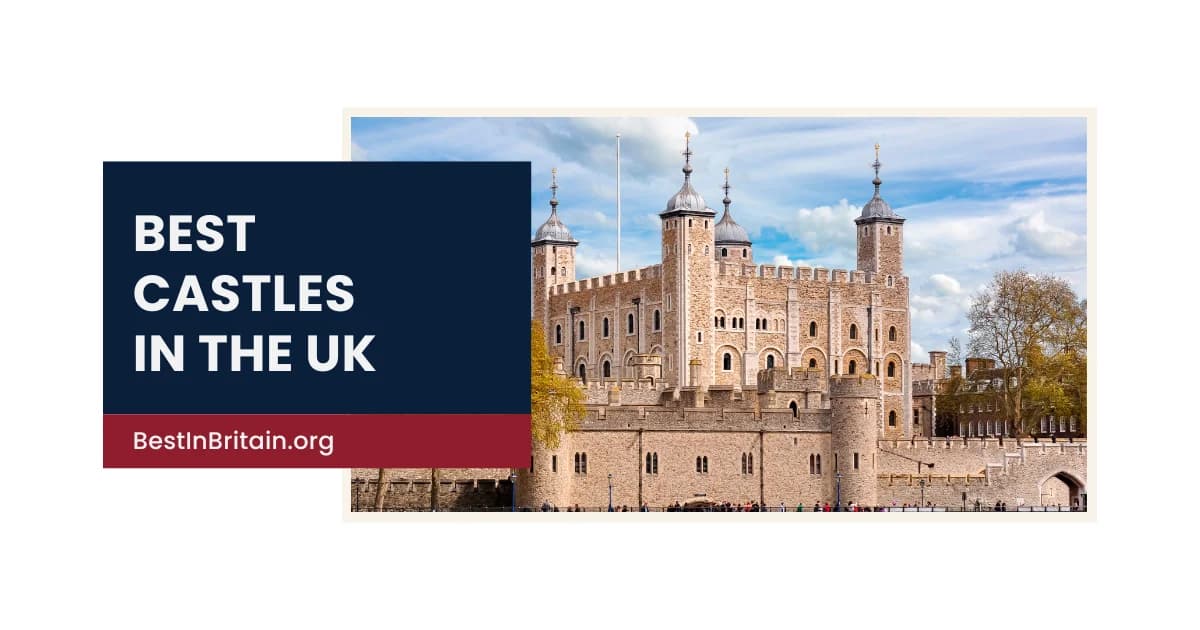
Historic Sites
40 best castles in the UK to visit
Discover the best castles to visit across the United Kingdom, from royal residences and medieval fortresses to dramatic coastal ruins and historic strongholds in England, Scotland, Wales and Northern Ireland.
Updated 26 September 2026
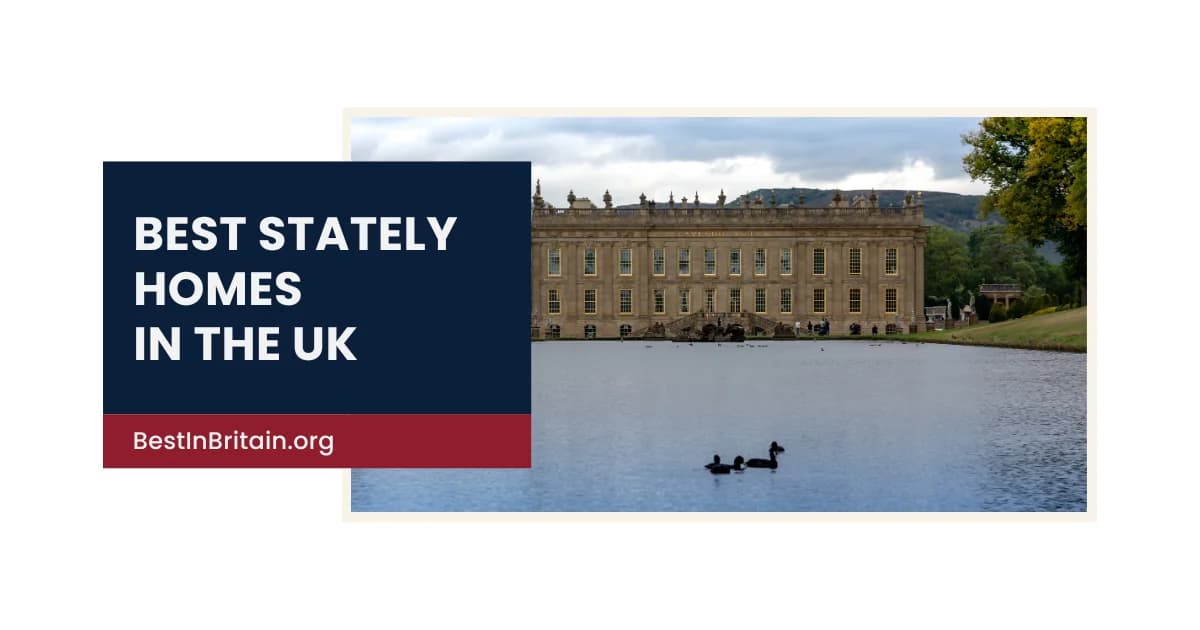
Historic Sites
25 best stately homes in the UK for a memorable visit
Discover the best stately homes across the United Kingdom, from grand ducal palaces and aristocratic estates to remarkable country houses with outstanding interiors, gardens and wider landscapes.
Updated 15 July 2026
Know a business we should consider?
Send us the details and our editorial team will review whether it fits a future guide.
Submit businessWriter profile
Gabriela Krumova
Arts, Culture & Performance Contributor
Actor, theatre director and Queen Margaret University Drama graduate with international performance experience across Edinburgh, London, New York, Paris and Venice. Gabriela has performed in and directed Edinburgh Festival Fringe productions and covers theatre, performing arts, cultural venues, live entertainment, festivals and the creative industries for Best in Britain.
Editorial Trust Standard
Independent ReviewIndependent Research
Featured rankings are editorially determined. Commercial partner listings are strictly labeled as Sponsored or Featured.
Public Register Audit
Listings are cross-checked against public regulatory registries, Companies House filings, and published fee schedules.