
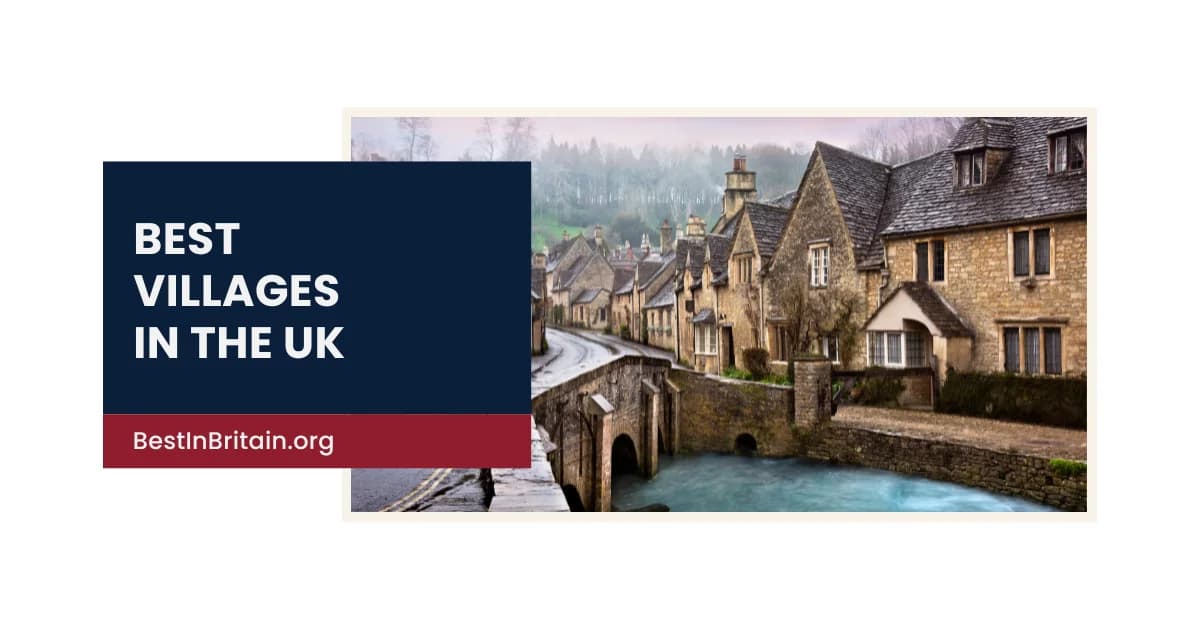
The best villages in the UK are memorable for very different reasons. Castle Combe and Bibury are known for carefully preserved stone architecture; Port Isaac, Staithes and Anstruther are shaped by fishing and harbour life; Plockton, Beddgelert and Killin depend as much on their surrounding landscape as their streets; while Culross and Lacock stand out for historical continuity and unusually coherent built character.
The United Kingdom contains thousands of villages shaped by local stone, farming, fishing, industry, religion and the landscape around them. Some are visually famous, but the most rewarding visits usually go beyond a single viewpoint. A church, harbour, footpath, small museum, local business or surrounding walk often explains far more about a place than the photograph that made it popular.
That matters because villages are not open-air attractions. They are homes and working communities, often with narrow roads, limited parking and small local services. The quality of a visit therefore depends partly on how well visitors move through the place and how much they engage with the wider setting rather than simply stopping for a photograph.
This guide brings together 30 of the best villages in the UK across England, Scotland, Wales and Northern Ireland. It is an editorial selection rather than a beauty ranking, focusing on architecture, landscape, heritage, atmosphere and whether the village offers enough character to justify including it in a wider journey.
Best UK villages at a glance
| Village | Nation | Best for | Character |
|---|---|---|---|
| Castle Combe | England | Cotswold stone architecture | Tiny historic village with a famously preserved centre |
| Bibury | England | Riverside Cotswold scenery | Stone cottages, water meadows and Arlington Row |
| Portmeirion | Wales | Architecture and design | Privately managed Italianate village |
| Port Isaac | England | Fishing heritage and coastal atmosphere | Compact Cornish harbour village |
| Robin Hood’s Bay | England | Steep lanes and coastal history | Cliffside fishing village |
| Staithes | England | Harbour scenery and artistic character | Tight North Yorkshire fishing settlement |
| Plockton | Scotland | Mountain-and-sea setting | Sheltered Highland village |
| Culross | Scotland | Historic preservation | Seventeenth-century streets and houses |
| Beddgelert | Wales | Mountain scenery and walking | Riverside Eryri village |
| Solva | Wales | Harbour views and coast path | Pembrokeshire inlet village |
| Cushendun | Northern Ireland | Architecture and Causeway Coast access | Conservation village with Cornish influence |
| Ballintoy | Northern Ireland | Dramatic harbour scenery | Small Causeway Coast settlement |
If you are choosing between them, start with the experience rather than the fame. Castle Combe, Bibury and Lacock are strongest for architecture; Port Isaac, Staithes and Mousehole for fishing-village atmosphere; Plockton, Beddgelert and Killin for landscape; Culross and Falkland for historic character; and Solva, Aberdaron and Ballintoy for coastal setting.
How we selected the best villages in the UK
This is an editorial selection, not a claim that village beauty can be measured objectively.
We considered:
- Architecture: Whether the village has a coherent and distinctive built character.
- Landscape: How strongly the settlement relates to coast, mountains, rivers, farmland or woodland.
- Heritage: Churches, harbours, industry, royal history, fishing, farming or other local stories.
- Atmosphere: Whether the village still feels like a real place rather than only a photo stop.
- Walkability: How easily visitors can explore without relying on the car.
- Depth of visit: Whether there is enough to support a proper stop, walk or half-day rather than a five-minute detour.
- Regional distinctiveness: Whether the village expresses something specific about its part of the UK.
- Responsible access: Whether visitors can experience the place without causing unnecessary pressure on residents, roads or sensitive landscapes.
The list therefore includes both highly polished destinations and much smaller working communities. Broadway and Bourton-on-the-Water are more visitor-oriented, while Pennan, Cwm-yr-Eglwys and Ballintoy are included because their setting and scale create a very different kind of experience.
The best villages to visit in the UK
1. Walk through Castle Combe

Business details
Address
Castle Combe, Wiltshire, England
Best for: Cotswold architecture, a short village walk and quiet historic streets
Visit details:
- The village is accessible throughout the year
- Churches, hotels and local businesses use separate schedules
- Visitor parking is located outside the historic centre
Typical cost: Free to explore
Castle Combe is one of the most photographed villages in England, but its appeal is stronger when seen as a compact historic settlement rather than a single postcard view.
The main street falls gently past honey-coloured stone cottages towards the medieval market cross and Bybrook River. St Andrew's Church, former weavers' houses and the shape of the old street pattern give the village genuine historical depth.
Because the centre is so small, visitor behaviour matters. Castle Combe feels far more rewarding when explored quietly and combined with a short surrounding walk instead of treated as a quick photography stop.
Pro tip:
Use the visitor car park, walk through quietly and extend the visit along a local footpath rather than turning around at the bridge.
2. Explore Bibury

Business details
Address
Bibury, Gloucestershire, England
Best for: Riverside Cotswold scenery and historic stone cottages
Visit details:
- The village is accessible throughout the year
- Attractions and hospitality businesses keep separate hours
- Roadside parking is limited
Typical cost: Free to explore
Bibury is often reduced to Arlington Row, but the village makes more sense when the cottages are seen as part of a wider riverside landscape.
The River Coln, water meadows, stone houses and church all contribute to the setting, and the strongest views come from understanding how the village sits within low-lying farmland rather than focusing only on the most photographed terrace.
Popularity is its main weakness. The narrow roads and residential character mean Bibury can feel crowded quickly, so early or quieter visits are far more rewarding.
Pro tip:
Visit early, avoid blocking homes and continue beyond Arlington Row to see more than the standard photograph.
3. Discover Portmeirion

Business details
Address
Minffordd, Gwynedd, Wales
Best for: Architecture, gardens and a deliberately designed village experience
Visit details:
- The village opens daily with seasonal hours
- Admission is ticketed
- Some buildings and areas may close for private events
Typical cost: £££
Portmeirion is intentionally unlike anywhere else in Britain. Sir Clough Williams-Ellis created it as a composed architectural landscape, combining Italianate buildings, theatrical colour, woodland and the Dwyryd estuary.
That means it should not be judged by the same standard as a working historic village. Its interest lies in design, proportion, surprise and the way paths repeatedly reveal new views across buildings, gardens and water.
The central piazza gets most of the attention, but the quieter woodland and coastal routes are what prevent the visit from feeling superficial.
Pro tip:
Allow several hours and walk through the woodland and coastal paths rather than visiting only the colourful centre.
4. Visit Bourton-on-the-Water

Business details
Address
Bourton-on-the-Water, Gloucestershire, England
Best for: Family-friendly Cotswold visits and easy riverside exploring
Visit details:
- The village is accessible throughout the year
- Museums and attractions use separate schedules
- Summer weekends and school holidays are particularly busy
Typical cost: Free to explore, with charges for attractions
Bourton-on-the-Water is one of the Cotswolds’ most popular villages, centred on the River Windrush and its low stone bridges.
The riverside, traditional stone buildings and range of small attractions make it especially accessible for families. It also has more cafés, shops and visitor facilities than many smaller villages nearby.
Its popularity can make the centre feel more like a resort than a quiet rural settlement.
Pro tip:
Arrive early, then walk beyond the central bridges or continue to a quieter neighbouring village later in the day.
5. Explore Clovelly

Business details
Address
Clovelly, Devon, England
Best for: A steep traffic-free descent to a historic fishing harbour
Visit details:
- The managed village opens daily with seasonal visitor hours
- Admission charges apply
- Access involves a steep cobbled descent and climb
Typical cost: £££
Clovelly descends steeply towards the sea along a traffic-free cobbled street.
Whitewashed cottages, harbour views and connections with fishing create one of Devon’s most recognisable village settings. The absence of ordinary vehicle traffic preserves its historic appearance, although Clovelly operates as a privately managed visitor attraction.
The gradient and uneven surfaces make the visit physically demanding.
Pro tip:
Wear proper footwear, take your time on the descent and leave enough energy for the return climb.
6. Walk around Port Isaac

Business details
Address
Port Isaac, Cornwall, England
Best for: Fishing-village atmosphere, harbour views and coastal walking
Visit details:
- The village is accessible throughout the year
- Shops, tours and hospitality businesses vary seasonally
- Visitor parking is located above the village
Typical cost: Free to explore
Port Isaac is a historic fishing village arranged around a narrow harbour on the north Cornwall coast.
Whitewashed cottages, steep lanes and working boats give the village a strong sense of place, while television and film appearances have increased its popularity. The surrounding coast path provides essential perspective and a way to escape the busiest streets.
Vehicle access in the centre is extremely limited.
Pro tip:
Park above the village and include a short coast-path walk rather than spending the whole visit around the harbour.
7. Discover Lacock

Business details
Address
Lacock, Wiltshire, England
Best for: Preserved historic streets, abbey architecture and photographic history
Visit details:
- The village is accessible throughout the year
- Abbey, museum and indoor sites keep separate opening hours
- National Trust parking is available outside the centre
Typical cost: Free village access, with charges for selected attractions
Lacock is an exceptionally well-preserved village of stone and timber buildings with few modern visual intrusions.
Its streets have appeared in numerous period productions, while Lacock Abbey and the Fox Talbot Museum add important architectural and photographic history. The village remains compact enough to explore slowly without requiring a fixed route.
Its filming associations should not overshadow the genuine social and industrial history of the settlement.
Pro tip:
Visit the abbey and museum as well as the streets, since they explain why Lacock matters beyond its appearance.
8. Walk through Robin Hood’s Bay

Business details
Address
Robin Hood’s Bay, North Yorkshire, England
Best for: Steep lanes, smuggling history and North Sea atmosphere
Visit details:
- The village and beach are accessible throughout the year
- Tides affect beach access and coastal walking
- Parking is located in the upper village
Typical cost: Free to explore
Robin Hood's Bay is memorable because the village seems to spill downhill towards the sea. The steep main street, hidden passages and tightly packed cottages create a sense of enclosure before the view suddenly opens onto the beach.
Its history of fishing and smuggling gives the lower village more texture than a typical resort, while the Cleveland Way and Coast to Coast routes connect it naturally with the surrounding cliffs.
The gradient is part of the experience. Reaching the harbour means accepting a steep return climb, especially in wet weather.
Pro tip:
Check the tide, wear suitable shoes and explore the side passages rather than following only the main downhill street.
9. Explore Staithes

Business details
Address
Staithes, North Yorkshire, England
Best for: Harbour scenery, artistic character and cliffside views
Visit details:
- The village is accessible throughout the year
- Galleries and businesses vary seasonally
- Visitor parking is located above the old village
Typical cost: Free to explore
Staithes is a tightly packed fishing village enclosed by high cliffs on the North Yorkshire coast.
Its narrow lanes, harbour and red-roofed houses create a dramatic setting, while artistic connections and local galleries add another layer. The village’s geography makes the relationship between homes, harbour and sea immediately visible.
Like several coastal villages, it is vulnerable to crowding and careless parking.
Pro tip:
Walk to the harbour viewpoints and remain for changing light rather than treating Staithes as a ten-minute photograph.
10. Visit Hawkshead

Business details
Address
Hawkshead, Cumbria, England
Best for: Historic Lake District streets and literary associations
Visit details:
- The village is accessible throughout the year
- Museums, churches and shops use separate schedules
- Parking is concentrated outside the historic centre
Typical cost: Free to explore
Hawkshead is one of the Lake District’s most attractive historic villages.
Whitewashed houses, narrow lanes and old civic buildings create a compact centre with connections to both William Wordsworth and Beatrix Potter. Its largely traffic-free core makes it pleasant to explore, while surrounding paths and nearby countryside extend the visit.
It can become busy as part of coach and driving routes through the southern Lakes.
Pro tip:
Park once and combine the village with a nearby walk rather than immediately driving on to the next landmark.
11. Discover Mousehole

Business details
Address
Mousehole, Cornwall, England
Best for: A compact Cornish harbour and intimate coastal atmosphere
Visit details:
- The village is accessible throughout the year
- Local businesses vary seasonally
- Roads and parking are extremely limited
Typical cost: Free to explore
Mousehole is a compact harbour village on the western side of Mount’s Bay.
Granite cottages, narrow streets and a sheltered harbour create a setting that feels intimate even by Cornish standards. The village has a strong fishing history and is particularly atmospheric during its winter harbour-light tradition.
Its narrow roads are poorly suited to high volumes of visitor traffic.
Pro tip:
Use public transport or park outside the centre where possible, then walk the harbour and surrounding coast.
12. Explore Broadway

Business details
Address
Broadway, Worcestershire, England
Best for: Cotswold architecture with strong visitor facilities and nearby walking
Visit details:
- The village is accessible throughout the year
- Museums, shops and attractions keep separate schedules
- Parking is available around the village
Typical cost: Free to explore
Broadway is one of the largest and most polished Cotswold villages.
Its broad main street is lined with stone houses, inns and independent businesses, while Broadway Tower rises on the hill above. The village works well for visitors who want Cotswold architecture alongside restaurants, shops and practical facilities.
Its popularity and commercial success give it a different character from quieter rural villages.
Pro tip:
Walk towards Broadway Tower or use one of the surrounding footpaths to place the elegant high street within its wider landscape.
13. Visit Castleton

Business details
Address
Castleton, Derbyshire, England
Best for: Peak District scenery, caverns and a village-plus-walking day
Visit details:
- The village is accessible throughout the year
- Caverns and attractions use separate schedules
- Roads and car parks become busy during weekends
Typical cost: Free to explore, with charges for attractions
Castleton sits beneath steep hills and the ruins of Peveril Castle in the Peak District.
The village is known for its show caverns, walking routes and position near Mam Tor and Winnats Pass. Stone buildings and surrounding geology make it visually strong, but its real value comes from the variety of outdoor and underground experiences nearby.
It is one of the Peak District’s busiest villages.
Pro tip:
Book cavern visits in advance and arrive early enough to combine the village with a walk before parking fills.
14. Walk through Polperro

Business details
Address
Polperro, Cornwall, England
Best for: Traffic-free fishing-village character and harbour walks
Visit details:
- The village is accessible throughout the year
- Museums, boat trips and businesses operate seasonally
- Visitor vehicles must generally park outside the centre
Typical cost: Free to explore
Polperro is a tightly enclosed fishing village of whitewashed cottages and narrow lanes on the south Cornwall coast.
The harbour, small museum and surrounding coast path explain its fishing and smuggling history, while the traffic-free centre allows the village to retain much of its visual character.
The main route can become crowded during summer afternoons.
Pro tip:
Arrive early or stay into the evening, and walk above the harbour for views that reveal the village’s coastal setting.
15. Explore Alfriston

Business details
Address
Alfriston, East Sussex, England
Best for: Historic architecture and South Downs walking
Visit details:
- The village is accessible throughout the year
- Church, heritage sites and businesses use separate hours
- Walking routes cross the surrounding South Downs
Typical cost: Free to explore
Alfriston is a historic village in the Cuckmere Valley within the South Downs National Park.
Timber-framed buildings, a village green, old clergy house and large medieval church create a strong architectural centre. Its location on the South Downs Way also makes it an excellent stop for walkers.
The village is more rewarding when connected to the surrounding landscape than when visited only for lunch.
Pro tip:
Combine the historic centre with a walk beside the Cuckmere River or across the Downs.
16. Discover Bosham

Business details
Address
Bosham, West Sussex, England
Best for: Tidal harbour atmosphere and Saxon-Norman history
Visit details:
- The village is accessible throughout the year
- Tides can flood sections of the harbour road
- Churches and businesses use separate schedules
Typical cost: Free to explore
Bosham is a harbour village with deep connections to Saxon and Norman history.
Its church, waterside houses and tidal setting create a distinctive atmosphere near Chichester Harbour. At high tide, water can cover parts of the road and dramatically alter the village’s appearance.
The changing tide is part of Bosham’s appeal but also creates practical risks for parked vehicles.
Pro tip:
Check the tide before parking near the harbour and visit the church to understand the village beyond its waterfront.
17. Walk through Plockton

Business details
Address
Plockton, Highland, Scotland
Best for: Harbour views, Highland scenery and a slower overnight stay
Visit details:
- The village is accessible throughout the year
- Boat trips and hospitality businesses vary seasonally
- Rail and road services are limited
Typical cost: Free to explore
Plockton has an unusually gentle atmosphere for the west Highlands. Whitewashed cottages curve around a sheltered bay, cabbage trees soften the waterfront and the surrounding hills and sea lochs give the village a much larger landscape setting than its size suggests.
The best reason to visit is not any single attraction. Boat trips, seafood, walking and the changing view across the bay create a place that rewards time rather than checklist sightseeing.
Because accommodation is limited and the journey is relatively remote, Plockton works far better as an overnight stay than as a rushed detour.
Pro tip:
Stay overnight if possible and walk above the village for the strongest view of the bay and surrounding landscape.
18. Explore Culross

Business details
Address
Culross, Fife, Scotland
Best for: Preserved historic streets and seventeenth-century atmosphere
Visit details:
- The village is accessible throughout the year
- Historic buildings use separate seasonal schedules
- Parking is available outside the oldest streets
Typical cost: Free village access, with charges for selected properties
Culross is one of Scotland's most coherent historic villages because the old street pattern, painted houses and surviving buildings still read as a complete settlement rather than isolated heritage fragments.
Culross Palace is the obvious landmark, but the steep lanes leading uphill towards the abbey reveal more about the village's shape and social history. Views across the Firth of Forth add another layer that is easy to miss from the lower square.
Film and television have increased its visibility, but Culross is worth visiting for its architecture and industrial history even without those associations.
Pro tip:
Walk beyond the palace to the abbey and upper village rather than remaining only around the most photographed square.
19. Visit Luss

Business details
Address
Luss, Argyll and Bute, Scotland
Best for: Loch Lomond views and an easy village stop from Glasgow
Visit details:
- The village and loch shore are accessible throughout the year
- Boat services and visitor businesses vary seasonally
- Parking charges may apply
Typical cost: Free to explore
Luss is a small conservation village on the western shore of Loch Lomond.
Stone and slate cottages lead towards a pier with broad views across the water and surrounding mountains. Its location makes it one of the most accessible Highland-style villages from Glasgow.
The central lanes can become crowded with tour groups during peak periods.
Pro tip:
Walk along the loch shore and nearby paths instead of limiting the visit to the short route between the car park and pier.
20. Discover Pennan

Business details
Address
Pennan, Aberdeenshire, Scotland
Best for: Tiny-scale coastal drama and a distinctive cliff-backed setting
Visit details:
- The village is accessible throughout the year
- Facilities are very limited
- The steep access road requires care in poor weather
Typical cost: Free to explore
Pennan is a single row of cottages compressed between high cliffs and the North Sea.
Its dramatic geography and appearance in the film Local Hero have made it internationally recognisable. The red telephone box is the familiar landmark, but the harbour and relationship between the village and cliffs are the real reasons to visit.
Pennan is tiny and cannot absorb careless visitor parking.
Pro tip:
Park responsibly, keep noise low and treat the village as a lived-in community rather than a film set.
21. Explore Falkland

Business details
Address
Falkland, Fife, Scotland
Best for: Royal history, coherent streets and nearby hill walks
Visit details:
- The village is accessible throughout the year
- Falkland Palace operates seasonal opening hours
- Local businesses use independent schedules
Typical cost: Free village access, with charges for the palace
Falkland combines a handsome historic centre with one of Scotland’s most important royal palaces.
Stone houses, old inns and narrow streets create a coherent village setting beneath the Lomond Hills. Falkland Palace and its gardens provide the main attraction, while nearby walks add a landscape element.
Television appearances have increased visitor numbers, but the royal and architectural history remains the stronger reason to visit.
Pro tip:
Allow time for the palace and climb partway into the Lomond Hills for views back over the village.
22. Visit Killin

Business details
Address
Killin, Stirling, Scotland
Best for: Waterfalls, mountain backdrop and Highland-edge scenery
Visit details:
- The village is accessible throughout the year
- Visitor facilities vary seasonally
- River conditions change after heavy rain
Typical cost: Free to explore
Killin is a Highland-edge village best known for the Falls of Dochart, which run directly beside its historic centre.
Stone bridges, rushing water and surrounding mountains create a dramatic entrance to Loch Lomond and The Trossachs National Park. Local history and nearby walking routes make it more than a roadside waterfall stop.
Conditions around the rocks can be dangerous when water levels are high.
Pro tip:
View the falls from safe public areas and explore the village and nearby paths rather than climbing onto wet rocks.
23. Discover Beddgelert

Business details
Address
Beddgelert, Gwynedd, Wales
Best for: Mountain scenery, riverside walking and Eryri access
Visit details:
- The village is accessible throughout the year
- Railway and visitor services use separate seasonal timetables
- Mountain weather can affect nearby routes
Typical cost: Free to explore
Beddgelert succeeds because the village and surrounding landscape are almost impossible to separate. Two rivers meet beneath the mountains of Eryri, stone buildings sit close to the water and footpaths leave the centre almost immediately.
The local legend associated with the village name adds a memorable story, while the Welsh Highland Railway and nearby walking routes give the visit more depth than a scenic stop.
The centre can feel busy around cafés and parking, but a short riverside walk quickly restores the sense of place that makes Beddgelert special.
Pro tip:
Follow the riverside walk and learn the story behind the village name before continuing into the surrounding landscape.
24. Explore Betws-y-Coed

Business details
Address
Betws-y-Coed, Conwy, Wales
Best for: Woodland, waterfalls and a practical Eryri base
Visit details:
- The village is accessible throughout the year
- Rail, outdoor and visitor services vary seasonally
- Road traffic can become heavy during holidays
Typical cost: Free to explore
Betws-y-Coed is one of the best-known gateway villages to Eryri National Park.
Woodland, rivers, stone bridges and nearby waterfalls create a setting well suited to walking and outdoor trips. The village has extensive visitor facilities and transport connections, making it more practical than many smaller mountain settlements.
Its popularity means the centre can feel busy and commercial.
Pro tip:
Use the village as the start of a woodland or river walk rather than spending the entire visit among the central shops.
25. Visit Solva

Business details
Address
Solva, Pembrokeshire, Wales
Best for: Harbour views, coast-path walking and changing tidal scenery
Visit details:
- The village and harbour are accessible throughout the year
- Shops, cafés and water activities vary seasonally
- Tides transform the appearance of the harbour
Typical cost: Free to explore
Solva is shaped almost entirely by its narrow harbour. At high tide the inlet feels sheltered and compact; at low tide it becomes a broad exposed channel, making the changing relationship between village and sea unusually visible.
The lower harbour is the scenic core, while the upper village has a more everyday character. The coast path above both provides the view that best explains how the settlement fits into the Pembrokeshire landscape.
Solva is therefore stronger as part of a walking or coastal itinerary than as a simple roadside stop.
Pro tip:
Check the tide and walk above the harbour to appreciate the full shape of the inlet.
26. Explore Aberdaron

Business details
Address
Aberdaron, Gwynedd, Wales
Best for: Remote coastal atmosphere, pilgrimage history and Llŷn scenery
Visit details:
- The village and beach are accessible throughout the year
- Boat trips and visitor services vary seasonally
- Road journeys across the peninsula are slow
Typical cost: Free to explore
Aberdaron lies near the western end of the Llŷn Peninsula, facing a broad sandy bay.
Whitewashed buildings, an historic church and views towards the open sea give it a remote coastal character. The village has long served as a departure point for Bardsey Island and retains strong connections with Welsh language and pilgrimage history.
Its distance from major roads is part of the experience.
Pro tip:
Stay long enough for a coast-path walk and avoid treating the village as a hurried final stop on the peninsula.
27. Discover Cwm-yr-Eglwys

Business details
Address
Dinas Island, Pembrokeshire, Wales
Best for: Tiny-scale coastal scenery, church ruins and headland walking
Visit details:
- The village and beach are accessible throughout the year
- Facilities are limited
- Coastal weather and tides can affect the experience
Typical cost: Free to explore
Cwm-yr-Eglwys is a tiny coastal settlement known for the ruined church frontage standing beside its sheltered beach.
Storms destroyed most of the church in the nineteenth century, leaving a striking reminder of the sea’s power. The surrounding headland and paths make the location more rewarding than its small size suggests.
This is a quiet residential place with limited capacity for visitors.
Pro tip:
Combine the beach and church ruins with a walk around part of Dinas Island, and park only in designated spaces.
28. Visit Cushendun

Business details
Address
Cushendun, County Antrim, Northern Ireland
Best for: Conservation architecture and a slower Causeway Coast stop
Visit details:
- The village is accessible throughout the year
- Local businesses and attractions vary seasonally
- Coastal routes may be affected by weather
Typical cost: Free to explore
Cushendun is a conservation village at the mouth of the River Dun on the Causeway Coastal Route.
Its distinctive white houses were designed in a Cornish-influenced style, while the beach, harbour and nearby caves add natural interest. The surrounding glens and coastal road make the village particularly effective as part of a slower regional journey.
Its scale and residential character require considerate visiting.
Pro tip:
Walk between the village, beach and caves instead of stopping only for a roadside photograph.
29. Explore Royal Hillsborough

Business details
Address
Royal Hillsborough, County Down, Northern Ireland
Best for: Georgian streets, royal history and a more formal village visit
Visit details:
- The village is accessible throughout the year
- Castle and garden opening varies by date and season
- Security or ceremonial use may affect access
Typical cost: Free village access, with charges for selected attractions
Royal Hillsborough combines Georgian streets, historic buildings and one of Northern Ireland’s most important royal residences.
Hillsborough Castle and Gardens provide the main visitor experience, while the fort, lake and village centre create enough interest for a full day. Its character is formal and historic rather than coastal or rural.
The village is particularly rewarding for visitors interested in architecture and political history.
Pro tip:
Check castle opening dates before travelling and leave time to explore the lake and village streets independently.
30. Discover Ballintoy

Business details
Address
Ballintoy, County Antrim, Northern Ireland
Best for: Dramatic harbour scenery and Causeway Coast walking
Visit details:
- The village and harbour are accessible throughout the year
- Facilities are limited outside the main season
- The harbour road is steep and narrow
Typical cost: Free to explore
Ballintoy is a small village above one of the most dramatic harbours on the Causeway Coast.
The harbour lies below the settlement among dark rocks, sea stacks and small coves. Film and television exposure has increased its popularity, but the natural setting and nearby coastal walks remain the real attraction.
The narrow harbour road can become congested quickly.
Pro tip:
Visit outside the busiest middle-of-day period and walk part of the coast rather than driving directly down and back.
Best UK villages by type
Best for historic architecture
Castle Combe, Bibury, Lacock, Culross, Falkland and Alfriston are among the strongest choices for coherent historic streets and distinctive local building traditions.
Best for fishing-village atmosphere
Port Isaac, Staithes, Mousehole, Polperro and Anstruther all retain a strong relationship with harbour life and the sea.
Best for mountain scenery
Plockton, Beddgelert, Killin and Betws-y-Coed are strongest when the surrounding landscape matters as much as the village itself.
Best for coastal scenery
Robin Hood’s Bay, Solva, Aberdaron, Cushendun and Ballintoy all combine village character with a memorable coastal setting.
Best for a quieter visit
Pennan, Cwm-yr-Eglwys, Bosham and some of the smaller Scottish and Welsh villages work best for visitors who prefer atmosphere and setting over a long list of attractions.
Best for families
Bourton-on-the-Water, Castleton and Portmeirion offer more visitor facilities and structured attractions than many of the smaller villages in this guide.
Best without relying heavily on a car
Some villages are much easier than others by public transport, but Hawkshead, Betws-y-Coed, Luss and several larger visitor villages can be incorporated into broader bus, rail or walking itineraries with planning.
Frequently asked questions
What are the best villages to visit in the UK?
Castle Combe, Bibury, Portmeirion, Port Isaac, Robin Hood’s Bay, Staithes, Plockton, Culross, Beddgelert, Solva and Ballintoy are among the strongest choices in this guide. The best village depends on whether you want architecture, coast, mountains, fishing heritage or a quieter rural stop.
What is the prettiest village in the UK?
There is no objective answer. Castle Combe and Bibury are among the most famous for stone architecture, Plockton and Beddgelert stand out for landscape, and Port Isaac and Staithes for harbour character.
Which UK villages are best in the Cotswolds?
Castle Combe, Bibury, Bourton-on-the-Water and Broadway are all included in this guide, but they offer different experiences. Castle Combe is the most compact and preserved, Bibury is strongest for riverside scenery, Bourton has the most visitor facilities and Broadway combines architecture with a larger village centre.
Which UK villages are best for coastal scenery?
Robin Hood’s Bay, Staithes, Port Isaac, Mousehole, Solva, Aberdaron, Cushendun and Ballintoy all have strong relationships with the coast.
Which UK villages are best for walking?
Beddgelert, Betws-y-Coed, Alfriston, Castleton, Plockton, Solva and Robin Hood’s Bay are especially good choices because worthwhile paths begin close to the village.
Which UK villages are best for history?
Lacock, Culross, Falkland, Bosham and Royal Hillsborough are among the strongest choices for visitors interested in architectural, religious, royal or political history.
How long should you spend in a UK village?
Many villages are best experienced in two to four hours, particularly when the visit includes a church, museum, harbour or local walk. A small village rarely needs an entire day unless it forms part of a wider walking route or landscape visit.
When is the best time to visit popular UK villages?
Early morning, late afternoon and the shoulder seasons are usually better for heavily visited places such as Castle Combe, Bibury, Port Isaac and Robin Hood’s Bay. Quieter timing reduces traffic pressure and makes the village easier to experience as a living place.
How to plan a village-focused trip around the UK
The most attractive villages are rarely designed for large numbers of cars. Narrow streets, limited parking and residents’ driveways make careless arrival one of the fastest ways to damage the experience for both visitors and local communities. Use signed visitor car parks, buses, trains and walking routes wherever possible.
Several villages in this guide are close enough to combine into a regional itinerary. Bibury, Broadway, Bourton-on-the-Water and Castle Combe can be included within a wider Cotswolds trip, although Castle Combe lies farther south. Port Isaac, Mousehole and Polperro belong to different parts of Cornwall and should not be treated as a quick single-day checklist.
In Scotland, Culross and Falkland work naturally within Fife, while Plockton requires a dedicated west-coast journey. Beddgelert and Betws-y-Coed provide different bases within Eryri, and Solva can be combined with St Davids and the Pembrokeshire Coast Path.
Village businesses often operate shorter and more seasonal hours than those in cities. Restaurants may require reservations, shops can close on particular weekdays and public transport may be infrequent. Check practical details before setting out, especially outside summer.
A village does not need to occupy an entire day. In many cases, two or three hours combined with a church, museum, coast-path section or countryside walk creates a stronger visit than staying only in the central street.
Respect is essential. Avoid photographing directly into homes, flying drones without appropriate permission, blocking roads or treating private gardens as public spaces. Spending money with local cafés, shops, guides and accommodation providers also helps ensure tourism brings value to the community.
Final thoughts
The villages in this guide represent very different ideas of what makes a place memorable. Castle Combe and Bibury are celebrated for architecture, Plockton and Beddgelert for landscape, Staithes and Port Isaac for fishing heritage, Culross and Lacock for historical continuity, and Cushendun and Ballintoy for their relationship with the coast.
The strongest visits usually happen when the village is treated as part of a wider place rather than the entire destination. A coast-path section, church, museum, local meal or short countryside walk often reveals more than the main street alone.
That also makes village tourism more sustainable. Spend locally, use designated parking, respect homes and private land, and resist the temptation to turn small communities into a sequence of photo locations. The best village is often the one that fits naturally into the journey you are already making.
Related guides

Destinations and Escapes
20 best cities in the UK for a memorable weekend break
Discover the best UK cities for a weekend break, from historic capitals and compact cathedral cities to creative cultural centres, waterfront destinations and lively food and music scenes.
Updated 10 July 2026
Destinations and Escapes
25 best seaside towns in the UK for a memorable coastal escape
Discover the best seaside towns across the United Kingdom, from classic beach resorts and elegant coastal cities to fishing harbours, artistic communities and characterful small towns by the sea.
Updated 10 July 2026

Things to Do
25 best Christmas markets in the UK
Discover 25 of the best Christmas markets in the UK, from Bath's Georgian streets and Birmingham's Frankfurt market to cathedral fairs, city festivals and historic estate markets.
Updated 26 September 2026

Things to Do
20 best places for a romantic weekend in the UK
Discover 20 of the best places for a romantic weekend in the UK, from historic cities and coastal towns to countryside escapes, islands and mountain retreats across all four nations.
Updated 26 September 2026

Food and Drink
25 best romantic hotels in the UK
Discover 25 of the best romantic hotels in the UK, from intimate country houses and adults-only coastal retreats to castle stays, private-island hotels and elegant city hideaways.
Updated 30 June 2026

Things to Do
15 best wildlife parks in the UK
Discover 15 of the best wildlife parks in the UK, from drive-through safari reserves and open-range animal parks to native-species centres and wetland conservation attractions.
Updated 30 June 2026
Know a business we should consider?
Send us the details and our editorial team will review whether it fits a future guide.
Submit businessWriter profile
George Davies
Regional and city guide desk researcher
George researches location-led guides, city roundups, regional comparisons, attractions, and practical local recommendations.
Editorial Trust Standard
Independent ReviewIndependent Research
Featured rankings are editorially determined. Commercial partner listings are strictly labeled as Sponsored or Featured.
Public Register Audit
Listings are cross-checked against public regulatory registries, Companies House filings, and published fee schedules.